


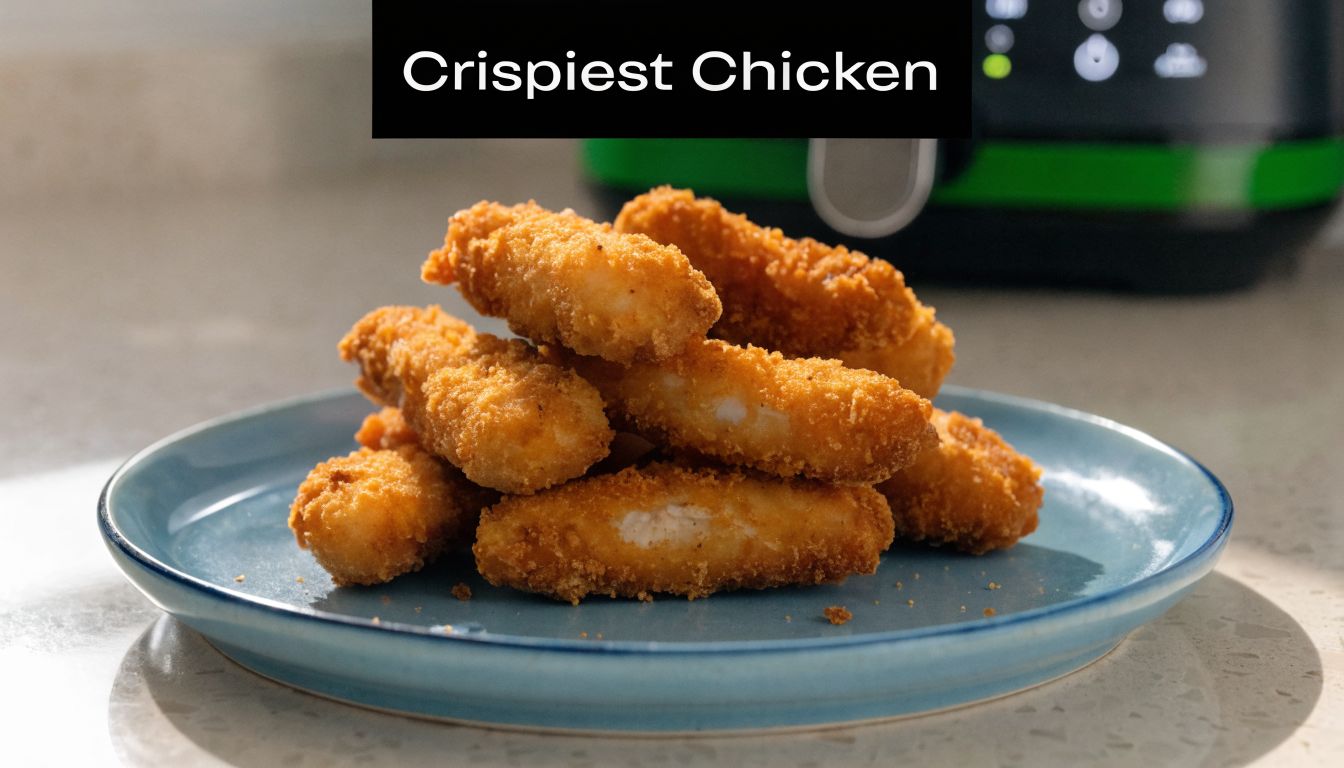
You want chicken fingers. Not pale baked strips with a dusty coating, and not a pan full of oil to clean up afterward. You want that audible crunch on the outside, tender chicken in the middle, and a tray that disappears fast whether it’s dinner, game night, or a quick lunch between meetings.
That’s exactly where the air fryer shines. It gives you the closest thing to fried-style texture without the mess and heaviness that make homemade chicken fingers feel like a project. It also fixes the biggest problem commonly encountered with oven versions. The coating never quite sets, or it slides off the first time you flip the chicken.
Good chicken fingers air fryer success comes down to two things. Breading that sticks and airflow that crisps. Once those are under control, the rest gets easy.
The Quest for Crispy Homemade Chicken Fingers
Dinner is 20 minutes away, the chicken is cut, and the air fryer is preheating. Then the first batch comes out with one beautiful piece, two pale ones, and a strip that leaves half its coating stuck to the basket. That pattern usually has nothing to do with bad luck. It comes from moisture management and how the crust is built.
Chicken fingers are simple food with picky mechanics. The surface of the chicken starts wet. The breading has to cling long enough to set. At the same time, the air fryer blasts circulating heat that dries exposed spots fast and leaves crowded areas soft. Different baskets exaggerate different problems. A small drawer-style air fryer tends to brown the top quickly, while oven-style models often need more time for the underside to crisp.
Good results come from treating crispiness like a process, not a promise on the machine box.
What finally fixed homemade chicken fingers in my kitchen was understanding two things. First, wet chicken steams its own coating loose unless you control that moisture with a short brine, a proper pat-dry, or both. Second, breading sticks better when each layer has a job. Flour dries the surface, egg gives the crumbs something to grab, and a final crumb layer needs a few minutes to hydrate before cooking so it does not blow off in the fan.
That is why air fryer chicken fingers improve so much when you slow down for a few strategic steps. A light dry brine helps the meat stay seasoned and juicy. A multi-stage dredge builds a crust that holds on. A short rest after breading gives the coating time to bond instead of sliding off at the first turn.
I rely on those details because they solve the complaints home cooks run into most often: patchy color, bare spots, soggy bottoms, and breading that separates from the chicken. If you want more context on the cooks behind this kind of practical testing, visit the Air Fryer Snack Ideas author team.
Crispy chicken fingers come from dry surfaces, a coating that has time to adhere, and enough air circulation for the crust to set before the chicken overcooks.
Gathering Your Ingredients and Essential Tools

You can usually predict the final texture before the air fryer even preheats. If the chicken strips are uneven, the crumbs are too fine, or the tools are missing, crispy chicken fingers get harder to pull off no matter how good the seasoning is.
Start with the chicken itself. Chicken tenderloins are the easiest choice because their shape is already close to what you want, and they stay tender with less knife work. Boneless skinless chicken breasts work well too, but cut them into strips of similar thickness. That one detail affects both browning and breading adhesion. Thin tips overcook fast, while thick centers hold moisture longer and can soften the coating before it sets.
A batch that cooks evenly usually starts with pieces that look boringly consistent.
If you like to prep ahead, plan on about 8 to 12 strips per pound of chicken, depending on how wide you cut them. That size works well in most air fryer baskets because the pieces have enough surface area to crisp without turning into nuggets.
Build the breading with texture and adhesion in mind
For air fryer chicken fingers, panko gives the best crunch in most home kitchens. Its larger flakes leave more ridges and exposed edges, which brown better under circulating heat than a fine, sandy breadcrumb. If your air fryer runs hot on top, crush the panko slightly with your hands before using it. You still get texture, but the coating browns more evenly and is less likely to develop dark spots before the chicken finishes.
Season every layer lightly instead of dumping everything into the crumbs. Flour should be seasoned. Egg or batter should be seasoned. Crumbs should be seasoned. That keeps the crust from tasting flat under the surface.
A practical setup looks like this:
- Chicken tenderloins or evenly sliced breast strips
- Flour to dry the surface and help the next layer stick
- Eggs or a thicker wet batter for stronger crumb adhesion
- Panko breadcrumbs for a lighter, crispier crust
- Kosher salt, black pepper, garlic powder, onion powder, paprika
- Neutral oil spray for better browning
- Sheet pan or plate to hold breaded pieces while the coating hydrates
- Tongs or one dry hand and one wet hand to keep the dredge from clumping
- Instant-read thermometer to check doneness without guessing
That resting tray matters more than many cooks expect. If you stack freshly breaded chicken or move it straight into the fryer in a rush, the coating is more likely to slip in patches.
Know your air fryer style before you choose time and temperature
Air fryers do not cook the same way, and ingredient prep should match the machine. Clean Food Crush’s chicken fingers air fryer article notes that basket models often work best at 380 to 400°F with a halfway flip, while oven-style models may need 375°F for 12 to 15 minutes because airflow and rack position change how the crust sets.
That lines up with what I see at home. Basket fryers usually crisp faster and reward smaller batches with more space between pieces. Oven-style models give you more room, but the bottom often needs extra help from rack placement, rotation, or a slightly longer cook.
The best ingredient list for chicken fingers is the one that matches your machine. A fast-browning basket model benefits from slightly finer crumbs and more spacing. An oven-style model benefits from strong air exposure and careful rack placement.
Get the setup right here, and the breading step becomes much more reliable.
The Foolproof Breading Method for Ultimate Crispiness
You know the frustrating version. The chicken is cooked through, the crumbs look promising, then the first flip leaves half the coating in the basket. Crisp chicken fingers start earlier than the cook cycle. They start with a surface the breading can grab.
Start with a brine if you want better meat and better coating
A short brine does more than season the chicken. It helps the meat hold onto moisture, which gives you a little insurance during cooking, and it improves the texture so the strips stay tender instead of stringy. CJ Eats Recipes’ air fryer chicken tenders method uses a simple ratio of water, kosher salt, and sugar, with a brining time of 30 minutes to overnight.
After brining, dry the chicken thoroughly with paper towels. That step matters because wet surfaces repel flour. If flour cannot cling evenly, the next layers slide, separate, and eventually fall off.
Build adhesion in layers, not with a quick dip
A standard flour, egg, and breadcrumb setup can work, but it often gives you a thinner shell that cracks in high airflow. I get better results with a staged dredge: light flour first, then a thicker wet batter, then a firm coating of panko. The flour dries the surface. The batter creates glue. The panko forms the craggy outer layer that turns crisp in the fryer.
If you want another example of how dry surfaces and careful layering affect texture, the same principle shows up in foods far beyond chicken, including this air fryer bagel method with a crisp exterior and chewy center.

The method that works
Set up your dredging station in this order and keep one hand for dry ingredients, one for wet if you can:
Dry the chicken well
Surface moisture creates steam under the coating and weakens the first layer.Dust lightly with flour
Use a thin coat, not a heavy one. Too much flour gives the crust a pasty layer underneath.Dip into a wet batter
A batter made with eggs, flour, water, and seasoning clings better than plain beaten egg. Let the extra drip off, but leave enough to coat the strip fully.Press into seasoned panko
Press, don’t sprinkle. The crumbs need contact with the batter to stay attached during flipping.Let the breaded chicken rest
Give it a short rest on a tray before frying. That small pause hydrates the crumbs and helps the coating set into one layer instead of three separate ones.
That resting step fixes a lot of common problems.
Small details that stop big problems
A few mistakes show up again and again in home kitchens:
- Chicken that is still damp after brining leaves bare patches where the flour slips off
- A heavy flour coat creates a dry layer that separates from the meat
- Loose panko browns fast but falls away just as fast
- No resting time makes the coating fragile when hot air starts pushing against it
There is also a crumb-size trade-off. Fine crumbs brown more evenly and work well in powerful basket models that move air hard and fast. Coarser panko gives you more crunch, but it needs better adhesion and a gentler hand when flipping, especially in oven-style units where the top can set before the bottom fully dries.
My rule is simple: if the breading looks patchy or loose on the tray, it will not fix itself in the air fryer. Press it well, let it rest, and give the crust a strong start before heat ever hits it.
Perfecting the Air Frying Process
Once the chicken is coated properly, cooking becomes a matter of discipline. Preheat the machine. Space the pieces. Spray the dry spots. Flip on time. Most failures happen because one of those steps gets skipped.

Preheat and load the basket correctly
An air fryer needs a hot start if you want the coating to set quickly. A cold basket gives moisture too much time to collect on the outside, and that’s when crisp breading turns tacky.
The most useful timing formula comes from From Valerie’s Kitchen air fryer chicken tenders. It recommends preheating to 400°F for 5 minutes, placing tenders about 1/2 inch apart, spraying until there are no dry spots, then cooking 7 minutes, flipping, spraying again, and cooking 4 to 5 minutes more until the center reaches 165°F.
Best working formula: Preheat to 400°F, cook 7 minutes, flip, spray again, then finish for 4 to 5 minutes.
That same source says recipe validations found the method helped over 90% of tenders reach an extra crispy texture, compared with 60% when cooks skipped the mid-cook oil spray.
Why spacing matters more than people think
The air fryer only works when hot air can move around the food. If the pieces touch, steam gets trapped between them and the coating softens.
For basket models, keep a single layer and cook in batches if needed. This is especially important with breaded chicken fingers because the crust blocks airflow more than plain seasoned chicken does.
A few practical signs your basket is overloaded:
- The bottoms stay pale while the tops brown
- The sides touching other tenders stay soft
- You get random crisp patches instead of even color
If you’re also making sides, it’s often smarter to cook the chicken first and hold it on a rack for a few minutes than to crowd everything together and lose the texture.
Use visual cues, not just the timer
Timing gets you close. The finish line is color plus temperature. You want a golden exterior and an internal temperature of 165°F. If the coating is browning too quickly, especially in a hotter basket-style machine, lower the temperature slightly on the next batch rather than extending the cook blindly.
Resting helps too. Two minutes on a rack keeps the underside from steaming itself soft.
For cooks who like easy air fryer sides after the chicken’s done, this bagel in air fryer idea is a useful reminder of how much better quick foods turn out when you let hot air do its job without crowding.
Variations Shortcuts and Healthier Swaps
Some nights call for the full from-scratch treatment. Other nights, you need a version that fits the time you have, the ingredients in the pantry, or the way your air fryer cooks. The trick is choosing swaps that still protect crispiness instead of setting you up for a soggy coating.
A good chicken finger has two jobs. The coating needs to cling during cooking, and it needs enough texture to dry out and crisp before the chicken overcooks. Once you look at variations through that lens, the trade-offs get a lot clearer.
Three good paths depending on the night
| Approach | Best for | What you gain | Trade-off |
|---|---|---|---|
| Classic panko breading | Maximum crunch | Thick, craggy crust and the best contrast between juicy chicken and crisp coating | More prep |
| Lower-carb coating | Grain-free or lighter meals | Good browning and plenty of savory flavor | Less airy crunch than panko |
| Pre-cooked frozen strips | Fastest dinner | Very little prep and predictable timing | Less control over seasoning, texture, and ingredient quality |
The classic version still gives the best crust, especially if you use the full dredging method from earlier and let the breaded pieces rest before air frying. That rest matters more than many recipes admit. It hydrates dry spots in the coating and helps the crumbs bond instead of blowing off in a strong fan basket.
Healthier swaps that still crisp well
Air frying already cuts down on the oil you need, so the easiest way to make chicken fingers feel lighter is to change the coating, not the method.
A few swaps I use regularly:
- Whole wheat panko for a slightly nuttier flavor and a crumb that holds up well
- Finely grated Parmesan mixed into breadcrumbs for more savory depth, which lets you use less salt
- Crushed cornflakes for a crisp, shattery coating that browns fast
- Pork rinds with a little almond flour for a lower-carb crust with strong flavor
- Oat flour in the first dredge if you need a wheat-free option that still gives the egg something to grab onto
One caution. Lower-carb coatings often brown faster before they fully dry out. In hotter basket-style machines, a slightly lower temperature usually gives a better result. Oven-style air fryers tend to be gentler, so those same coatings often need a little more time to crisp.
If you want a lighter result without changing the flavor too much, use smaller chicken strips and keep the breading thin. Thick, heavy coating tastes bready before it tastes crisp.
Shortcut versions that still taste intentional
Pre-cooked frozen strips are useful when speed matters most. The best way to improve them is to treat them like a finishing job, not a full recipe. Arrange them in a single layer, cook until hot and crisp, then add flavor after cooking with a pinch of fine salt, black pepper, smoked paprika, or grated Parmesan while they are still hot.
You cannot fix a weak factory coating completely, but you can avoid making it worse. Skip overcrowding, and do not spray so much oil that the crust turns patchy and greasy.
For raw chicken shortcuts, a quick brine does more for texture than an elaborate seasoning blend. Even 20 to 30 minutes in salted buttermilk or pickle brine helps the meat stay juicy and gives the flour layer a tackier surface to hold onto. That is one of the easiest ways to get better adhesion without adding much work.
If you like testing different quick dinners in the same machine, the air fryer recipe ideas archive has plenty of options that use the same crisping principles.
Serving Storing and Reheating Like a Pro

You pull a fresh batch from the air fryer, the crust is audibly crisp, and ten minutes later the bottoms have gone soft on the plate. Serving matters more than people expect. Good chicken fingers lose their edge fast if steam gets trapped under them or if they sit too long in a puddle of sauce.
Serve them hot on a wire rack set over a sheet pan, or on a plate lined loosely with greens instead of stacking them. That little bit of airflow protects the crust you worked for. I also keep dips on the side, not spooned over the top, because moisture is the fastest way to undo a well-adhered breading.
What to serve with them
The best sides balance richness and keep the meal from feeling heavy:
- Honey mustard for sweet acidity that cuts through the crust
- Barbecue sauce for smoke and a little stickiness
- Garlic aioli when you want a richer finish
- Ranch or a yogurt-based dip for a cold, creamy contrast
- Cucumber slices, salad greens, roasted vegetables, or fries depending on whether you want the plate lighter or more comfort-food style
For dinner, I usually pair them with something crisp and fresh. If the coating is especially crunchy, a sharp slaw or simple cucumber salad does more for balance than another fried side.
Storage that protects the crust
Let the chicken fingers cool before storing them. If they go into a container while still hot, trapped steam softens the coating from the inside out.
Arrange leftovers in a shallow container with a little space between pieces if possible. If you need to stack them, place a paper towel under and between layers to catch condensation. They keep well in the refrigerator for several days, and they also freeze well once fully cooled.
The crust will never be quite as delicate as it was fresh, but careful storage keeps it much closer.
Leftover chicken fingers usually disappoint because the crust absorbs steam in storage, then turns rubbery in the microwave. Dry circulating heat restores far more texture.
How to reheat without ruining them
Use the air fryer again. Reheat at 350°F until the coating is hot and crisp and the chicken is heated through. For refrigerated pieces, that usually takes only a few minutes. Frozen cooked fingers take longer and benefit from being arranged in a single layer so the exterior dries properly before the centers overcook.
Basket models tend to re-crisp faster, especially on the underside, so check early. Oven-style air fryers often need a bit more time, but they can be better for reheating a larger batch evenly.
After reheating, move the chicken to a wire rack for a minute instead of piling it straight onto a plate. That final step keeps the bottoms from steaming while you finish the rest of the batch.
Common Air Fryer Chicken Finger Questions Answered
Some problems show up so often that they’re worth keeping in one place. If your chicken fingers air fryer batch didn’t come out right the first time, the fix is usually straightforward.
Quick Troubleshooting Guide
| Question | Likely Cause | Quick Fix |
|---|---|---|
| Why did my breading fall off? | Chicken was too wet, or the coating wasn’t pressed on firmly | Pat the chicken dry, use a stronger batter layer, and press the crumbs onto each piece |
| Why are my chicken fingers soggy? | Basket was crowded, or there wasn’t enough surface oil | Cook in a single layer and lightly spray any dry spots before and after flipping |
| Why are the outsides dark before the inside cooks through? | Strips were too thick or your model runs hot | Cut pieces more evenly and reduce the heat slightly on the next batch |
| Why are some pieces crisp and others pale? | Uneven sizing or poor spacing | Match strip size as closely as possible and leave room between each piece |
| Why do leftovers lose their crunch? | Steam got trapped during storage or reheating | Cool first, store loosely, and reheat in the air fryer instead of the microwave |
Short answers to the most common issues
Can I use chicken breast instead of tenderloins?
Yes. Just slice the breast into strips of similar thickness. The more even the cuts, the easier they are to cook without drying out.
Do I really need oil spray?
If you want strong color and a fried-style finish, yes. A light spray helps the crumb brown evenly. It’s not about soaking the coating. It’s about eliminating dry patches.
Should I use parchment?
You can, but use it carefully. Some cooks like it for easier cleanup. The trade-off is that anything blocking airflow can soften the underside a bit, so a bare basket usually crisps better.
How do I know they’re done without guessing?
Use an instant-read thermometer. The center should hit 165°F. The crust should also look evenly golden, not floury or damp.
What if my oven-style air fryer cooks differently than the recipe says?
Adjust based on your machine. Some need lower heat and a little more time. Others run hot and benefit from smaller batches and a quicker flip. Good air fryer cooking is part recipe, part observation.
If you keep a few notes after each batch, your second round will usually be much better than your first. By the third, you’ll know exactly how your machine likes to cook breaded chicken.
If you want more practical air fryer snack ideas that fit real schedules, browse airfryersnackideas.com for easy recipes, quick sides, and simple methods that help new owners get better results fast.
