


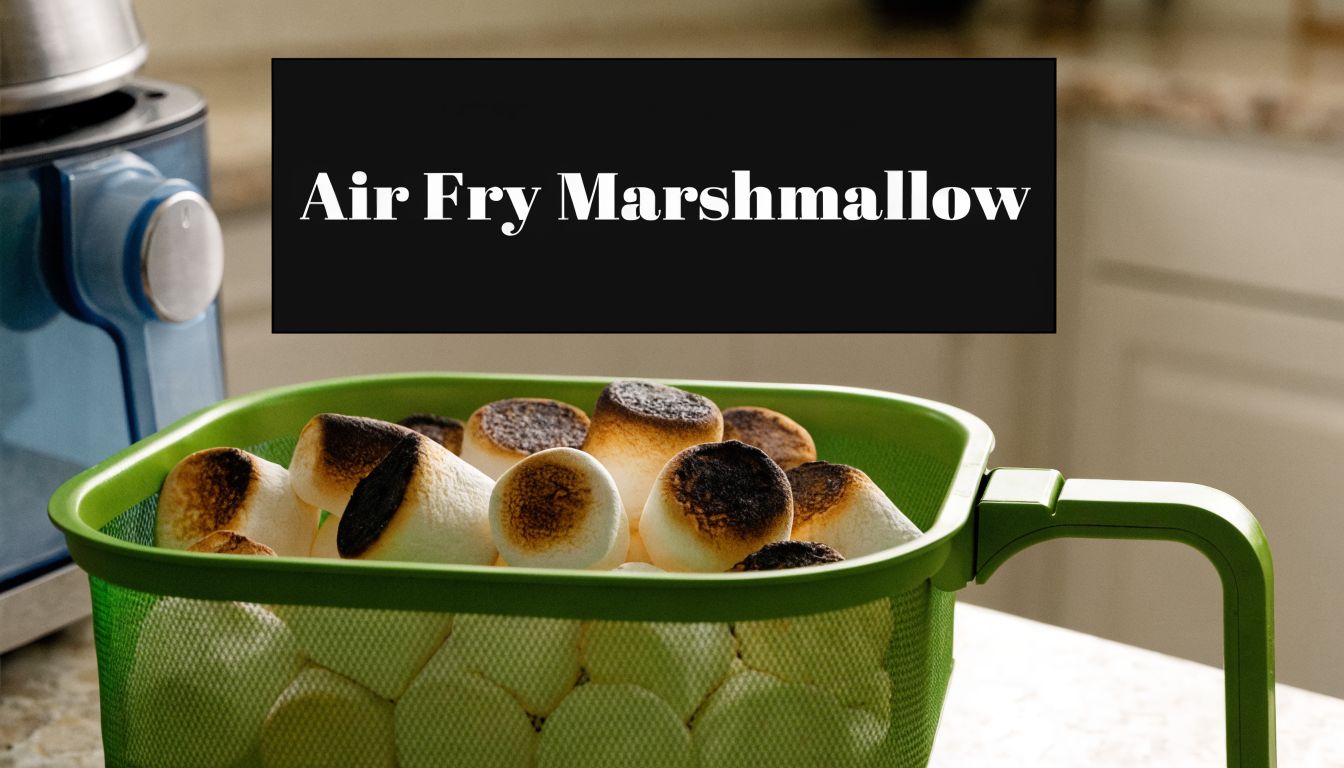
You bought marshmallows, pulled out the air fryer, and expected a quick toasted treat. Then the marshmallow skidded across the basket, glued itself to the grate, or went dark on top before the middle softened. That’s the part most recipes skip.
Air fry marshmallow success comes down to control, not luck. Once you understand how your machine moves hot air and how your marshmallow reacts to it, the whole thing gets easy. You stop following random one-size-fits-all directions and start getting the exact finish you want, whether that’s barely golden, thoroughly toasted, or melty enough for a fast s’more.
Your Toolkit for Marshmallow Toasting Success
The best air-fried marshmallows start before the basket goes in. A little setup saves a lot of sticky cleanup.

Start with the right marshmallows
Standard marshmallows are the easiest place to begin. They’re big enough to handle with tongs, but not so large that the outside races ahead of the center.
Jumbo marshmallows can work, but they’re less forgiving. They need a gentler approach because the exterior can color fast while the inside still feels dense.
Fresh marshmallows matter more than people think. A dry, stale marshmallow doesn’t puff the same way and tends to crack or stiffen instead of turning soft and gooey.
The sticky-bottom cut
This is the trick that keeps marshmallows from becoming airborne. Cut about ¼-inch off the bottom to make a fresh, sticky surface, then set that cut side down.
That little slice does two jobs. It gives the marshmallow a flat base, and it helps it grip the basket liner or cracker underneath instead of rolling around.
Practical rule: If your marshmallow can wobble, it can move. Give it a flat sticky base before you turn on the fan.
If you’re making s’mores, press the cut side directly onto the graham cracker. If you’re toasting marshmallows on their own, press them onto a properly fitted liner so they have some traction from the start.
The parchment paper question
Yes, parchment can help. No, you can’t toss in a loose sheet and hope for the best.
Use a piece trimmed to the base of the basket so it sits flat and doesn’t curl up into the heating flow. The main reason to use it is cleanup. Melted sugar hardens fast, and even a small drip can turn into a stubborn patch.
A liner helps most when you’re:
- Testing a new air fryer: You’re more likely to overcook the first batch a little.
- Working with split marshmallows: Sticky cut sides can leave residue.
- Making messy variations: Filled marshmallows and dip-style snacks ooze more.
Skip parchment if it blocks too much airflow or shifts around in your machine. If your air fryer has a very strong fan, securing the marshmallow itself matters more than lining the basket.
For more snack ideas built around practical air fryer use, the air fryer snack ideas blog collection is worth browsing.
Keep these tools nearby
You don’t need special gear, but a few basics help:
- Kitchen tongs: Better than fingers for hot, sticky marshmallows.
- Small spatula: Useful when the bottom gets extra soft.
- Plate or tray: Have a landing spot ready before cooking starts.
- Graham crackers or chocolate nearby: Toasted marshmallows wait for no one.
A lot of air fryer snacks give you a cushion of time after cooking. Marshmallows don’t. Their best texture happens right away, when the outside is lightly set and the inside is still loose.
The Core Technique for Golden Gooey Marshmallows
This is the part that turns a random experiment into a repeatable skill. You need a baseline, but you also need to know when to stop trusting the clock and start watching the marshmallow.

Your starting range
A reliable general range is 5-7 minutes at 375-390°F, but some recipes go much faster. Fantabulosity’s air fryer s’mores guide notes 375°F for 7 minutes, while Preppy Kitchen suggests 350°F for 2-3 minutes, and the difference comes from air fryer design and fan strength. That same source set also notes the ¼-inch sticky-bottom cut as the key trick for keeping marshmallows in place.
That range sounds huge because it is huge. Compact machines and stronger airflow can toast the top much faster than larger, gentler baskets.
Run a test batch first
Don’t fill the basket on your first try. Toast one or two marshmallows and treat them like calibration pieces.
Watch for three stages:
Puffed and pale
The marshmallow expands but hasn’t browned much yet. The inside is warming, but the surface is still soft.Light golden top
This is the sweet spot. The shell gets just enough color to taste toasted while the center stays soft.Deep brown with collapse
This can still be delicious if you like strong roast flavor, but it’s seconds away from burned sugar.
Pull the basket the moment the marshmallow looks one shade lighter than your ideal finish. Residual heat keeps working for a brief moment after cooking stops.
How to place marshmallows in the basket
Crowding causes uneven color. Give each marshmallow a little room so the hot air can move around it instead of bouncing off its neighbors.
A simple setup works best:
- Single layer only: Don’t stack.
- Flat base down: Use the cut side.
- Space between pieces: Enough that they don’t fuse as they puff.
- Center placement for the first test: The middle usually gives the clearest read on how your machine cooks.
If you’re using a graham cracker underneath, that cracker acts like an anchor. If you’re cooking the marshmallow alone, a clean flat liner gives you the next best shot at stability.
Learn your machine’s personality
Two air fryers set to the same temperature can behave very differently. That’s why fixed instructions often disappoint.
Here’s a practical read on what usually happens:
| Air fryer behavior | What you’ll notice | Better adjustment |
|---|---|---|
| Strong fan, compact basket | Fast browning, marshmallow shifts easily | Lower temp slightly and check early |
| Larger basket, gentler airflow | Slower color, softer top | Give it more time before increasing heat |
| Heat concentrated near top | Dark cap, firmer center | Move food lower if possible, reduce time |
| Narrow cooking area | Uneven browning in batches | Cook fewer at once |
A simple method that works
For most first attempts, do this:
- Prep the marshmallow: Cut the bottom so it sits sticky-side down.
- Set a moderate temperature: Stay within the tested range above.
- Check visually, not blindly: Start looking before you think it’s done.
- Add chocolate after the marshmallow if needed: Chocolate melts fast, marshmallows need more attention.
If you want only a lightly toasted finish, stop earlier. If you want campfire-style color, let it go a bit longer, but stay close. Marshmallows can jump from gorgeous to bitter very quickly.
Troubleshooting Common Marshmallow Mishaps
Most marshmallow failures aren’t random. The machine tells you what’s happening if you know how to read the mess.
When the marshmallow flies around
This is the classic problem with air frying marshmallows. Wellness by Kay’s air fryer s’mores notes point out that powerful fans, basket size, and circulation patterns can blow marshmallows around and create inconsistent results, especially in different models such as Ninja or Philips.
That happens because a marshmallow is light, rounded, and slippery once it warms. Strong airflow catches the curved sides and lifts it before the sugars soften enough to anchor it.
Try one of these fixes based on your setup:
- For a strong-fan basket model: Cut the bottom flat and press it onto a graham cracker. The cracker adds weight and grip.
- For a roomy basket with lots of airflow: Toast fewer pieces at a time. Open space can let the fan hit each marshmallow harder.
- For a small but intense machine: Lower the heat a bit and start with a shorter check window. Fast browning often comes with more aggressive air movement.
When the top burns before the middle softens
That usually means the marshmallow is getting blasted from above. The outside caramelizes first, while the center doesn’t have enough time to loosen.
The fix isn’t always “cook longer.” Cooking longer at the same intensity can just make the top worse.
Use this approach instead:
- Lower the temperature slightly
- Check sooner
- Cook smaller batches
- Choose standard marshmallows instead of jumbo for calibration
A standard marshmallow is easier to read. Once you understand your machine with that size, then branch out.
Burned top and firm center usually means the heat is too aggressive, not that the marshmallow needs more time at the same setting.
When some are golden and others stay pale
Uneven browning usually comes from basket layout. Marshmallows at the hottest point color first, while pieces at the edges lag behind.
Rotate only if your machine cooks unevenly enough to require it. Constant opening and shuffling can knock marshmallows over and interrupt the moment when they’re just starting to set.
A better pattern is:
- Cook a very small batch.
- Note where color develops first.
- Use that hot zone on purpose next time.
When cleanup becomes a sticky nightmare
Sugar spills harden fast, especially if a marshmallow tips over. Once it hits the hot basket, it can bake into a glossy glue.
Let everything cool first. Then soak removable parts in warm soapy water before scrubbing. Don’t attack hot sugar right away. That usually spreads it around rather than lifting it off.
If this keeps happening, the problem isn’t cleanup. It’s stability. Go back to the flat cut base, tighter placement, and smaller test batches.
Creative Snack Ideas Beyond a Single Marshmallow
Once you know how your air fryer handles marshmallows, a lot of fast desserts open up. The fun part is that you don’t need to reinvent the technique. You just change what sits under, inside, or around the marshmallow.

S'mores dip for sharing
This is the version I make when I don’t want to assemble individual s’mores. Use a small air-fryer-safe dish, add a layer of chocolate pieces, and top with marshmallows arranged snugly in one layer.
The trick is to stop when the tops are golden and the chocolate underneath has softened. If you let the marshmallows get too dark, the dip loses that creamy contrast and starts tasting more like toasted sugar than melted dessert.
Serve it right in the dish with graham crackers, pretzels, strawberries, or cookie pieces. It disappears quickly.
Stuffed marshmallows
Stuffed marshmallows feel fancy, but they’re simple once you handle them gently. Pinch in a small piece of chocolate, caramel, or a bite-size candy center, then reshape the marshmallow just enough to close it.
The challenge is weight distribution. If the filling throws off the balance, the marshmallow can tilt and leak.
A few fillings work especially well:
- Chocolate chip: Small, easy, and low-mess.
- Peanut butter cup piece: Rich, but best in a stable, anchored setup.
- Soft caramel bit: Delicious, though it can ooze fast if overcooked.
Keep these on the shorter side of your usual cooking window. The filling adds heat retention, so they often finish sooner than plain marshmallows.
Toasted marshmallow dessert toppers
A single air-fried marshmallow can finish another dessert in seconds. Drop one onto a brownie, warm cookie, or small tart, then let it settle while still soft.
This works best when the base dessert is already warm. The marshmallow relaxes into the surface instead of sitting on top like an afterthought.
A toasted marshmallow is often better as a topping than a standalone snack. The contrast from something crisp, cakey, or cold makes the flavor pop.
For a fast late-night treat, toast the marshmallow first and set it over a cookie or brownie after cooking. That keeps the basket cleaner and gives you more control over the final texture.
Fruit and marshmallow skewers
This one is playful but needs a little restraint. Pair marshmallows with sturdy fruit pieces that can handle heat, like strawberries or pineapple chunks.
Don’t overload the skewer. A heavy skewer is harder to place safely and can cook unevenly if ingredients are packed too tightly.
A good combination is:
- marshmallow
- fruit
- marshmallow
- fruit
Air fry just until the marshmallows color and the fruit edges warm. Pineapple gets especially nice because the tartness keeps the whole bite from tasting too sweet.
If you like adapting air fryer snacks into breakfast-for-dessert territory, this kind of sweet-and-toasty combination has the same easy appeal as a bagel in the air fryer. It’s quick, warm, and much more flexible than it looks at first.
Smart Serving Suggestions and Safety Tips
Fresh from the basket, marshmallows look harmless. They’re not. The inside can stay molten even when the outside seems ready to grab.
Handle the heat carefully
Use tongs or a small spatula, not your fingertips. Melted sugar sticks to skin fast, and marshmallows hold heat in the center longer than people expect.
Never leave the air fryer unattended while marshmallows cook. This isn’t one of those set-it-and-forget-it snacks. Once the surface starts browning, the finish changes quickly.
A few habits make serving much safer:
- Let them sit briefly before moving
- Transfer to a plate, not directly to your hand
- Keep kids back while the basket is open
- Clean drips after the machine cools completely
Serve them while the texture is right
The ideal serving window is short. Toasted marshmallows are best when the top is lightly set and the center is still soft enough to pull.
Try them:
- Pressed into s’mores right away
- Spooned over ice cream for hot-cold contrast
- Set on brownies or blondies
- Floated onto hot chocolate as a toasted cap
For guests, a small s’mores board works well. Put out graham crackers, chocolate, cookies, and fruit, then add the warm marshmallows as they finish. People can build their own combinations without waiting on a campfire.
A smart-snack way to think about it
Air-fried marshmallows still count as dessert, but they fit nicely into the “small indulgence” category. You get the toasted, gooey effect without turning to a heavier fried sweet.
That makes them useful for weeknights, dorm snacks, and quick family desserts. You get a warm treat with very little setup, and when you keep the portions small, it scratches the dessert itch without becoming a whole baking project.
Air Fryer Marshmallow FAQs
Can you use mini marshmallows
Yes, but they’re much harder to control. They’re so light that strong airflow can move them around almost immediately.
Mini marshmallows work better in contained recipes, especially a dip where they’re packed closely together in a dish. For open-basket toasting, standard marshmallows are far easier.
Can stale marshmallows be revived in the air fryer
Sometimes a slightly dry marshmallow softens enough to become usable, but it won’t behave as nicely as a fresh one. The texture can turn uneven, with a softer shell and a less pleasant center.
If the bag feels old and tough, use it in a contained dessert instead of expecting a perfect puffed topper.
Can you air fry Peeps
You can, but they melt and color differently because of the sugar coating and shape. They can go from cute to collapsed very quickly.
Treat them as an experiment, not your first marshmallow project. Start cautiously and watch constantly.
What’s the easiest cleanup method
Let the basket cool fully, then soak removable parts in warm soapy water. Once the sugar loosens, use a soft sponge or brush.
Avoid scraping aggressively while residue is still hot and tacky. That usually smears it around and makes the cleanup take longer.
Should marshmallows be cooked alone or on a graham cracker
If you’re new to this, start on a graham cracker. It gives the marshmallow a base and reduces movement.
Once you know how your air fryer behaves, cooking them alone becomes much easier to judge.
What if you still can’t get consistent results
That usually means your machine needs a custom routine. Pick one marshmallow brand, one placement pattern, and one starting temperature, then adjust only one variable at a time.
If you want to ask a specific air fryer question or share a weird marshmallow fail, the contact page for air fryer snack ideas is a good place to send it.
If you want more simple, practical snack recipes and air fryer ideas that work on busy days, visit airfryersnackideas.com.
