


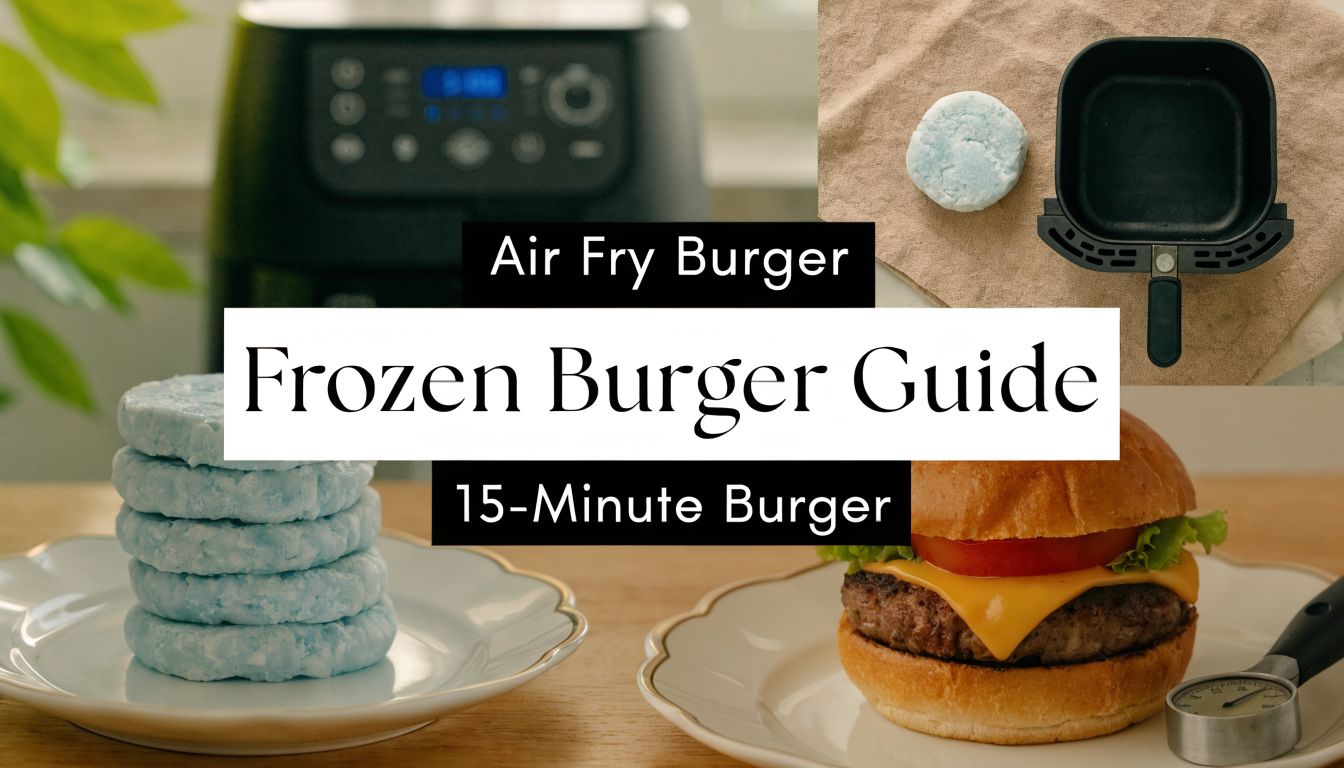
You’re hungry, the freezer is full of possibilities, and dinner needs to happen fast. That’s exactly where the air fryer shines. A frozen burger patty can go straight from the box to the basket and land on a bun with a browned outside, a juicy center, and almost no cleanup.
The trick isn’t memorizing one magic setting. It’s understanding what the hot air is doing, why spacing matters, and how to read the burger in front of you. Once you get that, you can air fry frozen burger patties confidently whether they’re beef, turkey, chicken, or plant-based.
Why Your Air Fryer Is Perfect for Frozen Burgers
Some meals ask too much on a busy night. Frozen burgers don’t have to. The air fryer gives you fast heat, strong airflow, and a contained cooking space that browns the outside while the inside finishes cooking. That’s why it works so well when you want a real dinner without dragging out a skillet or waiting on an oven.
It also solves the biggest frozen-burger problem. You don’t just want the patty cooked through. You want some crust on the outside and a center that still eats like a burger, not a hockey puck. The air fryer does that better than a microwave and with less mess than pan-frying.
Why this method caught on so fast
Air fryers didn’t become popular by accident. The air fryer market data from Market.us says the global air fryer market was valued at $899 billion in 2022 and is projected to reach $1,803 billion by 2032, driven by demand for appliances that cook foods like frozen burgers with 70 to 80 percent less oil than deep frying.
That lines up with what happens in real kitchens. People want something quick, crisp, and easy to clean up. Frozen burgers fit that perfectly because they don’t need prep work, and the basket lets excess grease drip away instead of pooling around the patty.
Practical rule: If dinner needs to be fast, satisfying, and low-effort, the air fryer is one of the few tools that can give you all three at once.
What makes it better than other quick methods
A skillet gives strong browning, but it splatters. The oven handles a batch, but it takes longer to heat up. The microwave is fast, but the texture suffers. The air fryer sits in the middle in the best way.
- Fast heat: You get burger-night results without waiting around.
- Better browning: Circulating hot air helps the outside firm up instead of turning gray and soft.
- Less oil and less mess: You’re not standing over grease.
- Easy for beginners: Once you learn the feel of your machine, the method becomes repeatable.
If you like practical air fryer meals that feel doable on a weeknight, Air Fryer Snack Ideas is built around exactly that kind of cooking.
The Foolproof Method for Air Frying Frozen Burgers
Start with the biggest rule. Don’t thaw the burgers first. Frozen patties cook well in the air fryer because the outside starts browning while the center comes up gradually. Thawing changes the timing and can make the texture less predictable. Straight from frozen is simpler and more reliable.
For the most dependable result, preheat the air fryer to 380°F (193°C), cook the frozen patty for 6 to 7 minutes, flip it, then cook another 5 to 8 minutes, and use a thermometer to make sure the center reaches 165°F (74°C), based on the air-fryer burger method from Air Fried.

The method that works in most air fryers
Preheat first. That gives the burger immediate heat instead of making it sit in a slowly warming basket. A hot basket also helps the first side develop color sooner.
Put the patties in a single layer with space around each one. If there’s parchment between frozen patties, separate them before they go in. Season the top if you want to. Even a simple pinch of salt, black pepper, garlic powder, or onion powder helps.
Cook the first side until the surface loses its frozen look and starts to brown. Then flip. That flip matters because one side always gets more direct airflow. Turning the burger halfway helps both sides brown more evenly and keeps one face from looking steamed while the other gets too dark.
Flip once, halfway through, and think of the second half as the finishing phase. The first half thaws and sets the exterior. The second half builds color and finishes the center.
Once the burger is nearly done, check the center with a thermometer. That last check is what separates a good routine from guesswork.
Air Fryer Frozen Burger Cook Times from Frozen
Use this table as a starting point, not a law. Thickness changes everything more than brand names do.
| Patty Thickness | Total Cook Time (flip halfway) |
|---|---|
| Thin patty | 11 to 13 minutes |
| Standard patty | 12 to 15 minutes |
| Thick patty | 14 to 18 minutes |
If your burger is especially thick, give it a little more time after the flip and check the center before serving. If it’s thin, start checking earlier than you think you need to.
What to look for while it cooks
A good frozen burger changes in clear stages:
- Early stage: The surface looks wet as the frost melts.
- Middle stage: The edges darken slightly and the patty firms up.
- Late stage: The top looks browned, juices run clearer, and the center is ready for a thermometer check.
Intuition becomes important. If the outside looks right but the center isn’t there yet, lower your expectations for color and give it another minute or two. If the outside is getting too dark before the center is ready, your air fryer may run hot.
Small choices that improve the result
Some frozen patties release a lot of fat. That’s normal. Let the air fryer do the work. Don’t press on the burger while it cooks. Pressing forces out juices you want to keep.
You can also add cheese near the end. Once the burger is cooked, lay a slice on top and return it to the warm basket briefly, or let the residual heat melt it while the patty rests.
Kitchen habit worth keeping: Rest the burger briefly before building it. The juices settle, the cheese softens, and the bun doesn’t get hit with a flood of steam.
Customizing Your Burger Beyond the Basic Beef Patty
Once you’ve got the base method down, the frozen aisle opens up. Beef is only one version of this meal now, and that variety is one reason the category keeps growing. The Food Dive frozen foods report notes that the air fryer-ready frozen foods market was valued at $13.2 billion in 2024 and is projected to reach $19.7 billion by 2033, with frozen processed meat and poultry, including burgers, more than doubling in sales since 2019.

How to adjust for different patties
Beef usually browns the easiest because it carries more fat. Turkey and chicken burgers often need a little more care because they can go from juicy to dry quickly if you push them too far. Plant-based patties vary the most. Some behave a lot like thin beef patties, while others soften first and brown later.
That means your job is less about chasing one perfect number and more about reading the patty.
- Turkey burgers: Watch closely near the end. They benefit from the same flip-and-check approach, but they often need gentler handling because they don’t stay as forgiving once overcooked.
- Chicken burgers: Expect a lighter color. Don’t rely on appearance alone. Judge doneness by texture and thermometer, not by how dark the outside gets.
- Plant-based burgers: Many do best when you avoid overcrowding and let the outside set before flipping. If one seems delicate, wait until it releases easily.
Thickness matters more than brand
A thick grill-style burger needs extra time because the center takes longer to catch up. A thin uniform patty cooks faster and can overshoot quickly if you walk away too long. That’s why experienced cooks watch thickness first and packaging second.
If you’re trying a new type, cook one or two patties before filling the whole basket. That gives you a clean read on timing without committing dinner for everyone to a test batch.
Cheese and finishing touches
Cheese should go on late. If you add it too early, it can slide, overmelt, or make a mess in the basket. Add it when the burger is basically done, then let the remaining heat soften it.
For more practical air fryer meal ideas beyond burgers, the recipe collection in the Air Fryer Snack Ideas blog is useful when you want the same freezer-to-table convenience with different snacks and sides.
Quick Toppings and Easy Meal Pairings
A burger patty on its own gets dinner started. Toppings make it feel finished. On busy nights, the best move is to build from ingredients that need little or no prep.

Fast toppings that pull their weight
One of the easiest burger setups is also one of the best. Toasted bun, burger, cheese, pickles, mustard. It works because every part has a job. The cheese adds richness, pickles add bite, and mustard cuts through the fat.
Another dependable combination is lettuce, tomato, mayo, and onion. If raw onion feels too sharp, use pickled onions from the fridge. If you want something diner-style, mix ketchup, mayo, and a little relish for a quick burger sauce.
- Crunchy route: Lettuce, pickles, sliced onion
- Rich route: Cheese, mayo, sautéed onions if you have leftovers
- Tangy route: Mustard, pickles, banana peppers
- Fresh route: Tomato, lettuce, a swipe of mayo
A fast burger feels better when the toppings contrast the patty. If the burger is rich and hot, add something cool, sharp, or crunchy.
Easy sides that fit the same mood
The easiest meal pairing is another freezer item that cooks while the burger rests or right after the patties come out. Fries, onion rings, tater tots, and breaded vegetables all fit naturally next to an air-fried burger because they thrive in the same appliance.
If you want a breakfast-for-dinner twist, serve the burger on a toasted bagel instead of a bun. This bagel in air fryer guide is handy if you want the outside crisp and the inside still chewy.
A simple side salad also works if the burger itself is the main event. Keep it sharp and light. Something acidic balances a rich burger better than another heavy side.
Common Air Fryer Burger Problems and How to Fix Them
Most bad air fryer burgers fail for a small reason, not a mysterious one. The machine is simple. Hot air moves around food. If that airflow gets blocked or the timing starts cold, texture suffers.
That’s backed up by technical air fryer burger benchmarks on YouTube, which show that overcrowding can reduce airflow and drop crispiness success rates to below 50 percent, while skipping preheat can increase cook time by 20 to 30 percent, which raises the risk of a dry, tough burger.

If the burger came out dry
Dry burgers usually mean one of three things. It cooked too long, the machine ran hotter than expected, or the patty was thin and needed less time than your usual routine.
Try this instead:
- Check earlier: Start checking before the full expected time is up if the patties are thin.
- Trust the thermometer: Don’t keep cooking just to chase a darker crust.
- Rest it briefly: A short rest helps the juices settle instead of spilling out immediately.
If it’s pale or soggy
This almost always comes back to crowding, excess moisture, or a missed flip. The patty needs moving hot air around it, not a packed basket.
Do this next time:
- Leave space: Cook in a single layer.
- Flip halfway: One side won’t brown evenly on its own.
- Preheat the basket: Starting hot helps the exterior set faster.
If your burger looks steamed instead of browned, the air couldn’t circulate properly.
If there’s smoke or greasy mess
Some burgers release a lot of fat, especially richer beef patties. That can create smoke in certain air fryer models. Emptying grease carefully between batches helps. So does keeping the machine clean.
A soggy bun is another common complaint, and the fix is simple. Don’t build the burger the second it leaves the basket. Let the patty rest briefly, then place it on a toasted bun so the bread holds up.
The one tool that removes guesswork
A meat thermometer is the difference between hoping and knowing. Air fryers vary. Patty thickness varies. Brand to brand, even frozen burgers that look similar can cook a little differently.
Use the visual cues, learn your machine, and then let the thermometer make the final call.
If you want more practical air fryer recipes that fit real life, visit airfryersnackideas.com. It’s a solid place to find simple snack and meal ideas for busy nights, new air fryer owners, and anyone trying to make better use of what’s already in the freezer.
