


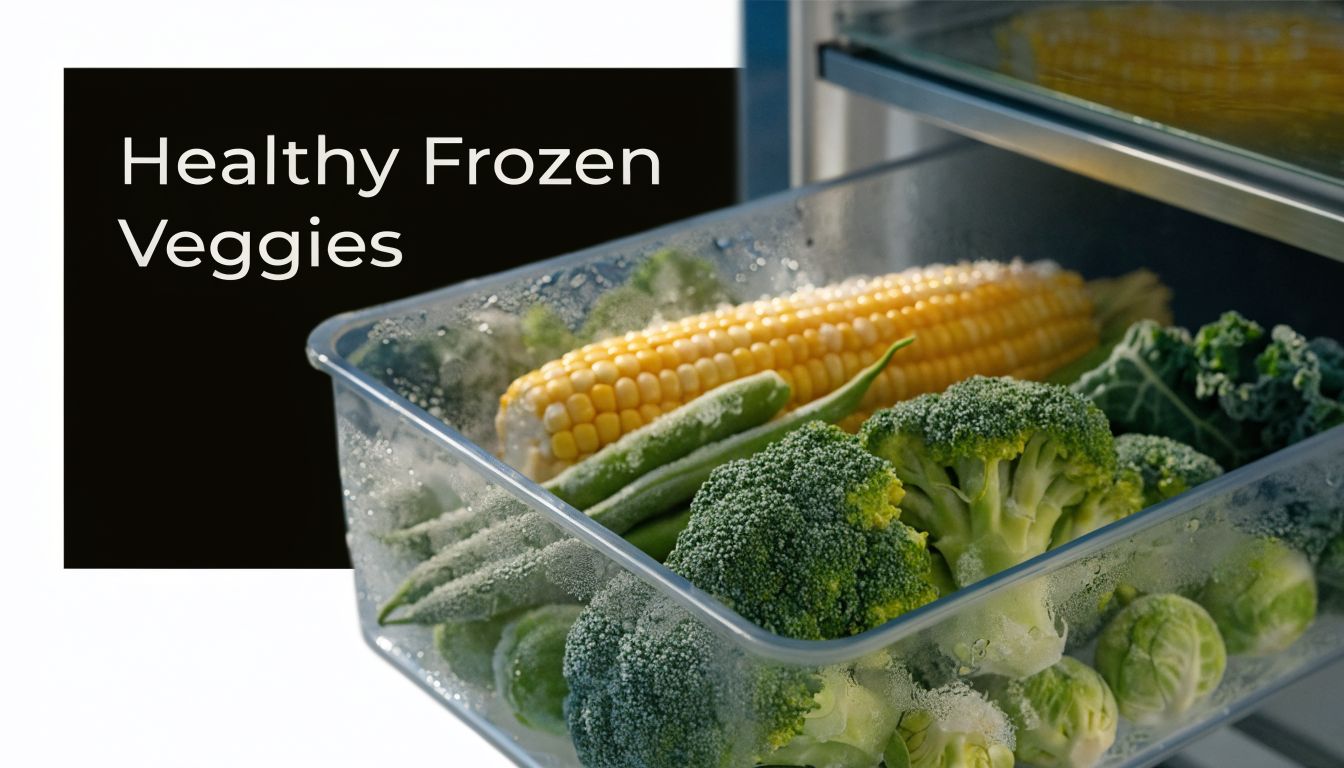
Frozen vegetables can be just as nutritious as fresh, and sometimes even more nutritious than the “fresh” vegetables at the store. The reason is simple: they're often picked ripe and frozen quickly, while fresh produce can lose nutrients over days in transit, on display, and in your fridge.
That runs against the most common nutrition advice people hear. “Fresh is always best” sounds tidy, but food doesn't live in a perfect world. A bag of frozen broccoli that went from farm to freezer fast may beat a head of broccoli that spent days traveling, sitting under store lights, and waiting in your crisper drawer.
For busy people, that matters. If you're trying to eat better with limited time, frozen vegetables aren't a backup plan. They're often a smart plan.
They're also especially useful if you own an air fryer. Frozen vegetables can go from freezer to crispy side dish or snack fast, with little prep and very little cleanup. The catch is that not every frozen vegetable product is equally healthy, and not every cooking method gives you a result you'll want to eat.
So the better question isn't only are frozen vegetables healthy. It's this: how do you choose the right ones, cook them well, and avoid turning a good food into a salty, soggy disappointment?
The Surprising Answer to an Old Question
You know the moment. You're at the store staring at two options: a “fresh” bag of green beans that looks a little tired, and a frozen bag that looks bright, firm, and simple. Many shoppers assume the fresh one wins automatically.
Nutrition science says it's not that simple.
Major health organizations consider plain frozen vegetables a healthy choice. The American Heart Association says frozen fruits and vegetables are “picked at the peak of ripeness and then flash frozen to preserve optimal nutrition”. That one line flips the usual script. Frozen isn't “less than” by default.
Why the fresh label can mislead
Fresh sounds like it came from a garden this morning. In real life, “fresh” often means harvested earlier, shipped, stocked, and stored before you buy it. During that time, nutrients can gradually decline.
Frozen vegetables take a different route. They're usually processed soon after harvest, so the food gets preserved closer to its best moment. This captures the vegetable at the right time, whereas fresh produce keeps changing after harvest. Frozen produce secures the vegetable much closer to peak condition.
Bottom line: If your choice is between plain frozen vegetables and fresh vegetables that have been sitting around for a while, frozen can be the stronger nutrition pick.
That's good news if you cook for convenience, live alone, hate food waste, or want vegetables that are ready when you are.
What matters more than the freezer aisle
The biggest mistake I see isn't buying frozen vegetables. It's buying vegetables plus extras and assuming they're all nutritionally the same. Broccoli is one thing. Broccoli in cheese sauce is another. Plain cauliflower is one thing. Breaded cauliflower bites with heavy seasoning are another.
If you want practical, evidence-aware food writing from people who focus on cooking and usability, you can see the site's author team.
A plain bag of frozen peas, broccoli, green beans, cauliflower, Brussels sprouts, or mixed vegetables can absolutely fit into a healthy diet. The true skill is knowing how to shop and cook them so they stay tasty enough to become a habit.
The Journey from Farm to Freezer Explained

A lot of confusion about frozen vegetables comes from not knowing what happens before they reach the bag. Once you understand the steps, the whole topic gets much less mysterious.
What usually happens before freezing
Most frozen vegetables follow a simple path. They're harvested, cleaned, cut if needed, blanched, and then frozen quickly.
Blanching is the key step people rarely hear about. It's a brief heat treatment, often in hot water or steam, used to slow the enzymes that would otherwise keep breaking the vegetable down. In plain English, blanching helps stop the natural aging process so the vegetable keeps better texture, color, and storage quality.
Freezing then acts like a pause button. It slows the chemical activity that causes decline.
The one real nutritional tradeoff
The main nutritional tradeoff with frozen vegetables is blanching, not freezing itself. A technical review summarized that vitamin C losses during blanching and freezing can range from about 10% to 80%, with an average loss around 50%, while minerals and fiber are relatively stable, as summarized in Healthline's review of frozen vegetable nutrition.
That sounds dramatic until you put it in context. Vitamin C is heat-sensitive, so it takes more of a hit. But that doesn't mean the whole vegetable becomes “unhealthy.” It means some nutrients are more delicate than others.
A useful analogy is laundry. If you wash a sweater, it may lose a little softness, but that doesn't mean the sweater is ruined. Blanching can reduce some sensitive vitamins while still preserving the vegetable as a highly nutritious food overall.
| Step | What it does | Why it matters |
|---|---|---|
| Harvest | Vegetables are picked when ready | Better starting quality matters |
| Blanching | Brief heat treatment | Helps stop enzyme activity |
| Quick freezing | Rapid temperature drop | Helps preserve quality for storage |
Why this still works in your favor
For everyday eating, frozen vegetables still offer a strong combination of convenience and nutrition. Minerals, fiber, and many plant compounds are relatively stable. And because the vegetables are already washed and prepped, you're more likely to cook and eat them.
Cooking method matters after purchase, too. If you air fry frozen vegetables briefly until crisp-tender instead of cooking them into mush, you preserve texture and make them much easier to enjoy regularly.
That matters more than many people think. A very healthy food you never eat is less useful than a very good food you eat several times a week.
Frozen vs Fresh A Nutrient Showdown
Fresh and frozen aren't enemies. They're different tools. The better choice depends on what happened after harvest and how long the food sat before you ate it.

Where frozen can pull ahead
A UC Davis comparison of eight common produce items found that vitamin C was unchanged in five of eight commodities and was higher in frozen samples for the other three. The same summary notes that “fresh” produce can lose nutrients during storage, while freezing locks them in soon after harvest.
That's the part many shoppers miss. The comparison isn't frozen vegetables versus garden-picked vegetables eaten immediately. The typical comparison is often frozen vegetables versus produce that has spent time moving through a supply chain.
A simpler way to think about it
Use this rule of thumb:
- If fresh is fresh and you'll eat it quickly, it's an excellent choice.
- If fresh is going to sit for days, frozen may hold up better nutritionally.
- If frozen helps you eat more vegetables consistently, that practical win matters.
Here's a side-by-side view:
| Question | Fresh vegetables | Frozen vegetables |
|---|---|---|
| Best moment nutritionally | Often best very soon after harvest | Often preserved close to harvest |
| Risk during storage | Can decline over time | More stable in the freezer |
| Prep work | Usually more washing and chopping | Usually ready to cook |
| Weeknight convenience | Variable | High |
The nutrient question people ask wrong
People often ask, “Which is healthier, frozen or fresh?” A better question is, “Which version of this vegetable am I most likely to buy, store well, and eat?”
That's not a dodge. It's real nutrition counseling.
If fresh spinach keeps turning slimy in your fridge, frozen spinach may be the healthier choice for your actual life. If you're great at buying farmers market produce and cooking it the same day, fresh may fit beautifully. If you need a dependable backup for rushed evenings, frozen is hard to beat.
Frozen vegetables are often strongest when you treat them as a staple, not a compromise.
This is also why frozen vegetables work so well in an air fryer routine. They remove several friction points at once: no washing, no trimming, no guilt when plans change, and no pressure to use everything immediately.
How to Choose the Healthiest Frozen Vegetables

The healthiest frozen vegetables usually look almost boring. That's a compliment.
If you flip over the bag and the ingredient list says something like broccoli, green beans, or cauliflower, you're probably looking at the kind of product that keeps the nutrition conversation simple. The trouble starts when the bag includes creamy sauces, flavored coatings, lots of added salt, or breading.
Read the front less and the back more
Good marketing can make almost anything sound wholesome. The ingredient list tells the truth faster.
GoodRx notes that the biggest nutritional downside to frozen vegetables often isn't the freezing process itself, but added ingredients like salt, sugar, or sauces, as explained in its guide to frozen versus fresh vegetables.
When you shop, scan for these signals:
- Best choice: Plain vegetables with a short ingredient list.
- Worth a second look: Seasoned mixes, especially if you want convenience but need to check sodium.
- Usually less ideal for everyday use: Vegetables in cheese sauce, buttery sauce, sugary glazes, or breaded coatings.
Smart freezer aisle shortcuts
You don't need to memorize nutrition panels. A few quick habits work well.
- Look for single-ingredient bags: “Broccoli,” “peas,” “mixed vegetables,” or “Brussels sprouts” are easy wins.
- Skip the heavy add-ons: Sauce packets and flavor coatings can change the food a lot more than freezing ever does.
- Choose vegetables you'll cook: A plain bag of corn that you use is better than aspirational artichokes that stay buried for months.
If you want vegetables for the air fryer, plain cuts usually crisp better than heavily sauced products.
Best frozen vegetables for air frying
Some vegetables are especially forgiving in an air fryer:
- Broccoli florets get browned edges and crisp tips.
- Cauliflower takes on seasoning well.
- Green beans can become snappy and snackable.
- Brussels sprouts roast up savory.
- Peas and spinach are better for other cooking methods, since they don't crisp the same way.
A small shopping trick helps, too. Bags with large, separate pieces usually cook more evenly than tightly frozen clumps. If the contents feel like one giant block, texture can be harder to manage later.
From Soggy Mess to Crispy Snack Air Fryer Secrets

Here's the contrarian part. Frozen vegetables usually do not fail in the air fryer because they are frozen. They fail because they are treated like fresh vegetables, even though their surface holds more ice and releases more water as it heats.
That water changes everything. An air fryer can crisp well, but only if hot air can reach the food and the surface can dry out. If the basket is crowded or the vegetables are coated in sauce too soon, you get steaming first and browning last. That is how a healthy shortcut turns into a limp side dish no one wants.
The practical takeaway is encouraging. You do not need special products or complicated recipes. You need a moisture plan.
The air fryer rules that matter most
Cook most frozen vegetables straight from the freezer. Thawing often creates a wetter surface, and wetter vegetables brown more slowly.
Use these rules like a checklist:
- Preheat if your air fryer runs cool: A hot basket helps moisture evaporate faster.
- Keep the basket in a single loose layer: Hot air works like a tiny convection oven. It needs open space.
- Use a small amount of oil: Enough to coat the edges lightly, not enough to make the vegetables slick.
- Wait on salty or wet seasonings: Salt, soy sauce, and bottled sauces can draw out water before the vegetables have color.
- Shake once or twice: This exposes damp spots that need more direct heat.
- Pull them when the edges are browned and the centers are still tender: Past that point, many vegetables go from crisp to chewy.
A simple way to remember it is dry first, flavor second.
A better way to season for crisp texture
Seasoning frozen vegetables is a two-stage job. Dry spices and a little oil can go on early. Acid, honey, teriyaki, balsamic, and heavy sauces work better at the end.
That approach protects texture. It also makes the vegetables more snackable, which matters more than nutrition theory if your goal is to eat them regularly.
Try these repeatable combinations:
Broccoli with oil, garlic powder, and black pepper
Finish with lemon after cooking for bright flavor without sogginess.Cauliflower with oil and smoked paprika
Add Parmesan at the end so it sticks to the hot surface instead of melting into moisture.Green beans with oil and onion powder
Finish with sesame seeds or citrus for crunch and contrast.Brussels sprouts with oil and chili flakes
Add balsamic after crisping, not before, so the cut sides can brown.
Kitchen rule: If you want crisp edges, save the sauce for the finish.
Common mistakes that ruin texture
These are the usual trouble spots:
| Mistake | What happens |
|---|---|
| Overfilling the basket | The vegetables trap steam and soften instead of roast |
| Adding wet sauce too early | The surface stays damp, so browning slows down |
| Mixing very small and very large pieces | Smaller pieces dry out before larger ones are done |
| Walking away too long | Frozen vegetables can go from browned to tough faster than expected |
One more helpful trick. If your vegetables release a lot of water in the first few minutes, open the basket, shake well, and cook a little longer before adding any finishing flavor. That extra step often makes the difference between "fine" and "craveable."
If your air fryer already handles quick staples like toast or breakfast breads, vegetables can slide into the same routine. A fast side of crispy broccoli or green beans pairs easily with other simple air fryer basics, including this guide to making a bagel in an air fryer.
The core principle is simple. Frozen vegetables become a useful healthy food when you cook them for texture, not just temperature. In an air fryer, that means letting moisture escape, browning the surface, and adding bold flavor at the right time.
Your Action Plan for Healthier, Easier Meals
If you've been wondering are frozen vegetables healthy, the most useful answer is yes, with one important condition. Choose plain frozen vegetables most of the time, then cook them in a way that keeps them appealing.
That turns a vague nutrition question into a real-life system.
Your freezer aisle checklist
Keep it simple when you shop:
- Pick plain vegetables first: Broccoli, cauliflower, green beans, Brussels sprouts, peas, and mixed vegetables are dependable staples.
- Read the ingredient list: Shorter and simpler is usually better.
- Be selective with seasoned products: Sauces, sugar, breading, and heavy sodium can change the nutrition profile more than freezing does.
Your cooking checklist
At home, focus on texture and ease.
- Use the air fryer for roastable vegetables: Broccoli, cauliflower, green beans, and Brussels sprouts do especially well.
- Cook from frozen when possible: It often works better for texture than thawing first.
- Season strategically: Oil lightly, avoid drowning vegetables in sauce, and finish with flavor boosters like lemon, garlic powder, black pepper, herbs, or a small sprinkle of cheese.
Frozen vegetables are one of the easiest ways to make healthy eating less fragile. They wait for you. They don't spoil quickly. They remove prep barriers.
That reliability is what makes them valuable.
For more practical cooking ideas and air fryer-friendly food guidance, browse the broader air fryer blog collection. The smartest nutrition habit is often the one that makes the healthy choice easier on your busiest day.
If you want simple snack ideas that work in real kitchens, visit airfryersnackideas.com. You'll find practical air fryer recipes, easy inspiration for busy days, and approachable ways to turn basics like frozen vegetables into snacks and sides you'll want to make again.
