


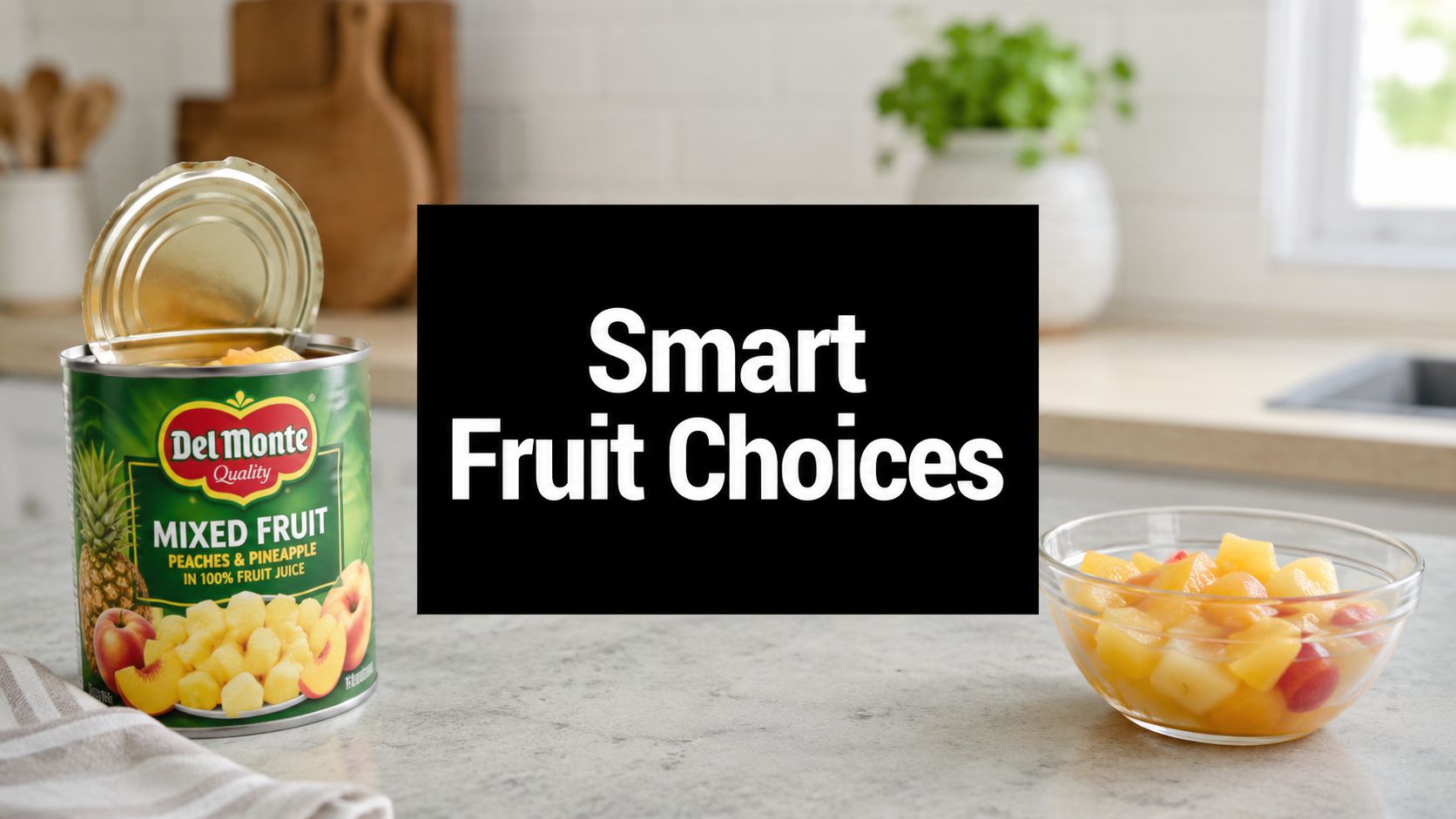
Canned fruit is often assumed to be a backup option. The evidence says that isn't always true. A Michigan State University analysis found canned fruits and vegetables are “on par nutritionally with fresh and frozen, and in some cases even better” when compared across practical nutrition, cost, and safety considerations, as summarized in this American Journal of Lifestyle Medicine coverage.
That surprises a lot of parents, especially if canned peaches or pineapple bring to mind sticky syrup and ultra-sweet fruit cups. But the answer to are canned fruits healthy is simpler than the internet often makes it sound. Some canned fruit is a smart pantry staple. Some is closer to dessert. The difference usually comes down to what the fruit is packed in and how you use it.
If you want fruit that lasts, saves prep time, and can turn into fast snacks your family will enjoy, canned fruit deserves a spot in the conversation. It can help on rushed school mornings, late work nights, and those moments when the fruit bowl is empty. It can also work surprisingly well in warm air fryer snacks, which is where canned fruit becomes much more interesting than “just open the can and eat it.”
The Truth About Canned Fruit in Your Pantry
Fresh fruit gets the health halo. Canned fruit gets the side-eye. That split isn't fully deserved.
Canned fruit can be a practical, healthy choice for busy families because it solves real-life problems. It doesn't spoil in two days. It doesn't need washing, peeling, or chopping. And when you choose the right can, you're still getting fruit, not a fake version of it.
Parents often get stuck on one confusing question. If canned fruit lasts so long, doesn't that mean it must be stripped of nutrients? Not necessarily. Preservation and nutrition aren't opposites. Food can be shelf-stable and still useful to your body.
Think of canned fruit like pre-cut vegetables from the produce section. It's still food. The convenience doesn't automatically cancel out the nutrition.
What matters most is the form it takes in the can:
- Fruit in water is usually the simplest option.
- Fruit in 100% juice can also fit well into a healthy diet.
- Fruit in syrup needs a closer look because the packing liquid can add a lot of sweetness you didn't ask for.
Canned fruit isn't automatically healthy or unhealthy. It's a category, not a verdict.
If you've ever skipped buying fresh berries or peaches because you knew they'd go bad before anyone ate them, canned fruit can fill that gap. It gives you a pantry safety net. That matters for students, working parents, and anyone trying to get more fruit on the table without adding more work.
For more kitchen-friendly snack inspiration beyond this guide, browse the site's air fryer snack blog collection.
The Nutritional Reality of Canned Fruit
Some canned fruit holds up well nutritionally. Some loses points because of what gets added around the fruit. That's the cleanest way to look at it.
What canned fruit still brings to the table
Fruit that is harvested ripe and packed quickly can still provide useful nutrients. A practical overview from Yazio notes that canned fruit can be nutritionally comparable to fresh fruit, especially when it's packed in water or 100% juice, while still delivering nutrients such as vitamin C, potassium, and folate in many products. The same overview also makes the main point busy shoppers need to know: the biggest issue is often not the fruit itself, but the sweetened liquid around it, as explained in their canned fruit nutrition guide.
That lines up with how many families eat. Convenience matters. If fruit is easy to store and ready to use, people are more likely to eat it.
Practical rule: The healthiest canned fruit usually has a short ingredient list and no sugary syrup.
A peer-reviewed study using U.S. dietary data found that people who frequently consumed canned foods had “higher nutrient intakes and healthier eating habits,” including higher intakes of 17 essential nutrients such as potassium, calcium, and fiber, according to the study published in Nutrients. That doesn't mean every can is a health food. It does push back on the myth that canned automatically means poor quality.
Where canned fruit can go off track
The biggest nutritional trap is added sugar from syrup. Fruit packed in heavy syrup can act more like dessert than everyday fruit. A peach half is one thing. A peach half soaking in sugary liquid is another.
Here are the main pros and cons parents should keep in mind:
- Good news: Canned fruit is ready to eat, easy to store, and often easier to keep on hand than fresh fruit.
- Watch this: Heat can reduce some heat-sensitive nutrients.
- Big decision point: Syrup-packed fruit adds sweetness that changes the overall nutrition picture.
- Check the can: Some shoppers also prefer cans labeled BPA-free when available.
A simple grocery-store mindset helps. You're not asking, “Is canned fruit perfect?” You're asking, “Is this can a smart choice for my family this week?” Often, the answer is yes.
Canned vs Fresh vs Frozen Fruit Compared
Fresh, frozen, and canned fruit are less like a ranking and more like three tools in the same drawer. Each one does a different job well. The smartest choice is the one your family will eat before it goes bad.

A practical side by side view
| Form | Best for | Main strength | Main drawback |
|---|---|---|---|
| Fresh | Lunchboxes, fruit trays, grab-and-go snacks | Crisp texture and no packing liquid to sort through | Spoils fastest and quality changes with season |
| Frozen | Smoothies, oatmeal, baking, batch prep | Picked and frozen quickly, easy to portion | Texture softens after thawing |
| Canned | Pantry backup, quick snacks, fast dessert shortcuts, air fryer add-ins | Ready right away, long shelf life, little waste | Quality depends on the packing liquid and added ingredients |
Nutrition is only part of the comparison. Real-life usefulness matters too.
Fresh fruit usually gives you the best texture for eating out of hand. A fresh apple or bunch of grapes is hard to beat in a lunchbox. The trade-off is timing. Fresh fruit asks you to use it soon, and busy weeks do not always cooperate.
Frozen fruit works well when texture is less important than convenience. It blends easily into smoothies, cooks down nicely for sauces, and waits patiently in the freezer. If your child loves warm fruit over yogurt or oats, frozen berries often fit that job better than fresh.
Canned fruit fills a different gap. It works like a pantry safety net. You do not have to wash, peel, slice, or thaw it, which matters on nights when everyone is hungry now. It also creates less waste than buying fresh fruit and discovering it in the crisper a week too late.
What changes the most between the three
The biggest differences are usually shelf life, texture, and what gets added during packing.
Fresh fruit has no packing liquid, but it can lose quality as it sits in your kitchen. Frozen fruit keeps well, though it often turns softer after thawing. Canned fruit stays stable the longest, but the can matters. Fruit packed in water or 100% juice is much closer to an everyday fruit choice. Fruit in heavy syrup is sweeter in a way that works more like a dessert topping. Syrup changes the picture the same way pouring soda over fruit would change the picture.
Which one should you buy
Use the form that matches the job:
- Choose fresh for crunchy snacks, lunchboxes, and fruit you plan to eat within a few days.
- Choose frozen for smoothies, warm breakfasts, baking, and recipes where soft texture is fine.
- Choose canned for quick sides, pantry backup, and fast snack ideas you can turn into something fun, including air fryer fruit bites or warm cinnamon fruit cups.
A healthy kitchen often uses all three. Fresh handles the “eat it today” moments. Frozen covers the “keep some on hand” jobs. Canned helps on the “I need fruit in 30 seconds” days.
For a busy parent, that last one can make the difference between serving fruit and skipping it.
How to Choose Healthy Canned Fruit at the Store
The smartest canned-fruit habit takes about five seconds. Read the words under the fruit name.

Start with the packing liquid
The American Heart Association recommends choosing canned fruit packed in water or 100% juice, and notes that heavy syrup can significantly increase free-sugar intake, as explained in their guide to healthy fresh, frozen, or canned fruit and vegetable choices.
That one label detail tells you a lot. Think of the syrup like what happens when fruit gets a sugary bath. Water lets the fruit stay fruit. Juice keeps it closer to fruit. Heavy syrup can push it toward dessert, a bit like turning plain sparkling water into soda.
A quick store checklist
Use this in the aisle:
- Look for “packed in water” first. That's usually the cleanest pick.
- “Packed in 100% juice” is also a strong option. It can work well if water-packed fruit isn't available.
- Pause on “light syrup” and “heavy syrup.” Those products may add sweetness you don't need.
- Scan the ingredient list. Fewer ingredients usually means less guesswork.
- Choose BPA-free cans if that matters to you. Many brands now highlight it on the label.
- Drain or rinse syrup-packed fruit if it's the only option. It won't make it identical to fruit in water, but it can help.
Best choices for different uses
- For lunchboxes: Mandarin oranges or pears in water or juice.
- For snacks: Pineapple chunks or peach slices with no syrup.
- For cooking: Unsweetened applesauce or canned fruit with minimal ingredients.
If your store brand and name brand both offer fruit in water, don't overthink it. Pick the one that fits your budget and move on. Healthy eating gets easier when the decision is simple enough to repeat.
Easy Air Fryer Snacks with Canned Fruit
Canned fruit becomes much more appealing when you warm it up, crisp the edges a little, and add simple spices. As a result, pantry fruit stops feeling like a compromise.
Before you start, drain the fruit well. If it's packed in syrup, rinse it briefly and pat it dry. That small step helps the fruit caramelize instead of steam.
Cinnamon pineapple bites
Use canned pineapple rings or chunks packed in water or juice. Drain well, sprinkle with cinnamon, and air fry until the edges turn lightly golden.
Serve them plain, with yogurt, or tucked into a small tortilla with a spoonful of ricotta. The result tastes sweet and warm without needing much else.
Warm peach halves with oats
Canned peach halves work beautifully in the air fryer because they're already soft and evenly cut. Pat them dry, place them cut-side up, and add a pinch of cinnamon plus a small spoonful of oats.
Air fry until the tops look toasty. They come out tasting like the shortcut version of peach crisp.
If canned fruit feels boring straight from the can, heat changes everything. Warm fruit reads more like a snack and less like a pantry emergency.
Pear and nut butter melts
Take canned pear halves packed in juice or water, drain them very well, and air fry briefly. Add a small spoonful of nut butter after cooking and finish with chopped nuts or seeds if you like.
This one works especially well for older kids and adults because it feels substantial. It's also a smart after-school option when you need something fast but not ultra-sweet.
If you're new to air fryer snack prep and want another easy starter recipe, this simple bagel in the air fryer guide is useful for getting comfortable with timing and texture.
More easy ways to use canned fruit
Not everything needs to go in the air fryer every time. Healthy canned fruit also works well in:
- Yogurt bowls with cinnamon and nuts
- Oatmeal stirred in at the end
- Smoothies when you want sweetness without extra prep
- Cottage cheese bowls with drained peaches or pears
The key is to treat canned fruit like an ingredient, not just a side dish.
Common Questions About Canned Fruit
Is BPA still a major concern
Some shoppers still watch for BPA in can linings, and that's reasonable. If you want to limit that concern, choose products labeled BPA-free when you can. If a brand doesn't say, many parents rotate among fresh, frozen, jarred, and canned fruit rather than relying on one format all the time.
How should I store canned fruit after opening
Once you open the can, move leftovers into a covered container and refrigerate them. Don't keep the fruit sitting in the opened can. A glass or food-safe storage container is the easier choice for taste and storage.
Can I use the leftover liquid
It depends on the liquid. If the fruit was packed in 100% juice, you can use some of that liquid in a smoothie or oatmeal if you want. If it's syrup, it's usually better to discard it because that's where much of the extra sweetness sits.
For more recipe guidance and to learn about the cooks behind the content, visit the author page.
If you want simple snack ideas that fit real life, airfryersnackideas.com shares practical air fryer recipes, quick how-tos, and easy inspiration for turning pantry staples into snacks you'll want to make again.
