


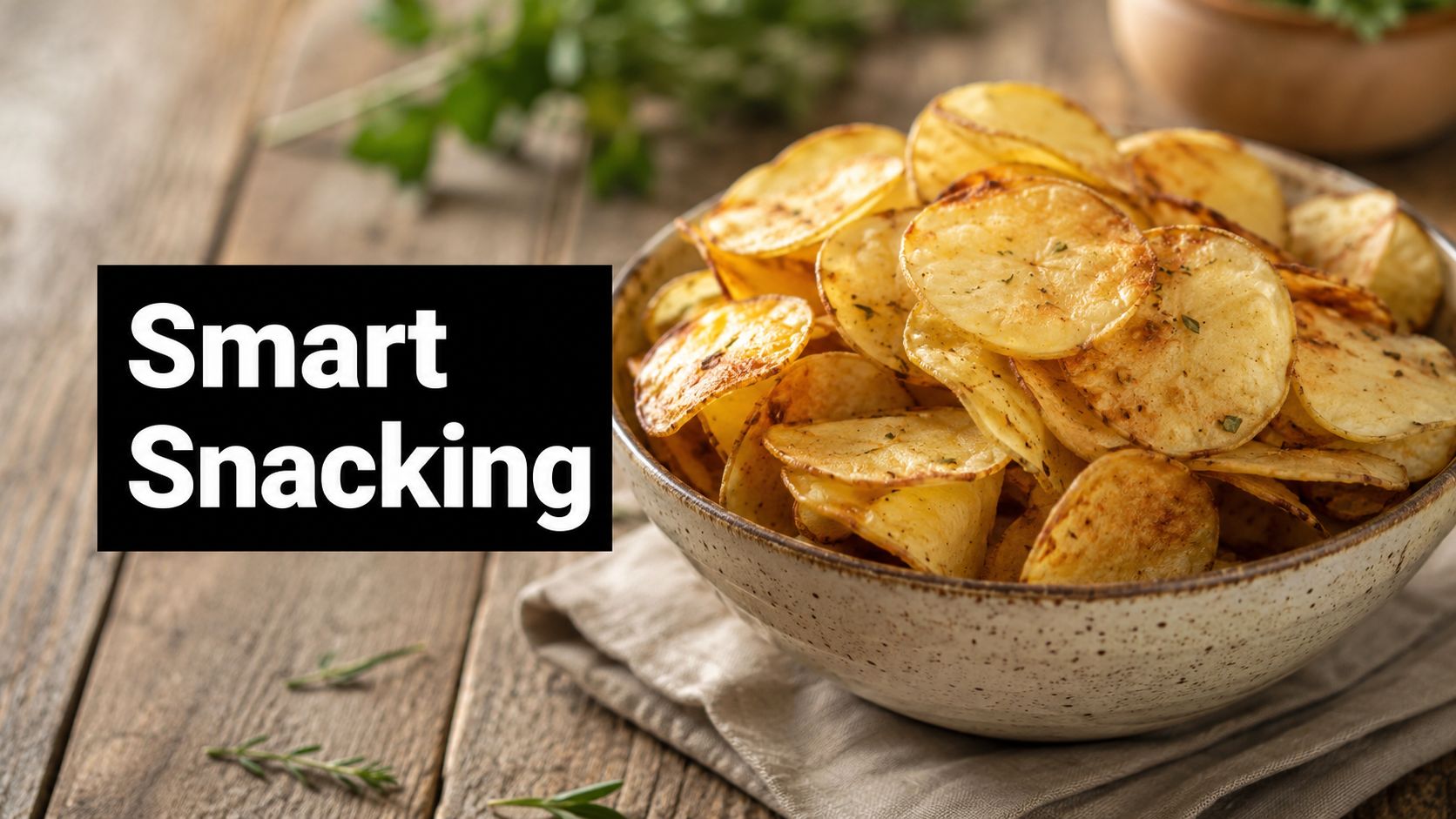
You're probably doing what most snack shoppers do. You grab one bag, flip it over, compare it to another, spot the word baked, and feel like you've found the responsible option without giving up chips.
That instinct isn't wrong. It's just incomplete.
If you're asking whether baked chips are healthy, the most honest answer is this: they're usually healthier than fried chips, but they're not automatically a healthy food. I think of them as a bridge snack. They can move you in a better direction when life is busy, cravings hit, or you need something easy. But if your real goal is a smarter everyday snack, homemade air-fryer chips are where things get much better.
The Baked Chip Dilemma in the Snack Aisle
For many, the choice isn't between kale and chips. They're choosing between one bag of chips and another bag of chips. That matters, because nutrition advice often gets too idealistic for real life.
In that real-world context, baked chips make sense. They promise a lighter option, a little less guilt, and a familiar crunch. The confusion starts when “better than fried” becomes “healthy enough to eat without thinking.”
Why chips still sit in the moderation category
A 2024 peer-reviewed review of potato and corn chips noted that potato chips are typically much higher in fat, with reported fat content ranging from 28.57% to 34.58%. The paper also concluded that the high caloric density and saturated-fat levels in these snacks can raise concerns for obesity and cardiovascular disease, and it explicitly recommended moderation and healthier alternatives such as baked chips or vegetable crisps.
That's the bigger frame. Even when snack brands improve the method, they're still working inside the same category: salty, crunchy, processed starch snacks designed to be easy to keep eating.
Chips can be a reasonable choice sometimes. They just work best when you treat them like a snack with limits, not a wellness food.
Why the label creates so much confusion
The word baked sounds clean. It sounds close to homemade. It sounds like someone removed the “bad part.”
Sometimes that's partly true. But baked chips don't suddenly become vegetables, legumes, or a balanced snack. They're often a step up, not a final destination.
That's why I like the bridge-snack mindset. It removes the all-or-nothing thinking that makes healthy eating harder than it needs to be. If fried chips are your default, baked chips can be a smart upgrade. If baked chips are your default, you can still improve from there.
A practical snack strategy doesn't require perfection. It requires honesty about trade-offs, and chips come with them every time.
Fried vs Baked Chips A Nutritional Showdown
The aisle test is simple. You pick up the baked bag expecting a big nutritional upgrade, flip it over, and realize the difference is real but smaller than the front of the package suggests.

What the label comparison shows
According to this nutrition summary for Lay's Baked Loaded Baked Potato Chips, the baked version contains 120 calories, 3 g of fat, 22 g of carbohydrates, 1 g of fiber, 2 g of protein, and 200 mg of sodium per serving. The same source lists regular Lay's chips at 160 calories, 10 g of fat, 15 g of carbohydrates, and 170 mg of sodium per similar serving.
Here's the quick read:
| Type | Calories | Fat | Carbs | Sodium |
|---|---|---|---|---|
| Baked Lay's | 120 | 3 g | 22 g | 200 mg |
| Regular Lay's | 160 | 10 g | 15 g | 170 mg |
The clear win is fat. The baked version also comes in lower on calories. If someone eats chips a few times a week, that swap can reduce the nutritional cost of the habit without demanding a full lifestyle overhaul.
That matters in real life. A better option you will buy again beats a perfect option you never touch.
Where baked chips help
Baked chips usually drop the oil load, and the label reflects that. For people trying to cut back on fried foods, this is a practical middle ground. Crunch is still there, the snack still feels familiar, and the numbers usually improve where fried chips are weakest.
That is why baked chips make sense as a bridge snack. They can move you in a better direction while leaving room for another upgrade later.
Where the improvement stops
The trade-off is that lower fat does not turn chips into a filling snack. In this example, fiber stays low at 1 g and protein stays low at 2 g per serving. Sodium is still in the same general range, and the carbs are higher in the baked version.
That combination matters. Snacks low in fiber and protein tend to be easy to overeat, especially if you are hungry and eating straight from the bag.
Bottom line: Baked chips are often a better choice than fried chips, especially for calories and fat. They still sit in the processed snack category, so the upgrade is real, just limited.
My practical take is simple. If fried chips are your baseline, baked chips are a smart step up. If you want a snack with better staying power and more control over ingredients, baked chips are not the finish line. They are the middle step.
The Health Halo How Baked Chips Can Trick You

The biggest problem with baked chips usually isn't the bag itself. It's the story people tell themselves once they see the word baked.
That story goes something like this: these are the healthy chips, so I don't need to think as much about portion size, what I pair them with, or how often I eat them. That's the health halo effect in plain English. The packaging suggests virtue, and people relax their guard.
What the health halo looks like in real life
It often shows up in familiar ways:
- Eating from the bag: Portion awareness disappears fast when chips feel lighter or safer.
- Skipping a more balanced snack: A bag of baked chips takes the place of something that would have offered more staying power.
- Ignoring what's missing: People focus on “not fried” and overlook the fact that many baked chips still don't offer much fiber or protein.
- Treating them like a free pass: The food becomes an everyday default instead of an occasional convenience.
None of that means baked chips are bad. It means context matters. A moderate portion alongside a meal is one thing. Standing at the counter and absentmindedly finishing half a bag is something else.
The word healthy needs a little precision
The question “baked chips healthy” often represents an incomplete inquiry. A better one is: healthy compared to what, and eaten how?
Compared to standard fried chips, baked chips can be the smarter pick. Eaten as an unlimited snack with nothing else, they're much less impressive.
A “better-for-you” snack still stops being helpful when it turns into a large, mindless portion.
I've found one simple rule works well here. Don't ask whether the front of the bag sounds healthy. Ask whether the snack will satisfy you. If the answer is no, the label may be doing more work than the food.
Navigating the Labels Healthier Store-Bought Options
If you buy chips at the store, don't start with the front of the bag. Start with the nutrition panel and ingredient list. That's where the useful information lives.

A practical benchmark comes from Good Housekeeping's summary of dietitians' screening criteria for a healthier chip. The guide says a serving should generally stay at no more than 200 calories, 2 g saturated fat, and 300 mg sodium, while also favoring meaningful fiber and protein content for satiety. It also notes that many baked chips fit the calorie and fat criteria but fall short on sodium and fullness factors.
The shopping checklist I'd actually use
Use these questions when you compare bags:
- Calories first: If the serving fits under the dietitian benchmark, that's a workable starting point.
- Check saturated fat, not just total fat: “Baked” may lower fat, but you still want the saturated fat number in a reasonable range.
- Watch sodium closely: Many shoppers miss this because they're focused on calories.
- Look for fiber and protein: If both are low, the chips are less likely to hold you over.
- Read the serving size with some skepticism: If the portion looks tiny compared with how you eat, factor that in mentally.
What usually works better than standard baked potato chips
If you want a stronger store-bought option, look beyond plain potato-based products. Chips made from beans, lentils, or whole grains often make more sense because they have a better chance of bringing some substance to the snack.
That doesn't mean every alternative chip is automatically healthy. It just means the category opens up more opportunities to find products with a better balance of crunch and satiety.
For more home-snack ideas and recipe-style inspiration, the Air Fryer Snack Ideas blog category is one place to browse options built around air-fryer snacks rather than standard packaged chips.
Store rule: If a baked chip clears the calorie, saturated fat, and sodium screen but still leaves you hungry, it's a convenience food, not a complete snack.
A smarter way to eat store-bought chips
One of the easiest upgrades has nothing to do with the chip itself. Pair it.
Try baked chips with a protein-rich dip, or eat them alongside a meal that includes vegetables and a protein source. That simple move can make a processed snack fit better into a balanced day. It also helps stop the endless hand-to-bag cycle that chips are famous for.
The Ultimate Upgrade Homemade Air Fryer Chips
Store-bought baked chips can help, but homemade air-fryer chips give you something packaged snacks never can. Control.
You choose the potato or vegetable. You decide how much oil to use, how heavily to salt them, and what seasonings go on top. That changes the whole equation.

Why the air fryer is such a useful middle ground
The air fryer hits a sweet spot between oven baking and deep frying. It gives you crisp edges and a chip-like texture without turning snack prep into a project with a pot of oil.
For busy people, that matters. Homemade snacks only work if they're convenient enough to repeat.
A simple base method for potato chips
You don't need a complicated recipe. You need a repeatable process.
- Slice the potatoes thinly and evenly. A mandoline helps, but a careful knife works.
- Soak briefly if you want extra crispness. Then dry the slices very well.
- Use a light coating of oil. You're aiming for coverage, not a heavy gloss.
- Season lightly before cooking. Salt can always be adjusted later.
- Cook in a single layer when possible. Overcrowding makes steaming more likely than crisping.
- Shake or flip partway through. Air fryers cook unevenly if you let slices sit untouched.
- Let the chips cool for a minute or two. That's often when they finish crisping.
A lot of air-fryer cooking gets easier once you understand this pattern. Slice thin, dry well, use minimal oil, avoid crowding, and give the food room to crisp.
Flavor ideas that don't rely on more salt
If you want homemade chips to feel exciting, seasoning matters more than people think.
- Classic savory: Sea salt, black pepper, garlic powder
- Smoky: Smoked paprika and onion powder
- Tangy: A little vinegar powder or a squeeze of citrus after cooking
- Herby: Dried dill or rosemary
- Warm spice: Chili powder or cumin
You can apply the same approach to more than potatoes. Sweet potato, zucchini, kale, and apple slices all work with air frying, though each behaves differently. Zucchini and kale need more moisture awareness. Sweet potato browns faster. Apple chips benefit from patience and a gentler approach.
What makes homemade chips feel more satisfying
The hidden advantage of homemade chips isn't only nutrition. It's that you naturally eat them more intentionally.
You've made them yourself. You're more likely to portion them onto a plate, pair them with something useful, and treat them like food instead of background snacking. That shift matters more than is commonly understood.
If you're new to air fryers and want another easy starter recipe to build confidence, this bagel in air fryer guide is a simple example of how quickly the appliance can turn basic ingredients into a snack or meal component.
Homemade air-fryer chips aren't “healthy” because they're trendy. They're healthier because you control the variables that packaged snacks hide.
That's why I see baked chips as the bridge, not the finish line. They can help you move away from fried snacks. The air fryer helps you move toward snacks that are still crispy and fun, but much more under your control.
The Smart Snacker's Final Verdict
So, are baked chips healthy?
Healthy-ish is the honest answer. They're often a better swap than fried chips, especially if your current habit is regular potato chips. But they still sit in the processed snack lane, and they still work best with portion awareness.
The easiest way to think about it is this:
- Good: fried chips when you want them and move on
- Better: baked chips when you want an easier upgrade
- Best: homemade air-fryer chips when you want the most control over ingredients, texture, and seasoning
That middle option matters. A bridge snack has value. It helps people improve without pretending they have to become perfect overnight.
If you want a healthier relationship with chips, focus less on finding the one magical bag and more on building a smarter pattern. Choose baked over fried when it makes sense. Pair chips with more satisfying foods. Use your air fryer when you have a few extra minutes. Repeat the habits you can live with.
You can also learn more about the people behind the recipes and guides at Air Fryer Snack Ideas on the authors page.
If you want more practical snack ideas that fit real schedules, explore airfryersnackideas.com for air-fryer recipes, chip-style snacks, and simple ways to make homemade options easier to stick with.
