


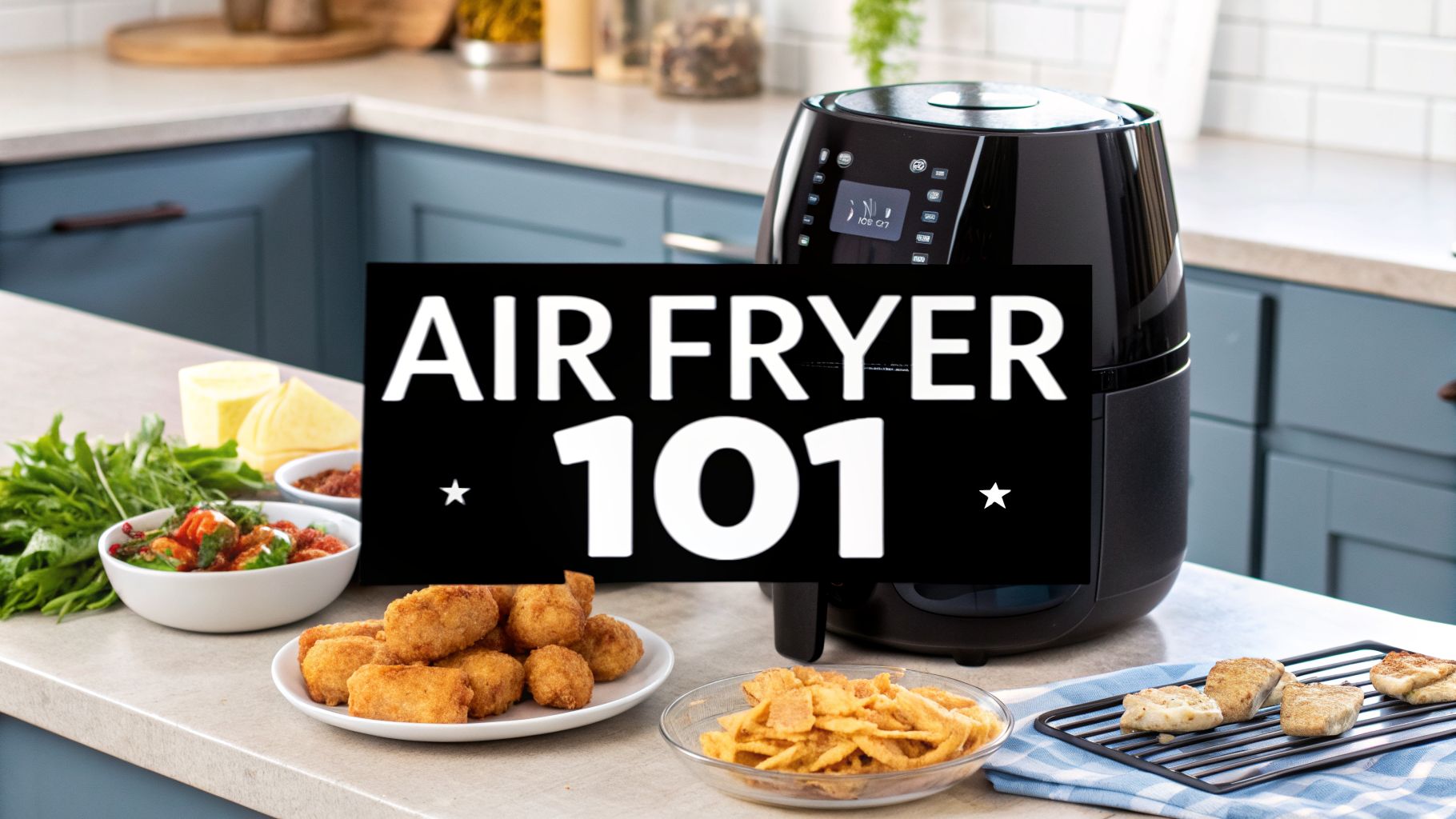
So, you finally did it. You brought home that shiny new air fryer, and it's sitting on your counter, full of promise. Before you dive into making crispy snacks, let's get it set up right. The key is to remove all the packaging, give the basket a good wash, find a safe spot for it, and do a quick test run. Taking a few minutes for these simple steps ensures your machine is safe, clean, and ready to deliver fantastic food from the very first cook.
Your First Steps With a New Air Fryer
The excitement around a new kitchen gadget is always fun, but the air fryer is one of the few that actually delivers on its promises. This isn't just another appliance destined to gather dust; it’s your new best friend for getting that perfect crunch without all the oil or the long wait for your oven to heat up. It's no wonder the global air fryer market, valued at US$1,103.4 million in 2025, is expected to more than double to US$2,343.9 million by 2036. If you're curious about the numbers behind the craze, you can explore the market research from Transparency Market Research.

Before you can get to the good stuff, though, we need to do a little prep. Think of it as a pre-flight check to guarantee a smooth and delicious journey ahead.
To make things even easier, here's a quick cheat sheet I put together to walk you through the essentials.
Quick Start Cheat Sheet for Your First Cook
| Action | Why It Matters | My Personal Tip |
|---|---|---|
| Full Unboxing | Removes all packaging, tape, and silica packets that could melt or cause fumes. | Check inside the drawer and under the crisper plate. I once found a cardboard insert hiding in there a week later! |
| Wash Basket & Drawer | Cleans off any factory dust or residue for food safety and better taste. | Use regular dish soap and a non-abrasive sponge to protect the non-stick coating. |
| Initial Test Run | Burns off the protective coating on the heating element, which can have a plastic smell. | Crank it to 400°F (200°C) for 5-10 minutes. Open a window—the smell is normal but not pleasant. |
| Find a Safe Spot | Ensures proper ventilation, preventing overheating and potential damage to your counters or cabinets. | The back of the unit gets hottest. Make sure there are at least 5 inches of clearance all around. |
Following these simple steps right out of the box sets you up for success and takes all the guesswork out of getting started.
Unboxing and Initial Prep
First things first, let's get that machine out of its box. Be thorough here. Pull out every piece of cardboard, plastic wrap, and styrofoam. Manufacturers love to tape the drawer shut and hide little silica gel packets or cardboard inserts inside the basket, so give it a complete once-over.
Once you’re sure it's free of all packaging, take the basket and drawer to the sink. A quick wash with warm, soapy water will get rid of any residues left over from the manufacturing process. Make sure to dry everything completely before putting it back together. This is a non-negotiable step for food safety and clean-tasting results.
The All-Important Test Run
You might notice a faint plastic or chemical smell the first time you turn on your air fryer. Don't panic—this is totally normal. It's just the protective coating on the new heating element burning off, and you definitely don't want that flavor infused into your first batch of fries.
The fix is easy: just run an empty cycle. Set the air fryer to its highest temperature, usually 400°F (200°C), and let it run for about 5-10 minutes. The smell will dissipate, and it won't come back.
Pro Tip: I always recommend doing this first test run near an open window or with your kitchen's exhaust fan on high. It airs out the smell in minutes and is a small, one-time inconvenience for perfectly-flavored food later.
Safe Placement Is Not Optional
This is the step people often skip, but it’s critical for both safety and performance. Air fryers cook by circulating incredibly hot air, and they need room to breathe. Most have an exhaust vent on the back that pushes out a surprising amount of heat.
You absolutely must leave a few inches of clearance around the entire appliance. I learned this the hard way when I pushed my first air fryer too close to the wall and nearly warped the finish on my upper cabinets.
Find a stable, heat-resistant spot on your counter that allows for at least 5 inches of open space on all sides, especially behind it. Avoid tucking it directly under low-hanging cabinets. Good airflow isn't just a safety measure; it helps the machine run efficiently, giving you that crispy, even cook you're looking for.
Ready to get cooking? Head over to our collection of delicious air fryer snack ideas to get some inspiration for your first meal.
Mastering Temperature, Time, and Preheating
Alright, you’ve unboxed your air fryer. Now for the fun part—actually cooking with it. Getting that perfect, crispy result every single time really comes down to three things: temperature, time, and preheating. Nail this trio, and you'll leave soggy snacks in the past for good. This is the core skill that turns you from an air fryer owner into an air fryer pro.
So, let's talk about preheating. Do you really need to do it? Absolutely. I’ve seen too many people skip this and wonder why their food is lackluster. Think of it like trying to get a good sear on a steak by throwing it into a cold pan—it just steams and turns grey. You need that initial blast of heat.
A quick 3-5 minute preheat at your target temperature is all it takes. This creates a super-hot environment that immediately starts crisping the outside of your food, a process food nerds call the Maillard reaction. It’s the secret to that signature crunch we're all chasing.
Decoding Temperature Zones
Your air fryer's temperature dial isn't just a random set of numbers; it's a tool for getting different results from different foods. I find it helpful to think in terms of "heat zones" to make choosing the right setting almost second nature.
Low Heat (300-350°F / 150-175°C): This is your gentle-touch zone. It's fantastic for reheating things without destroying them, like bringing leftover pizza back to life so the cheese is perfectly melted but the crust doesn't turn into a brick. This range is also great for more delicate items, like warming a croissant or even baking a small batch of soft cookies.
Medium-High Heat (360-380°F / 180-190°C): This is your everyday workhorse setting. Most of what you cook will probably fall into this range. I'm talking about things like chicken nuggets, fresh-cut potato wedges, and Brussels sprouts. It's the perfect balance—hot enough to cook everything through and get a nice crisp, but not so intense that it burns the outside before the inside is ready. For instance, my go-to for perfect air fryer green beans is 375°F for 10 minutes.
High Heat (390-400°F / 195-200°C): When you need a serious, fast crisp, you crank it up. This is the setting for most frozen snacks that need to go from rock-solid to shatteringly crisp in minutes—think spring rolls, tater tots, or mozzarella sticks. It’s also what I use to get an amazing crust on a steak in less than 10 minutes.
If there’s one piece of advice I can give you, it’s this: When adapting a regular oven recipe, always start by reducing the temperature by about 25°F (or 15°C) and cutting the cooking time by 20%. An air fryer is essentially a small, powerful convection oven; it cooks much faster.
The Give and Take of Time and Temperature
Time and temperature are a team. Higher heat usually means less time, and lower heat means more time. It sounds simple, but knowing how to apply this is what separates good from great.
Let's say you have a thick chicken breast. If you hit it with 400°F heat, the outside will be charred long before the inside is cooked and safe to eat. The better approach is to use a more moderate temperature, like 360°F, for a longer duration. This gives the heat time to work its way to the center for an even, juicy result.
On the flip side, for something thin like asparagus spears or frozen shrimp, you want high heat for just a few minutes. This gets them crisp and tender before they have a chance to overcook and turn rubbery.
A Practical Guide to Time Adjustments
Treat your air fryer’s manual and the instructions on food packaging as starting points, not unbreakable laws. The real world has variables. The size of your basket, how full it is, and whether your food is frozen or thawed will all change the ideal cooking time.
- Frozen vs. Thawed: It's a no-brainer, but it’s worth repeating: frozen food will always need a few extra minutes to cook through compared to thawed.
- The Halfway Check: Make it a habit to pull out the basket and check your food about halfway through the cook time. It's the perfect moment to give everything a good shake for even browning and decide if you need to add or subtract a few minutes.
- Use Your Senses: Your eyes and ears are great cooking tools. When food is sizzling and looks golden brown, it’s probably done. Trust your gut.
The Essential Air Fryer Cooking Workflow
Alright, now that you've got the basics down, let's walk through the actual cooking process. This is the simple, repeatable workflow I use every day to get consistently great results, whether I'm making frozen fries or roasting fresh veggies. It's less about just hitting buttons and more about a simple rhythm that guarantees crispy, delicious snacks.
Once your machine is preheated, the real work begins with prepping your food. Two small steps here are the difference between a soggy letdown and golden-brown perfection: getting your food dry and using just the right amount of oil.
This flow chart nails the three core settings you’ll be juggling every single time you cook.

Getting comfortable with preheating, then dialing in the temperature and time, is the foundation for everything you'll make in your air fryer.
The Secret Weapon Against Sogginess
Moisture is the number one enemy of crispy food. It doesn't matter if it's lingering water from washing vegetables or ice crystals clinging to frozen snacks—that moisture turns to steam, and steamed food is soft food. The fix is incredibly easy: pat everything dry with a paper towel before adding a drop of oil or a pinch of seasoning.
The ability to turn out crispy mozzarella sticks or onion rings in under 15 minutes is why so many people are obsessed with these things. It’s a level of convenience that has catapulted the industry from $899 million in 2022 to a forecasted $1.8 billion by 2032. This simple trick of patting food dry directly feeds into that—it enhances the Maillard reaction for better browning and crisping. You can check out the full air fryer market statistics on news.market.us to see just how fast this trend is growing.
After drying your food, it's time to think about oil. You really don't need much. A light spritz from an oil mister or a quick toss in a teaspoon of oil is plenty. That tiny bit of fat is what helps conduct the heat and gives you that beautiful, even browning. Whatever you do, don't drench your food. That’s a one-way ticket to a greasy basket and a smoky kitchen.
My Go-To Method: For things like potato wedges or chopped veggies, I just pop them in a bowl, add a tiny drizzle of avocado oil, and use my hands to toss everything until it's lightly coated. It’s way more effective than spraying and ensures every single piece gets some love.
Arrange Food for 360-Degree Cooking
With your food prepped, it's time to load the basket. Here’s the golden rule: arrange everything in a single, uncrowded layer. This is probably the biggest mistake I see new users make, and it completely sabotages your results.
Your air fryer is essentially a small, powerful convection oven that works by blasting hot air all around your food. If you stack everything in a big pile, the air can't circulate. You’ll end up with crispy bits on top and a sad, steamy pile underneath.
- For the best results: Always leave a little breathing room between each item.
- If you're cooking a big portion: It's much better to cook in two smaller batches than one overcrowded one. I promise, the extra few minutes are worth it.
This single-layer approach is what ensures every surface of your food gets exposed to that circulating hot air, which is the key to getting a perfectly even, crispy texture all around.
Master the Shake and Flip
The final, crucial step in this workflow is what I call the "mid-cook shake." Because the heating element is at the top of the machine, the food closest to it will brown much faster. To get everything evenly cooked, you have to mix it all up about halfway through.
- For small, loose foods like fries, tater tots, or green beans, just pull the basket out and give it a good, firm shake to toss everything around.
- For larger items like chicken nuggets, fish fillets, or even a bagel, you'll want to use tongs to physically flip each piece over. Our guide to making the perfect air fryer bagel really shows why this flip is so important for an even toast.
When should you shake? It depends on the total cook time. For something quick like Brussels sprouts (which take about 12-15 minutes), I’ll give them a shake around the 7-minute mark. For something that takes longer, like chicken wings (around 25 minutes), I might shake them every 8-10 minutes to help render the fat and get the skin extra crispy.
Once you get the hang of this simple shake-and-flip technique, you're well on your way to becoming an air frying pro.
So, you’ve mastered the basics of your new air fryer. That’s awesome! Now it's time for the fun part—the little tricks and tools that take your cooking from good to "wow, you made this?" These are the tips I’ve picked up over the years that help you get those perfect results every time, without a ton of effort.
One of the first things I tell everyone to get is a pack of perforated parchment paper liners. Honestly, they're a lifesaver. These little pre-cut sheets sit right in the basket, keeping food from sticking while the holes let that hot air do its job. Cleanup becomes a simple wipe-down instead of a scrubbing session. It’s a total game-changer for busy nights.
Smart Accessories That Are Actually Worth It
You'll see a million different air fryer accessories out there, but you really only need a few key items to seriously expand your cooking game. I've tested a bunch, and these are the ones that I use all the time.
- Stacking Racks: If you buy one thing, make it a stacking rack. It literally doubles your cooking space, which is perfect when you're making a big batch of wings or want to dehydrate some apple slices. By lifting a layer of food up, you ensure hot air gets to every single piece for a much more even cook.
- Silicone Molds and Pans: This is where you can get really creative. Small silicone muffin cups are fantastic for making mini frittatas or even lava cakes. I also have a small silicone loaf pan that’s great for cornbread. They’re super flexible, non-stick, and a breeze to clean.
- Oil Mister: It’s a good idea to move away from canned cooking sprays. The propellants in them can slowly eat away at the non-stick coating on your basket. A refillable oil mister is the perfect solution—it gives you a fine, even spray of a high-smoke-point oil (like avocado oil) without any weird chemicals.
To help you decide what's right for you, here’s a quick look at some of the most popular accessories.
Essential Vs Optional Air Fryer Accessories
| Accessory | Best For | Is It Worth It? |
|---|---|---|
| Parchment Liners | Preventing sticking and making cleanup fast. | Absolutely. A must-have for everyday use. |
| Stacking Racks | Cooking in larger batches or preparing two different foods at once. | Highly recommended. It doubles your fryer's capacity. |
| Silicone Molds | Baking small cakes, muffins, frittatas, or bread. | Yes, if you enjoy baking. It opens up a new world of recipes. |
| Grill Pan Insert | Getting authentic sear marks on steaks, burgers, and chicken. | Optional. Great for grill lovers, but not essential. |
| Oil Mister | Lightly and evenly coating food with oil; preserving your basket's coating. | Yes. A smart, long-term investment for any serious user. |
Just grabbing one or two of these can completely change what you're able to create.
Investing in just one or two of these tools can seriously expand your cooking repertoire. For more daily inspiration and unique snack recipes, be sure to explore our other air fryer snack articles.
With the right gear, your air fryer stops being just a snack machine and becomes a true kitchen workhorse.
Advanced Cooking Techniques to Try
Ready to level up your skills? These two techniques are staples in my kitchen for getting amazing textures you just can't get any other way.
First up, the "double fry" method for fries that are genuinely crispy. Start by cooking your fresh-cut potatoes at a lower temp, around 350°F, for about 15 minutes. You just want to get them soft and cooked through. Then, pull them out, let them cool for a minute, and crank the heat to 400°F. Pop them back in for another 5-10 minutes, and they’ll come out perfectly golden and unbelievably crunchy.
The other technique is a must-know for battered foods. The air fryer’s powerful fan is notorious for blowing wet batter all over the place, creating a huge mess. The secret is the "dry-wet-dry" coating method. First, lightly dust your food (chicken tenders and fried pickles are great for this) in flour. Next, dip it in an egg wash or buttermilk batter. Finally, press it firmly into a dry coating like panko or breadcrumbs. This creates a solid crust that stays put, giving you a fantastic crunch without the mess.
The Rise of Healthy Air Fryer Snacking
There's a reason these machines have become so popular. They've completely changed how we think about healthy snacking. Getting that satisfying, deep-fried crunch using just a tiny bit of oil is a huge win for anyone trying to eat better.
This trend is also why the air fryer market has just exploded—it was valued at $1.18 billion in 2024 and is expected to nearly double to $2.24 billion by 2033. It’s all driven by people wanting healthier versions of their favorite foods.
For a perfect example, try making buffalo cauliflower. Just toss the florets with a little bit of hot sauce and seasoning, then air fry them at 400°F for 12-15 minutes, shaking the basket halfway through. You end up slashing the oil you’d use in a deep fryer by over 80% while still getting that addictive, wing-like texture. If you're interested in the business side of this trend, you can review the air fryer market report on skyquestt.com.
Knowing these pro-level tips and grabbing a few smart accessories will help you truly master how to use an air fryer. Before you know it, you'll be making every snack a crispy, delicious success.
Keeping Your Air Fryer Clean and Maintained
Let's be honest: a clean air fryer isn't just for show. When you really get the hang of using your air fryer, you'll find that leftover grease and old food bits can make your food taste off, fill your kitchen with smoke, and even become a fire risk. A quick, consistent cleaning routine is all it takes to keep your machine happy and your snacks crispy for years to come.

The best part? Keeping it spotless isn't a huge chore. If you build a couple of simple habits into your routine, cleanup becomes an afterthought.
The Immediate Post-Cook Wipe-Down
The golden rule of air fryer cleaning is to do it right after you cook, once the machine has cooled down a bit. Don't let grease and crumbs get comfortable—they’re much easier to deal with when they're fresh.
After you’ve dished up your food, unplug the air fryer and wait just a few minutes until the basket is cool enough to touch. Then, just grab a paper towel and wipe out any loose bits and extra oil. This simple, 30-second step is the secret to preventing gunk from building up and makes deep cleaning way less of a headache.
If you just made something extra messy, like saucy barbecue wings, think of this quick wipe as a mandatory part of the process.
How to Properly Deep Clean the Basket
For a real clean, the basket and drawer need a good wash. The first thing you should do is check your manual to see if the parts are dishwasher-safe. So many are these days, and it's a massive time-saver.
If you're hand-washing, either by choice or necessity, here’s my foolproof method:
- Pull out the drawer and fill it with hot, soapy water.
- Pop the basket right back into the drawer to let it soak. I call this the "soak-while-you-eat" trick. By the time dinner is over, the hot water has done most of the heavy lifting.
- Use a non-abrasive sponge or a soft brush to gently scrub off any food that’s still hanging on.
- Rinse it all off and let it air dry completely before putting it back together.
Being gentle is key here. You want to protect that non-stick coating, so stay away from steel wool or any harsh scouring pads that will scratch and ruin the surface.
My Go-To Trick for Stubborn Gunk: For really tough, baked-on messes, make a paste of baking soda and a little water. Apply it to the stubborn spots, let it sit for 15-20 minutes, and then gently scrub with a soft brush. It works like magic without scratching the surface.
Don't Forget the Heating Element
This is the one spot everyone forgets. Over time, grease splatters up onto the heating element, which is what causes that weird smell or smoke on startup. Aim to clean it about once a month.
Make sure your air fryer is unplugged and totally cool. You'll probably need to flip it upside down to get a good look at the heating coil.
Simply take a damp cloth or sponge, maybe with a tiny drop of dish soap, and gently wipe the element and the housing around it. Wipe it again with a clean, damp cloth to get any soap off. The most important part is to make sure it's 100% dry before you plug it in again. This little bit of maintenance keeps your air fryer running safely and efficiently.
Common Air Fryer Questions Answered
So, you've unboxed your air fryer and maybe cooked a few things, but now the real questions are starting to surface. That’s totally normal. Let's walk through some of the most common head-scratchers I hear from people all the time so you can get back to cooking with confidence.
Why Is My Air Fryer Smoking and How Do I Stop It?
Panic mode can set in when smoke starts pouring out of your new appliance, right? But don't worry, the fix is usually pretty simple.
First, take a breath and look at the smoke. If it's just a little bit of white smoke, that's often just steam escaping, especially if you're cooking something with high water content like vegetables. That’s perfectly fine.
However, if you're seeing thick, blue-tinged, or dark smoke, that’s a different story. That's burning grease. This happens a lot with fatty foods like bacon, burgers, or chicken thighs when the drippings fall and sizzle on the hot bottom of the drawer.
- Here's a great trick: Place a slice of bread or a tablespoon of water in the drawer under the basket. This catches the grease and stops it from getting hot enough to smoke. It works like a charm.
- The other big culprit: A dirty air fryer. Leftover grease and food bits from your last meal will burn and smoke the next time you fire it up. A quick wipe-down before you start is always a good idea.
Can I Use Aluminum Foil or Parchment Paper Inside?
Yes, absolutely—and they can be a lifesaver for cleanup. But there’s a huge catch you need to know about.
Whatever you do, never put it in while preheating. I can't stress this enough. The air fryer’s fan is so powerful that it will suck a loose sheet of foil or paper straight into the heating element, which is a serious fire hazard. Always make sure the liner is weighted down by your food before you turn the machine on.
Also, be careful not to cover the entire bottom of the basket. Doing so blocks the airflow—the very thing that makes an air fryer work! Your food will end up soggy and unevenly cooked. The best option is to grab some perforated parchment paper liners made specifically for air fryers. They have holes that let the air circulate perfectly.
My Food Is Not Getting Crispy What Am I Doing Wrong?
This is probably the most common frustration out there, but the good news is that it’s almost always an easy fix. If your food is coming out soggy instead of crispy, one of these three things is likely the problem.
- You're Overcrowding the Basket: This is the #1 mistake. Hot air needs space to circulate and hit your food from all sides. When you pile everything in, you're essentially just steaming it. It's always better to cook in smaller batches for that perfect crunch.
- There's Too Much Moisture: Water is the enemy of crispy. Make sure you pat your food completely dry with a paper towel before it goes in. This goes for washed veggies and especially for frozen foods that might have ice crystals on them.
- You're Using the Wrong Amount of Oil: While we love air fryers for using less oil, you still need a tiny bit to get things golden and crispy. Just a light spritz of a high-smoke-point oil (like avocado or grapeseed) is all it takes. Too much oil will just make things greasy.
How Do I Convert Oven Recipes to My Air Fryer?
Adapting your favorite oven recipes is actually quite simple once you get the hang of the basic formula. Think of your air fryer as a small, super-efficient convection oven—it just cooks things much faster.
A good rule of thumb is to reduce the oven temperature by 25°F (about 15°C) and cut the cooking time by roughly 20%.
So, for example, if a bag of frozen mozzarella sticks says to bake at 400°F for 20 minutes in the oven, you'd start by setting your air fryer to 375°F for about 15-16 minutes. Since every machine heats a little differently, I always check my food about halfway through and give it a shake. This simple formula works great for almost all frozen snacks, veggies, and reheating leftovers.
Ready to put all this knowledge to good use? The best way to become an air fryer pro is to start cooking! At airfryersnackideas.com, we've got tons of simple, tested recipes that are perfect for beginners and seasoned cooks alike. Find your next favorite snack over at https://airfryersnackideas.com.
