


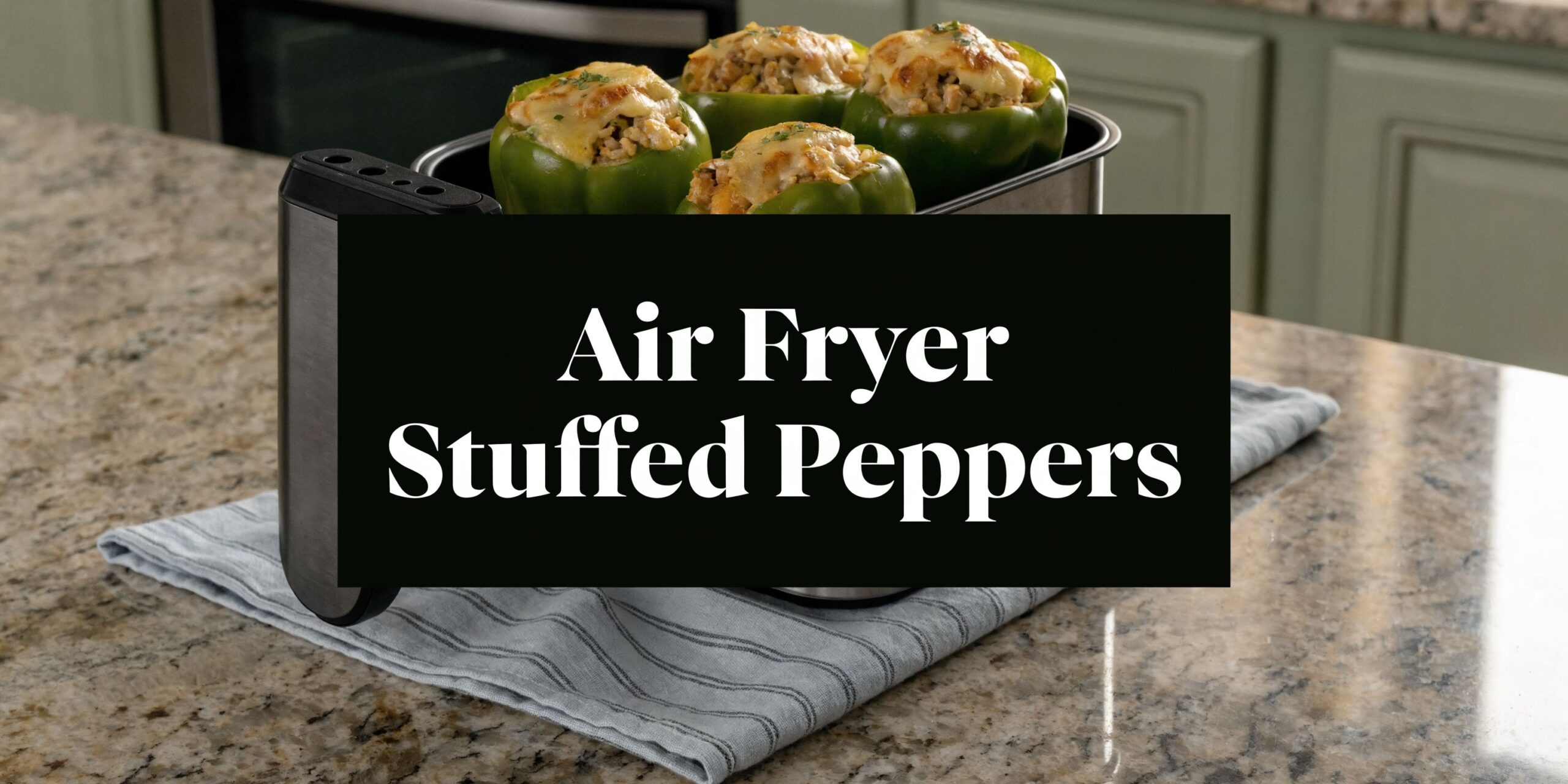
It’s usually the same problem. You want something hot, filling, and homemade, but you don’t want to wait on a slow oven for a meal that still leaves you with extra pans to scrub.
That’s exactly why stuffed bell peppers air fryer style has become such a smart weeknight move. You still get the comfort-food payoff of tender peppers, savory filling, and melted cheese on top. You just get there faster, with better control over texture and a lot less fuss.
Your New Weeknight Hero Air Fryer Stuffed Peppers
At dinnertime, speed matters. So does food that feels like a real meal instead of a compromise.
Air fryer stuffed peppers solve both problems. They typically cook in 25 to 50 minutes total, slashing traditional oven times by up to 50%, thanks to rapid hot air circulation, according to Preppy Kitchen’s air fryer stuffed peppers guide. That makes them a practical option for busy professionals, college students, and anyone trying to get dinner on the table without defaulting to takeout.

Why the air fryer works so well
The best part isn’t just speed. It’s the texture.
A good stuffed pepper should have a tender-crisp shell, not a collapsed, waterlogged one. The filling should be hot and cohesive, not greasy or soupy. The air fryer helps by circulating heat around the peppers so the outside cooks efficiently while the top gets lightly browned.
That changes the whole personality of the dish. Stuffed peppers stop feeling like a Sunday project and start acting like a Tuesday-night staple.
What makes this recipe weeknight-friendly
This method works because it breaks the dish into manageable parts:
- The peppers soften quickly: You can give them a short head start before filling them.
- The filling is flexible: Ground beef, turkey, sausage, beans, rice, quinoa, and leftover grains all work.
- The portions are built in: One or two halves can be a dinner. One half can be a snack or lunch.
Practical rule: If a recipe makes you wait on the oven and overcook the peppers just to heat the center, the air fryer usually does the job better.
Another reason this recipe sticks is that it scales up or down well. You can make a hearty family dinner, or you can make a couple of halves for yourself and call it done. That’s especially useful if you’re cooking in a small apartment kitchen or using a compact air fryer basket.
Gathering Your Core Ingredients and Tools
Stuffed peppers sound like a project meal, but the ingredient list is refreshingly ordinary. If you keep a few basics around, you’re already close.

The peppers matter more than people think
Choose bell peppers that are:
- Similar in size: They’ll cook more evenly.
- Firm with smooth skin: Soft spots tend to turn mushy fast.
- Able to sit steady: Flat-bottomed peppers are easier to arrange upright, though halved peppers are often easier overall.
Color changes the flavor more than the method. Red, yellow, and orange peppers cook sweeter. Green peppers bring a more savory, slightly sharper bite. None is wrong. It depends on whether you want the pepper to blend into the filling or stand out against it.
The classic filling formula
For a dependable base, use familiar parts:
- Ground meat: Beef gives the most classic comfort-food flavor. Turkey is lighter. Sausage adds more seasoning on its own.
- Cooked rice or another grain: This stretches the filling and helps it stay spoonable instead of dense.
- Tomatoes or sauce: A little moisture keeps the filling from drying out.
- Aromatics and seasoning: Onion, garlic, salt, pepper, and a basic spice blend do plenty.
A common setup uses 4 bell peppers with a lean meat filling, which is one reason this recipe feels so accessible. The ingredients are simple, not specialty-store ingredients that get used once and forgotten.
The tools you need
This is not a gadget-heavy recipe.
You only need:
- An air fryer
- A skillet or sauté pan
- A mixing spoon
- A knife and cutting board
- A bowl, if you like mixing the filling off heat
Bell peppers are one of those ingredients that reward small prep decisions. If they’re evenly cut and the filling isn’t wet, the rest is easy.
Good swaps without changing the method
Once you know the base pattern, you can swap ingredients freely.
A few reliable moves:
- Use cooked quinoa instead of rice when you want a nuttier texture.
- Use beans with or instead of meat for a lighter filling.
- Use shredded mozzarella, cheddar, Monterey Jack, or feta depending on the flavor direction.
- Use leftover cooked protein if you want to cut prep and avoid browning meat from scratch.
The method stays the same. What changes is the personality of the pepper.
The Foolproof Method for Perfect Stuffed Peppers
A rushed Tuesday is exactly when this method earns its keep. The peppers cook fast, the filling stays where it belongs, and even a small air fryer can turn out a full batch if you set things up right.

Start by prepping the peppers
For weeknights, halved peppers beat whole ones. They fit the basket better, cook faster, and give you more browned edges. That matters even more in compact air fryers where height is limited and every inch of basket space counts.
Use this order:
- Slice the peppers lengthwise and remove the seeds and membranes.
- Preheat the air fryer to the temperature your recipe calls for.
- Par-cook the empty pepper halves for a few minutes so they get a head start.
That brief pre-cook solves a common problem. The filling is usually hot and ready before the pepper itself has softened, so starting the shells first keeps the final texture even.
Build the filling the right way
Pre-cook the filling. That is the safest shortcut in the whole recipe.
According to What Molly Made’s air fryer stuffed peppers method, pre-cooking the filling is the most reliable way to help it hold its structure. Fillings made with raw rice often cook unevenly because the rice expands as it absorbs liquid, while a cooked filling stays scoopable and settles neatly into the pepper.
Brown the meat first. Cook the onion and garlic until they lose their raw bite. Then stir in cooked rice or another grain, tomatoes or sauce, and your seasoning. The filling should look moist but thick enough to mound on a spoon without running.
If I am using leftovers, I still warm and combine everything in a skillet first. Cold, separate ingredients do not heat at the same rate in the air fryer, and that is how you end up with hot cheese on top and a lukewarm center.
Don’t overfill the peppers
Fill each pepper generously, then stop just short of the top edge.
A level or slightly rounded fill works better than a tall mound. Overstuffed peppers brown too quickly on top and can spill when you move the basket. Underfilled peppers dry out faster because more of the pepper wall stays exposed.
If the filling slides off the spoon, cook it down for another minute or two before stuffing.
Give the basket enough space
Air fryers cook by moving hot air around the food, so spacing matters more here than it does in a baking dish.
Set the peppers in a single layer. A little gap between them helps the sides soften and the tops brown at the same pace. If your basket is small, cook in batches or use two shorter pepper halves instead of trying to force in four large ones. That trade-off is worth it. Crowding saves one round of cooking but usually gives you patchy results.
The same rule shows up in other compact air fryer recipes too, including a quick bagel in the air fryer when you want something simple on the side or an easy snack while the second batch cooks.
Finish with cheese at the end
Add the cheese near the end of cooking, not at the beginning.
Early cheese can harden or darken before the pepper softens and the filling gets fully hot. A late layer melts cleanly, browns lightly, and keeps that soft, stretchy texture desired in stuffed peppers.
A simple method that works
Here is the version I recommend for first-timers and busy nights alike:
- Prep the peppers: Halve them, clean them, and par-cook them briefly.
- Cook the filling first: Brown the meat, mix in the grain and sauce, and keep the texture thick.
- Stuff with restraint: Fill generously, but leave a little room on top.
- Air fry in one layer: Prioritize airflow over squeezing in one more piece.
- Add cheese late: Let it melt in the final stretch.
What works and what doesn’t
A few method choices change the outcome more than people expect.
| Method choice | What works | What tends to go wrong |
|---|---|---|
| Halved peppers | Better fit, faster cooking, more even browning | Less dinner-table drama than whole peppers |
| Whole peppers | Good presentation for a sit-down meal | Harder to fit, slower to soften in the center |
| Thick filling | Holds together, reheats well, easier to portion | Can feel heavy if packed too tightly |
| Loose filling | Softer texture and easier mixing | Can turn watery and spill into the basket |
Control the texture, give the peppers a head start, and leave room for airflow. That is the formula that makes stuffed bell peppers air fryer friendly instead of fussy.
Variations for Every Diet and Craving
Once you’ve got the base method, stuffed peppers become one of the easiest meals to customize. The shell stays the same. The filling can shift with your mood, what’s in the fridge, or what kind of meal you want.
Some nights, stuffed peppers need to feel like dinner. Other nights, they need to behave more like a quick snack. Both versions work.
The easiest way to think about swaps
Instead of hunting for a brand-new recipe every time, use a simple framework:
- Keep the pepper
- Change the grain
- Change the protein
- Match the cheese and seasoning to the flavor style
That’s enough to turn one reliable method into several distinct meals.
Stuffed Pepper Variation Guide
| Variation Type | Rice Swap | Protein Swap | Flavor Notes | Estimated Cook Time |
|---|---|---|---|---|
| Classic comfort style | White or brown rice | Ground beef | Tomato, onion, garlic, melty cheese | Similar to the base method |
| Tex-Mex | Rice or quinoa | Chorizo, beef, or black beans | Taco seasoning, corn, black beans, cilantro | Similar to the base method |
| Mediterranean | Quinoa | Ground chicken, lamb, or chickpeas | Feta, spinach, olives, herbs | Similar to the base method |
| Low-carb | Cauliflower rice | Turkey, beef, or sausage | Lighter filling, still savory and cheesy | Often cooks a bit faster because the filling is less dense |
| Vegetarian | Rice, quinoa, or lentils | Mushrooms, beans, walnuts, or lentils | Earthy, hearty, flexible with cheese or no cheese | Similar to the base method |
| Snack-size mini peppers | Optional, or use a small amount of grain | Beans, turkey, sausage, or cheese-forward filling | Great for quick bites, more edge browning | Faster than full-size peppers |
If you want a full dinner
Go classic or Mediterranean.
The classic version leans richest. Ground beef, rice, tomato, onion, and shredded cheese give you the familiar stuffed-pepper feel people expect. It’s hearty and balanced enough that you can serve it with just a salad or bread.
Mediterranean-style peppers go in a brighter direction. Quinoa, ground chicken or chickpeas, spinach, feta, and olives give you a filling that feels lighter but still substantial. The pepper itself becomes more noticeable here, especially if you use red or orange peppers.
A stuffed pepper dinner works best when the filling has contrast. Rich meat needs acidity or herbs. Lighter proteins need salt, cheese, or olives.
If you want bold flavor with minimal effort
Tex-Mex is hard to beat.
Use seasoned meat or beans, stir in tomatoes with green chiles if you like that profile, and finish with a cheese that melts easily. Black beans and corn fit naturally here. So does cilantro at the end.
The advantage of this variation is that it tolerates leftovers well. Leftover taco meat, cooked rice, and a handful of cheese can turn into stuffed peppers without much planning.
If you want lighter peppers
A low-carb version works well because bell peppers already give you structure and sweetness. You don’t need rice for the dish to feel complete.
Cauliflower rice is a practical swap because it absorbs flavor well and keeps the filling from becoming heavy. It’s especially good with turkey or sausage. Turkey keeps the overall dish lighter. Sausage brings enough seasoning that you can keep the rest of the ingredient list short.
If you want a meatless version that still feels substantial
Vegetarian stuffed peppers need texture. That’s the difference between satisfying and forgettable.
Good combinations include:
- Lentils and mushrooms for a savory, spoonable filling
- Black beans and quinoa for a firmer bite
- Walnuts and mushrooms for a more meaty texture
- Spinach and feta if you want something brighter and less dense
The main caution is moisture. Mushrooms, beans, and tomatoes can release plenty of liquid, so cook the filling down before stuffing.
If you want a quick snack instead of dinner
Mini peppers are the fun option, especially when you don’t want a full-size meal. They’re easy to pick up, easy to portion, and they brown nicely around the edges.
For more small-batch ideas in that spirit, the broader air fryer snack ideas blog category is built around the same kind of practical cooking: quick, compact, and easy to repeat.
For snack-style stuffed peppers, keep the filling simple. A quick bean-and-cheese mix, seasoned turkey, or a spoonful of leftover quinoa filling all work. The goal is speed and contrast. Crisp edges, creamy filling, and enough salt on top to make the pepper taste bigger than it is.
Pro Tips for Storage Freezing and Troubleshooting
A batch of stuffed peppers can save tomorrow’s dinner if you store them the right way. That matters even more with air fryer meals, because the best shortcut is often doing the messy part early and finishing fast later.

Make-ahead moves that save dinner
Cook the filling ahead if weeknights are the problem.
It holds well in the fridge for about 3 days, which gives you time to split the job in two. Brown the meat, cook the rice or other grain, season it properly, and let it cool before storing. Then on the night you want to eat, all you have to do is fill the peppers and air fry.
Freezing works best with fully assembled peppers or pepper halves. Set them on a tray first so they freeze separately, then move them to a container or freezer bag once firm. Thick filling freezes and reheats better than loose filling, so simmer off extra moisture before you stuff anything.
If you use a small basket often, freezing halved peppers instead of whole ones also makes portioning easier. You can pull out one or two pieces for lunch, a snack, or a quick dinner without thawing a full batch.
The small air fryer hack that changes everything
Compact air fryers need a different approach. Tall whole peppers look nice, but they often fit poorly and cook less evenly.
According to In the Kitchen with Momma Mel’s air fryer cheesy stuffed bell peppers page, many home cooks run into space limits with smaller air fryers. Halving peppers lengthwise is the fix I reach for first. They sit lower, use basket space better, and expose more surface area to the hot air, which helps the tops brown faster.
That one adjustment can turn stuffed peppers from a weekend project into a realistic weeknight meal.
For more practical small-batch air fryer ideas, the recipes on Air Fryer Snack Ideas follow the same logic. Shorter cook times, better basket fit, less friction.
In a cramped basket, flatter pepper halves usually beat whole peppers for speed, browning, and even cooking.
Fixing common problems
Most stuffed pepper problems come from moisture, crowding, or timing.
- Soggy bottoms: The filling was too wet, the peppers were packed too close together, or the shells needed a short head start before stuffing.
- Peppers still too firm: The walls were thick, the peppers were large, or they needed a few extra minutes on their own before the filling went in.
- Cheese browned too fast: Add it near the end instead of at the start.
- Filling feels loose or crumbly: Cook it longer in the skillet so it tightens up before it goes into the peppers.
What to adjust first
Change one thing at a time. That makes it much easier to tell what fixed the problem.
- Reduce liquid in the filling. Drain fat, cook off excess sauce, and avoid stuffing with a watery mixture.
- Switch to halved peppers. They fit better in small air fryers and usually cook more evenly.
- Cook in batches. Air needs room to move if you want good texture.
- Use a foil ring or small prop if a pepper tips. A stable pepper keeps the filling in place and cooks more cleanly.
Leftovers also reheat better in the air fryer than in the microwave. The tops stay a little crisp, the filling warms through without going mushy, and the whole thing still tastes like a proper meal instead of a compromise.
Serving Suggestions and Final Thoughts
Stuffed peppers don’t need much on the side. That’s part of their appeal.
For dinner, serve them with something crisp and simple. A green salad with vinaigrette works. So does coleslaw. If you want a heavier plate, add bread for soaking up any juices left on the plate.
For lunch or snack mode, one pepper half often does the job. Add sour cream, hot sauce, chopped parsley, or cilantro if that fits the filling you made. Those small finishers make the whole dish taste fresher without adding more work.
Best ways to serve them
- For a balanced weeknight meal: Pair with salad or slaw.
- For comfort-food dinner energy: Add warm bread.
- For snack plates: Use smaller halves or mini peppers with a dip on the side.
- For meal prep lunches: Pack one or two halves and reheat in the air fryer when you’re ready to eat.
Stuffed bell peppers air fryer style earn a permanent place in the rotation because they do several jobs well. They’re flexible, filling, and easier to scale than a casserole. They also feel homemade in a way a lot of fast dinners don’t.
If you like building easy meals around your air fryer, the main site at airfryersnackideas.com is worth bookmarking for more quick inspiration.
If you want more simple air fryer recipes that fit real life, from quick snacks to low-effort meals, visit airfryersnackideas.com. It’s a handy place to find ideas you can make on a busy weeknight.
