


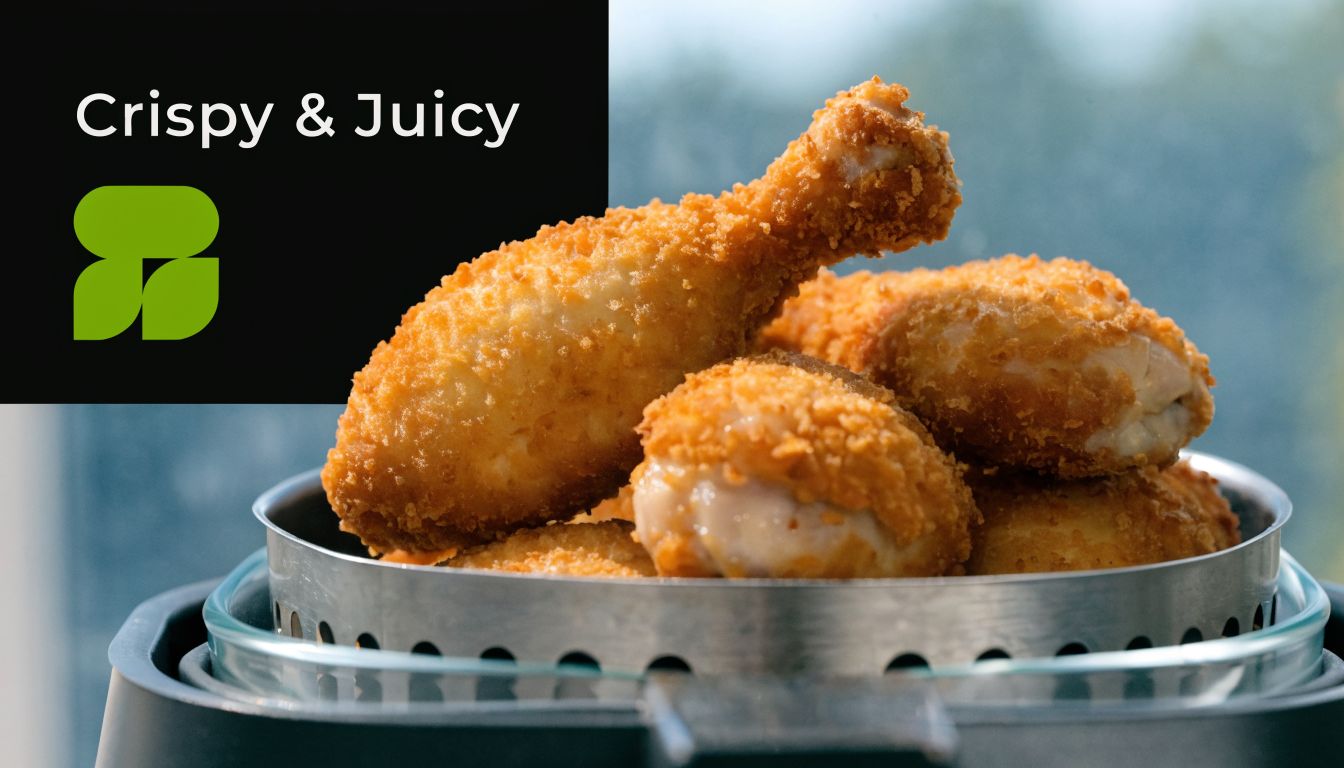
You bought the air fryer for one reason. You wanted crisp food fast, without babysitting a skillet of oil or scrubbing grease off the stovetop later.
Then breaded chicken in air fryer happened. The coating looked pale. Or the crumbs slid off in patches. Or the outside browned before the inside felt done. Most bad results come from a few fixable mistakes, not from the recipe itself. Once you understand how breading sticks, how airflow works, and how thickness changes cook time, the whole thing gets much easier.
The Quest for Crispy Air Fryer Chicken
Breaded chicken in air fryer should be one of the easiest wins for a weeknight meal. It cooks quickly, uses very little oil, and can land somewhere between comfort food and practical meal prep depending on how you season and serve it.
That’s one reason air fryers have become so common for this job. Approximately 29.7% of households now use air fryers to prepare frozen breaded chicken, making it as common as using a microwave, according to CDC survey findings on cooking appliances and food safety. The same CDC data also notes an important problem. Only 38% of food thermometer owners consistently use them to confirm chicken reaches 165°F (74°C).
That second number matters more than people think. Chicken can look browned before it’s safely cooked. It can also dry out while you wait for visual cues that aren’t reliable.
What usually goes wrong
Most disappointing batches trace back to one of these:
- Wet chicken: Moisture prevents flour and crumbs from gripping the surface.
- Weak breading setup: If you skip the flour or rush the coating, the crust won’t hold.
- Crowded basket: The chicken steams instead of crisping.
- No thermometer check: You either pull it too early or leave it in too long.
Breaded chicken doesn’t fail because the air fryer is tricky. It fails because crisping and doneness are two different targets, and you need to manage both.
What actually works
A good method solves three things at once:
- Adhesion so the breading stays on.
- Airflow so the surface crisps instead of going soft.
- Temperature control so the center stays juicy.
That’s the whole game. Once those three pieces are in place, you can swap in chicken breasts, tenders, thighs, panko, gluten-free crumbs, or a lighter coating and still get reliable results. The rest is customization, not guesswork.
Building Your Breading from the Ground Up
A crisp crust starts before the chicken ever hits the basket. The best breaded chicken in air fryer comes from a coating that’s built in layers, not dumped on all at once.

The three-stage method that actually sticks
The most dependable sequence is simple. Dry chicken, flour, egg, crumbs.
A proper three-stage breading process, plus a short rest, can boost crust adhesion by up to 40% and is tied to a 95% success rate for a golden, crispy finish, based on the method described in Averie Cooks' air fryer crispy chicken breast guide.
Use it like this:
Pat the chicken dry
Surface moisture is the enemy. If the chicken feels slick, the flour turns pasty and the coating separates later.Dredge lightly in seasoned flour
This gives the next layer something to cling to. Shake off extra flour. Thick clumps create bare spots later.Dip in egg wash
The egg acts as glue. Coat fully, then let the excess drip off so the crumb layer doesn’t get heavy.Press into crumbs
Don’t just toss the chicken in breadcrumbs. Press the crumbs on firmly so they make full contact.Rest before cooking
Let the breaded pieces sit briefly on a rack or plate. That pause helps the coating settle instead of sliding off when hot air starts moving around it.
Choosing the crust you want
Not all breading behaves the same way. That’s useful, because different coatings create different textures.
- Panko breadcrumbs: Best for an airy, jagged crunch. If you want a cutlet-style finish with lots of texture, start here.
- Regular breadcrumbs: Finer and more even. Good when you want a tighter crust.
- Cracker or cereal crumbs: Great for a rougher homemade texture and strong browning.
- Gluten-free crumbs: A practical swap if needed. The method stays the same. You just need a dry crumb that can hold onto the binder.
- Seasoned flour coating: This gives more of a classic fried-chicken feel, but it needs careful oil spraying to avoid dry patches.
Practical rule: If your breading has large flakes or coarse crumbs, press it on instead of sprinkling. Contact matters more than quantity.
Egg-free options that still hold
If you can’t use egg, you still have options. A thicker binder works better than a watery one. Plain yogurt thinned slightly, or aquafaba, can help the outer crumbs attach. The exact crispness will depend on your crumb choice and how lightly you coat, but the same principles apply. Dry the chicken first, use a light inner layer if needed, and avoid overloading the surface.
For more flavor, season every layer lightly instead of only salting the outside at the end. Well-seasoned flour plus seasoned crumbs beats a bland interior with a salty crust every time.
Mastering Air Fryer Times and Temperatures
The air fryer is a heat-and-airflow machine. That sounds obvious, but it explains almost every good and bad result. If the fryer is hot before the chicken goes in, the coating starts crisping immediately. If pieces sit too close together, hot air can’t move around them and the crust softens.

The two rules that matter most
Preheat first. For fresh breaded chicken breast, the most reliable range is 390°F to 400°F for 10 to 12 minutes, flipping halfway, according to Little Sunny Kitchen's air fryer chicken breast method. That same guidance notes the chicken can go from prep to plate in under 20 minutes.
Leave space around each piece. The basket isn’t an oven tray. It needs open gaps so moving air can crisp the coating on all sides.
If you remember only one thing from this section, remember this. Don’t judge by time alone. Judge by thickness plus internal temperature.
Air Fryer Chicken Cooking Guide from thawed
| Chicken Cut | Approx. Thickness | Total Cook Time | Flip Time |
|---|---|---|---|
| Thin breast cutlets | Thin, even cutlets | 10 to 12 minutes | Halfway through |
| Chicken tenders or strips | Thin pieces | 6 to 8 minutes | Halfway through |
| Boneless thighs | Thicker than tenders | 12 to 14 minutes | Halfway through |
| Drumsticks | Medium thickness | About 10 minutes | Halfway through |
These ranges work best when the pieces are arranged in a single layer and the coating has a light oil spray. If one cutlet is much thicker than the others, pull the smaller pieces first and let the thicker one finish.
How to adjust without guessing
A few simple adjustments keep results consistent:
- For uneven breasts: Slice or pound them to a more even thickness before breading.
- For tenders: Lower time, same attention. They cook fast and go dry fast.
- For thighs: Expect a little more time because they’re thicker and often denser.
- For frozen breaded chicken: Follow package guidance if provided, then confirm with a thermometer.
Flip for color, but check temperature for doneness. Those are separate jobs.
A thermometer removes the biggest source of frustration. Insert it into the thickest part and pull the chicken once it reaches 165°F (74°C). That keeps you from chasing color and accidentally overcooking the center.
Advanced Techniques for Unbeatable Crispiness
The basics will get you good chicken. A few smaller habits turn good into dependable.

Rest the breading before it cooks
Once the chicken is coated, give it a short rest before it goes into the fryer. This is one of those unglamorous steps that pays off every time. The flour, egg, and crumbs settle together and hold more tightly during cooking and flipping.
A wire rack is useful here because it keeps the underside from turning damp while the coating sets.
Oil spray is not optional
People often buy an air fryer to avoid oil altogether. That instinct makes sense, but breaded chicken is one place where a little oil does real work.
Skipping an oil spray can lead to a 40% less crispy crust because there isn’t enough fat to drive the Maillard reaction, and a 6 to 7 minute cook, followed by a flip and a 4 to 5 minute finish, is tied to a 98% success rate for juicy, safe chicken in the method summarized by Pinch Me Good's 15-minute crispy air fryer breaded chicken breast guide.
That doesn’t mean drenching the chicken. It means a light, even coating.
- Spray the basket lightly so the first side releases cleanly.
- Spray the top of the breading before the chicken goes in.
- Flip and spray the second side so both sides brown instead of one side crisping while the other stays dusty.
Why some batches brown better than others
The best crust comes from a combination of dry crumbs, direct hot air, and enough surface fat to encourage browning. If one of those is missing, the result slips.
Here’s what tends to hurt texture most:
- Too much egg wash: The coating gets heavy and patchy.
- Too much breading: Thick coatings stay pale in spots.
- No space underneath: The underside softens if airflow can’t reach it.
- No second spray after the flip: The flipped side often stays lighter and drier.
A light spray doesn’t make the chicken greasy. It makes the crumbs behave like they’re frying.
If you want the crispest possible finish, put the cooked pieces on a wire rack for a minute instead of stacking them on a plate. Stacking traps steam, and steam is the fastest way to soften a crust you just worked for.
Meal Prep, Reheating, and Healthier Swaps
Breaded chicken in air fryer fits busy schedules better than most breaded meals. You can make a full dinner, slice it over a salad the next day, or tuck it into wraps for lunch without much extra work.
How to meal prep it without ruining the crust
The biggest mistake is sealing hot chicken in a container right away. That trapped heat creates condensation, and condensation softens the breading.
Instead:
- Cool it first: Let the chicken sit until the steam stops rising.
- Store it in a container with a little breathing room: Don’t cram pieces tightly together if you can avoid it.
- Keep sauces separate: Sauce belongs at serving time, not during storage.
If your weeknight plan includes quick snack-style meals, something like these air fryer bagel ideas for easy pairings can round out chicken cutlets without much effort.
The best way to reheat it
Don’t use the microwave if crispness matters. It warms the inside, but it softens the coating.
The air fryer works best for leftovers because it revives the outside while reheating the center. Reheat at a moderate temperature until the crust returns and the middle is warmed through. Watch closely, especially with thin cutlets, because reheating can dry them out faster than the first cook.
Easy ways to keep it lighter
This dish already uses far less oil than deep frying, so you’re starting from a good place. If you want to lean even more in that direction, focus on balance rather than trying to strip away every bit of richness.
A few practical swaps:
- Use panko or a lighter crumb layer instead of a very heavy coating.
- Season aggressively with spices and herbs so you don’t rely on extra salt or rich sauces for flavor.
- Serve with vegetables or salad to make the chicken the main protein, not the entire plate.
- Choose lean cuts like breast or tenderloins when you want a lighter meal.
Healthier doesn’t have to mean joyless. The key is keeping the chicken crisp, flavorful, and satisfying enough that it still feels like a meal you’d want to make again.
Your Air Fryer Chicken Troubleshooting Guide
Even a solid method can go sideways if one small detail slips. Most problems have a direct cause, which makes them easier to fix than people assume.

Why is my chicken soggy instead of crisp
Usually, the basket is too full. Compact machines are especially unforgiving here. For 3 to 5 quart air fryers, limiting each batch to 1 to 2 thin cutlets at 400°F for 7 to 10 minutes can produce 80% crispier results than overcrowding, according to guidance summarized by The Salt and Sweet on air fryer chicken cutlets for smaller baskets.
If your model is small, cook fewer pieces at once. It feels slower, but the total outcome is better because you won’t need to recook limp chicken.
Why did the breading fall off
This almost always starts before cooking.
Common causes:
- The chicken wasn’t dried well
- The flour layer was skipped or too thin
- The coating didn’t get pressed on
- The chicken went into the fryer immediately without resting
A quick fix is to be more deliberate at the breading station. Dry thoroughly, coat in order, then let the pieces sit briefly before cooking.
Why is the outside browned but the inside not done
The pieces are probably uneven. Thin ends finish earlier, while thick centers lag behind.
Try one of these:
- Slice large breasts into thinner cutlets.
- Pound thicker pieces so they cook more evenly.
- Use a thermometer in the thickest section rather than relying on color.
If one piece is done and another isn’t, that’s usually a thickness problem, not an air fryer problem.
Why did my chicken turn out dry
Overcooking is the usual culprit. Breaded chicken doesn’t give much visual warning before it crosses the line from juicy to dry.
Pull the chicken once it reaches 165°F (74°C) internally. Then let it rest briefly before slicing. That short pause helps the juices settle instead of running out onto the plate.
A final practical note. If your results are inconsistent, stop changing five things at once. Keep the same temperature, same cut, and same breading for a couple of batches. Then adjust only one variable, usually thickness or basket load. That’s how you get to a method that works in your actual kitchen, with your actual machine.
If you want more practical air fryer recipes that fit real schedules, visit airfryersnackideas.com for easy snack-friendly air fryer ideas.
