


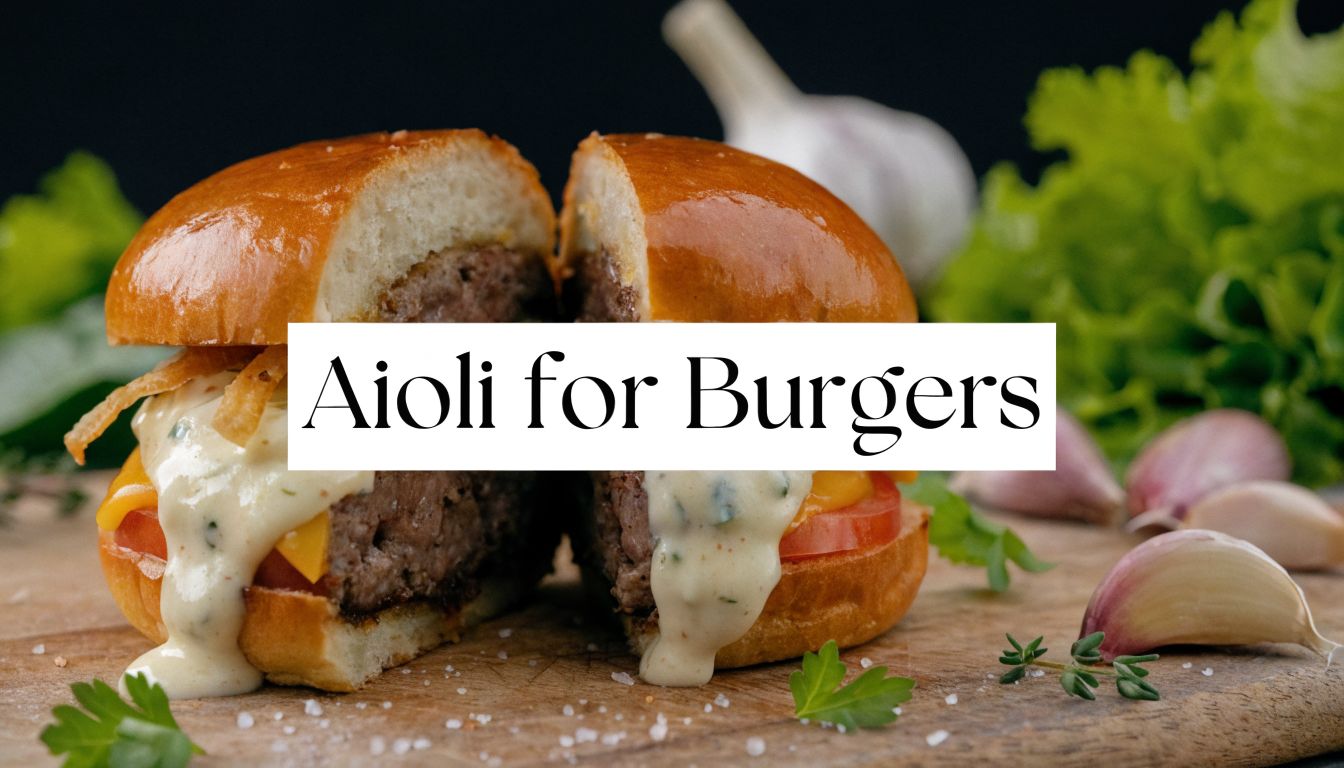
You pull an air fryer burger from the basket, the bun is ready, the toppings are lined up, and the patty looks great. Then you take a bite and realize what's missing. It isn't more cheese or another pickle. It's a sauce with enough body and bite to make an air-fried burger taste fuller, richer, and more intentional.
That's where aioli for burgers earns its place. Air fryer burgers cook fast and stay convenient, but they can also lean a little cleaner and less greasy than pan-fried or griddled versions. A good aioli fills that gap beautifully. It adds creaminess, carries garlic and acid, and gives the whole burger a finished feel instead of a rushed weeknight feel.
Why Your Air Fryer Burger Needs Aioli
A lot of home cooks land in the same spot. The burger itself is good. The air fryer did its job. The outside has color, the inside is still juicy, and cleanup was easy. But ketchup feels flat, yellow mustard feels too sharp on its own, and plain mayo doesn't bring enough personality.
That's why aioli works so well here. It doesn't just sit on top like an afterthought. It rounds out the texture of the burger and gives you that savory, creamy layer that air-fried patties really benefit from.

The air fryer angle matters
Most aioli recipes treat burgers like they're all cooked the same way. They're not. A burger from a cast-iron skillet brings extra fat to the party. An air fryer burger often tastes a little lighter and cleaner. That can be a huge plus, but it also means the sauce has to do more work.
A useful gap shows up here. A 2025 Statista report says air fryer ownership surged 45% in the US among millennials, yet searches for “air fryer burger aioli” are under 5,000 monthly compared with 50,000+ for “burger aioli,” which suggests a real shortage of recipes aimed at this exact use case, as cited in this air fryer burger aioli demand note.
That feels right in practice. There are plenty of burger sauce ideas out there, but far fewer that think about what air frying changes. If you like building snacks and quick meals around your basket cooker, the broader inspiration in the air fryer snack ideas blog archive is useful. Still, aioli deserves its own playbook.
Air fryer burgers don't need a heavier sauce. They need a smarter one.
What aioli fixes
Aioli helps in three specific ways:
- Texture balance: It adds a creamy layer that keeps each bite from feeling too firm or dry.
- Flavor lift: Garlic, lemon, and oil wake up a burger fast, especially when your topping list is simple.
- Better pairing with crispy sides: The same aioli you spread on the bun can double as a dip for fries, onion rings, or air-fried vegetables.
If your usual burger routine feels close but not quite there, aioli is often the missing step. It's one of those upgrades that sounds small and tastes huge.
Choose Your Aioli Adventure Two Perfect Recipes
Dinner gets easier once you pick the right aioli method for the kind of burger night you're having. For air fryer burgers, that choice matters more than usual because the patties tend to be a little leaner on the surface, with less pan fat to carry flavor into the bun. The best recipe depends on your available time and the finish you want.

Quick cheater aioli
This is the version I use on busy weeknights. It gives you the creamy, garlicky hit an air fryer burger often needs, and it does it fast. Mayo also brings built-in stability, so you can focus on balancing garlic and acid instead of worrying about the sauce breaking.
Use this when you want a fuller, slightly looser spread that adds moisture to a burger with a crisp edge and a less greasy finish.
Quick burger aioli
- Base: 3/4 cup mayonnaise
- Garlic: 3 minced garlic cloves
- Acid: 2.5 tablespoons lemon juice
- Seasoning: 3/4 teaspoon salt and 1/2 teaspoon pepper
Stir until smooth, then chill for 10 to 15 minutes if you can. That short rest softens the raw garlic bite and helps the lemon settle in. For air fryer burgers, I like this version slightly tangy because it wakes up a patty that didn't get much help from rendered fat.
Classic from-scratch aioli
Classic aioli gives you a cleaner garlic flavor and a silkier texture. It tastes fresher and more deliberate, which is great if the burger build is simple and you want the sauce to stand out. It also lets you control the thickness more precisely, which matters if you hate a burger that slides apart after the first bite.
The trade-off is technique. You have to build the emulsion properly, and if you rush the oil, it can split.
Comparing the Two Methods
| Version | Best for | What works | What can go wrong |
|---|---|---|---|
| Quick cheater aioli | Weeknights, beginners, meal prep | Fast, dependable, adds moisture quickly | Can taste one-note if the mayo is bland or too sweet |
| Classic aioli | Weekend burger nights, entertaining, sauce-first cooks | Cleaner garlic flavor, silkier texture, better control over thickness | Can split if ingredients are too cold or the oil goes in too fast |
How to choose tonight
Pick the quick version if:
- You need dinner on the table fast
- You want the safest option for a group
- Your air fryer burgers tend to run a little dry, so extra creaminess will help
Pick the classic version if:
- You want a thicker, more polished sauce that stays put on the bun
- You have an immersion blender and don't mind spending a few extra minutes
- Your toppings are minimal, so the aioli needs to carry more of the flavor
Practical rule: Use the mayo version for weeknights and the classic one when the burger itself is simple enough for the sauce to be noticed. Both work well with air fryer burgers. They just solve slightly different problems.
Mastering Classic Aioli with an Immersion Blender
Air fryer burgers often need a sauce that does more than taste good. They need one that adds richness, stays put on the bun, and softens that crisp-edged texture without turning the whole burger slippery. A well-made classic aioli does that better than almost anything else.

The setup that gives you the best shot
Use a narrow jar that closely fits the head of your immersion blender. That small detail matters because it keeps the oil and yolk moving together instead of splashing around the sides.
Start with a room-temperature egg yolk. Fridge-cold yolks are a common cause of failure. Add the oil slowly at the beginning, because pouring too fast is the main reason aioli breaks. I also prefer a neutral oil for burger aioli. Extra virgin olive oil can taste great, but it can turn sharp or slightly bitter once garlic and lemon are in the mix, which is not always what an air-fried burger needs.
My preferred method
Add the yolk, garlic, and a pinch of salt to the jar. Blend just long enough to combine them. Then add a small amount of oil to start the emulsion, and continue with the rest in a slow, steady stream until the aioli turns pale, thick, and glossy.
A simple flow looks like this:
- Add the yolk, garlic, and salt to the jar.
- Blend briefly until smooth.
- Add a small splash of oil to get the emulsion started.
- Pour in the remaining oil slowly while blending until thick.
- Finish with lemon juice and adjust the salt.
If I'm making aioli for air fryer burgers, I stop blending as soon as it holds soft peaks. That texture spreads cleanly and clings to the burger instead of squeezing out the back after the first bite.
Common Mistakes to Avoid
- Cold ingredients make the emulsion harder to start.
- Adding oil too quickly can split the sauce before it thickens.
- Using a wide bowl makes it harder for the blender to catch and build the emulsion.
- Using too much raw garlic can overpower a burger, especially one cooked in the air fryer, where the patty is usually a little leaner and less fatty than a skillet burger.
What works better is balance. Use enough garlic to taste it, enough lemon to brighten it, and enough oil to give the burger the richness the air fryer does not provide on its own.
If the aioli splits, don't throw it out. Start with a fresh yolk in a clean container, then slowly blend the broken aioli into it. That rescue trick works surprisingly well.
Why immersion blenders are so good for this
An immersion blender gives you speed and control at the same time. It builds the emulsion fast, which helps at the stage where hand-whisked aioli is most likely to go wrong.
It also makes it easier to dial in burger-friendly texture. For air fryer burgers, that matters. The best aioli for this style of burger should feel thick and silky, not runny. Chill it for 10 to 15 minutes before assembling if you want the cleanest spread and the neatest bite.
Easy Aioli Variations for Every Craving
You pull an air fryer burger from the basket, the edges are nicely browned, and the patty looks great. Then the first bite tastes a little lean or one-note. A smart aioli variation fixes that fast because it adds back richness, moisture, and contrast without making the burger heavy.

Flavored aioli keeps showing up on burger menus for a reason. A Technomic summary via Tasting Table notes strong consumer interest in garlic aioli over standard mayo, and that tracks with what works at home too. Air-fried burgers usually have less rendered fat coating the bun, so a plain mayo spread can taste flat where a more focused aioli tastes intentional.
Four variations worth keeping in rotation
Roasted garlic aioli
This is the one I make most for air fryer burgers. Roasting takes the harsh edge off garlic, so you get depth without covering up the patty. It also suits leaner burgers better than raw garlic because the flavor feels rounder and less aggressive.
Mash soft roasted cloves into your base aioli until smooth.
Best with:
- Beef burgers with cheddar or Swiss
- Turkey burgers that benefit from a little extra richness
- Mushroom burgers with onions or melted provolone
If you already use your air fryer for toasted buns or sides, you can also build the meal around a sturdier bread option like these air fryer bagels for burgers and sandwiches when you want a chewier bite.
Chipotle aioli
Chipotle aioli brings smoke, mild heat, and enough richness to make an air-fried burger taste fuller. Start with a small amount of finely chopped chipotle in adobo, then adjust. Too much can drown out the crust on the burger, especially if you already have bacon, charred onions, or pepper jack in the mix.
Best with:
- Beef burgers with pepper jack
- Chicken burgers with lettuce and tomato
- Black bean burgers with pickled onion
Herb aioli
Fresh herbs lighten the whole burger without making it feel thin. Chives, parsley, dill, and basil all work, but keep the mix simple. One or two herbs usually taste cleaner than throwing in everything from the fridge.
Best with:
- Chicken burgers
- Turkey burgers
- Simple beef patties with tomato and red onion
A squeeze of lemon helps this version wake up a burger that came out juicy but needs a brighter finish.
Vegan aioli
Use a good vegan mayo if you want the fastest version. Homemade vegan aioli can work well too, but texture matters more here than with a skillet burger. For air fryer burgers, make it thick enough to stay on the bun and mellow enough that it does not compete with the patty or crispy toppings.
Best with:
- Black bean burgers
- Falafel-style patties
- Crispy cauliflower sandwiches
How to pair the variation with the burger
Air fryer burgers do best with aioli that fills in what the cooking method leaves out. If the burger is lean and savory, choose a richer or sweeter aioli like roasted garlic. If the toppings are heavy, use something brighter, like herbs and lemon, to keep the bite from feeling overloaded.
A quick rule set helps:
| If your burger is… | Use aioli that is… |
|---|---|
| Rich and cheesy | Brighter, more lemony |
| Spicy | Creamier and a little milder |
| Light, herby, or poultry-based | Fresher, greener, less heavy |
| Smoky or bacon-heavy | Garlic-forward, but still balanced |
That flexibility is what makes aioli so useful. Once you have a solid base, you can tune it to the burger instead of forcing every burger to wear the same sauce.
How to Build the Perfect Air Fryer Burger
You pull an air fryer burger basket open, the patties look great, and then the sandwich falls apart on the plate. That usually happens at assembly. Air-fried burgers often have a little less surface fat than griddled ones, so the aioli has to do more work. It needs to add richness, keep the bite juicy, and stay in place instead of sliding out the back.
The fix is simple. Build for texture, not just flavor.
Build it in the right order
I get the best results when the aioli goes on the bun, not straight onto the hot patty. The bun holds it better, the sauce stays creamy, and the burger is easier to eat.
Use this stack:
- Toast the bun until the cut sides are lightly crisp.
- Spread aioli on the cut side of the bun so it forms a barrier.
- Add the burger patty after a short rest so the juices settle.
- Finish with crisp toppings last, especially lettuce, onion, and pickles.
That short rest matters more with air fryer burgers than people expect. A patty that goes straight from basket to bun releases more steam, and steam is what turns a good burger soggy fast.
The bun matters more than people think
A soft, untoasted bun disappears under aioli and burger juices. A toasted bun keeps some structure and gives you a cleaner bite from start to finish.
Brioche works if you toast it well. Potato buns are forgiving and stay tender without falling apart. For a sturdier homemade option, even ideas from this air fryer bagel method for quick bread inspiration can help you plan better burger-night breads and sides.
If your aioli is on the thinner side, use a little less on the bottom bun and a little more on the top. The bottom bun takes the most heat and moisture.
Spread aioli on the bun, rest the patty briefly, and the burger stays neater and tastes richer.
What makes the final bite better
Air fryer burgers need contrast. The best ones have a hot patty, cool aioli, crisp vegetables, and a bun with enough toast to hold everything together.
Aioli earns its place here because it covers several jobs at once. It adds fat back into a burger that can taste slightly leaner from air frying. It brings garlic and acid without the sharpness of plain mustard or the sweetness of ketchup. And it helps every bite feel more rounded, especially if you are working with turkey, chicken, or a lean beef blend.
Keep the toppings controlled. One cheese, one crunchy vegetable, one pickle element, and the right aioli usually beats an overloaded stack every time.
Aioli Storage Tips and Time-Saving Hacks
Aioli pays off best when it is already made before the burgers hit the air fryer. Cold aioli on a hot patty gives you better contrast, and for air-fried burgers in particular, that cool, rich layer helps replace some of the juiciness you do not get from pan drippings.
A clean jar with a tight lid makes storage simple. Keep it cold, use a clean spoon each time, and make only what you will realistically finish while it still tastes fresh. If you made a raw-egg aioli, handle it more carefully and use it sooner. A mayo-based aioli is the easier batch-prep option for weeknight burgers.
A few prep habits save time and improve the texture:
- Press or finely grate the garlic for a smoother aioli that spreads easily on toasted buns.
- Make it ahead of time so the garlic, lemon, and salt settle into a rounder flavor.
- Keep it slightly thick if you are using it for air fryer burgers. Thick aioli stays on the bun instead of slipping into the burger juices.
- Label each jar if you made more than one version, especially spicy, herby, or roasted garlic batches.
I also like to portion a few spoonfuls into a small ramekin before serving. That keeps the main jar clean and cold, and it is much easier during a busy burger night.
The best shortcut is using leftovers on foods that already come out well in the air fryer. Spread it on a chicken sandwich, spoon it next to air-fried potatoes, or use it as a dip for crisp vegetables. Once you start treating aioli like part of your weekly condiment rotation, it stops feeling fussy and starts earning fridge space.
If you want more quick meal and side ideas that work the same way, browse the air fryer recipe collection at airfryersnackideas.com.
