


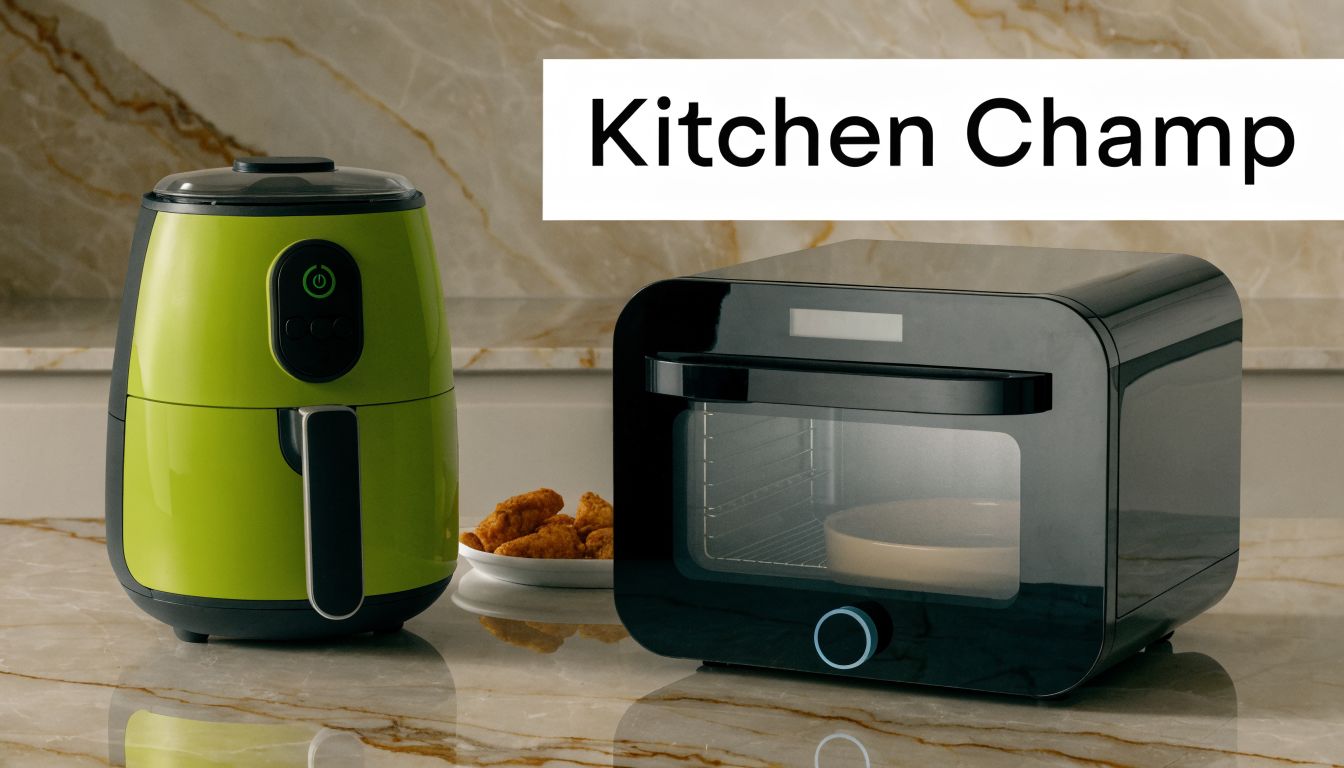
It’s 6:40 p.m. You’re hungry, you want something hot and salty, and the idea of waiting on a full-size oven feels ridiculous. Fries, wings, broccoli, leftover pizza, maybe a couple of frozen tenders. That’s the primary moment behind most air fryer vs convection oven searches.
For snack cooking, the question isn’t which appliance is more impressive on paper. It’s which one gets you the texture you want, in the amount you need, with the least friction. A college student has different needs than a parent trying to feed three kids after practice. A solo cook reheating two slices of pizza doesn’t need the same machine as someone batch-roasting trays of wings.
I’ve found that most buyers don’t need a broad “which appliance is better for everything” answer. They need a snack answer. Which one makes better fries. Which one dries out chicken less. Which one is easier to clean when you’re tired. Which one earns its counter space. If you like practical kitchen reads, the air fryer snack blog archive is built around exactly that kind of everyday use.
The Quest for the Perfect Crispy Snack
The classic weeknight test is simple. You want crisp edges, a soft center, and food on a plate fast enough that you don’t start picking at crackers while you wait. Deep frying is messy. A standard oven often feels slow for a small craving. That’s why this comparison matters.
An air fryer and a convection oven can both brown food well. Both move hot air. Both can handle the usual snack rotation of frozen fries, wings, roasted vegetables, and reheated leftovers. But they don’t behave the same way once real food goes in, especially in the small-batch, fast-turnaround cooking that snack lovers care about most.
For a lot of households, the decision comes down to friction:
- After-work snacking: You want the shortest path from freezer to plate.
- Dorm or apartment life: You need something compact and simple to clean.
- Family use: You need enough space to make more than one serving without multiple rounds.
- Health-minded cooking: You want crisp results without relying on deep-frying oil.
Here’s the short version before the deep dive.
| Snack need | Air fryer | Convection oven |
|---|---|---|
| Best for small portions | Excellent | Good |
| Best crisp on fries and wings | Excellent | Very good |
| Best for family-size batches | Fair to good | Excellent |
| Fastest for quick snacks | Usually better | Good |
| Easiest cleanup | Usually easier | More cleanup |
| Best fit for reheating a few slices of pizza | Excellent | Good |
| Best fit for tray cooking | Limited | Excellent |
For most snack-first cooks, this isn’t a battle between a good appliance and a bad one. It’s a choice between small-batch speed and large-batch flexibility.
How Each Appliance Creates the Crisp

The biggest difference in the air fryer vs convection oven debate is airflow intensity and where that heat hits the food.
Why the air fryer feels more aggressive
An air fryer’s crisping power comes from a powerful top-mounted fan positioned close to the food basket, which pushes hot air rapidly through a very small chamber. That tight setup mimics the intense surface heat people associate with fried food. The design difference is described clearly in this air fryer and convection oven comparison from Eureka Patsnap.
In plain kitchen terms, the air fryer attacks the outside of the food fast. That’s why frozen fries color quickly, wings tighten and brown well, and leftover pizza perks up instead of just warming through.
The tradeoff is just as important. The basket can crowd easily. Once food overlaps too much, the airflow advantage starts to disappear.
How a convection oven works differently
A convection oven also uses a fan, but the job is broader. It moves hot air through a much larger cavity so heat spreads more evenly across more food. That’s great for trays of vegetables, multiple servings of wings, or a sheet pan of nachos. It’s less intense on any one piece of food than an air fryer basket.
That larger environment changes how snacks finish:
- Air fryer: stronger blast of heat on a smaller amount of food
- Convection oven: more even heat over a wider cooking space
- Air fryer: stronger “fried-like” exterior
- Convection oven: better for volume and tray coverage
Think of it this way. The air fryer is a sprinter. The convection oven is a steady distance runner.
Kitchen rule: If the food’s best quality is surface crispness, the air fryer has a built-in advantage. If the food’s best quality is being cooked in one big batch, the convection oven starts catching up.
Why this matters for actual snacks
This design difference explains a lot of real-world results people notice immediately:
- Fries do best when hot air can move all around them.
- Wings benefit from strong top-down heat that tightens skin quickly.
- Broccoli and similar vegetables can go from browned to dried if the cook stretches too long in a larger oven cavity.
- Reheated pizza needs quick surface revival without overbaking the crust.
That’s also why recipe conversion can’t just be a simple one-to-one swap. Even when the temperature looks similar, the way the heat moves is not.
Snack Showdown Performance Speed and Texture

If your short list is fries, wings, veggies, and leftover pizza, performance comes down to four things: crisping power, speed, texture inside the food, and how much you can cook at once.
Fries and potatoes
Fries are where many people fall in love with air fryers. In side-by-side tests, air fryers produced crispier exteriors and juicier interiors on foods like potatoes, broccoli, and chicken tenders. The potatoes came out with plumper centers, while the convection oven version still browned but tended to dry more inside during the longer cook, according to Delish’s side-by-side snack test.
That matches what most home cooks notice right away. A small batch of frozen fries gets better edge-to-center contrast in the air fryer. You get crunch outside and softness in the middle with less fiddling.
For a large tray of fries, though, a convection oven becomes more practical. You lose a bit of that intense basket-style crisp, but you gain capacity and avoid cooking in rounds.
Wings and tenders
Wings reward concentrated airflow. The air fryer usually gives you tighter skin and stronger browning in a small batch. Tenders benefit too, especially if you care about crust texture more than cooking quantity.
A convection oven still does a good job, especially on a full tray, but it’s easier to drift into “evenly browned but a little drier” territory if you don’t pull the food at the right moment.
Small-batch wings are usually better in the air fryer. Party wings are easier in the convection oven, even if the texture is a touch less dramatic.
Vegetables and reheated pizza
Broccoli is a good test because it shows whether an appliance can brown the outside without wrecking the interior. The same Delish test found softer florets and better interior texture from the air fryer, while the convection oven version could crisp but leaned drier.
For reheated pizza, the air fryer has a strong practical edge. It revives the top surface and crust quickly. A convection oven works well too, especially for several slices, but for one or two slices the extra space often feels wasteful.
Here’s how I’d break down the usual snack jobs.
| Snack | Air fryer result | Convection oven result | Better pick |
|---|---|---|---|
| Frozen fries | Strong exterior crisp, soft center | Good browning, often less dramatic texture | Air fryer |
| Chicken wings | Excellent skin crisp in small batches | Good to very good on larger trays | Depends on batch size |
| Chicken tenders | Crisp shell, moist interior | Solid results, can run drier | Air fryer |
| Broccoli | Strong char and tender interior | Even roasting, can dry if pushed | Air fryer |
| Reheated pizza | Quick crust revival | Better for several slices at once | Air fryer for few slices |
Speed versus throughput
Speed isn’t just about the timer. It’s about the full path from deciding you’re hungry to eating.
Air fryers generally feel faster for snacks because they get going quickly and don’t ask you to heat a large cavity. For one serving of fries or a handful of wings, they’re hard to beat. Convection ovens become more efficient emotionally and practically when you’re feeding more people at once, because one larger batch beats several smaller basket rounds.
That’s the key distinction. The air fryer often wins the single-snack sprint. The convection oven wins the one-and-done family batch.
The Practical Tradeoffs Energy Cost and Counter Space

A lot of people assume the faster appliance must also be the cheaper one to run. That’s not always true.
Energy use depends on batch size
For small snack portions, air fryers often feel efficient because they heat quickly and avoid warming a large oven cavity. But lab testing shows a more nuanced picture for bigger loads. In scaled testing, air fryers used 29–41% more energy per kilogram of food than full-size convection ovens, and roasting 1.5 kg of potatoes at 200°C used 0.89 kWh in an air fryer versus 0.52 kWh in a convection oven, according to lab-based comparisons summarized here.
That matters if you regularly cook a big tray of wings, roasted potatoes, or meal-prep vegetables. Once you move beyond a small batch, the bigger oven can become the more efficient tool.
A practical perspective is this:
- Tiny load: air fryer often makes sense
- Large load: convection oven can use less energy per amount of food
- Repeated rounds: an undersized air fryer can lose its convenience fast
Reality check: Faster preheat doesn’t automatically mean lower total energy use. The amount of food you cook changes the math.
Counter space and storage
Space is where the air fryer often wins instantly. Basket models are built for countertops, apartments, dorm setups, and kitchens where every inch matters. They’re compact enough to leave out and simple enough to use on autopilot after a long day.
A convection oven asks for more room. If you already have one built in, that’s easy. If you’re looking at a countertop convection model, you’re giving up more visual and physical space in exchange for extra capacity and versatility.
The annoyance factor matters here too. An appliance you have to haul out of a cabinet every time you want mozzarella sticks won’t get used as much.
Cleaning and day-to-day friction
Air fryer cleanup is usually friendlier for snack cooking. The basket and crisper plate are easier to deal with than oven racks and a larger oven interior, especially after greasy foods like wings. If you cook snacks several times a week, that difference adds up.
Convection ovens aren’t impossible to clean. They’re just more work after splatter-heavy foods. The larger cavity, the rack cleaning, and the occasional baked-on grease make them less appealing for frequent small messes.
Upfront cost and value
Air fryers usually have the easier entry point if you just want a dedicated snack machine. Convection ovens make more sense when you want one appliance to cover snacks, baking, roasting, and larger family use.
For most buyers, the honest value question is this: are you paying for specialized convenience or broader utility? If the answer is “mostly fries, wings, leftovers, and frozen snacks,” the air fryer often feels like the smarter buy. If the answer is “snacks plus actual meal volume,” the convection oven earns its footprint.
Which Is Right for You Scenarios for Every Snack Lover

The best answer in the air fryer vs convection oven debate depends less on the machine and more on your kitchen life.
The college student
Get the air fryer.
If you’re cooking for one, maybe two, speed and cleanup matter more than maximum versatility. You want late-night fries, reheated pizza, frozen dumplings, or a fast bagel pizza without heating a large appliance. The air fryer fits that rhythm better.
It also suits tight living spaces. A compact machine with simple controls is easier to live with than a larger countertop oven. For snack-heavy cooking, that convenience matters more than broad baking ability.
The busy professional
Still leaning air fryer, unless you meal prep in larger batches.
This is the classic use case. You get home, you want food fast, and you’re not trying to roast three sheet pans at once. The air fryer handles one or two servings with less waiting and less cleanup. It’s especially good for the weeknight snack dinner that isn’t really dinner. Wings, sweet potato fries, roasted cauliflower, leftover slices.
If your routine includes making larger trays for several days at a time, a convection oven starts making more sense.
If your cooking style is “small amount, right now,” the air fryer usually fits your real life better than the convection oven.
The busy parent
Choose the convection oven if volume is the problem you need to solve.
The need for multiple rounds causes many people to outgrow the air fryer honeymoon. The food is great, but cooking several batches gets old fast when multiple individuals are hungry at once. A convection oven can turn out a full tray of wedges, a large batch of wings, or a sheet pan of vegetables in one session.
That doesn’t mean an air fryer is useless in a family kitchen. It can still be the best reheating machine in the house. But if your main frustration is capacity, the convection oven is the more sensible answer.
The health-conscious snacker
This one is more nuanced.
Air fryers are appealing because they can produce crisp food with little to no oil. That’s a real reason many home cooks prefer them. But the health question isn’t only about oil. Because air fryers cook food faster and closer to the heat source, there are unexplored questions about how that might affect compounds like acrylamide compared with slower convection cooking, as discussed in this Whirlpool overview of air fryer versus convection oven cooking.
So if you’re health-focused, the answer isn’t “air fryer always wins.” It’s “match the appliance to the food, avoid overbrowning, and don’t confuse crispness with automatic healthfulness.”
The person who reheats leftovers constantly
Pick the air fryer.
This is one of the least glamorous but most important categories. If your usual job is bringing pizza, fries, or crispy leftovers back to life, the air fryer punches above its size. It restores texture quickly and avoids the soggy microwave problem.
For big leftover spreads, the convection oven has room. For everyday leftover rescue, the air fryer is usually the better tool.
From Oven to Air Fryer Recipe Conversion and Pro Tips
Recipe conversion gets easier once you stop trying to make the appliances behave the same way.
A solid general rule is to lower the cooking temperature by 20 to 25°F for both air fryers and convection ovens compared with a conventional oven recipe. For air fryers, you’ll usually need to reduce cooking time more aggressively, often by 20% or more, because the heat is more concentrated, as noted in the earlier design guidance from Eureka Patsnap.
A simple conversion rule that works
Use this approach for snack foods first, then adjust by sight.
- Lower the listed oven temperature by 20 to 25°F.
- Check early in the air fryer. Don’t trust the original bake time.
- Use color and texture as the final test. Crispy foods should look dry on the surface before they’re done.
- Shake or flip halfway when the food has overlapping surfaces.
For practical examples, a recipe like this bagel in the air fryer guide shows why timing and surface exposure matter more than blindly following a standard oven instruction.
Pro tips that save disappointing batches
- Don’t overcrowd the basket: Air fryers need open airflow around the food. Piled fries steam.
- Use the oven for volume: If you’re cooking snacks for several people, one larger tray is often better than repeating small batches.
- Preheat when crispness matters most: Wings, fries, and pizza all benefit from starting hot.
- Watch sugary sauces: Barbecue glaze and sweet marinades can darken fast in the air fryer.
Start checking sooner than you think. In snack cooking, overdone often happens in the last stretch, not the first.
The Final Verdict Making the Right Choice for Your Kitchen
If your priority is the best crisp and the fastest turnaround for one or two people, choose the air fryer.
If your priority is feeding more people at once, roasting larger batches, and using one appliance for broader kitchen work, choose the convection oven.
If you mostly cook fries, wings, veggies, and reheated pizza, here’s the cleanest decision framework:
- If you want maximum snack performance in small batches, get an air fryer.
- If you want capacity and tray-based flexibility, get a convection oven.
- If you already own a convection oven and rarely cook for just one or two, you may not need a separate air fryer.
- If leftovers and frozen snacks are a major part of your week, an air fryer earns its keep quickly.
That’s why the air fryer vs convection oven question doesn’t have a universal winner. It has a right fit. For most snack-first cooks, the air fryer feels more satisfying day to day. For bigger households, the convection oven is the more practical kitchen workhorse.
If you want more snack-focused guidance, recipes, and ideas for getting better results from the machine you already own, explore Air Fryer Snack Ideas.
If you’re building a better snack routine, airfryersnackideas.com is a great next stop for easy air fryer recipes, practical cooking tips, and simple ideas for fries, wings, pizza, bagels, and more.
