


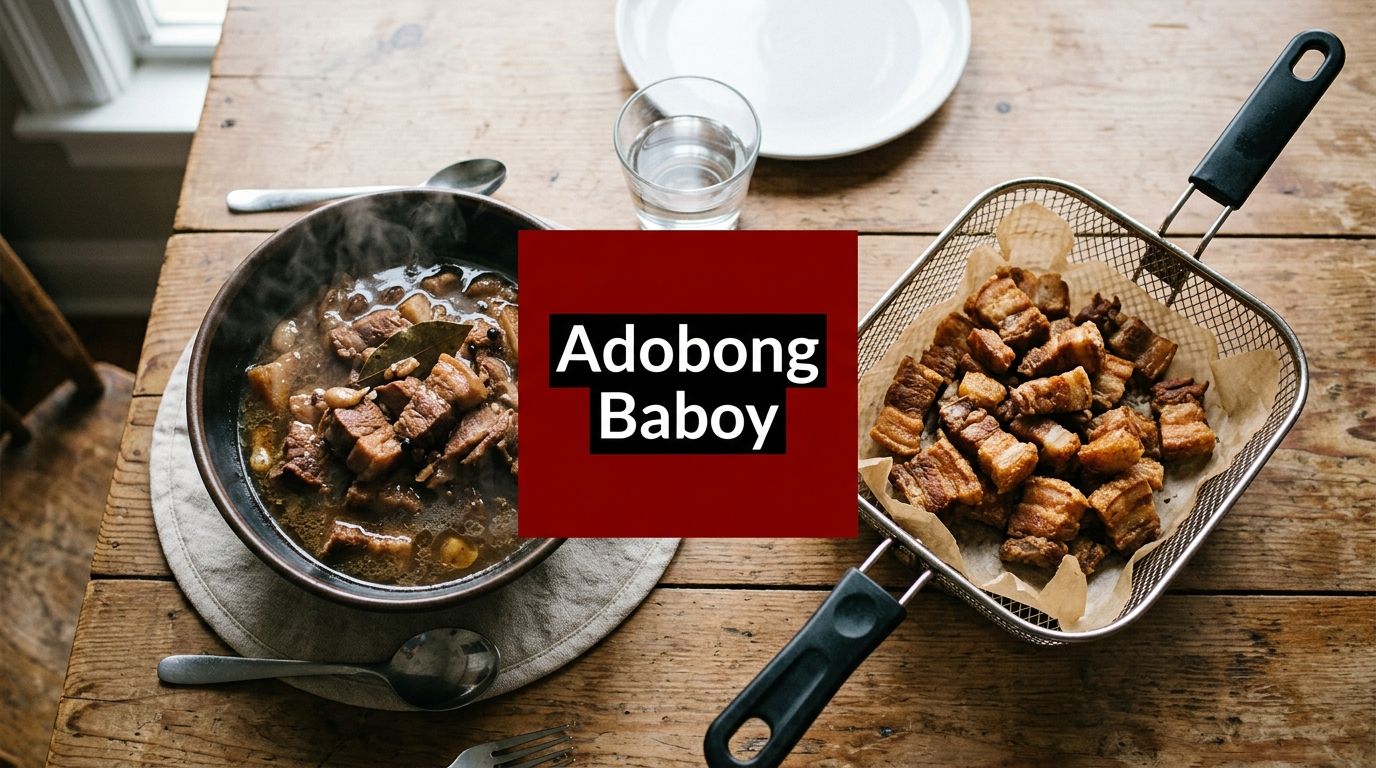
You want adobo, but you may not want to give up half the afternoon to get it. That's the usual tension with a good adobong baboy recipe. The dish rewards patience, but dinner still has to fit into real life.
Some nights, the right answer is a pot on the stove and a slow, gentle simmer until the pork turns savory and tender. Other nights, you want the same familiar garlic, vinegar, soy, bay leaf, and black pepper profile, but with faster cleanup and crisp edges that feel made for a modern kitchen.
The Ultimate Comfort Food Two Ways
Adobo has always felt bigger than a single recipe card. In one home, it's a loose, spoonable sauce over hot rice. In another, it cooks down until the pork almost fries in its own rendered fat. Both are recognizably adobo because the core method matters more than one rigid formula.
That core goes back a long way. Adobo is an indigenous Filipino cooking method encountered by the Spanish in the 16th century, and a written description from 1613 details preserving meat in vinegar according to The Spruce Eats on Filipino adobo. That preservation-first logic is still the reason the dish tastes the way it does. Vinegar is not a garnish here. It is the backbone.
For a lot of cooks, the problem isn't whether adobo is worth making. It's choosing the right version for the night. If you have time, the stovetop method gives you the deepest sauce and the classic soft, braised finish. If you want texture and speed, the air fryer version gives you browned, crispy edges without losing the soul of the dish.
Kitchen truth: The best adobo method is the one that matches your evening, not the one that wins an argument online.
I keep both in rotation because they solve different problems. A Sunday batch wants the stove. A weeknight craving often wants a hybrid approach that braises first, then finishes hot and fast.
If you like practical air fryer cooking beyond this dish, the broader collection at Air Fryer Snack Ideas blog recipes is useful for the same kind of busy-night thinking.
Assembling Your Adobo Ingredients and Tools

A strong adobo starts before the burner comes on. Ingredient choice decides whether your sauce tastes rounded and balanced or just salty and sharp.
A heritage-style version gives a useful baseline. One recipe uses 1.5 kg of pork, 1/2 cup cane vinegar, 2 heads of garlic, and a simmer of about 2 hours, while noting that soy sauce, now common in many versions, came through Chinese trade as early as the 9th century according to Ang Sarap's precolonial adobo discussion. You don't have to follow that formula exactly to the letter, but the ratio tells you something important. Adobo is not meant to be timid.
What each ingredient does
- Pork belly or shoulder gives you the most forgiving result. Belly produces a richer sauce because more fat renders out. Shoulder is a little less lush but still stays moist.
- Cane vinegar brings acidity that tastes more integrated than harsher vinegars. If cane vinegar isn't available, use what you have, but expect the final balance to shift.
- Soy sauce adds salt, color, and depth. It's a later addition in the dish's history, but for many home cooks it's now part of the expected flavor.
- Garlic should be generous. Adobo that skimps on garlic usually tastes flat.
- Bay leaves and black peppercorns give the dish its unmistakable warm, savory aroma.
The tools that make each method easier
For the stovetop version, use a heavy pot or Dutch oven, tongs, a wooden spoon, and a bowl for holding browned pork. A wide pot works better than a narrow deep one because the sauce reduces more evenly.
For the air fryer version, add these:
| Tool | Why it helps |
|---|---|
| Air fryer basket or tray | Exposes more surface area for crisping |
| Small saucepan | Lets you reduce the adobo sauce separately |
| Wire rack or plate | Gives braised pork a brief rest before crisping |
Buy the best pork you can afford. Fancy ingredients matter less than using a cut with enough fat to stay tender.
If you're still building your setup, Air Fryer Snack Ideas is a handy reference point for equipment-friendly cooking ideas.
The Traditional Stovetop Simmer Method

The stovetop version is still the standard I measure everything else against. It gives you the fullest sauce and the most cohesive flavor because everything develops in one pot.
A reliable workflow is to brown the pork first, toast the garlic, bay leaf, and peppercorns briefly, then add soy sauce, vinegar, and enough water to cover, followed by a gentle simmer for about 40 to 90 minutes depending on the cut, as described by Ian Kewks' pork adobo method. That order matters. Good adobo tastes layered, not dumped together.
Step by step in the pot
Brown the pork well
Pat the pork dry if it's wet. Put it into a hot pot in batches if needed. You want color on the edges, not gray steamed meat.Toast the aromatics briefly
Once the pork is browned, lower the heat slightly and add the garlic, bay leaves, and peppercorns. This wakes them up. Don't let the garlic burn.Add the liquids
Pour in soy sauce and vinegar, then enough water to cover or nearly cover the meat. Once the liquid is in, keep the heat controlled. A hard boil toughens pork faster than people expect.Simmer gently until tender
The surface should show small bubbles, not aggressive bubbling. Check the pork with a fork. It should give way easily but still hold shape.
What to watch for
The biggest mistake is rushing the browning. If the pork doesn't pick up color at the start, the sauce will always feel a little one-note later.
The second mistake is cooking too hot. Adobo likes patience. Gentle simmering lets the vinegar settle into the sauce instead of staying sharp and separate.
Practical rule: If the pot is boiling hard enough to shake the meat around, lower the heat.
When the stovetop method is the right choice
Choose the traditional route when:
- You want extra sauce for rice, leftovers, or meal prep.
- You're using fattier cuts like belly and want that richness fully rendered.
- You care most about depth and don't need crispy edges.
- You're cooking for family-style serving, where the pot goes to the table and everyone spoons from the same dish.
If you ask me which version tastes most like home, this is the one. The sauce settles into the meat in a way the faster finish can't fully copy. The trade-off is simple. It asks more time and gives more depth.
The Modern Air Fryer Method for a Crispy Twist
The air fryer method works best as a hybrid, not as a shortcut that skips braising altogether. Adobo needs time in liquid first. The air fryer is the finishing move, not the whole game.
That's why this approach is useful. Texture-focused adobo, especially crispy versions, is still underserved in traditional recipe coverage, and a hybrid air fryer method answers the modern need for speed and contrast according to Kitchen Confidante's discussion of Filipino pork adobo.

How the hybrid method works
Start exactly as you would for stovetop adobo. Brown the pork, build the braising liquid, and cook until the meat is tender. Then remove the pork pieces and let them cool slightly so the exterior dries a bit. That dry surface helps them crisp instead of steam.
While the pork rests, reduce the sauce in a saucepan on the stove until it tastes concentrated and glossy enough to spoon over rice. The air fryer basket can't do this part well. Sauce needs open heat and attention.
Then transfer the cooked pork to the air fryer in a single layer. Don't crowd the basket. Crowding traps steam and gives you leathery edges instead of crisp ones.
What changes compared with stovetop only
Here's the side-by-side judgment that matters most:
| Method | Best result | Main trade-off |
|---|---|---|
| Stovetop only | Tender pork and integrated sauce | Less contrast in texture |
| Hybrid air fryer finish | Tender interior with crisp edges | Slightly less sauce contact during final stage |
The air fryer version wins when you want adobo that feels a little more snackable, with caramelized corners and chewy-crisp edges. It's especially good for leftovers because chilled braised pork firms up, then crisps beautifully when reheated.
What works and what doesn't
What works
Finish only after the pork is tender. Keep the sauce separate and reduce it on the stovetop. Use moderate coating, not a dripping wet glaze, before air frying.What doesn't
Raw marinated pork straight into the air fryer. You'll get uneven doneness and a sauce that never develops properly.
Flooding the basket with liquid. That just creates a smoky, wet mess.
Chasing maximum crispness at all costs. Adobo should still eat like adobo, not like dry pork bites.
Let the pork become tender first. Crisping is a texture choice, not a replacement for braising.
This is also the moment to appreciate how useful air fryers are for familiar comfort food beyond typical frozen snacks. If you like quick appliance-led ideas, bagels in the air fryer shows the same principle of using concentrated heat for better texture with less fuss.
When to choose this version
Choose the air fryer finish when:
- You're cooking on a weeknight
- You prefer crispy edges over extra sauce
- You're reheating leftover adobo
- You want less mess than pan-frying a reduced adobo
For busy cooks, this is the practical sweet spot. It respects the dish's braised foundation while giving you something the classic pot version doesn't prioritize: crunch.
Plating Serving and Healthier Variations

Adobo almost always wants rice. The sauce is intense by design, and rice turns that intensity into a complete meal instead of a too-salty bite. Spoon the pork first, then the sauce, and let some of it run into the rice instead of drowning everything.
If you used the stovetop method, serve from a shallow bowl or platter so the pork sits partly above the sauce. If you used the air fryer finish, plate the crisped pork on top and drizzle the reduced sauce at the end. That keeps the edges from softening too quickly.
Good serving habits
- Use hot rice so the sauce loosens slightly on contact.
- Add the garlic from the pot if it softened nicely and didn't burn.
- Serve extra sauce on the side if people like to control how wet their plate gets.
Leftovers are one of adobo's best features. The flavor settles in overnight, and the pork often tastes even more unified the next day. Reheat gently on the stove with a splash of water if the sauce has tightened too much, or use the air fryer to crisp the pork again and warm the sauce separately.
Making it lighter without losing the dish
A useful gap in most adobo advice is how to adapt the dish for lower sodium or lower fat goals while keeping the flavor recognizable. That's exactly where practical substitutions help, as noted in Diaspora Co.’s discussion of the need for diet-conscious adaptations.
Here's how I approach it:
- Use a leaner cut if you want a less rich final sauce. You'll lose some body, so reduce the sauce a bit more carefully.
- Choose reduced-sodium soy sauce if salt is your main concern. Taste late, not early.
- Skim some fat after braising if you used belly but want a cleaner finish.
- Add vegetables or eggs to stretch the meal and soften the intensity of the sauce.
The trade-offs to expect
| Change | Benefit | Trade-off |
|---|---|---|
| Leaner pork | Less richness | Sauce can taste thinner |
| Reduced-sodium soy sauce | Easier to control salt | May need more reduction for impact |
| Air fryer finish | Less greasy feel on the plate | Slightly less saucy character |
There's no single “healthy” adobo, only smarter decisions based on what you need. The key is keeping the core flavor structure intact. If the vinegar, garlic, soy, bay leaf, and pepper balance is still there, the dish still reads as adobo.
Troubleshooting Common Adobo Problems
Most adobo problems come from heat control, timing, or balance. The good news is that nearly all of them are fixable.
Why is the pork tough
Tough pork usually means one of two things. Either the cut was too lean, or it didn't simmer long enough at a gentle heat. Keep cooking until the meat yields easily when pressed with a fork. Adobo punishes impatience more than complexity.
Why does the sauce taste too sharp
A vinegar-heavy bite doesn't always mean you used too much. Sometimes the sauce just hasn't had enough time to settle. Let it simmer longer and avoid violent boiling, which can keep the flavor feeling rough instead of rounded.
If your first taste feels harsh, give the pot more time before you start correcting with extra soy sauce or water.
Why isn't the sauce thick enough
Adobo sauce shouldn't always be very thick. It can be loose and still be right. But if it tastes good and you want more body, remove some pork and reduce the liquid separately until it coats a spoon more lightly.
Why did the air fryer version dry out
That usually means the pork stayed in too long after it was already tender, or it went into the basket with too little protective sauce or fat clinging to it. Crisp the exterior, then stop. The goal is contrast, not dehydration.
Quick fixes at a glance
Too salty
Add a bit more water and simmer briefly so the sauce rebalances.Too thin
Reduce the sauce uncovered.Too fatty
Rest it briefly and skim some rendered fat.Too sour
Let it cook longer before adjusting anything else.
A good adobong baboy recipe gets easier every time you make it. Once you know what the pork should look like, how the sauce should smell, and when to stop reducing, the dish becomes less about memorizing steps and more about reading the pot.
If you like practical recipes that make modern appliances more useful, visit Air Fryer Snack Ideas for approachable air fryer ideas that fit busy schedules without giving up flavor.
