


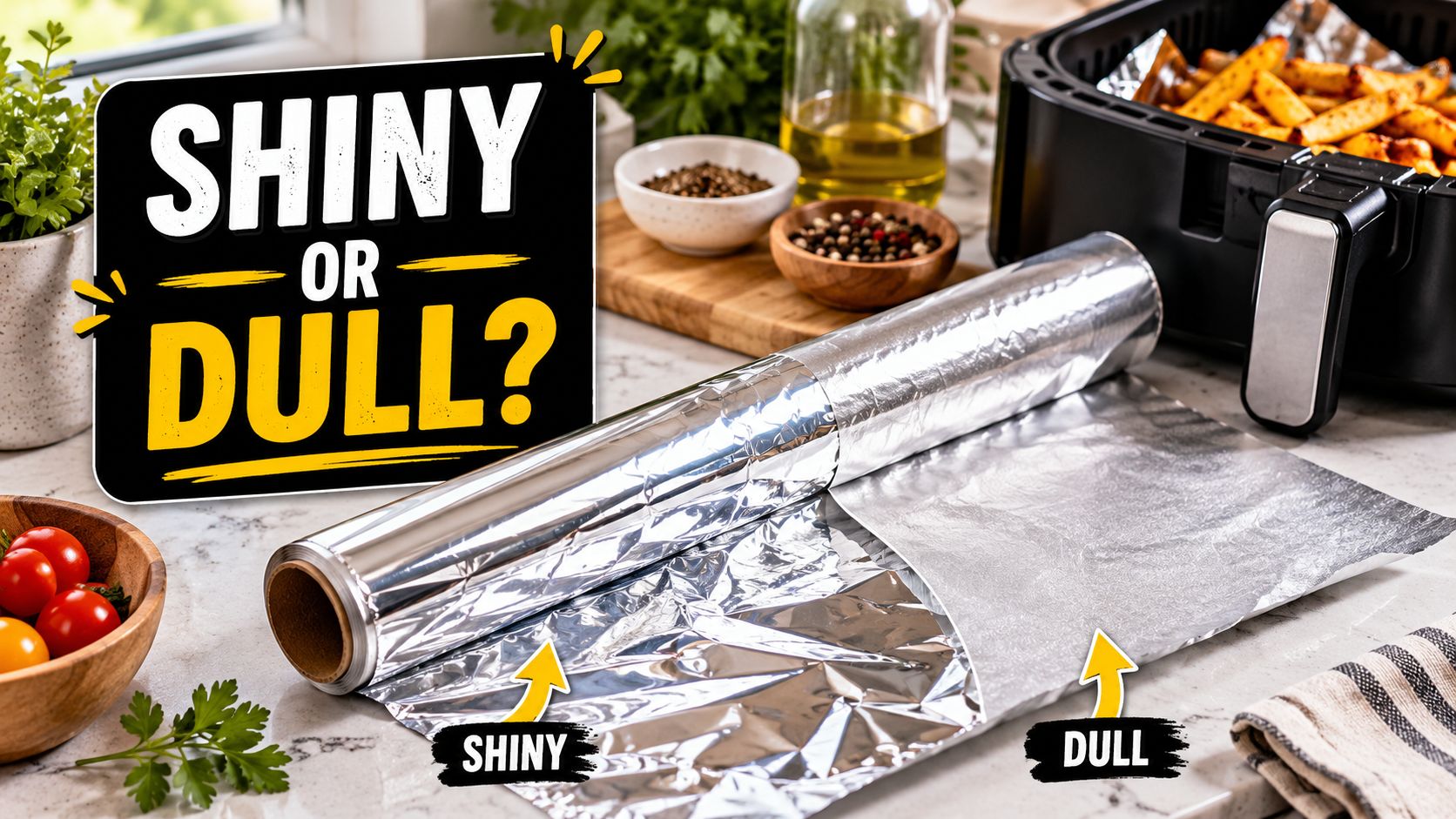
For standard household foil, it doesn't make a difference which side you use for cooking. The shiny-versus-dull argument is mostly a kitchen myth caused by how foil is made, and the important factors are airflow, specialty non-stick foil, and what foods you put against the foil.
A lot of popular advice makes the aluminum foil shiny side in or out question sound like a secret cooking lever. It isn't. If you're roasting vegetables, warming leftovers, or lining part of an air fryer basket with ordinary foil, you're usually not changing the result by flipping the sheet over.
The more useful question is this: are you using foil in a way that helps your food cook well and safely? That's where home cooks get better results.
The Great Foil Debate Finally Settled
The debate sounds bigger than it is. For ordinary household foil, the shiny and dull sides are not two different cooking surfaces with two different jobs. In practical cooking, standard foil performs similarly on both sides for normal baking and roasting tasks, and technique matters more than side selection for most recipes, especially in an air fryer, as noted in this consumer-friendly explanation of foil use.
That answer surprises people because the sides look so different. Our brains assume shiny must mean reflective, and reflective must mean better. But in a home kitchen, that visual difference usually isn't the thing driving your result. Your food cares more about whether hot air can move around it, whether moisture gets trapped, and whether you've accidentally shielded the surface from browning.
Practical rule: If you're using regular foil, stop worrying about shiny side in or out. Put your attention on placement, coverage, and whether the food still has room to cook properly.
This matters even more in an air fryer. Air fryers work by pushing hot air around the food. If foil blocks that movement, food can cook unevenly or lose crispness. That's a much more useful kitchen rule than any shiny-side tip.
Many home cooks also miss two exceptions. One is non-stick foil, where the coated side should face the food. The other is food safety with very acidic or salty ingredients under heat. Those details affect real-world cooking more than the shine ever will.
If you like practical air fryer cooking advice, you'll find that kind of approach at Air Fryer Snack Ideas, where technique usually beats myth.
Why Aluminum Foil Has a Shiny and Dull Side
The shiny side doesn't come from a special coating on standard foil. It comes from the final rolling process. Aluminum foil is rolled in paired sheets. The side that touches the highly polished rollers becomes shinier, while the side touching the other foil sheet becomes duller. For standard household foil, manufacturers confirm it performs the same whether the shiny side is in or out, as explained in this Reynolds-based manufacturing overview.
A simple analogy helps. Think of two soft pieces of dough pressed through a roller together. The outside surfaces that touch the smooth equipment will look different from the sides pressed against each other. The dough is still dough. Standard foil works the same way. The finish changes, but the base material is still aluminum on both sides.

Why the look fools people
The confusion starts because shiny surfaces do reflect more radiant energy. That's a real physical idea. But most everyday cooking doesn't depend on that tiny visual distinction the way people imagine.
Your food cooks through a mix of things like:
- Contact with hot surfaces when food sits on a tray, pan, or foil
- Moving hot air in an oven or air fryer
- Radiant heat from hot surroundings
In a home oven or air fryer, the first two usually dominate the result you notice. That's why you can flip a sheet of standard foil either way and still get basically the same outcome in ordinary use.
What actually changes food texture
Three practical choices matter much more:
- How much foil you use. Too much can shield food from circulating heat.
- How tightly you wrap. A sealed packet traps moisture and softens surfaces.
- Where the foil sits. Lining a tray isn't the same as tenting the top of food.
The shiny side is mostly a visual clue from manufacturing, not a magic setting for better cooking.
Once you understand that, the whole myth becomes easier to ignore.
The Exceptions to the No-Difference Rule
There are situations where side orientation does matter. They just aren't the reasons commonly assumed.
The most important exception is non-stick foil. With this specialty product, the non-stick surface is typically the dull side, and that side should face the food. The reason isn't heat reflection. It's the coating.

Standard foil versus non-stick foil
| Foil type | What matters |
|---|---|
| Standard household foil | Side choice usually doesn't matter for normal cooking |
| Non-stick foil | The non-stick side should face the food |
That distinction clears up a lot of mixed advice online. Someone may tell you the dull side should always face the food. They might be thinking of non-stick foil, then accidentally applying that rule to every roll of foil in every kitchen drawer.
Rare cases outside everyday cooking
There are also niche uses where reflectivity gets more attention, such as projects built to capture or redirect heat. That's different from baking fries, reheating pizza, or lining an air fryer basket.
For ordinary kitchen cooking, the question isn't "Which side is stronger?" It's "Am I using the right kind of foil for this job?" If your food is sticky, cheesy, glazed, or delicate, non-stick foil can help. If it's regular foil, orientation usually isn't the issue.
How to Use Aluminum Foil in an Air Fryer
Air fryers change the conversation. In this appliance, foil can block airflow if it covers too much of the basket, reducing crisping and causing uneven results. The bigger concern is what food you're cooking and how the foil is placed, not which side faces the food, as explained in this air fryer and foil safety overview.
That means the best foil habit in an air fryer is restraint. Use enough to solve a problem. Don't use so much that you create a metal lid over the whole cooking chamber.

Do's and don'ts that actually matter
Here are the habits that make foil useful instead of frustrating.
| Do | Don't |
|---|---|
| Use small pieces that fit the food instead of blanketing the whole basket | Cover the entire basket if your goal is crisp food |
| Anchor the foil with food so it stays in place during cooking | Leave loose foil flapping where moving air can push it around |
| Shape a sling or shallow boat for delicate or messy foods | Wrap food too tightly if you want browning and crunch |
| Check your air fryer manual for model-specific limits | Let foil get too close to the heating area |
| Choose non-stick foil for sticky foods | Assume shiny side changes texture |
Air fryers reward exposure. The more open the food is to moving hot air, the better it usually browns.
Good foil uses in an air fryer
Foil works well when you use it with a purpose:
- Catch sticky drips under sauced foods
- Create a sling for soft items like egg bites or baked snacks
- Make a divider between two small foods that might slide together
- Shield a top surface that browns faster than the inside cooks
It helps less when you're making foods that depend on all-over circulation, like fries, breaded bites, or anything you want very crisp.
A good mental model is a winter coat. A little coverage protects. Too much coverage traps and blocks. That's why a foil-lined air fryer basket often gives softer results than people expect.
If you're testing foil with breakfast items or toasted snacks, a simple recipe like this air fryer bagel guide shows how much texture depends on exposed surface area.
Smart Foil Tricks for Your Favorite Snacks
Once you stop obsessing over shiny side versus dull side, foil becomes much more interesting. It's a shaping tool. You can fold it, lift with it, shield with it, and contain mess with it.

The foil boat for sticky wings
Wings tossed in a thick sauce can leave behind a stubborn glaze. A foil boat solves that. Fold up the edges of a small sheet so the sauce stays contained, but leave the top open so heat can still reach the skin.
This works best when the foil supports the food without turning into a sealed packet. If the sides are too tall or the boat is too wide, you start blocking the airflow that makes wings appealing in the first place.
The sling for delicate snacks
A foil sling is one of the handiest tricks in an air fryer. Fold a strip under a small pan or a soft snack so you can lift it out without tipping or tearing it.
Think mini frittatas, soft brownies, or stuffed mushrooms. The sling doesn't improve cooking by itself. It improves handling. That's often the difference between a neat snack and one that collapses on the way out.
The shield for fast-browning tops
Some snacks brown on top before the center is ready. Garlic bread with cheese is a classic example. A loose foil shield over the top can slow surface browning while the inside catches up.
The key word is loose. You want a tent, not a tight cap. A tight cover traps steam and softens the exact surface you're trying to protect.
A small fold in the right place does more for snack quality than choosing the shiny side ever will.
If you like collecting practical kitchen shortcuts like these, the snack tips in the Air Fryer Snack Ideas blog archive are a better use of your attention than most foil myths.
Aluminum Foil Safety and Common Misconceptions
Let's end with the part that deserves more attention than the shine question.
One common fear around aluminum foil gets repeated a lot, but the everyday kitchen conversation often drifts toward dramatic claims instead of useful ones. The more practical issue is simpler. What food is touching the foil, and for how long under heat?
Acidic and salty foods deserve the most care. The verified guidance behind this topic notes that aluminum can migrate into foods, with higher transfer in contact with salty or acidic foods under heat. That means ingredients like tomato-heavy mixtures, citrusy marinades, or very salty preparations deserve more caution than plain bread, dry snacks, or a quick foil sling.
Safer habits for everyday cooking
A few habits make foil use more sensible:
- Use foil briefly for cooking support, lining, or lifting
- Be cautious with acidic foods such as tomato or citrus-based mixtures
- Watch salty marinades when heat and foil contact happen together
- Choose another container when a food will sit against foil for a long time
Misconceptions worth dropping
The biggest misconception is still the original one. People spend energy asking which side should face out, then miss the actual variables.
Another misconception is that foil is automatically unsafe in every air fryer. That's too broad. Used thoughtfully, it can be handy. Used carelessly, it can interfere with cooking or be a poor match for certain foods.
If you're deciding between shiny side and dull side, you're asking a tiny question. If you're deciding between open airflow and blocked airflow, or between plain food and acidic marinade on hot foil, you're asking the right one.
If you want more practical, no-myth air fryer help, visit Air Fryer Snack Ideas for snack recipes and kitchen tips built around what improves results.
