


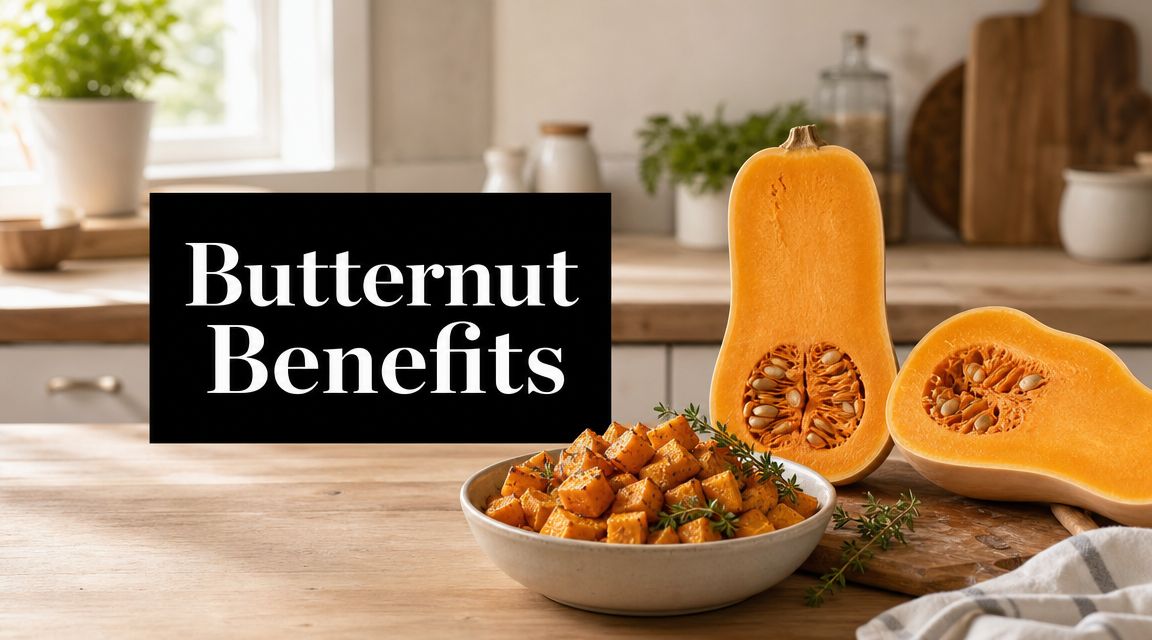
More Than Just a Fall Favorite
One cup of plain, baked butternut squash contains 82 calories, 0 grams of fat, 22 grams of carbohydrates, 6.6 grams of fiber, 1.8 grams of protein, and 8 milligrams of sodium, according to WebMD. That's a strong nutrition return for a food that also happens to crisp up beautifully in an air fryer.
Butternut squash gets treated like a once-a-year soup ingredient, but that sells it short. It's useful for fast lunches, weeknight sides, after-school snacks, and the kind of savory-sweet air fryer batch cooking that keeps busy people from reaching for ultra-processed snacks.
The biggest practical advantage is how well it bridges nutrition and convenience. It has natural sweetness, enough structure to roast without falling apart, and enough fiber to feel satisfying. It also works across formats. Fries, cubes, chips, mash cakes, and stuffed halves all fit easily into an air fryer routine.
The benefits of butternut squash go beyond “it's healthy.” It supports eye health, digestion, satiety, heart-conscious eating, and smarter snacking. Just as important, it's easy to make taste good without drowning it in oil or sugar.
If you own an air fryer, this is one of the easiest vegetables to turn into something you'll want to eat more than once.
1. Rich in Vitamin A for Eye Health and Immunity
Butternut squash earns its reputation fast on vitamin A alone. Tufts reports that one cup of cooked butternut squash provides nearly 23,000 IU of vitamin A, or about 560% of the Daily Value, along with 6.6 grams of fiber. That's why it belongs in regular rotation, not just holiday meals.
That vitamin A payoff comes largely from carotenoids. Healthline notes that butternut squash contains carotenoids including beta-carotene, which the body converts into vitamin A, a nutrient tied to eye health, immune function, and cell growth. In practical kitchen terms, the bright orange flesh is doing real nutritional work.
Best air fryer use for this benefit
Thin slices or slim wedges work better than oversized cubes when vitamin-A-rich squash is the goal and snackability matters. They cook faster, caramelize at the edges, and make it easier to use a modest amount of oil instead of coating everything heavily.
A little fat helps here because vitamin A is fat-soluble. I keep it simple with olive oil, avocado oil, or a light spray, then season one of two ways:
- For sweet-leaning snacks: cinnamon, pinch of salt, and a little black pepper
- For savory batches: smoked paprika, garlic powder, and rosemary
Practical rule: If your squash slices steam instead of brown, the basket is overcrowded. Give the pieces space or cook in batches.
Butternut squash chips aren't potato chips, and treating them like exact substitutes is where people go wrong. They soften in the center more easily because of the squash's moisture and natural sugars. Thinner cuts and a single layer produce the best texture.
Cleveland Clinic also notes that butternut squash contains lutein and zeaxanthin, which support eye protection. That makes air-fried squash especially appealing for people who spend long hours on screens and want a food-first way to build better habits.
2. High in Fiber for Digestive Health and Satiety
Americans still fall short on fiber intake, which is one reason butternut squash earns a regular spot in my kitchen. Harvard T.H. Chan School of Public Health explains that dietary fiber supports digestive health, helps regulate blood sugar, and promotes satiety. That matters for snacks, because a food that tastes good but leaves you hungry an hour later is not doing much work.
Butternut squash is useful here because it brings fiber in a format people want to eat. Air frying concentrates its natural sweetness, gives the edges some color, and keeps the inside tender enough to feel satisfying without turning the snack into something heavy.
Here's the image that matches the kind of simple prep that works best:

What works in the air fryer
For this benefit, medium cubes usually beat thin chips. Chips cook fast, but cubes hold moisture better and slow you down a bit while eating, which helps the fullness factor. I get the best texture by cutting even pieces, using a light coat of oil, and giving the basket enough space so the squash roasts instead of steaming.
A few pairings make the fiber benefit more practical:
- For afternoon hunger: air-fried squash cubes with Parmesan and black pepper
- For better staying power: pair squash with Greek yogurt dip, cottage cheese, or a handful of nuts
- For meal-prep snack boxes: combine squash with Brussels sprouts or chickpeas
There is a trade-off. Butternut squash is filling, but it is still softer and less crisp than a packaged snack, so expectations matter. If you want crunch, add roasted chickpeas or pumpkin seeds after cooking instead of trying to force squash cubes into a chip texture they rarely hold well.
If your usual diet is low in fiber, increase portions gradually and drink enough water through the day. That approach is a lot more comfortable than jumping straight into a big batch of squash fries and assuming the vegetable is the problem.
For more practical air fryer snack ideas for everyday cooking, browse the blog's recipe collection.
3. Excellent Source of Potassium for Heart Health
Many adults fall short on potassium while taking in too much sodium, which is a rough combination for blood pressure. Butternut squash helps close that gap. According to the USDA FoodData Central entry for butternut squash, it provides potassium in a food that also brings fiber and a naturally sweet flavor, so it fits a heart-conscious plate more easily than many salty snack options.
That matters in real kitchens, not just on paper. If a side dish only works when it is covered in butter, brown sugar, or a heavy shake of seasoning salt, the nutrition advantage gets diluted fast. Butternut squash does better with a lighter hand. A little oil, enough heat for browning, and assertive low-sodium flavors usually give better results.
Here's a good visual for the heart-health angle:

Best seasoning strategy
For air fryer batches, I get the best balance by cutting cubes or thick wedges, not fries. Those shapes brown well while staying tender inside, and they do not need much salt to taste satisfying.
A few combinations work especially well:
- Herb-forward: rosemary, thyme, garlic powder
- Warm and savory: cumin, coriander, black pepper
- Bright finish: lemon zest or a squeeze of lemon after cooking
The trade-off is texture. If you keep sodium low and skip heavy coatings, squash will not mimic a bag of chips. What it can do is give you a warm, flavorful snack or side that feels substantial without pushing the meal toward the usual salty defaults.
The air fryer helps here because dry circulating heat concentrates flavor quickly. You can get caramelized edges with modest oil, which makes it easier to build a smarter snack routine from recipes like these air fryer butternut squash ideas and healthy snack recipes.
For better heart-health payoff, pair the squash with foods that do not pile on sodium. Plain Greek yogurt with lemon and dill works well. Unsalted pumpkin seeds add crunch after cooking. If the rest of the meal is already salty, keep the squash simple and let it do the balancing work.
4. Low in Calories with High Nutrient Density
A food that gives you substantial vitamin A and vitamin C while staying relatively light in calories earns its place in a regular rotation. Butternut squash does that better than many starchy sides, which is why it works so well for people who want meals that feel satisfying without getting heavy fast.
In practical cooking terms, nutrient density matters most when you are choosing what fills the plate. Butternut squash brings color, sweetness, fiber, and useful micronutrients without the calorie load of many fried sides, creamy casseroles, or breaded snacks. That trade-off is especially useful in the air fryer, where dry heat concentrates flavor and browns the edges without needing much oil.
How to keep it light and still satisfying
The biggest mistake is treating squash like white potatoes and adding oil by feel. Measure it. A light coating is usually enough for good browning, especially if the basket is not overcrowded.
A few methods work consistently well:
- Use one even coating of oil: enough to help seasoning stick, not enough to soak the surface
- Choose cuts based on your goal: half-moons for a snackable feel, wedges for a more filling side, thinner pieces for more browned edges
- Season for contrast: smoked paprika, garlic powder, cumin, black pepper, or a dusting of Parmesan after cooking
- Cook in a single layer when possible: better airflow gives you more caramelization and less steaming
For an easy starting point, the recipe collection at Air Fryer Snack Ideas for butternut squash and lighter snack prep keeps the focus on fast, realistic air fryer cooking.
A low-calorie food still has to taste good enough to repeat. Butternut squash usually passes that test because its natural sugars intensify in the air fryer, so you get a richer flavor without piling on heavy sauces.
I get the best results from half-moon slices and thick wedges here. Cubes are efficient for meal prep, but those larger shapes often feel more like an actual snack or side dish, which makes them easier to keep in a healthy weekly routine.
5. Supports Smarter Blood Sugar-Friendly Eating
Butternut squash tastes sweeter than many vegetables, so people often assume it belongs in the “probably not” category for steadier blood sugar. That's too simplistic. WebMD links high-fiber foods like butternut squash with improved blood sugar support, and the squash's combination of fiber, modest protein, and relatively low calorie load is part of why it fits so well into balanced meals.
That doesn't mean any butternut squash recipe is automatically blood-sugar-friendly. Preparation decides a lot. Maple syrup glazes, sugary casseroles, and oversized portions of mashed squash push it in a very different direction than savory air-fried wedges paired with protein.
Better pairings than sweet add-ons
If you want the practical benefits of butternut squash here, think balance rather than sweetness.
- Pair with protein: almonds, pumpkin seeds, cottage cheese, or grilled chicken
- Go savory first: sage, paprika, cumin, garlic, chili flakes
- Keep portions reasonable: use squash as part of a snack plate, not the entire plate
A smart snack looks like air-fried squash cubes with a handful of nuts, or roasted wedges next to a yogurt-based herb dip. That pairing slows things down and feels more complete.
Harvard notes that winter squash is rich in potassium, but also cautions that controlled-trial evidence on specific health benefits is limited. That's a useful reminder not to oversell any single food. Butternut squash isn't a treatment. It's a practical ingredient that fits well into a steadier, higher-fiber eating pattern.
6. Packed with Antioxidants for Cellular Protection
Orange vegetables earn their color from carotenoids, and butternut squash is one of the easiest ways to put more of them on the plate. The NIH Office of Dietary Supplements explains that carotenoids such as beta-carotene act as antioxidants, helping protect cells from damage caused by unstable molecules called free radicals. That matters in practical terms because antioxidant-rich foods work best as repeat players in meals, not as a one-off “healthy” ingredient.
For cooks, the useful part is simple. Butternut squash gives you antioxidant value in a form that is easy to prep, easy to season, and easy to eat regularly. Air frying helps because it creates crisp edges and concentrated flavor without the heavy oil load that can turn a light vegetable side into something much richer than planned.

Cooking trade-offs that matter
Antioxidant benefits do not depend on making squash complicated. They do depend on how you cook it. Very high heat can tip squash from caramelized to scorched fast, especially if the cubes are small or uneven. I get better results with medium-high heat, a light oil coating, and enough basket space for air to circulate.
A few kitchen habits help:
- Cut evenly: similar-sized cubes cook at the same rate and brown more cleanly
- Use oil lightly: enough for browning, not so much that the squash turns greasy
- Season after you taste: spices like paprika, cumin, and garlic work well, but too much can cover the squash's natural sweetness
- Add fresh ingredients at the end: parsley, lemon juice, baby spinach, or red pepper keep the plate brighter and less heavy
If you want a fast antioxidant-rich snack, air-fried squash cubes with red pepper strips and a spoonful of herby yogurt works well. For a different quick air fryer carb option on busy days, this bagel in air fryer guide for easy snack prep shows another repeatable approach.
The big advantage here is repeatability. Butternut squash stores well, cooks quickly once cut, and fits savory snacks better than many people expect. Keep the heat controlled, avoid burnt spots, and pair it with other colorful produce to get more variety from one simple air fryer batch.
7. Natural Energy Boost with Complex Carbohydrates
Butternut squash is useful when you want energy from actual food instead of a snack that's mostly refined flour, sugar, or salt. The carbohydrate content gives it substance, while the fiber helps slow the experience of eating and digestion. In practice, that makes it a strong choice before a long meeting, a late study session, or an afternoon errand run.
Air fryer prep offers benefits beyond initial expectations. Crispy edges make the squash feel snack-like, which means you're more likely to reach for it. Convenience matters. If healthy food feels like homework, consistent preparation often ceases.
Best uses for steady everyday fuel
I like butternut squash most in this lane when it's paired rather than eaten alone. The squash gives you the carb base. A small amount of fat or protein makes it hold longer.
A few combinations that work:
- For study sessions: squash fries with a handful of roasted nuts
- For work afternoons: cubes with hummus or a yogurt dip
- For pre-gym snacking: seasoned wedges alongside a simple protein source
This is the same reason a lot of people enjoy toasted, bready snacks before they need energy. If you want another easy air fryer carb option for contrast, this bagel in air fryer guide shows how the site handles simple, practical snack prep.
Good energy snacks don't need to be exciting. They need to be easy to repeat on busy days.
The main thing that doesn't work is oversweetening. Cinnamon is great. A sugar-heavy coating turns a useful snack into something much closer to dessert.
8. Supports Bone Health with Essential Nutrients
Bone health depends on more than calcium intake. Butternut squash contributes magnesium and potassium, two minerals that help support normal bone maintenance and muscle function, which matters because falls, weakness, and poor overall diet quality often show up alongside bone concerns. The NIH Office of Dietary Supplements explains magnesium's role in bone health, and squash is one practical way to add more of it to the plate.
What I like about butternut squash in this category is that it fits the bigger pattern that proves effective. Bone-supportive eating usually comes from repeated meals built around varied whole foods, not one headline ingredient. Squash works well here because it pairs easily with foods that bring protein, calcium, or vitamin D.
How to make this benefit useful at home
Air fryer prep helps with consistency. Faster cook times and crisp edges make butternut squash easier to serve as a side or snack, which means it is more likely to show up often enough to matter.
A few combinations work especially well:
- Family snack plate: air-fried squash with cheese cubes and fruit
- Weeknight side: savory squash wedges with salmon or white beans
- Kid-friendly option: lightly seasoned fries with a yogurt dip
Texture matters. Cook it a little softer for younger kids or anyone who prefers a tender bite. Run it longer for browned edges if you want something that feels closer to fries than roasted vegetables.
A practical caution applies here too. Butternut squash supports a bone-friendly diet, but it does not replace calcium-rich foods, strength training, or medical care for osteoporosis risk. It earns its place by being easy to cook, easy to pair, and easy to repeat.
8 Health Benefits Comparison of Butternut Squash
| Benefit | Implementation Complexity 🔄 | Resource Requirements ⚡ | Expected Outcomes 📊 | Ideal Use Cases 💡 | Key Advantages ⭐ |
|---|---|---|---|---|---|
| Rich in Vitamin A for Eye Health and Immunity | Low 🔄, peel/slice and air‑fry (20–25 min) | Minimal ⚡, squash + small oil, air fryer | Very high vitamin A (~9,000 IU/cup); supports vision & immunity 📊 | Eye‑health focus, immune support, air‑fryer snacks 💡 | Concentrated vitamin A and beta‑carotene; antioxidant support ⭐ |
| High in Fiber for Digestive Health and Satiety | Low 🔄, leave skin on optional; simple air‑fry | Minimal ⚡, squash; optional protein for satiety | Improves digestion and fullness; ~6.6 g fiber/cup 📊 | College students, busy professionals, weight management 💡 | Promotes satiety, supports gut bacteria, low GI ⭐ |
| Excellent Source of Potassium for Heart Health | Low 🔄, standard prep; monitor if medically necessary | Minimal ⚡, squash; low‑sodium seasonings recommended | ~582 mg potassium/cup; supports BP regulation & heart rhythm 📊 | Heart‑health snacks, athletes, active lifestyles 💡 | Electrolyte support; counters sodium effects; cardiovascular benefit ⭐ |
| Low in Calories with High Nutrient Density | Low 🔄, very simple prep; control added oil/seasoning | Minimal ⚡, squash; minimal oil to retain low calories | ~44 kcal/cup with many vitamins/minerals; high nutrient:calorie ratio 📊 | Weight‑conscious snacking, budget meal prep 💡 | High nutrition per calorie; economical and guilt‑free snack ⭐ |
| Supports Blood Sugar Regulation and Diabetes Management | Low 🔄, basic prep; portion awareness advised | Minimal ⚡, squash; pair with protein/fat for balance | Low GI (~51); slows glucose absorption; stabilizes blood sugar 📊 | People with diabetes/prediabetes, low‑GI snack seekers 💡 | Natural sweetness with reduced glycemic impact; pairs well with protein ⭐ |
| Packed with Antioxidants for Cellular Protection | Low–Moderate 🔄, moderate cooking temps preserve compounds | Minimal ⚡, squash + variety of colorful vegetables | Contains β‑carotene, vitamin C, polyphenols; reduces oxidative stress 📊 | Anti‑inflammatory focus, longevity, stress‑exposed individuals 💡 | Broad antioxidant profile; supports immune and cellular health ⭐ |
| Natural Energy Boost with Complex Carbohydrates | Low 🔄, simple prep; timing (30–60 min before activity) matters | Minimal ⚡, squash; best paired with protein/fat for sustained effect | Provides sustained energy (2–3 hrs); ~10.7 g carbs/cup; steady focus 📊 | Pre‑study, pre‑workout, afternoon energy boost 💡 | Steady glucose release without caffeine crashes; gentle on digestion ⭐ |
| Supports Bone Health with Essential Minerals | Low 🔄, routine inclusion; combine with vitamin D/calcium | Minimal ⚡, squash; pair with calcium/vitamin D sources | Supplies Mg (~60 mg/cup) plus phosphorus and manganese; supports bone formation 📊 | Busy parents, aging adults, athletes concerned with bone health 💡 | Contributes bone‑supporting minerals; complements dietary calcium/vitamin D ⭐ |
Put Butternut Squash on Your Plate and in Your Air Fryer
Analysts at Market Research Future estimate the global butternut squash market at USD 1.591 billion in 2024 and project it will reach USD 2.291 billion by 2035 at a 3.37% CAGR, driven by health consciousness and plant-based diets. That tracks with what I see in real kitchens. People want ingredients that carry real nutritional value, taste good, and fit a weeknight schedule.
Butternut squash earns its place because it checks all three boxes. It brings fiber, carotenoids, potassium, and steady-digesting carbs in a form that also turns crisp and sweet in the air fryer. That practical cooking advantage matters. A healthy ingredient is far more useful when you can turn it into wedges, cubes, or fries in under half an hour without much cleanup.
The air fryer helps you get more out of squash with less fuss. High, circulating heat browns the edges quickly, so you get better texture without heavy breading or a lot of oil. A small amount of fat also helps with absorption of fat-soluble carotenoids, so a light toss in oil is not just for crisping. It supports nutrition and flavor at the same time.
There are real trade-offs. Thin pieces can go from caramelized to burnt fast, especially with sweet spice blends. Overcrowding the basket traps moisture and gives you soft squash instead of browned edges. Large cubes hold moisture well, but they need more time and a shake halfway through if you want color instead of a steamed finish.
Choice of product matters too.
Pre-cut squash saves time, which is often the difference between cooking vegetables and ordering takeout, but older cut pieces can dry out and cook unevenly. Whole squash usually has better texture and keeps longer, yet it takes more knife work and a stable cutting setup. Frozen squash is convenient for quick snack bowls, though it often releases more water and may need a slightly longer cook.
For repeatable results, start simple. Cut cubes or wedges to a similar size, coat lightly with oil, and season with salt plus one strong accent such as smoked paprika, rosemary, sage, cinnamon, or chili powder. Cook until the edges brown and the center yields easily with a fork. From there, use it in practical ways: add cubes to grain bowls, serve wedges with yogurt dip, or batch-cook a tray for quick afternoon snacks.
That is where butternut squash stands out. It is nutrient-dense, affordable in several formats, and easy to turn into food you will want to eat again.
