


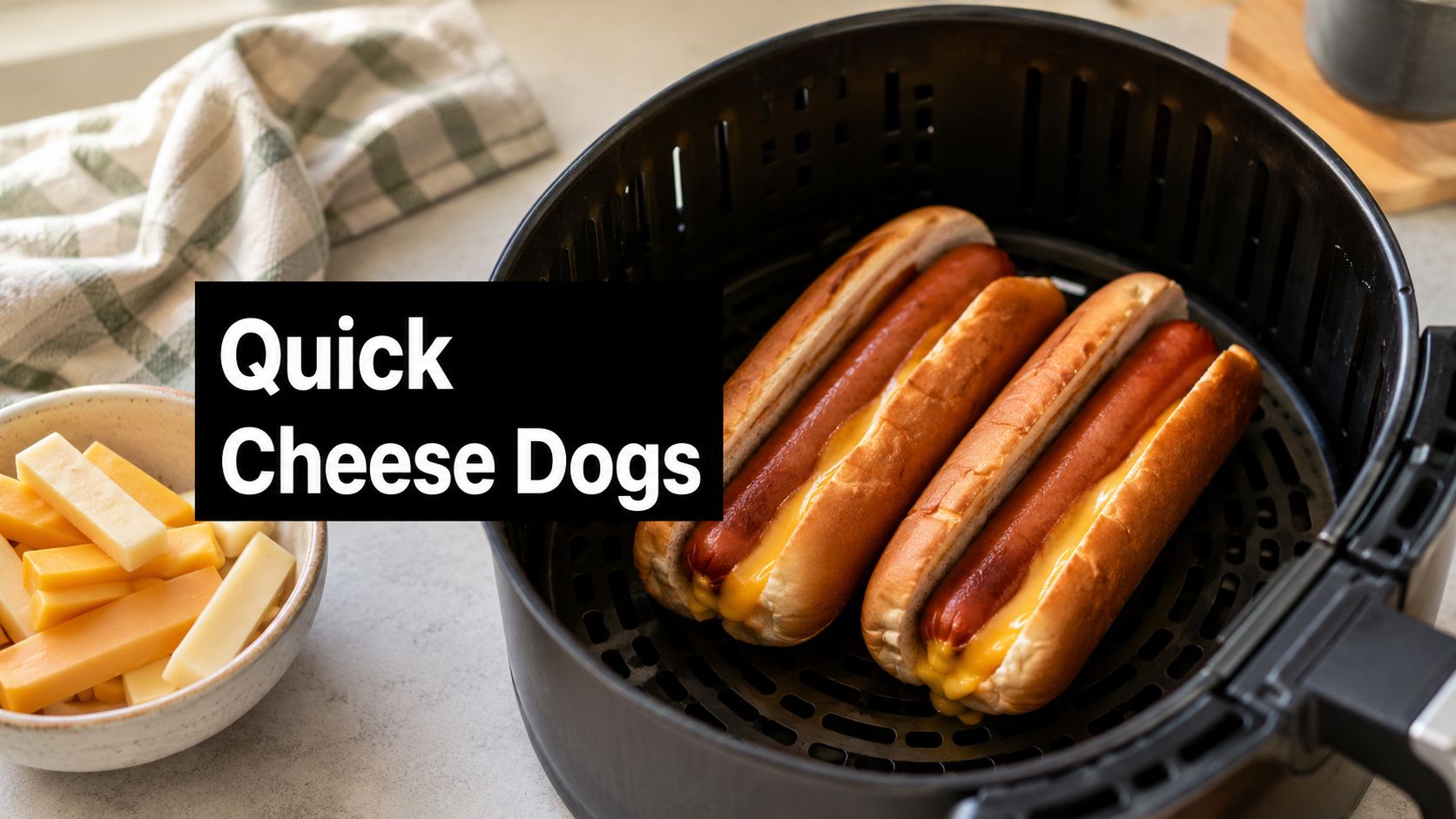
You want something hot, salty, cheesy, and fast. Not a project. Not a sink full of dishes. Not a sad microwave hot dog with a rubbery skin and a cheese puddle you have to scrape off a plate.
That's where air fryer cheese filled hot dogs earn their keep. They hit the comfort-food button almost instantly, but they still feel like you cooked something on purpose. The air fryer crisps the outside, the cheese softens into the center, and if you do the cut correctly, you get the payoff without cleaning burned cheese off the basket later.
The Ultimate 10-Minute Comfort Snack
It's 9:15, you're hungry, and you want something hot and comforting before you start grazing through the pantry. A cheese filled hot dog fits that moment better than almost anything else because it cooks fast, tastes deliberate, and doesn't need a pile of cleanup if you handle it properly.
Hot dogs have been part of American eating habits for a long time. The Library of Congress notes that Charles Feltman opened a Coney Island hot dog stand in 1871, and the National Hot Dog and Sausage Council brochure reports that Americans were spending over $3 billion on hot dogs annually in supermarkets by 2018. Stuffing one with cheese is the modern comfort-snack version of that same idea.
The air fryer earns its spot here for one reason. It gives the outside a better bite than the microwave while heating quickly enough to keep this in true snack territory.
The trick is controlling the melt.
A cheese dog sounds simple, but the difference between great and annoying comes down to technique. Cut too deep, add too much cheese, or set the hot dog carelessly in the basket, and you get the dreaded blowout. Get those details right, and the cheese softens inside the slit instead of welding itself to the air fryer drawer.
That's why this recipe works so well for weeknights and lazy lunches. It delivers the comfort-food payoff, but the win is that you can eat it instead of scraping burned cheese off metal 10 minutes later.
Choosing Your Key Ingredients
The cleanest cheese dog starts at the cutting board. If the hot dog is too soft or the cheese melts too fast, you set yourself up for the kind of leak that glues itself to the air fryer basket.

Pick a hot dog with some structure
Choose a frank that feels firm and springy, not loose in the package. All-beef hot dogs usually work well because they hold a slit neatly and stay intact once the filling heats up. Softer dogs can tear while you cut them, and that small tear often turns into a full split during cooking.
Skinless and natural-casing hot dogs can both work. The better test is how the dog feels in your hand. If it bends too easily or looks waterlogged, skip it.
Use block cheese, not shredded
Block cheese gives you control, and control is what prevents blowouts. Cut it into narrow sticks that sit below the top edge of the hot dog. That keeps the cheese tucked in place instead of exposed to direct heat right away.
Shredded cheese is messier here. It melts fast, slips out of the slit, and leaves little bits behind to burn. Save the shreds for something like this air fryer bagel recipe, where loose cheese on top is part of the appeal.
A few cheeses work especially well:
- Cheddar: Firm, flavorful, and easy to cut into tidy batons.
- Pepper jack: Good heat, with enough structure to stay put.
- Mozzarella: Mild and stretchy, but best used in smaller pieces because it loosens faster.
Firm cheese buys you time. The hot dog can heat through and brown a little before the filling turns fully molten.
If you want bacon, think about thickness
Bacon changes the timing, so choose it on purpose. Thick-cut bacon gives you a meatier bite, but it usually needs a head start or it stays underdone by the time the hot dog is ready. Regular-cut bacon is easier for a quick wrap and less likely to trap too much moisture around the slit.
Leave a little space between the bacon turns instead of wrapping the whole dog like a bandage. A few gaps help steam escape, which keeps the outside from going soft and reduces the pressure that pushes cheese out.
The Perfect Air Fryer Cooking Method
A cheese-filled hot dog can go two ways in the air fryer. You either get a browned, tidy snack with a molten center, or you spend the next ten minutes scraping burnt cheese off the basket. The method below is built to avoid that second outcome.

Cut a channel, not a deep slit
Use a sharp knife to cut lengthwise into each hot dog, but stop before you reach the bottom. The goal is a shallow channel with both sides still attached. That gives the cheese a pocket instead of an escape route.
Depth matters here. If the cut is too shallow, the cheese sits on top and melts out fast. If it goes too deep, the hot dog opens wide as it heats and the filling pushes out. A centered channel keeps the structure strong while the inside melts.
Fit the cheese below the rim
Press one narrow stick of cheese into the channel so it sits slightly lower than the top edges of the hot dog. That small detail does a lot of work. The meat shields the cheese from direct circulating heat for the first few minutes, which buys time for the hot dog to heat through before the filling turns loose.
Do not pile extra cheese on top. More cheese sounds better, but in the air fryer it usually means more cleanup.
The same restraint helps with other air fryer snacks too, especially recipes that rely on controlled browning like this bagel in the air fryer method.
Cook with the opening facing up
Place the hot dogs in the basket with the cheese side up and leave a little space between them. Air needs room to move, but the opening should stay upright the whole time. That position keeps gravity on your side and makes it easy to spot trouble before the cheese spills over.
Cook at 400°F for 8 to 10 minutes as a starting point. Check a little earlier if your hot dogs are thin or your air fryer runs hot. Add a minute or two if they are larger, very cold from the fridge, or wrapped in bacon.
Look for these signs instead of waiting for a dramatic cheese bubble:
- The hot dog is lightly browned and a little taut
- The cheese looks melted and glossy, not aggressively boiling
- The channel has opened slightly but still holds its shape
- The edges look roasted, not split or dried out
Pull them as soon as they look ready. Extra time rarely improves them. It usually turns a clean fill into a blowout.
Rest before serving
Let the hot dogs sit for a minute or two after cooking. Hot cheese is at its loosest right out of the basket, so this brief rest helps it settle and thicken. You get a better bite, and you are less likely to lose the filling when transferring to a bun.
Toast the bun separately
If you want a bun, toast it after the hot dogs come out or warm it on its own. Cooking the bun underneath the hot dog traps moisture at the base and softens the exterior. A separate toasted bun keeps the contrast right. Crisp outside, creamy center, less mess on your plate and in the basket.
Creative Twists on Your Cheese Dogs
Once you've nailed the basic method, you can start changing the personality of the hot dog without changing the core technique. The trick is to add flavor without losing control.
Compare your cheese choices
Different cheeses change both flavor and behavior. Some stay tidy. Some get looser. Some bring heat right away.
| Variation Type | Suggestion | Pro Tip |
|---|---|---|
| Classic | Sharp cheddar | Cut it into narrow sticks so it sits below the rim of the slit |
| Mild and stretchy | Mozzarella | Use low-moisture mozzarella if you want a cleaner melt |
| Spicy | Pepper jack | Pair with a few small jalapeño pieces, not a full pile |
| Smoky | Cheddar with smoked seasoning on top | Season the outside, not the filling, to avoid overcrowding |
| Richer bite | Cheese plus cooked onion | Use a very small amount of onion and tuck it under the cheese |
Add-ins that actually work
Tiny add-ins can be great. Big wet fillings usually aren't. Diced jalapeños, very small bits of cooked onion, or a thin swipe of mustard inside the slit can work well because they don't force the hot dog open.
What doesn't work as well is stuffing in too many extras at once. Once the channel gets overloaded, the cheese no longer sits securely. Then the air fryer does what the air fryer always does. It pushes hot fat and melted cheese outward.
For more snack ideas in that same spirit, this air fryer snack blog collection is useful if you like turning simple ingredients into fast comfort food.
Two easy variations worth trying
- Bacon-wrapped version: Wrap loosely enough that steam can still escape. If the bacon is thick, pre-cook it first so the hot dog doesn't overcook waiting for the bacon to finish.
- Vegetarian version: Use a plant-based hot dog and a dairy-free cheese that comes in block form if possible. The same slicing and filling principles still apply.
The best variation is the one that still respects the channel. If the filling can't sit down inside the hot dog, it probably won't stay there.
How to Avoid a Cheese Explosion
You load the dogs, slide them into the air fryer, and a minute later cheese is bubbling onto the basket instead of staying where you want it. That mess usually starts before cooking ever begins. The fix is technique, not more time or more cheese.

The goal is simple. Build a pocket that holds the cheese while the hot dog heats through, then pull it as soon as the center is hot enough. If the slit is weak or the filling is packed too high, hot air will push melted cheese right out the top.
The three rules that keep cheese in place
- Cut a channel, not a split: Slice deep enough to make room for the cheese, but leave the bottom intact so the hot dog still supports itself.
- Use one solid piece of cheese: A stick or narrow strip melts more predictably than loose shreds, which scatter and escape faster.
- Keep the cheese slightly below the top edge: If it sticks up before cooking, it will spill out once it softens.
A grill-based stuffed hot dog method from Steven Raichlen follows the same principle in a different setup. The sausage browns first, then the cheese finishes under gentler heat so it stays inside more cleanly, as shown in this stuffed pepper jack hot dog recipe.
Don't judge doneness by the cheese
Cheese can look fully melted before the hot dog is heated through, or it can keep loosening after the hot dog is already done. That is why I do not use the cheese as the signal to keep cooking. Extra time is what usually turns a tidy cheese dog into an air fryer cleanup job.
Use the hot dog itself as your finish line. For uncooked sausage products, the USDA recommends cooking to 160°F / 71°C, as noted on the USDA safe minimum internal temperature chart. Once it reaches that point, take it out and let it rest briefly so the cheese settles instead of running.
A small rest helps more than people expect. The filling thickens slightly, the slit relaxes, and you get a cleaner bite with a lot less basket scrubbing later.
Serving Suggestions and Storage Tips
Serve these the way you eat snacks at home. In a bun with mustard is great. Sliced into bite-size pieces with dipping sauces is even better when you're feeding people or want something easy to share.

A few serving ideas work especially well:
- Hot dog bites: Slice them into coins after resting, then serve with ketchup, mustard, or ranch.
- Loaded buns: Add pickled jalapeños, diced onion, or relish after cooking so the filling stays stable.
- Snack plate style: Pair with chips, cut vegetables, or a simple slaw.
If you have leftovers, let them cool before storing so condensation doesn't soften the exterior. Reheat in the air fryer until warmed through and the outside perks back up. That gives a much better texture than microwaving.
Make-ahead prep is simple too. Slice and fill the hot dogs ahead of time, then keep them covered in the fridge until you're ready to cook. That's handy on busy nights because the fiddly part is already done.
Frequently Asked Questions
Can I use regular pre-cooked hot dogs?
Yes. That's the easiest choice for this recipe. Since the hot dog is already fully processed, you're mostly reheating it while melting the cheese and improving the exterior texture.
Why did my hot dog split?
Usually one of three reasons caused it. The cut went too deep, the filling was too large, or the hot dog stayed in the fryer longer than it needed to. A weaker casing can also split faster than a firmer one.
Is shredded cheese ever okay?
It can work, but it's harder to control. If that's all you have, use a very small amount and press it down into the slit instead of sprinkling it across the top.
How do I clean cheese drips from the air fryer basket?
Let the basket cool slightly first. Then soak or rinse it before the cheese hardens completely. A seam-side-up position helps reduce this problem from the start.
Do I need to flip the hot dogs?
Not usually. For stuffed hot dogs, keeping the seam facing up is more important than flipping. That position protects the filling and makes doneness easier to judge.
If you want more fast, practical snack ideas like this, Air Fryer Snack Ideas is packed with easy recipes for busy nights, low-effort cravings, and better air fryer results.
