


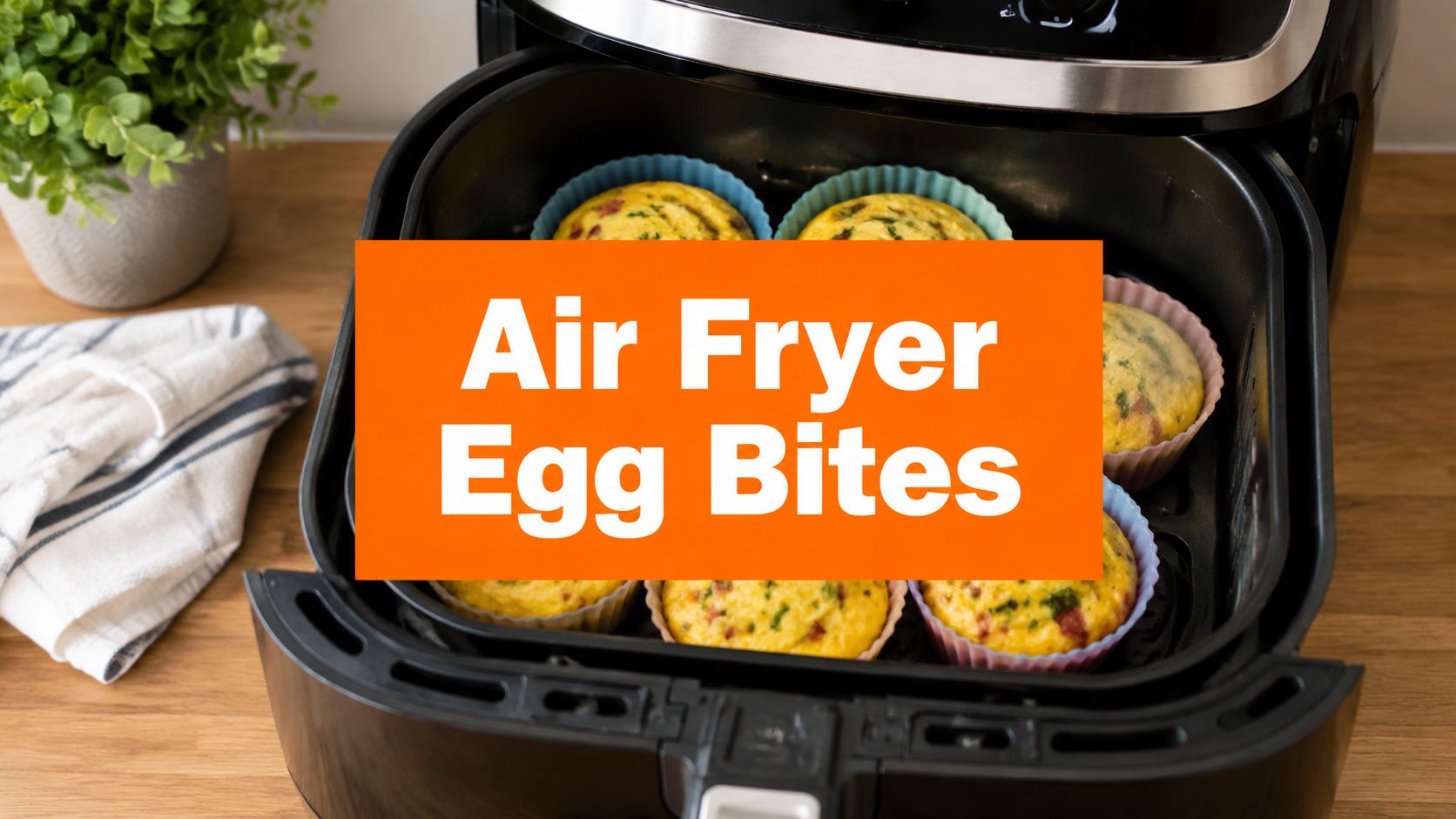
Some mornings you need breakfast to be faster than your coffee. You're getting kids dressed, packing a bag for campus, jumping into an early meeting, or just trying not to default to toast again. That's exactly where egg bites earn their spot. They cook quickly, reheat well when made properly, and feel more satisfying than most grab-and-go breakfasts.
A good air fryer egg bites recipe isn't just about mixing eggs and hoping for the best. The difference between fluffy, tender bites and sad rubbery ones usually comes down to a few small decisions. How you prep vegetables matters. How thoroughly you mix the eggs matters. Even the rest time after cooking matters.
These are the details that turn egg bites from “fine” into something you'd want to make every week.
Your Fast and Healthy Breakfast Solution
You open the fridge at 7 a.m., need breakfast in minutes, and do not want another piece of toast that leaves you hungry an hour later. Egg bites fit that moment better than almost any other make-ahead breakfast. They reheat fast, travel well, and can be portioned for one person or a full week of rushed mornings.
What makes them useful is not just speed. It is consistency. A good batch gives you tender, custardy centers instead of rubbery eggs, and that texture holds up in the fridge if you prepare the fillings properly and avoid extra moisture. That is the part many basic recipes skip.
Small portions also solve a practical cooking problem. A full egg casserole can bake unevenly and takes longer to cool, store, and reheat. Egg bites cook faster, are easier to portion, and let you mix flavors in the same batch so nobody gets stuck with a whole pan of something they do not want.
Why these work on busy mornings
A batch of egg bites covers several real situations without much effort:
- For workdays: Reheat two or three for a quick breakfast that feels substantial.
- For college schedules: They are easy to pack and easy to eat between classes.
- For parents: Smaller portions are easier to serve, and different add-ins keep picky eaters happier.
If you want a more filling breakfast, a bagel in the air fryer pairs well with egg bites and reheats on the same timeline.
Practical rule: Egg bites are only convenient if they still taste good on day three. Texture decides whether they are worth meal prepping.
What usually goes wrong
Watery vegetables are the biggest culprit. Mushrooms, spinach, and peppers release moisture as they cook, and that extra water turns the egg mixture loose and spongy. The fix is simple. Cook vegetables first and let them cool before they go into the mold.
Overbeating is less common than undermixing, but both affect texture. If the eggs and dairy are not fully combined, the bites cook unevenly and can puff up in odd spots, then sink hard as they cool. Cook time matters too. Pull them when the centers are just set. Residual heat finishes the job and keeps the texture soft.
Get those details right, and air fryer egg bites become one of the few healthy breakfasts that is fast, repeatable, and still good after reheating.
Essential Equipment and Ingredients for Perfect Egg Bites
The easiest way to ruin egg bites is before cooking starts. A crowded mold, watery fillings, or the wrong egg-to-dairy balance gives you the kind that puff up, sink, and turn rubbery by the next day.

The equipment that makes this easier
You only need a few tools, but each one affects texture or ease.
- Silicone egg bite mold or silicone muffin cups: Silicone releases cleanly and protects the eggs from cooking too harshly at the edges. That matters if you want a soft, custardy center instead of a firm muffin texture.
- A mixing bowl and whisk, or a blender: A whisk gives you control and keeps cleanup simple. A blender makes the mixture smoother, which I prefer when I want that coffee-shop style texture.
- A small skillet: Use it to cook moisture out of vegetables and to fully cook bacon, sausage, or ham before they go into the eggs.
- Cooking spray or a little oil: Even silicone can grab onto eggs if you skip this.
- Your air fryer basket or tray setup: The mold should sit flat with a little room around it so hot air can circulate evenly.
A blender is useful, but not required. Good texture comes more from proper prep than from expensive equipment.
The foundational ingredient base
A reliable batch starts with eggs as the main ingredient and dairy in a supporting role. As noted earlier, the American Egg Board uses a simple egg-and-dairy ratio, and other recipes such as Hello Frozen Bananas show that the method scales down well for smaller molds and smaller households.
For home cooking, the practical rule is simple. Use enough milk or cream to soften the eggs, but not so much that the mixture turns thin. Cream gives a richer, silkier bite. Milk keeps things lighter. Cottage cheese can work too, but it changes the texture and needs to be blended well if you want a smooth finish.
Season the base before adding fillings. Salt, black pepper, and a modest amount of cheese are enough for a first batch.
Best add-ins to keep on hand
Choose fillings that add flavor without releasing too much water or weighing down the custard.
| Category | Good choices | What to watch |
|---|---|---|
| Meats | cooked bacon, diced ham, cooked sausage, shredded chicken | use fully cooked meat and keep pieces small |
| Vegetables | spinach, mushrooms, peppers, onions | cook off moisture first and cool before adding |
| Cheese | cheddar, mozzarella, feta, Monterey Jack | too much cheese makes the center dense |
| Extras | chives, parsley, dill, a spoonful of cottage cheese | wet add-ins change how the bites set |
A restrained filling mix works better than a loaded one.
Ingredient mindset that gets better results
Treat these like a baked egg custard. The eggs should hold everything together, not compete with a pile of add-ins. That is the difference between bites that reheat well and bites that weep liquid in the container.
I keep each cup lightly filled with mix-ins and let the egg base do the work. If you want more vegetables or meat, serve them on the side or add them at breakfast instead of forcing them into the mold. That trade-off gives you better texture, less deflation, and more reliable meal prep.
The Step-by-Step Air Fryer Egg Bite Recipe
A good batch should come out tender, set, and easy to reheat, not wet in the middle or rubbery around the edges. The method below is the one I use when I want egg bites that hold up for meal prep and still taste good on day three.

Prepping your fillings
Start by fixing the ingredient that causes the most trouble: extra water.
Cook vegetables until their moisture is mostly gone, then let them cool for a minute or two before adding them to the mold. Mushrooms should look browned, spinach should be wilted and squeezed dry, and onions or peppers should be softened instead of raw and crunchy. Fully cook bacon, sausage, or ham as well.
This step decides texture. Raw, wet fillings release steam as the eggs set, which leads to watery pockets, uneven cooking, and bites that sink hard after cooling.
Keep the prep simple:
- Cut everything small: Small pieces distribute better and help each bite hold together.
- Dry the fillings well: A paper towel helps with cooked spinach, mushrooms, and bacon.
- Cool hot ingredients briefly: Very hot fillings can start cooking the egg mixture before it even reaches the air fryer.
If you want more ideas for practical breakfast batches, this collection of air fryer snack and breakfast recipes is useful for planning ahead.
Creating the egg custard
Whisk or blend the eggs with a small amount of milk or cream, plus your salt, pepper, and cheese. The mixture should look fully combined and uniform, with no visible streaks of white.
A quick whisk works, but a blender gives the smoothest texture. I use the blender when I want that soft, almost sous vide style interior. The trade-off is a little more puff during cooking, followed by a little more settling as the bites cool. Both versions work. The main goal is an even mixture so the bites cook at the same rate from edge to center.
Do not overload the base with cheese. Too much cheese makes the middle heavier and can turn the texture from creamy to dense.
Filling the molds
Grease the silicone mold or cups lightly so the bites release cleanly.
Scatter a modest amount of fillings into each cup, then pour in the egg mixture until each one is nearly full. Leave a little room at the top because the bites will rise as they cook. If you pack in too many solids, the eggs cannot form a smooth custard around them, and the finished bites are more likely to crack or fall apart.
A reliable order is simple:
- add fillings first
- pour egg mixture over them
- finish with a small sprinkle of cheese or herbs
That balance gives you bites that look full without turning heavy.
Air frying the bites
Place the filled mold in the basket and cook until the tops are set and the centers have just a slight softness. Exact time depends on your air fryer, the depth of your mold, and how cold the ingredients were when they went in.
Use appearance, not just the clock. Pull one out a little early if needed and check the center.
| What you see | What it means |
|---|---|
| shiny liquid center | needs more time |
| set top with slight softness in center | ready |
| dry surface and noticeable browning | overcooked or close |
If your air fryer runs hot, lower the temperature a bit and give the bites more time. That slower cook usually produces a more even texture. If the tops brown before the centers set, tent the mold loosely with foil.
The all-important rest
Let the egg bites sit for a few minutes before unmolding.
This short rest finishes the center with carryover heat and helps the structure firm up, so the bites release without tearing. It also reduces the dramatic collapse that frustrates a lot of home cooks. Some settling is normal. Egg bites puff from trapped steam, then drop slightly as that steam escapes.
What matters is the final texture. If the inside stays moist and tender after resting, you cooked them correctly.
Endless Variations for Your Egg Bites
Once you have the base right, egg bites become more of a template than a fixed recipe. The trick is understanding what each swap does to texture, not just flavor.

Savory meat combinations
Cooked meats add flavor fast, especially if your vegetable mix is mild.
Bacon gives the strongest flavor in a small amount. Ham keeps the bites soft and salty without making them greasy. Sausage works well, but it can dominate the whole batch if it's heavily seasoned.
The best rule is to use meats as accents, not as the bulk of the filling.
Vegetable combinations that actually work
Vegetables make egg bites better, but they also cause most texture problems. The highest-risk ingredients are the ones that release water as they cook.
Good choices include:
- Spinach and feta: Salty, sharp, and compact once the spinach is cooked down
- Mushroom and cheddar: Rich flavor, but only if the mushrooms are sautéed first
- Pepper and onion: A classic combo that works well when softened before adding
- Tomato and herbs: Tasty, but use sparingly because tomatoes can add extra moisture
If you like experimenting with air fryer breakfast ideas and snack-style recipes, the air fryer snack ideas blog category is a helpful place to browse for combinations and techniques.
Cheese and texture trade-offs
Cheese changes more than flavor. It changes body.
Cheddar and Jack add structure. Mozzarella melts smoothly but can make the interior feel softer. Feta stays in little pockets, which gives each bite a more varied texture.
Cottage cheese is the most interesting variation. Many recipes use it for a creamier, higher-protein style, but there's a trade-off. It adds moisture, so if you're also adding watery vegetables, the center can go soggy unless those vegetables are pre-cooked first (Profusion Curry egg bites discussion).
Cottage cheese can improve creaminess, but it makes moisture control more important, not less.
Lighter and dairy-free approaches
Egg white versions can work if you want a lighter bite. Just expect a different texture. They won't have the same richness as whole eggs, and they can feel firmer if cooked too long.
Dairy-free versions are also possible. The key is keeping the egg base smooth and not overloading the molds with wet fillings to make up for lost creaminess.
A simple way to build your own batch
When creating your own version, think in layers:
- Choose one main flavor: bacon, mushroom, ham, or feta
- Add one supporting ingredient: spinach, onion, pepper, or herbs
- Keep moisture in check: pre-cook anything watery
- Finish easily: a little cheese on top is usually enough
The best batches aren't the ones with the most ingredients. They're the ones where every ingredient has a reason to be there.
Solving Common Egg Bite Problems
You open the air fryer expecting a batch you can reheat all week, and instead you get bites that look puffed, then collapse into wet little cups. That usually comes down to one thing. Texture problems start before the mold goes into the basket.

Why they turn watery
Watery egg bites almost always come from excess moisture. Raw vegetables are the main culprit. Mushrooms, spinach, onions, and peppers release liquid as they cook, and that moisture gets trapped inside the egg mixture instead of evaporating away.
The fix is simple but important. Cook high-moisture vegetables first until they stop steaming and look slightly reduced, then let them cool a bit before folding them in. A smooth egg base matters too. If the eggs and dairy are not fully combined, the bites cook unevenly and can form wet pockets. As Confetti and Bliss notes earlier in the article, a fully mixed custard and pre-cooked vegetables make a noticeable difference.
If you want more air fryer breakfast ideas that use the same prep logic, air fryer breakfast recipes and tips are a good next stop.
Why they puff up and then deflate
Some rise and settling is normal. Eggs trap steam as they cook, so the bites swell in the mold and then relax as they cool.
Heavy deflation points to one of two issues. The center was still under-set when you pulled them, or the mixture held too much water to support itself after cooling. In practice, that means you should cook until the centers look just set, not glossy, and avoid overloading the molds with fillings.
A slight drop is normal. A sunken center with a damp top means the structure did not fully set.
Why they get rubbery
Rubbery egg bites are almost always overcooked. Air fryers run hot, and small portions of egg go from tender to firm very fast.
Lower, gentler heat usually gives the best texture. If your first batch comes out tough, shorten the cook time on the next round or reduce the temperature slightly. Blending or whisking the base until fully smooth also helps the texture stay more even instead of tight and curdled.
| Problem | Likely cause | Fix |
|---|---|---|
| Rubbery bite | cooked too long | remove when center is just set |
| Cracked top | heat too high or overcooked | lower heat or shorten cook time |
| Dense interior | eggs not mixed enough | whisk or blend until smooth |
| Wet pockets | vegetables released water | cook fillings first and cool them slightly |
Why they stick to the mold
Even silicone can hold onto eggs if the cups are not greased well or if you try to unmold them right away. A short rest helps the proteins firm up, which makes release cleaner.
If sticking keeps happening, brush the mold lightly with oil instead of relying on spray alone. Then let the bites sit for a few minutes before loosening the edges. That small pause prevents torn tops and helps the batch stay neat for meal prep.
Make-Ahead and Reheating Instructions
A batch of egg bites can save breakfast on the mornings when there is no time to cook, but only if they reheat with the same soft, custardy texture they had on day one. Storage matters here. So does how you warm them back up.
Cooked egg bites hold well in the fridge for several days, and they also freeze well for longer meal prep, as noted in Crumb Top Baking's air fryer egg bite storage tips. For food safety and better texture, let them cool, then refrigerate promptly in a covered container. Cooling them first keeps steam from collecting inside the container, which is one of the main reasons leftover egg bites turn wet on top.
Best way to store them
- For the fridge: Store fully cooled egg bites in an airtight container. If you are stacking them, place a sheet of paper towel or parchment between layers to catch extra moisture.
- For the freezer: Freeze the bites in a single layer until firm, then transfer them to a freezer-safe bag or container. That keeps them from sticking together and makes it easy to grab one or two at a time.
How to reheat without ruining them
The microwave is the fastest option. Use short bursts on medium power instead of one long cycle. That gentle reheating keeps the proteins from tightening up, which is what makes eggs go rubbery.
The air fryer gives the best texture if you have a few extra minutes. Reheat at a lower temperature just until warmed through. High heat will toughen the outside before the center is hot. If you prep a lot of air fryer breakfasts, this collection of air fryer breakfast and snack ideas is useful for filling out the week.
The oven works well for a larger batch. Cover the bites loosely so the tops do not dry out, then heat only until the centers are warm.
If a reheated bite seems watery, it usually means condensation built up during storage, not that the recipe failed. A paper towel in the container helps. If it seems dense or rubbery, the reheating was too aggressive. Lower heat fixes that better than extra time.
