


You're probably reading this with one eye on your phone and one eye on the rest of your day. Maybe breakfast was coffee, lunch was whatever you could grab between classes or meetings, and dinner is starting to feel like a choice between takeout, cereal, or skipping it and snacking later. That's exactly where a 1500 calorie meal plan can help. Not because it's magic, but because it gives shape to a day that otherwise runs on autopilot.
The useful part of a 1500 calorie meal plan isn't the number alone. It's the structure. When you know roughly how much room you have for breakfast, lunch, dinner, and snacks, it gets easier to stop under-eating all day and over-eating at night. It also gets easier to build meals that effectively keep you full, instead of relying on random convenience food that never quite does the job.
Is a 1500 Calorie Meal Plan Right for You
A 1500 calorie meal plan works best when you treat it as a framework, not a rule handed down to everyone. For some people, it creates a useful calorie deficit for gradual weight loss. For others, especially active adults, taller people, or anyone with higher energy needs, it can be too low and hard to sustain.
That difference matters more than most online meal plans admit. Hospital-style guidance often treats 1500 calories as one step in a calorie ladder, not a universal prescription. AtlantiCare notes that 1,200 calories is usually used for women while 1,500 is often used for men in certain contexts, which highlights how calorie needs vary by sex, body size, and activity level in real life, not just on paper (AtlantiCare 1500 calorie meal plan guidance).
Signs it may be a good fit
If your current eating pattern feels loose, reactive, or driven by convenience, a 1500 calorie plan can give you guardrails. I see it help most when someone wants:
- More structure: You're tired of guessing what to eat.
- Better portion awareness: Meals tend to creep larger when you're stressed or distracted.
- A simple weight-management target: You want a clear daily budget without obsessing over every bite.
- Busy-day consistency: You need meals you can repeat and prep quickly.
Signs it may not be enough
Some people start at 1500 calories and feel wiped out by midweek. That's usually a sign to reassess, not “try harder.”
A meal plan only works if your body and schedule can live with it.
Be cautious if you train hard, walk a lot during the day, or notice strong hunger, poor concentration, irritability, or rebound eating at night. Students pulling long campus days and professionals with heavy workout schedules often need more flexibility than a strict low target allows.
The better way to think about it
Don't ask, “Is 1500 calories supposed to work?” Ask, “Does this create enough structure to help me eat better without making my life harder?” If the answer is yes, it's a useful starting point. If it leaves you white-knuckling hunger and thinking about food all day, it's the wrong target.
Setting Your Calorie and Macro Targets
The number 1500 only becomes practical when you give it a job. That job is to cover protein, carbs, fats, and fiber in a way that supports your day. If you skip that step, a 1500 calorie meal turns into coffee, a pastry, a light lunch, and a giant dinner. Technically tracked, but not helpful.
A more effective setup starts with your estimated energy needs. Guidance from Healthline recommends estimating total daily energy expenditure using TDEE and then subtracting about 500 calories to support gradual loss of about 1 to 2 pounds per week. The same guidance also stresses a high-protein, high-fiber pattern built around whole foods (Healthline on a 1500-calorie diet and TDEE).
Start with the calorie target, then build the plate
The infographic above gives a simple macro blueprint for a 1500 calorie day. Think of those numbers as planning targets, not perfection goals. You don't need every meal to look balanced in exactly the same way. You do need the full day to make sense.
What each macro does for you
Protein keeps meals from falling apart
Protein is what stops a meal from feeling like a snack. It supports muscle, helps with fullness, and makes a lower-calorie plan easier to stick with. In practice, this means centering meals around foods like eggs, Greek yogurt, cottage cheese, chicken, fish, tofu, beans, or edamame.
A quick test works well here. If your breakfast is mostly toast, fruit, or cereal, you'll probably be hungry too soon. Add a clear protein source and the meal usually holds much better.
Carbs support energy, especially on busy days
Carbs get unfairly blamed for overeating, but the bigger issue is usually carb quality and portion drift. Students and professionals often do better when they keep steady, moderate portions of oats, rice, potatoes, fruit, beans, or whole grain bread instead of trying to avoid carbs all day and then overdoing them at night.
Good carbs are especially useful around long work blocks, study sessions, or workouts. They help you stay alert and prevent the “I need something sweet right now” crash that shows up mid-afternoon.
Fats make the plan livable
Fat adds staying power and flavor. A meal plan with no healthy fats often feels joyless, and that's one reason people abandon it. Use portions deliberately with foods like avocado, olive oil, nuts, seeds, cheese, or nut butter.
Practical rule: Add fats on purpose, not by accident. Cooking oil, dressings, sauces, and handfuls of nuts can change a meal fast.
A simple way to personalize your plan
If you want a practical starting point, use this sequence:
- Estimate your maintenance needs. An online TDEE calculator based on the Mifflin-St Jeor method is usually enough for planning.
- Compare 1500 to that estimate. If 1500 creates a moderate deficit, it may be workable.
- Test your appetite and energy for two weeks. Hunger, focus, gym performance, and late-night cravings tell you a lot.
- Adjust based on real life. If adherence breaks down, the plan is too aggressive or too rigid.
A solid 1500 calorie meal plan doesn't win because it looks disciplined. It wins because you can repeat it on a Tuesday when you're tired.
Building Your Plate with Smart Portioning
Overeating isn't typically due to carelessness. Rather, it often occurs because portions are hard to judge when life gets busy. A “healthy lunch” can still blow through your calorie budget if the rice doubles, the dressing pours heavy, and the nuts become a second snack. That's why smart portioning matters more than perfect meal tracking.
A useful reference comes from a U.S. Department of Veterans Affairs sample menu summarized by Medical News Today. In that model, a nutrient-dense 1500-calorie diet includes roughly 3 cups of vegetables, 2 cups of fruit, 5 ounces of protein foods, 1 ½ tablespoons of oils, and 100 calories for treats per day, which shows how a full-day plan preserves nutrient density instead of cutting calories randomly (Medical News Today on the 1500-calorie diet).

Use your hands when you don't have a scale
When I want portioning to be realistic, I teach hand-based estimates first. They work in dorm kitchens, office lunches, and restaurants.
- Palm for protein: Chicken, fish, tofu, turkey, or tempeh.
- Cupped hand for carbs: Rice, pasta, oats, beans, fruit.
- Thumb for fats: Nut butter, oil, mayo, salad dressing.
- Two fists for vegetables: Salad greens, broccoli, peppers, cucumbers, roasted vegetables.
This isn't lab precision. It's consistency. And consistency is what helps a 1500 calorie meal plan survive contact with real life.
What a balanced plate looks like
A practical lunch plate might look like this:
| Plate section | Simple visual |
|---|---|
| Lean protein | About a palm |
| Starch or grain | One cupped hand |
| Vegetables | Two fists |
| Fat source | One thumb |
That pattern works for rice bowls, burrito bowls, salads, grain bowls, and simple dinners. It also reduces the common mistake of letting carbs and fats stack while protein stays too low.
Where people usually get tripped up
One common scene: someone orders grilled chicken and thinks the meal is “light.” Then the add-ons do the damage. Extra cheese, creamy dressing, large rice serving, and a sweet drink push the meal far beyond what they expected.
Restaurant portions are often built for appetite, not for a calorie target.
If you eat out often, keep one anchor in mind. Choose the protein first, vegetables second, and starch third. Then decide if the extras are worth the trade. That order alone can clean up a lot of meals without turning you into the person who brings a food scale to lunch.
Sample 3-Day Menu and Easy Recipes
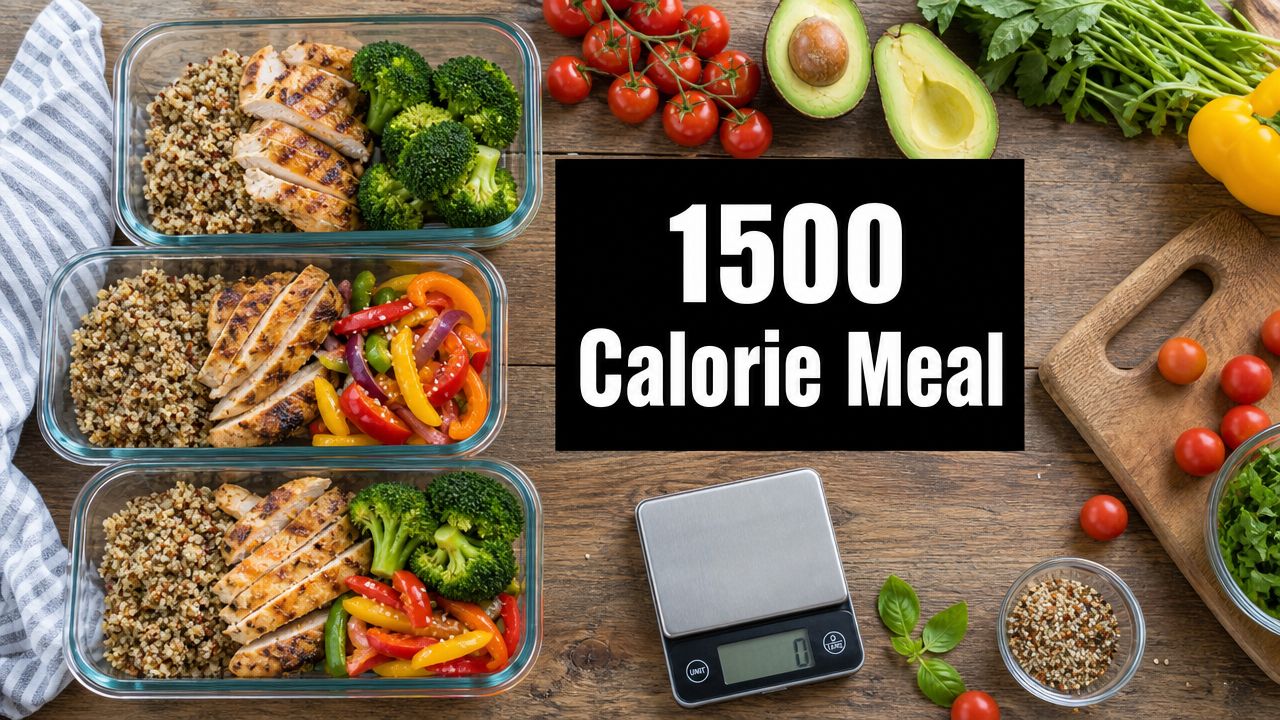
A 1500 calorie meal plan works better when each day has a rhythm. For most busy adults, that means a satisfying breakfast, a packable lunch, a straightforward dinner, and one planned snack. Without that rhythm, calories tend to bunch up late in the day.
That bunching happens fast. Diet vs Disease gives a useful example: one breakfast in its sample plan totaled 952 calories, or 63% of a 1,500-calorie daily target, which shows how quickly a single meal can consume most of the day's budget when portions aren't watched closely (Diet vs Disease sample 1500-calorie plan).
Sample 3-day 1500 calorie meal plan
| Day | Breakfast (~350 cal) | Lunch (~450 cal) | Dinner (~500 cal) | Snack (~200 cal) |
|---|---|---|---|---|
| Day 1 | Greek yogurt bowl with berries, oats, and chia | Turkey wrap with salad and fruit | Salmon, rice, and roasted broccoli | Air-fried chickpeas |
| Day 2 | Egg and veggie toast with fruit | Chicken grain bowl with cucumber and hummus | Tofu stir-fry with brown rice | Apple slices with peanut butter |
| Day 3 | Overnight oats with yogurt and banana | Tuna salad box with crackers and raw veg | Lean beef or bean taco bowl | Air-fried apple chips with cottage cheese |
These meals are intentionally simple. They use repeat ingredients, travel well, and don't depend on having a perfect schedule.
Day-by-day ideas that work in a real week
Day 1 for a packed workday
Breakfast is a yogurt bowl because it takes minutes and gives you protein early. Use plain Greek yogurt, berries, a spoonful of oats, and chia or flax. It feels substantial without becoming a calorie trap.
Lunch is a turkey wrap because wraps travel better than composed salads. Add sliced turkey, greens, chopped vegetables, and a spread like hummus or mustard. Pair it with fruit so you don't end up prowling for vending machine snacks by mid-afternoon.
Dinner is the classic batch-cook move: salmon, rice, and roasted broccoli. Cook enough for leftovers and you've solved tomorrow's lunch problem too.
Snack idea: air-fried chickpeas with smoked paprika and garlic powder. Crunchy, salty, and much more useful than random desk snacks.
Day 2 for class, commuting, or meetings
Breakfast needs to be grab-and-go. Toast with eggs and sautéed spinach works if you're at home. If not, a pre-made egg muffin or boiled eggs with toast does the same job.
Lunch is a chicken grain bowl. Build it with cooked rice or quinoa, chopped cucumber, chicken, tomatoes, and a scoop of hummus. This is one of the most reliable 1500 calorie meal templates because it's easy to portion and hard to mess up.
Dinner is tofu stir-fry. Use a frozen vegetable mix if time is tight. Stir-fry doesn't have to be fancy. Protein, vegetables, rice, and a measured sauce is enough.
Snack idea: apple slices with peanut butter. It's portable and takes the edge off hunger without feeling like dessert.
Air fryer snack swaps that earn their spot
Air fryers help because they cut down effort, not because they make every food “healthy.” The trick is using them for snacks that feel satisfying enough to replace convenience food.
Try these:
- Crispy chickpeas: Good when you want something salty.
- Apple chips: Better for a sweet craving than grazing through packaged snacks.
- Bagel half with protein on the side: Works well for a higher-carb snack before a long afternoon. If you want a quick method, this bagel in air fryer guide is a simple option.
- Air-fried veggie sides: Zucchini, carrots, or green beans can turn dinner into a more filling plate without much work.
Keep the meals boring enough to repeat
That's not a joke. The best meal plans aren't the most exciting ones. They're the ones you can make when you're tired.
If a recipe has too many steps for a Wednesday night, it won't become a habit.
Use flavor to create variety. Change spices, sauces, or fruit. Keep the structure the same. That's how a 1500 calorie meal plan becomes easier after week one instead of harder.
Your Meal Prep Strategy and Grocery List
Most meal plans fail in the gap between intention and Thursday. You start with motivation, but by midweek there's no cooked protein, no washed produce, and no clean container to pack lunch in. That's why meal prep matters. Not because it's glamorous, but because it protects your plan when your energy drops.
Clinical evidence summarized in a review on calorie restriction makes that point clear. Calorie restriction drives weight loss, but adherence is the primary predictor of long-term success, and structured habits matter because continuous daily restriction has poor long-term success when adherence slips (clinical review on adherence and calorie restriction).
The prep flow that saves the week

The most effective strategy is simple: prep components, not perfect meals. A fridge full of fully assembled containers can work, but it often gets repetitive fast. Components are more flexible.
A weekend system that doesn't take over your life
Cook your anchors first
Make the foods that give meals structure:
- Protein: Chicken, tofu, hard-boiled eggs, turkey patties, tuna mix.
- Carbs: Brown rice, quinoa, roasted potatoes, oats.
- Vegetables: Washed greens, chopped cucumbers, roasted broccoli, peppers, carrots.
Once those are done, meals come together in minutes.
Build a short grocery list
A practical list for the sample menu looks like this:
- Proteins: Eggs, Greek yogurt, chicken breast, salmon or tuna, tofu
- Carbs: Oats, brown rice, whole grain wraps, whole grain bread, fruit
- Produce: Berries, apples, bananas, broccoli, spinach, cucumbers, peppers, salad greens
- Fats and extras: Olive oil, hummus, peanut butter, chia seeds, seasonings
- Snack items: Chickpeas, cottage cheese, cinnamon
Short lists reduce waste and make repeat shopping easier.
Make convenience work for you
Students and professionals often think meal prep means cooking everything from scratch. It doesn't. Smart convenience counts.
Use pre-washed greens. Buy frozen vegetables. Choose rotisserie chicken if that's what gets protein into lunch. Keep microwave rice on hand for emergency dinners. If you use an air fryer often, you can also browse air fryer snack ideas when you want quick options that still fit your overall plan.
Prep should lower friction. If your prep routine feels like a second job, simplify it.
Portion the decisions, not just the food
One underrated habit is pre-deciding your defaults. Pick two breakfasts, two lunches, and two snacks you can rotate without thinking. That removes the daily negotiation that often leads to skipped meals and late-night overeating.
A strong setup might be:
- yogurt bowl or eggs for breakfast
- wrap or grain bowl for lunch
- fruit with peanut butter or cottage cheese for snack
That's not rigid. It's efficient. And efficient beats idealized eating every time.
Staying Consistent and Avoiding Common Pitfalls
The biggest mistake people make with a 1500 calorie meal plan isn't choosing the wrong chicken recipe or the wrong snack. It's turning one imperfect day into a reason to quit. A plan only helps if you can return to it quickly after normal life gets messy.
Consistency works better than perfection because perfection has no backup plan. Work dinners happen. Study nights run late. Travel days wreck your meal timing. None of that means the plan failed. It means you need a version of the plan that survives imperfect conditions.
The common traps
Saving all your calories for dinner
This usually backfires. You start with coffee, maybe a light lunch, then arrive home starving and eat past fullness. A better move is spreading intake across the day so hunger never gets out of control.
Eating too “clean” to stick with
A 1500 calorie meal shouldn't feel like punishment. If every meal is dry chicken and plain vegetables, adherence drops fast. Add sauces carefully. Include foods you enjoy. Leave room for a treat when it helps you stay steady.
Letting one restaurant meal derail the week
Restaurant meals don't need a moral label. They just need a little structure. Order protein first, ask for vegetables, and keep extras deliberate. If the meal ends up bigger than planned, move on. Don't turn one dinner out into a weekend of “starting over Monday.”
What to do when hunger keeps showing up
Hunger is information. Sometimes it means your portions are too small. Sometimes it means meals are too low in protein or fiber. Sometimes it means 1500 calories isn't the right target for your body and schedule.
Watch for patterns:
- Hungry soon after breakfast: Add more protein.
- Night cravings every day: Don't under-eat earlier.
- Low gym energy: Your intake may be too aggressive.
- Obsessing over food: The plan may be too restrictive.
A plan that fits should feel structured, not consuming.
The mindset that keeps people going
Use the clean-next-meal approach. Not “I blew it.” Not “I'll restart Monday.” Just the next meal.
If you need extra recipe inspiration for busy weeks, the air fryer snack ideas blog can help you keep convenient options on hand so your default snack isn't whatever you find first.
The people who do well long term aren't the ones who never go off plan. They're the ones who come back quickly, without drama.
If you want simple snack ideas that make a 1500 calorie meal plan easier to stick to, visit airfryersnackideas.com. It's a practical resource for quick air fryer snacks that fit busy schedules, especially when you need something fast, satisfying, and easier than takeout.
