


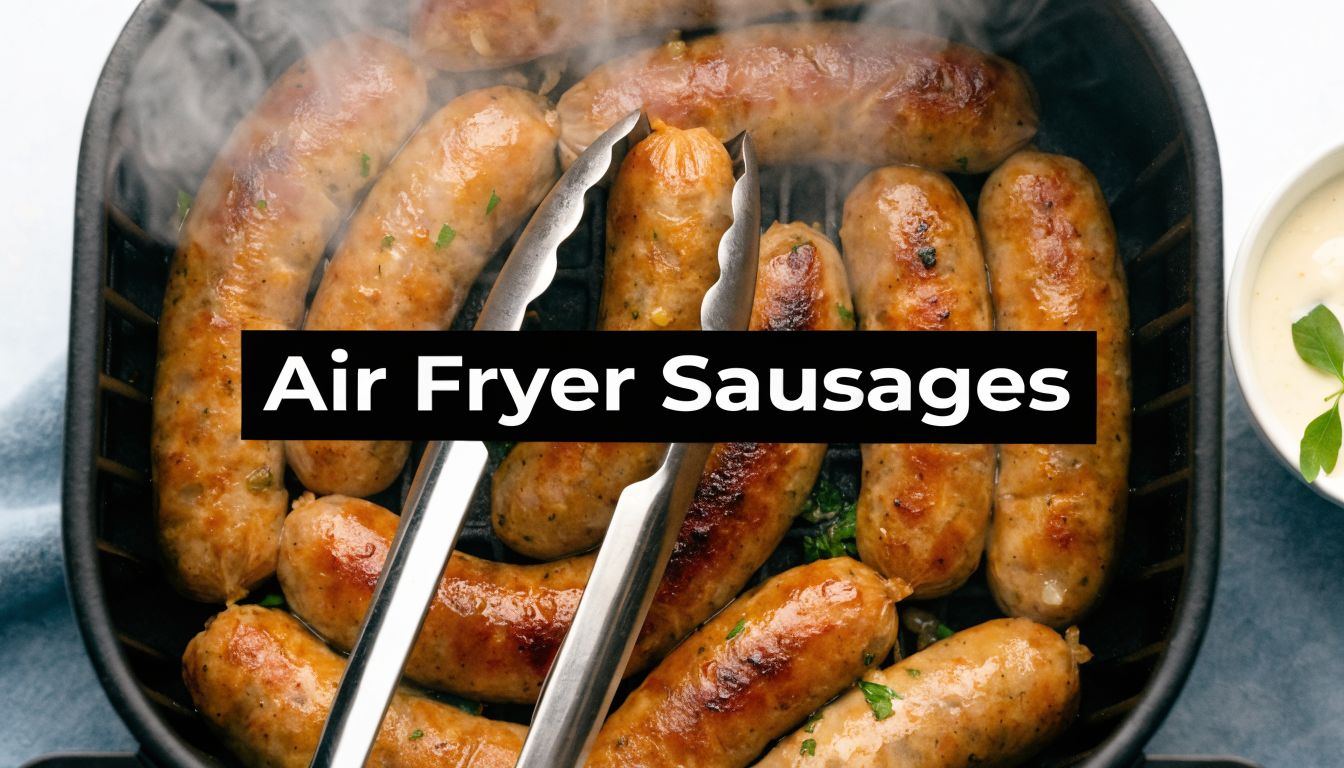
You’re probably here because dinner isn’t fully planned, your freezer is doing the heavy lifting, and a pack of sausages sounds a lot better than another bowl of cereal or toast. That’s exactly where air fryer frozen sausages shine. You can take them straight from the freezer, skip the thawing step, and still end up with browned outsides and a juicy center.
This is one of those low-effort wins that feels bigger than it is. You don’t need a pile of oil, you don’t need to stand over a pan, and you don’t need a complicated recipe to turn frozen sausages into something snackable, filling, and easy to build into a quick meal.
Why Your Air Fryer Is Perfect for Frozen Sausages
Six o’clock hits, the freezer is full of odds and ends, and you need something hot before everyone starts picking through chips and cereal. Frozen sausages are one of the few backup ingredients that can turn into real food fast, and the air fryer handles them better than a pan or oven for this exact kind of night.
The reason is simple. Fast circulating heat starts thawing the sausage right away while also drying and browning the outside. You get a casing with some color and bite, but you do not have to babysit a skillet or deal with oil popping all over the hob. That trade-off matters on busy nights. The stovetop gives you close control, but the air fryer gives you consistency with much less effort.
It also suits the way people eat sausages. Yes, you can serve them as a main with potatoes or veg. They are just as useful sliced into wraps, tucked into rolls, cut into snack bites with dip, or added to noodles, rice, and toast. If your goal is flexible, freezer-to-table food instead of a formal dinner, this method earns its place.
Why it works better than you might expect
Frozen sausages do well in the air fryer because they benefit from steady surrounding heat rather than hard contact heat. In a frying pan, the outside can brown too fast while the center is still catching up. In the oven, you often wait longer for the same result and still end up washing a tray. The air fryer sits in the middle. It cooks quickly, browns well, and keeps cleanup manageable.
There is also a useful bit of air fryer logic here that many quick recipes skip. Preheating is not always the best move for frozen sausage. Starting from a cold basket can give the middle a little more time to warm through before the casing tightens too quickly. That is one reason air fryer sausages can stay juicier than people expect, especially with thicker links.
A few ways this pays off in real kitchens:
- Quick snack plate: Serve whole links with mustard, barbecue sauce, or a yogurt dip.
- Low-fuss meal base: Slice them over rice, noodles, mash, or buttered toast.
- Party food: Cut cooked sausages into bite-size pieces and add dipping sauces.
- Kid-friendly option: Tuck pieces into mini buns or quesadillas.
For more air fryer snack ideas for busy nights, it helps to think beyond the usual sausage-and-chips routine.
Hot sausage straight from the freezer is not magic. It is just a method that works with real life instead of against it.
The Core Method for Perfect Air Fryer Sausages
The biggest mistake people make is treating all frozen sausages the same. They aren’t. Thin breakfast links, thicker Italian sausages, and frozen patties all respond a little differently to heat. But the core method stays simple if you understand what the air fryer is trying to do.
The most reliable baseline for links is this: place frozen sausages into a cold basket, use 390°F (200°C) for thin sausages or 360°F (180°C) for thicker ones, cook for 12 to 14 minutes, flip halfway, and confirm they reach 165°F (74°C) with an instant-read thermometer, as outlined in this step-by-step frozen sausage method.

Start cold if you want juicier links
A cold start sounds backward if you’ve used an oven your whole life, but it makes sense here. Frozen sausage needs a little gentler heat at the beginning so the center can catch up before the casing gets hammered by hot air.
Starting in a cold basket helps the sausage thaw gradually. That lowers the chance of the casing tightening too fast and splitting before the inside has properly heated through. This is especially useful for thicker sausages, which need a little more patience to stay juicy.
Arrange for airflow, not maximum capacity
Air fryers reward spacing. If sausages are piled together or wedged tightly side by side, hot air can’t move around them well. You end up with pale patches, uneven browning, and one sausage that cooks faster than the one hiding behind it.
Use a single layer whenever possible. If you’re cooking patties, don’t overlap them. The basket should look organized, not packed.
Here’s the practical rule I use:
- Leave visible space: Each sausage should have room around it for air to circulate.
- Cook in batches if needed: Two smaller batches beat one crowded batch every time.
- Flip halfway: This helps both sides brown evenly and prevents one side from looking steamed.
- Use tongs, not a fork: Piercing the casing lets juices escape.
Practical rule: If the basket looks crowded before you start, the sausages will cook like they’re crowded.
What to do when they’re frozen together
This is common, especially with breakfast links. Don’t wrestle them apart while they’re rock solid. That’s how casings tear.
If the sausages are stuck together, let the air fryer do the separating work. Give them a short initial cook so the outer layer softens, then use tongs to pull them apart and spread them out. Once they’re separated, the rest of the cook goes much more evenly.
Don’t guess at doneness
Color helps, but it isn’t enough. A browned sausage can still be undercooked in the middle, especially if it started frozen and thick.
Use an instant-read thermometer and check the center of the thickest sausage. The benchmark in the method above is 165°F (74°C). That’s the point where you stop wondering and know it’s done.
A few signs you’re on the right track:
- The outside looks browned, not shriveled.
- The sausage feels firm but not hard.
- The juices run clear when cut.
- The thermometer confirms the center is cooked through.
A simple workflow that works
If you want the no-fuss version, this is the rhythm:
- Put frozen sausages in a cold basket.
- Set the temperature based on thickness.
- Cook until the halfway point, then flip.
- Separate any pieces that were stuck.
- Check with a thermometer before serving.
That method is simple enough for a first-time air fryer owner, but it’s also the one experienced cooks keep coming back to because it respects the biggest trade-off in sausage cooking: you want browning, but not at the expense of moisture.
Sausage Cooking Chart Time Temp and Tips
You will not cook every frozen sausage the same way, and that is where a chart helps. Thin breakfast links, thick butcher-style sausages, patties, and precooked options all respond a little differently in the air fryer.
Use these times as a starting range, then let thickness and doneness guide the finish. If the package gives air fryer directions, compare them to the chart and follow the safer of the two.
Air Fryer Frozen Sausage Cooking Guide
| Sausage Type | Temperature | Total Cook Time | Notes |
|---|---|---|---|
| Thin frozen breakfast links | 390°F | 12 to 14 minutes | Good for fast snacks and breakfast plates. Flip halfway. |
| Thicker frozen sausages | 360°F | 12 to 14 minutes | Better for plumper links that can split if the heat is too aggressive early on. |
| General frozen sausages | 350°F | 12 to 15 minutes | A reliable starting point if the package gives little detail. |
| Raw frozen sausages | 350°F to 400°F | 12 to 18 minutes | Thickness matters most. Check the center with a thermometer before serving. |
| Italian sausages | 360°F, then 400°F | 10 minutes, then 10 minutes | The lower first stage helps thaw the center before you chase browning. |
| Precooked frozen sausage patties | 375°F to 390°F | 10 to 12 minutes | Flip halfway. Handy for sandwiches, biscuit stacks, or quick snack plates. |
| Raw frozen sausage patties | 375°F to 390°F | 15 minutes | Keep them in a single layer and check the middle carefully. |
| Frozen breakfast links stuck together | 400°F | 2 minutes, then continue cook | Use that short first burst to loosen them, then separate with tongs. |
What changes the cook time
Thickness is the big one. A skinny breakfast link can be done while a brat-style sausage still needs several more minutes in the center.
Raw and precooked sausages also behave differently. Precooked sausage only needs to be heated through and browned. Raw sausage needs enough time for the middle to fully cook, which is why the same color on the outside can mean two different things.
Your machine matters too. Small basket air fryers often brown harder and faster because the food sits closer to the heating element. Crowding slows everything down, especially if the sausages start out packed together with frost on them.
How to use the chart well
Start at the low end of the range if the sausages are thin, your air fryer runs hot, or you are cooking a precooked product. Add time in short bursts, usually 1 to 2 minutes, if they are thick or still cold in the center.
A two-zone mindset helps here. First get the middle cooked. Then decide whether the outside needs more color. That approach gives you better sausage than chasing deep browning too early and ending up with dry edges.
One small habit saves a lot of guesswork later. If a certain brand comes out just right at 13 minutes in your machine, write it on the bag with a marker and keep using that number.
Elevate Your Sausages Pro Tips and Common Mistakes
A lot of air fryer advice starts with “always preheat,” but frozen sausages are one of the best arguments against hard rules in the kitchen. The better question is what result you want. If your priority is speed and a crisp exterior, preheating can help. If your priority is a juicier sausage with a gentler thaw, a cold start often works better.
A contrarian approach from this no-preheat frozen sausage guide argues that placing frozen sausages in a cold basket at 360°F to 390°F for 12 to 14 minutes can lead to juicier results and can save 5 minutes of prep time.

The preheat debate is real
Preheating isn’t wrong. It’s just not automatic best practice for every sausage. A hot basket hits frozen casings hard and can dry the exterior before the middle has had time to relax and cook evenly.
That’s why cold-start cooking has such a loyal following for links. It gives you a slower opening stretch, which helps with moisture retention and lowers the odds of burst casings.
Preheating is useful for many foods. Frozen sausages are one of the clearest exceptions when juiciness matters more than aggressive browning.
Common mistakes that ruin the batch
These are the issues that show up most often in home kitchens:
- Overcrowding the basket: This creates steamed spots instead of browned ones.
- Cooking too hot for thick sausages: High heat can split casings before the center is done.
- Skipping the flip: One side gets deeper color while the other stays pale.
- Piercing before cooking: The juices leak out, and the sausage loses part of what makes it good.
- Relying only on appearance: Frozen meat can look finished before the center is safely cooked.
Small moves that make a big difference
A few practical tweaks improve results without adding work.
- Add a little water to the basket base: If drippings start smoking, a small splash in the lower area can help calm things down.
- Rest briefly before slicing: Even a short rest helps the juices settle instead of running onto the plate.
- Use tongs for turning: Sausages are easier to handle gently than with a spatula in a small basket.
- Separate stuck sausages after a short initial cook: Don’t force them apart while fully frozen.
Best fix for smoke: If fatty sausages are giving off drips and smoke, stop, empty excess grease if needed, and add a little water below the basket area before continuing.
If your first batch turns out a little too dark outside and a little too firm, the answer usually isn’t “air fryers don’t work for sausage.” It’s almost always one of two things. The basket was crowded, or the temperature was too high for the thickness of the sausage.
Creative Snack and Meal Ideas with Air Fryer Sausage
Frozen sausages stop being “just something to cook” and start becoming a flexible shortcut ingredient. Once they’re cooked, you can slice, stack, tuck, dip, or skewer them into all kinds of easy snacks.
Frozen sausage patties are especially useful here. Air frying them at 375°F to 390°F for 10 to 15 minutes can reduce fat content by up to 80% compared to pan-frying, according to this air fryer sausage patty guide. That makes them a solid base for lighter snack plates and quick mini meals.

Snack ideas that don’t feel repetitive
Sausage bites with dip
Cook links, slice into coins, and serve with mustard, ranch, spicy mayo, or avocado dip. This is the easiest way to turn air fryer frozen sausages into a party snack or late-night plate.
Add-ons that work well:
- Crunchy side: Pickles or radishes
- Fresh contrast: Tomato wedges or cucumber
- Heat: Jalapeño slices or hot sauce
Mini sausage sandwich melts
Use a cooked patty as the filling for a small sandwich, biscuit, or toasted English muffin. Add a slice of cheese during the last part of warming the bread so it melts fast.
This one is ideal when you want something more substantial than a snack but not a full meal.
Sausage and apple snack plate
A savory sausage patty with apple slices gives you that salty-sweet contrast that makes a simple plate feel planned. Add a few crackers or nuts and it turns into an easy desk lunch.
Quick bagel sausage stack
Toast a bagel in the air fryer, add a cooked sausage patty, and finish with cheese or a fried egg if you have one ready. If you want the bagel part dialed in, this guide to making a bagel in the air fryer fits perfectly with this kind of build-your-own snack meal.
A few stronger dinner-ish options
Not every sausage snack has to stay small. These ideas stretch one batch into something closer to dinner.
- Sausage and pepper bowl: Slice cooked sausages over air-fried peppers and onions.
- Deconstructed sausage roll: Serve sausage pieces with toasted pastry or buttery toast strips for dipping.
- Loaded sausage fries: Top cooked fries with sliced sausage, cheese, and a spoonful of sauce.
- Rice bowl shortcut: Add sliced sausage over leftover rice with a quick sauce and a handful of greens.
Sausages work best in snack-style meals when you treat them like a flavorful component, not the whole plate. Add crunch, something fresh, and a dip or sauce.
The best part about using frozen sausage this way
You don’t have to commit to one recipe before you start. Cook the sausages first, then decide where they’re headed. If everyone in the house wants something different, one batch can become bites for one person, a sandwich for another, and a snack plate for someone else.
That flexibility is a big reason air fryer frozen sausages stay in rotation. They solve the “what can I make quickly?” problem without forcing the same meal every time.
Storing Reheating and Answering Your Top Questions
Cooked sausages are one of those leftovers worth keeping because they reheat well and turn into easy next-day snacks. The goal is simple: don’t dry them out, and don’t trap them in a soggy container while they’re still steaming.
Let cooked sausages cool slightly, then store them in a covered container in the fridge. When you want them again, reheat in the air fryer just until hot and the outside perks back up. A short reheat works better than blasting them for too long, which can tighten the casing and dry the middle.
Reheating without ruining the texture
If you’re reheating whole links, place them in a single layer and warm them gently until heated through. If you’re reheating sliced sausage coins, keep an eye on them because cut edges brown faster than whole sausages.
For sausage patties, reheating in the air fryer works especially well because the outer surface regains a bit of crispness instead of going soft the way it often does in a microwave.
Quick answers to common questions
Why did my sausages cook unevenly
They were probably crowded, stuck together too long, or not flipped. Frozen breakfast links often cling together in a solid block. A useful fix from this breakfast link method is to cook the block at 400°F (200°C) for 2 minutes, then separate with tongs before continuing. That helps prevent undercooked centers and uneven browning.
Why did my air fryer smoke
Usually it’s drippings. Fatty sausages can release enough grease to smoke when it hits hot surfaces. A little water in the lower part of the basket area can help, and cleaning built-up grease between uses matters more than people think.
Can I cook sausages with other foods
Yes, but only if both foods finish well at similar temperatures and neither crowds the basket. Sausages need airflow. If fries or vegetables block that airflow, both foods can suffer.
Can I slice sausages before cooking from frozen
It’s better to cook first and slice after, unless the sausage is only lightly frozen and easy to handle. Trying to cut fully frozen sausages is awkward and usually unnecessary.
For more practical air fryer cooking articles and snack-focused ideas, browse the full collection on the Air Fryer Snack Ideas blog.
If you want more simple, snack-first air fryer recipes that fit busy nights, visit airfryersnackideas.com. It’s packed with approachable ideas for quick bites, easy reheats, and low-fuss air fryer favorites.
