


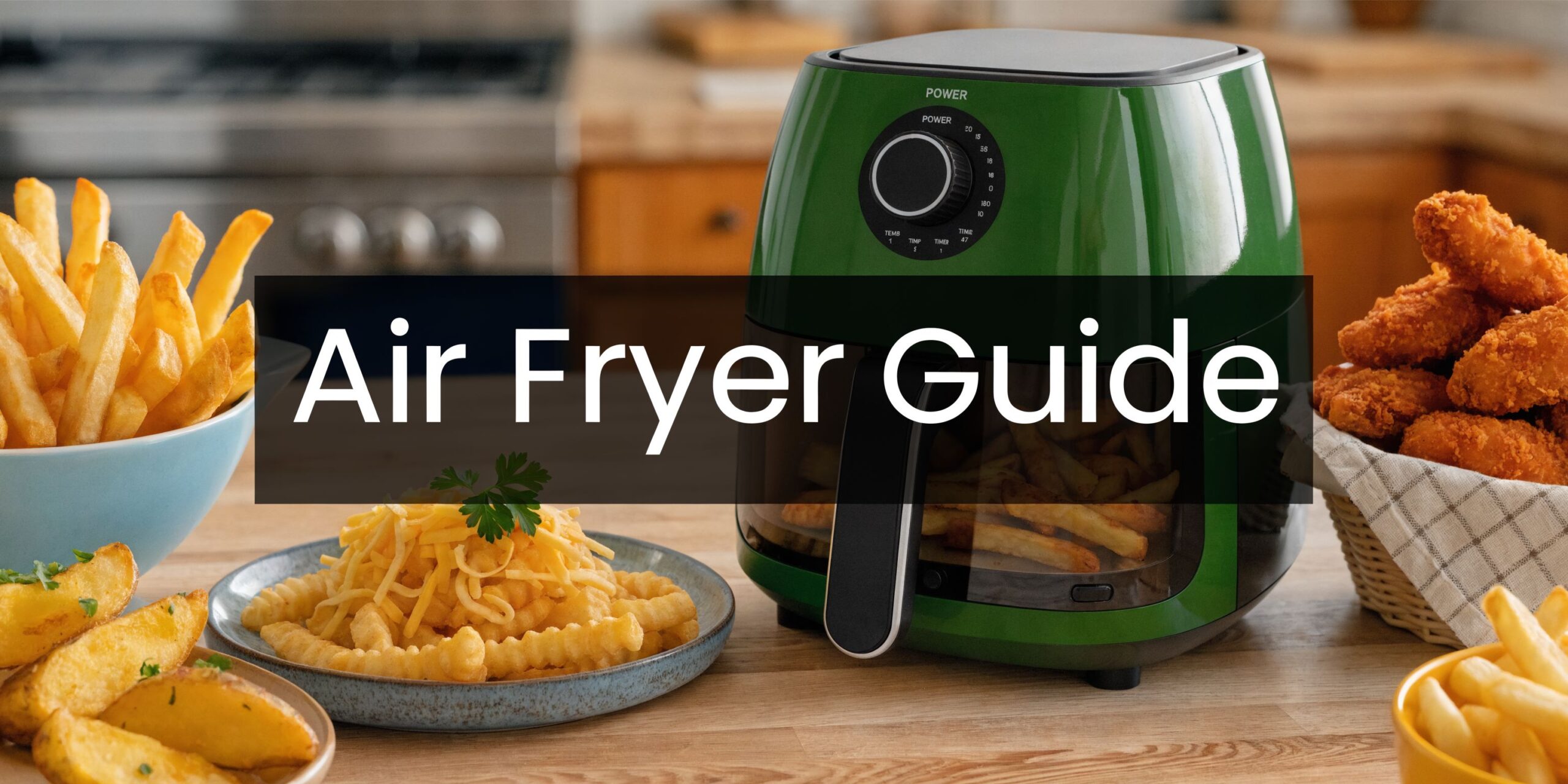
Some kitchen cravings show up at the worst time. You want fries that are crisp on the outside, maybe a batch of mozzarella sticks, maybe a few wings. Then reality kicks in. Deep frying feels messy, the oven feels slow, and a skillet rarely gives you that evenly crunchy finish.
That is why so many people get curious about air fryers. If you have ever wondered what is an air fryer, the short answer is simple. It is a compact countertop cooker that uses very hot, fast-moving air to brown and crisp food in a way that feels surprisingly close to fried food, but with much less oil.
For snack lovers, that difference matters. You can go from craving to crunchy in one appliance, without babysitting a pot of oil or heating up the whole kitchen. The big appeal is not just “healthier cooking.” It is the combination of speed, crispiness, and convenience that makes weeknight snacking and quick meals much easier.
Welcome to the World of Crispy Snacks
A familiar scene: it is late afternoon, work ran long, everyone is hungry, and the fastest thing that sounds good is something crispy. Not a salad. Not soup. Crispy.
Maybe you pull frozen fries from the freezer. Maybe you find a few leftover pizza rolls. Maybe you are staring at chicken nuggets and hoping they come out better than the sad, soft version the microwave gives you. The oven can do the job, but it takes time to preheat, and by the time everything is hot, the snack window has almost passed.
The air fryer became popular because it solves exactly that kind of moment. It gives people a way to make crunchy, golden snacks with less hassle and less oil than deep frying. That promise caught on fast. According to air fryer market statistics from Market.us, global production rose from 18.95 million units in 2018 to 27.04 million in 2019, then surged another 85.6% in 2020. The same source says 60% of U.S. households had one by 2026, making it the fourth-ranked appliance.
That kind of growth does not happen because of hype alone. People keep using air fryers because they fit real life.
Why snack lovers took to it so quickly
An air fryer shines in the kinds of cooking jobs people repeat all week:
- After-school snacks: Nuggets, fries, taquitos, and roasted chickpeas are quick to make.
- Late-night cravings: You can crisp a small batch without turning on a big oven.
- Leftover rescue: Foods that go limp in the microwave often perk back up in an air fryer.
- Low-mess cooking: No vat of oil, no splatter around the stovetop.
If you enjoy practical kitchen ideas, the recipe inspiration in this air fryer snack blog collection can help you picture how often this little appliance gets used.
The biggest “aha” for many first-time users is this: an air fryer is not only for fries. It is a snack machine that handles frozen foods, vegetables, leftovers, and quick bites with very little fuss.
The Science Behind the Crispiness
To understand why an air fryer makes such good snacks, compare it to a tiny convection oven with a much stronger breeze inside. It heats food in a small chamber and keeps hot air rushing around it, so the outside of your snack dries and browns quickly instead of turning soft.
That small-space, high-airflow combo is the whole trick. A regular oven can crisp food too, but it has a lot more empty space to heat first. An air fryer concentrates that heat around snack-sized portions, which is why a handful of fries or a few mozzarella sticks often come out crisper and faster.

The three parts doing most of the work
Most air fryers use a simple setup, and each part has a clear job.
A heating element at the top
This creates the heat that cooks and browns the food.A high-speed fan
This is the part many first-time users overlook. The fan pushes hot air down and around the food again and again, which helps the surface cook evenly instead of heating from only one direction.A perforated basket or tray
Those holes are not a design extra. They let air reach the bottom and sides of the food, which is a big reason snacks crisp better here than on a flat baking sheet.
Put those three together and you get a hot, dry cooking environment that is great at browning the outside of food.
What Rapid Air technology means
You will often hear the phrase Rapid Air technology. Philips helped popularize that term, but the idea is straightforward. Hot air circulates quickly in a compact cooking chamber, so food gets more steady contact with heat. Philips also notes that air fryers can reach about 200°C (392°F), support browning in the 140 to 165°C range where the Maillard reaction happens, and can reduce fat by up to 80 to 90% compared with deep frying while also cooking faster than a conventional oven, as explained in Philips’ guide to how an air fryer works.
For snack foods, that matters a lot. Fries, tots, breaded pickles, and reheated pizza rolls all need the surface moisture to leave before crispness can show up. If that moisture stays trapped, the food steams.
The Maillard reaction in plain English
This is the part behind the golden color and savory smell.
The Maillard reaction is the browning process that gives snacks that toasted, cooked flavor. It is why breading turns golden, potato edges get appetizing, and reheated leftovers can taste fresh again instead of limp and tired.
That is one of the biggest air fryer aha moments. The machine is not creating a fried texture out of nowhere. It is setting up the right conditions for browning to happen quickly on the surface.
Why it needs so little oil
Deep frying crisps food by surrounding it with hot oil. Air frying reaches a similar goal from a different direction. It uses moving hot air to dry and brown the outside.
Some snacks need no extra oil, especially frozen foods that already contain fat in the coating or filling. Others do better with a light spray, which helps color develop and keeps dry coatings from looking dusty.
For snack-making, that light-oil approach is a big part of the appeal. You still get crunch, but without dealing with a pot of oil, greasy cleanup, or the heavy feel that can come with deep-fried food.
Why snacks come out better than in the oven
People often wonder why a tray of nuggets can taste better from an air fryer than from a full-size oven. The answer is mostly scale.
A large oven is built to handle casseroles, sheet pans, and roasts. An air fryer is built for smaller batches and stronger airflow. That makes it especially good at:
- Quick browning
- Crisp exteriors
- Shorter preheat times
- Small portions that match real snack habits
That is why it shines with foods like spring rolls, chickpeas, potato wedges, jalapeño poppers, and leftover chicken tenders. These foods have lots of surface area and cook best when hot air can move around them freely.
If your food is not getting crisp, crowding is often the reason. The fan can only do its job if hot air has room to circulate.
The snack-specific advantage
The air fryer earns its reputation as a snack machine with this capability. Snacks are usually small, fast-cooking, and all about texture. They want crisp edges, browned surfaces, and quick turnaround.
A casserole asks for slow, even heating. A batch of fries asks for intense circulating heat and a dry surface. The air fryer is built for the second job, which is why many people buy one for general cooking and end up using it most for after-school bites, party foods, and late-night cravings.
Key Benefits for Healthier Snacking
The air fryer earns its spot on the counter because it solves several snack problems at once. It is not only about cutting oil. It also helps with time, cleanup, and consistency.
Less oil without giving up texture
Many want the crunch of fried food but not the heavy feeling that comes with deep frying. Air fryers help because they rely on moving hot air rather than oil immersion.
According to Aeno’s explanation of air fryer performance, high-velocity convection leads to 75% less fat absorption in foods like fries. The same source notes fries can have 200 to 250 fewer calories per 100g serving than deep-fried versions.
That does not mean every air-fried snack becomes “healthy” by default. It does mean you can often get a satisfying crispy result with far less added fat.
Faster cooking on hungry days
An air fryer is a strong match for people who snack in real-world conditions. That means between meetings, after classes, before soccer practice, or during the short gap between getting home and making dinner.
Aeno reports that high-velocity fan-driven convection can reduce cooking times by 20 to 30% compared to traditional ovens. In everyday terms, that means a small batch of food often gets to the plate faster, with less waiting around for a large cavity to heat.
For snack-making, speed matters more than often assumed. The easier it is to cook a quick bite, the more likely you are to use the appliance regularly.
Better for small batches
A standard oven works well for large meals. It is less appealing for six jalapeño poppers or one serving of sweet potato fries.
An air fryer fits small jobs beautifully:
- One person lunch: A quick quesadilla wedge or crisped dumplings
- Family add-on: Garlic bread bites while dinner finishes elsewhere
- Movie snack: Chickpeas, wings, or a handful of tater tots
- Leftover refresh: Reheating a few pieces without drying everything out
This small-batch strength is one reason it becomes a daily tool instead of a once-a-month gadget.
Crisping power that helps vegetables too
Many associate air fryers with frozen snack foods, but some of the best results come from vegetables. Broccoli florets, zucchini coins, green beans, and cauliflower all benefit from fast surface drying and browning.
The result is a vegetable snack that tastes roasted and crisp-edged rather than limp. For people trying to snack smarter, that matters. The appliance makes produce feel more craveable.
If you usually find roasted vegetables boring, try air-frying them until the edges brown. Texture changes flavor more than often assumed.
Less mess than deep frying
This benefit deserves more attention. Deep frying asks a lot from the cook. You need enough oil, a safe setup, cleanup patience, and a willingness to deal with lingering grease.
An air fryer simplifies the process. You load the basket, cook, shake or flip if needed, and wash removable parts later. For busy home cooks, that lower-friction routine matters almost as much as the food itself.
Helpful for routine snacking habits
Healthy eating often breaks down during small decisions, not big meals. You come home tired and want something now. That is when the easiest option wins.
An air fryer helps in that moment because it makes simple snacks more doable:
- leftover roasted potatoes get crisp again
- chickpeas turn crunchy
- tortillas become chips
- a few apple slices can warm up with cinnamon
- frozen vegetables become more appealing
That practical convenience offers a key advantage. If an appliance helps you make decent snack choices with less effort, you use it.
Finding Your Perfect Air Fryer Model
The first air fryer many remember was the Philips Airfryer, launched in 2010 with patented Rapid Air technology after Fred van der Weij began developing the concept in 2005, according to History Cooperative’s account of the air fryer’s invention. Since then, the category has branched into several shapes and sizes.
That variety is great, but it can also make shopping feel weirdly complicated. The easiest way to choose is to think less about brand hype and more about how you snack.
Basket style or oven style
These are the two main types most shoppers compare.
| Type | Best for | Upside | Tradeoff |
|---|---|---|---|
| Basket-style air fryer | Quick snacks, frozen foods, small households | Usually faster to load, shake, and clean | Less room for flat foods or multiple layers |
| Oven-style air fryer | Larger households, mixed cooking tasks, tray cooking | More space and often more functions | Can take a bit more effort to clean and manage |
Basket-style models
These are the classic air fryers many picture first. You pull out a basket, add food, slide it back in, and cook.
They are great for:
- fries
- nuggets
- wings
- roasted vegetables
- reheating leftovers
If your main goal is fast snack-making, this style is often the simplest fit. The basket encourages tossing and shaking, which helps food brown evenly.
Oven-style models
These look more like small countertop ovens with racks or trays. They can be helpful if you cook for a family or like to make several snack items at once.
They suit people who want to:
- toast and air fry in one unit
- make flat foods like pizza slices or garlic bread
- cook on multiple racks
- use extra functions like baking or dehydrating
The main thing to know is that more capacity can also mean more decision-making. For a first-time owner focused on easy snacks, simpler can be better.
Questions worth asking before you buy
How many people will you usually cook for?
If most of your use will be solo lunches or quick snacks for one or two people, a compact basket model is often enough. If your kitchen regularly feeds a family, an oven style or larger dual-basket setup may feel less limiting.
Think in terms of your most common use, not your holiday use.
What foods will you cook the most?
If your answer is “fries, dumplings, nuggets, vegetables, and leftovers,” a basket style likely makes sense.
If your answer includes toast, reheating slices of pizza, or cooking several items at once, an oven style may feel more flexible.
Do you want simple controls or presets?
Some cooks love a digital panel with presets. Others prefer a dial and timer they can understand in two seconds.
Neither approach is automatically better. The best control panel is the one you will use confidently when you are hungry and in a hurry.
Features that matter more than flashy extras
Some add-ons sound exciting in the box and never affect daily use. Others steadily make the appliance better every week.
Look closely at these points:
- Basket or tray shape: A wider cooking area can be more useful than a deeper one for snacks.
- Ease of cleaning: Removable nonstick parts and accessible corners matter.
- Window or no window: Some people love seeing the food brown without opening the unit.
- Noise level: Fans vary, and some are louder than others.
- Footprint: Counter space is part of the decision, not an afterthought.
- Handle comfort: You will touch this part constantly.
The best air fryer is not the one with the most buttons. It is the one you will happily use on a random Tuesday for a small batch of food.
A practical way to choose
Try matching your kitchen habits to the machine.
Choose basket style if:
you snack often, cook in small batches, want strong crisping, and prefer a lower-effort routine.
Choose oven style if:
you want a multi-use countertop appliance, cook for more people, or need more rack space.
If you are browsing different options and want a recipe-first perspective rather than a gadget-first one, airfryersnackideas.com is useful for seeing the kinds of foods people make in these machines.
Do not overbuy your first one
This is my favorite piece of buying advice. If you are new to air frying, you do not need the most complex machine on the market.
You need one that can crisp food well, clean up without a struggle, and fit the snacks you make. Once you know your habits, then you can decide whether dual baskets, windows, rotisserie parts, or extra modes would help.
A smaller, easier model that gets used often is a better purchase than a giant one that feels intimidating.
A Practical Starter Guide for New Owners
The first few uses shape whether an air fryer becomes a favorite appliance or a dusty one. A good start makes a big difference.
First-day setup that prevents common mistakes
When you unbox your air fryer, keep the setup simple.
Place it on a heat-safe, flat surface.
Give it breathing room around the back and sides so heat can vent properly.Wash the removable parts.
The basket, tray, or rack usually needs a basic wash before first use.Run it empty once if the manual recommends it.
This can help clear any “new appliance” smell.Keep the first recipe easy.
Frozen fries, nuggets, or broccoli are forgiving starter foods.
The reason this matters is confidence. You want your first batch to teach you how the machine behaves, not test your patience.
Three rules that improve results fast
Do not overcrowd the basket
This is the most common beginner error. If food is piled too tightly, the hot air cannot circulate well, and the texture turns uneven.
Cook in a single layer when possible, especially for foods you want very crisp.
Shake, flip, or rotate when needed
Many snacks brown best when you move them once during cooking. Fries, tots, and vegetables often benefit from a mid-cook shake.
This is less about perfection and more about exposing different sides to the hot air.
Use a little oil when it helps
Some foods need none. Others improve with a light spray or coating. Breaded foods and vegetables often brown more attractively with a small amount.
A little oil helps color and texture. It does not defeat the purpose of air frying.
Foolproof snack ideas for week one
Start with foods that teach you what “done” looks like in your machine.
Frozen fries
Great for learning how shaking affects browning.Broccoli florets
A nice lesson in how vegetables crisp at the edges.Tortilla wedges
Quick homemade chips with seasoning.Leftover pizza
A strong example of why the air fryer beats the microwave for texture.Bagel halves
Useful when you want a warm, crisp breakfast snack. If you want a practical example, this bagel in air fryer guide shows how simple the method can be.
Start with familiar foods. When you already know how fries or nuggets should taste, it is easier to learn your machine’s timing.
Oven to Air Fryer Conversion Chart
This chart helps when you have a snack recipe written for a regular oven and want to adapt it.
| Snack Type | Conventional Oven Settings | Air Fryer Settings (Approx.) | Pro Tip |
|---|---|---|---|
| Frozen fries | Medium-high oven heat until crisp | Slightly lower heat, shorter time | Shake halfway for even browning |
| Chicken nuggets | Standard baking setup on sheet pan | Slightly lower heat, shorter cook | Leave space around each piece |
| Roasted broccoli | Oven roast with oil on tray | Similar seasoning, shorter cook | Dry well before cooking to avoid steaming |
| Pizza rolls | Bake until hot and blistered | Shorter cook in small batch | Let them rest briefly before eating |
| Tortilla chips | Bake until dry and crisp | Fast air fry in single layer | Watch closely because thin foods brown fast |
Because models vary, think of this table as a starting point. The first batch teaches you more than any preset does.
Cleaning without making it a chore
Air fryers stay useful when cleanup is easy enough to do right away.
A simple routine works best:
- Let it cool a bit first
- Remove crumbs after each use
- Wash the basket or tray before stuck-on bits harden
- Wipe the interior if grease collects
If you delay cleaning for several uses, residue can smoke and affect flavor. A quick wash keeps the appliance pleasant to use.
Good foods for learning, tricky foods for later
Some foods are beginner-friendly. Others take more practice.
Easy starters:
frozen fries, nuggets, broccoli, cauliflower, quesadilla wedges, breaded ravioli
More advanced:
delicate battered foods, very wet marinades, layered casseroles, cheese-heavy items without a base
Starting simple helps you build instincts. You learn how fast your model browns, when to shake, and how much food fits comfortably.
A helpful mindset for new owners
Do not expect every recipe to work perfectly on the first try. Air fryers vary, and food size matters.
Treat the first week like calibration. Take notes. If your fries browned too fast, lower the heat next time. If your vegetables softened before crisping, reduce crowding. Small tweaks are normal.
Many get their “aha” moment quickly. Usually it happens with one snack that comes out far better than expected. After that, the appliance starts earning permanent counter space.
Air Fryer Facts Versus Fiction
Air fryers inspire strong opinions. Some people treat them like miracle machines. Others dismiss them as trendy mini ovens. The truth sits comfortably in the middle.

Myth 1: Air-fried food is automatically healthy
The situation is more nuanced.
Yes, air fryers can reduce oil use significantly. But healthier cooking is not the same as unlimited snacking. According to Business Standard’s reporting on doctors’ concerns about the “health halo” effect, air fryers can create a false sense that crispy snack foods are guilt-free, which may lead some people to eat more of them than they otherwise would.
That is the trap: A lighter cooking method does not cancel out portion size, frequency, or the ingredients you choose.
Myth 2: You should never use oil
This myth confuses “less oil” with “no oil ever.”
A small amount of oil often improves browning, helps seasonings stick, and gives vegetables a better finish. The goal is not to avoid oil at all costs. The goal is to use it intentionally.
For many snacks, a light spray is enough.
Myth 3: It is exactly the same as a regular oven
A regular oven and an air fryer both cook with hot air, but they do not move that air the same way.
An air fryer’s compact chamber and stronger airflow are what make it especially good at crisping snack-sized foods. That is why leftovers, fries, and breaded items often come out better than they do in a standard oven.
Myth 4: Everything cooks perfectly with one preset
Presets can help, but they are not magic buttons.
Food size, moisture, breading, basket crowding, and even how cold the food is at the start will change the result. The best users treat presets as starting points, then adjust based on what they see.
Good air fryer cooking is part appliance, part observation. Look for color, texture, and steam, not just the timer.
Myth 5: Air fryers only make junk food
This one sells the appliance short.
Yes, it handles fries and nuggets well. It also does a nice job with vegetables, chickpeas, potatoes, tofu, leftover grains turned into crisp bites, and snackable proteins. The machine is only as narrow as the cook’s imagination.
A balanced air fryer routine might include both fun foods and everyday staples. That tends to be the most realistic approach for long-term use.
Frequently Asked Questions About Air Frying
Do I really need to preheat my air fryer
Sometimes yes, sometimes no. If you want the best browning on foods like fries, breaded snacks, or vegetables, preheating usually helps. For more forgiving foods, you can often skip it and just add a little extra cooking time.
Can I use aluminum foil or parchment paper inside
Usually yes, but use them carefully. Do not block airflow completely, and make sure the liner is weighed down by food so it does not move around. Air circulation is a big part of what makes the appliance work well.
Why does my food come out uneven
The usual causes are crowding, pieces cut in different sizes, or skipping the mid-cook shake or flip. Air fryers reward spacing. A smaller batch often cooks better than an overloaded basket.
What should I do if my air fryer starts smoking
Turn it off and let it cool. Then check for grease buildup, loose crumbs, or fatty food dripping onto hot surfaces. Cleaning the basket and interior more regularly usually helps prevent this.
Is an air fryer good for leftovers
Very often, yes. It is especially useful for foods that go soggy in the microwave, such as fries, pizza, breaded cutlets, and roasted vegetables.
What foods are hardest for beginners
Very wet batters, cheesy foods without support underneath, and anything packed too tightly can be tricky at first. Start with simpler snacks and learn how your model cooks before tackling messier recipes.
If you want easy, snack-focused ideas you can make on a busy day, visit airfryersnackideas.com. It is a helpful place to find practical air fryer recipes, simple inspiration, and new ways to put your favorite crispy appliance to work.
