


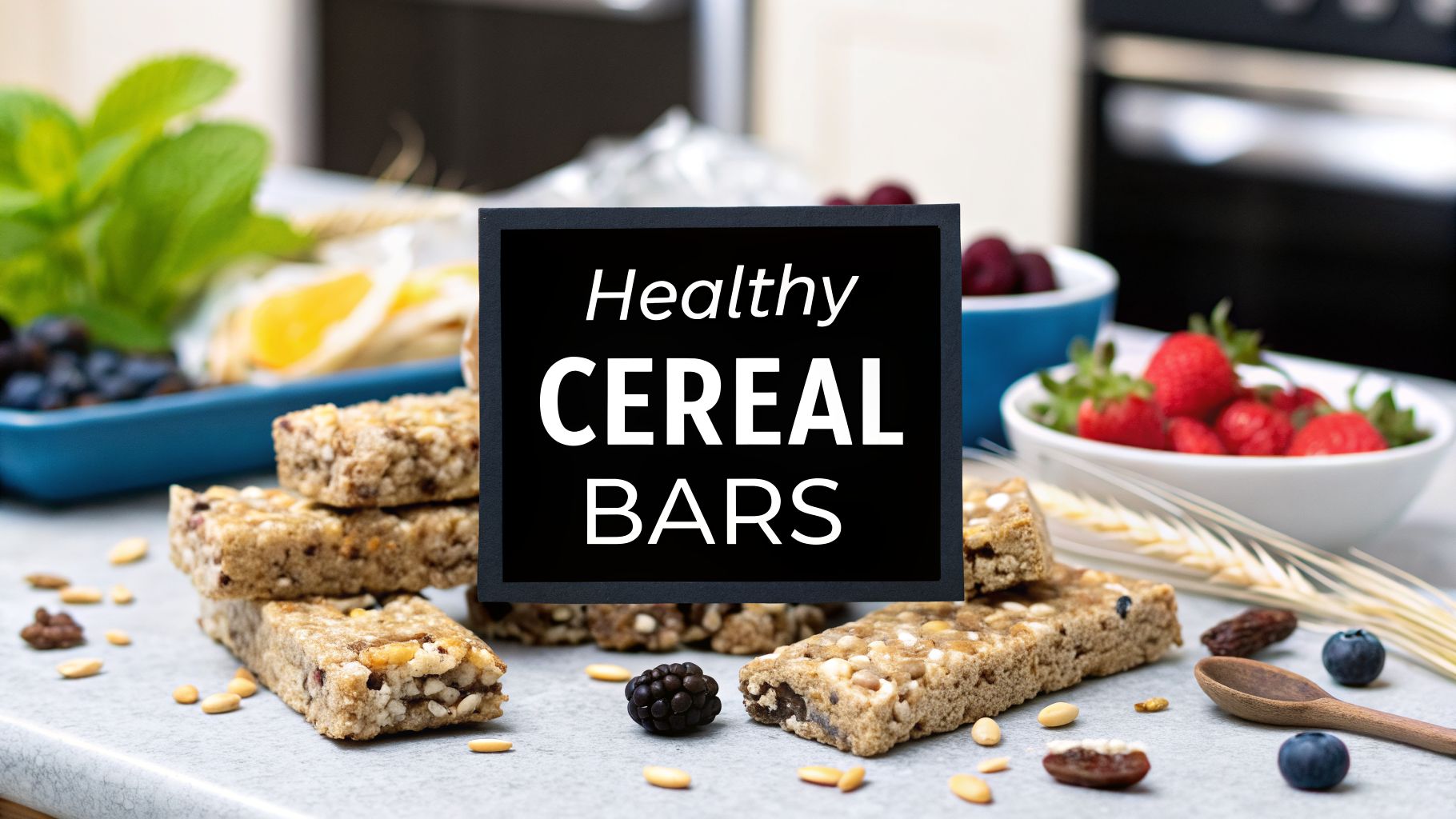
Are cereal bars healthy? Let's be honest: most of the time, the answer is a hard no. Many popular brands dress up their bars to look like a wholesome choice, but when you peel back the wrapper, you often find something closer to a candy bar. They're packed with sugar and refined carbs, making them a pretty poor choice for a genuinely healthy pick-me-up.
The Hidden Truth About Cereal Bars
You know the ones. They're stacked in every checkout aisle and staring back at you from vending machines, their colorful packages shouting about whole grains, fiber, and a boost of energy. It’s a tempting promise, especially for busy professionals, college students, or anyone who just needs a quick bite.
The trouble is, that convenience often comes with a hidden cost to your health.
Many cereal bars are masters of disguise, benefiting from something called the "health halo" effect. This is a clever marketing trick where a few healthy-sounding words—like "natural," "whole grain," or "low-fat"—make you assume the whole product is good for you. In reality, these buzzwords often hide an ingredient list loaded with sugar, unhealthy fats, and heavily processed grains.
Think of it like putting a single lettuce leaf on a greasy burger and calling it a salad. It's technically true, but it misses the bigger picture.
And we're buying into it. Big time. The global cereal bar market was recently valued at a whopping USD 17,883.5 million and is still climbing, largely because people are actively looking for healthier snacks. In fact, snack bars alone grab a massive 46.75% market share, which shows just how much we depend on them. This incredible growth reveals a huge gap between what we think we’re eating and what's actually fueling our bodies.
Unmasking the Misconception
So, what's the real problem? It all comes down to how most commercial bars are made. To get that crave-able taste and a long shelf life, manufacturers often rely on a few key culprits:
- A cocktail of sugars: It’s not just one type. A single bar can have cane sugar, high-fructose corn syrup, honey, and fruit juice concentrate. It all adds up.
- Refined grains: Ingredients like "crisp rice" or "enriched flour" have been stripped of most of their fiber and nutrients. They’re a far cry from true whole grains.
- Problematic fats: You'll often find palm kernel oil and other saturated fats used to hold the bar together and give it a certain texture.
To really get what's happening with our food, it's worth looking into how the food industry markets its products. Investigative journalists have done deep dives into this, and learning about the Corruption In Our Food Industry Exposed can really open your eyes to why these misleading products are everywhere. That’s why our team of writers here at Air Fryer Snack Ideas is so committed to giving you clear, honest advice you can trust. Learn more about our mission here: https://airfryersnackideas.com/our-authors/
This guide is designed to help you see right through that health halo. We’ll show you exactly what to look for on a label and what to run from, so you can confidently pick a truly healthy bar—or even better, make your own delicious version at home.
How to Decode a Cereal Bar Nutrition Label
Stepping into the cereal bar aisle can feel overwhelming. The boxes are bright, the health claims are loud, but the real story is always in the fine print on the back. Learning to read a nutrition label is like getting a backstage pass—it lets you see past the marketing hype and understand what you’re actually eating.
Think of the ingredient list as the bar's true recipe. It lists everything by weight, from most to least. If sugar, or one of its many sneaky aliases, shows up in the first three ingredients, that’s a huge red flag. It’s a dead giveaway that the bar is mostly sugar, not the wholesome grains and nuts you were hoping for.
Honestly, getting good at this is a game-changer for your health. If you want to really master this skill, a deep dive into how to read nutrition labels is well worth your time. It’ll help you see beyond just the calorie count and focus on what truly matters.
Key Numbers to Look For
Don't let the Nutrition Facts panel intimidate you. You only need to check a few key numbers to know if you've got a winner. Zeroing in on sugar, fiber, and protein gives you a fast and accurate picture of the bar's quality.
Sugar Content: This is your top priority. Always aim for bars with less than 10 grams of sugar per serving. If you really want to make a great choice, stick to what I call the "5-gram rule" and pick one with under 5 grams. It’s a simple benchmark that separates the truly healthy options from the glorified candy bars.
Dietary Fiber: Fiber is what keeps you from feeling hungry again 30 minutes later. Look for a bar with at least 3-5 grams of fiber. It slows down digestion, keeps your blood sugar steady, and is great for your gut. A bar without enough fiber is just a fleeting snack.
Protein Power: Protein teams up with fiber to give you sustained energy. A good target is 5 or more grams of protein per bar. This turns your snack into something that actually fuels you, rather than sending you on a sugar high followed by a crash.
The Quick-Check Method:
Before you commit, ask yourself three simple questions:
- Is sugar one of the top three ingredients? (If yes, put it back.)
- Does it have at least 3 grams of fiber?
- Does it have at least 5 grams of protein?
This little mental checklist is my go-to for cutting through the noise and making a smart choice in just a few seconds.
Spotting Hidden Sugars and Unhealthy Fats
Food companies have gotten incredibly clever at hiding sugar. They use dozens of different names to make a product seem healthier than it actually is. Don't fall for it.
Keep an eye out for these common sugar aliases on the ingredient list:
- High-fructose corn syrup
- Dextrose, maltose, or sucrose
- Brown rice syrup
- Cane juice or fruit juice concentrate
It's the same story with fats. Healthy fats from nuts and seeds are fantastic. But if you see palm kernel oil or partially hydrogenated oils, steer clear. Those are the unhealthy saturated and trans fats you want to avoid. The best rule of thumb? Look for a short ingredient list full of real foods you recognize, like oats, nuts, seeds, and dried fruit.
This simple guide can help you visualize the quick 'go or no-go' process for picking a truly healthy bar.

As you can see, keeping sugar low is the first and most critical step. It’s what separates a genuinely healthy snack from a candy bar in a clever disguise.
The Sneaky Ingredients Hiding in Your Snack Bar
So, we've talked about sugar, but the story doesn't end there. To really understand what you're eating, you need to become a bit of a detective and look at the entire ingredient list. The flashy marketing on the front of the box can promise the world, but the back panel tells the real story.
Think of it like this: a great recipe usually starts with a handful of simple, recognizable ingredients. You know what they are, and you know they'll work well together. A long, complicated ingredient list full of things you can't pronounce? That’s more like a chemistry experiment, and it’s probably not something you want to eat.
Beyond Just Sugar
We've already established sugar as a major player, but it rarely acts alone. Many bars are packed with other ingredients that add little nutritional value and can sometimes sabotage your health goals. Let's look past the sugar line and scan for these other common culprits.
First on the list are refined grains. You might see a big "made with whole grains" banner on the package, but you have to check what else is in there. Ingredients like "crisp rice" or "puffed wheat" sound innocent enough, but they are highly processed. They've been stripped of their most nutritious parts—the bran and germ—which takes away most of the fiber, vitamins, and minerals.
What you're left with is basically a simple carb that your body burns through almost as fast as plain sugar. This can cause that dreaded blood sugar spike and the inevitable crash, which is the exact opposite of the steady, sustained energy you're looking for in a good snack.
Unhealthy Fats and Fillers
Next up are the fats and oils. Healthy fats from nuts and seeds are fantastic, but to save money and make bars last longer on the shelf, many companies use cheaper, less desirable options. You should be especially wary of palm kernel oil.
It's easy to confuse with palm oil, but palm kernel oil comes from the seed, not the fruit, and it's loaded with saturated fat. Over time, a diet high in this kind of fat can mess with your cholesterol levels and isn't great for your heart.
A genuinely healthy bar shouldn't need a laundry list of additives to be delicious. If the ingredient list reads like a science project—with things like artificial flavors, colors such as Yellow 5 or Red 40, and preservatives like BHT—it's a massive red flag. Put it back on the shelf.
These additives are there for the manufacturer's benefit, not yours. They’re used to create an artificial look, taste, and shelf life that real food just can't replicate.
The Problem with "Sugar-Free"
In a bid to look healthier, many brands swap out regular sugar for artificial sweeteners. While they might be free of calories, they bring their own set of baggage to the table.
Artificial Sweeteners: Things like sucralose, aspartame, and acesulfame potassium can cause digestive issues for some people. On top of that, emerging research suggests they might mess with your gut microbiome and, ironically, even make you crave more sweet things.
Sugar Alcohols: Keep an eye out for ingredients ending in "-ol," like sorbitol, xylitol, and erythritol. While they are often seen as a better alternative, they're notorious for causing bloating, gas, and digestive distress, particularly if you eat too much.
At the end of the day, your best bet is to find bars that are sweetened naturally with whole foods, like dates or a touch of fruit puree. When you're trying to figure out if a cereal bar is actually healthy, the ingredient list is your most honest guide. A short, simple list you can actually understand is almost always the way to go.
Making Your Own Healthy Cereal Bars at Home
Reading endless labels can feel like a chore. If you're tired of playing detective in the grocery store aisle, there's a much better solution: just make your own. When you take control of your snacks, you can create something that’s not just delicious but also perfectly in line with your health goals.

And the best part? It's way easier than you think. You don’t need to be a pastry chef or stock a pantry with a bunch of weird ingredients. A simple, no-bake formula is all it takes to whip up a fresh, nutritious batch in minutes.
This approach immediately cuts out all the processed fillers and hidden sugars, leaving you with pure, wholesome goodness. It also happens to save you a surprising amount of money over time.
The Core Building Blocks of Homemade Bars
Think of a healthy cereal bar recipe as a simple blueprint with four essential parts. Once you get this foundation down, you can mix and match ingredients to create endless flavor combinations. It’s really just about assembling the right team of whole foods.
Here are the four key players you'll need:
- The Whole-Grain Base: This gives the bars their structure and provides that steady, slow-releasing energy. Rolled oats are a classic for a reason, but quinoa puffs or other whole-grain flakes work just as well.
- The Natural Binder: This is the "glue" that holds it all together. Creamy nut butters like almond or peanut butter are perfect because they also add healthy fats and protein.
- The Natural Sweetener: Forget refined sugar. Pureed dates, mashed bananas, or even unsweetened applesauce deliver natural sweetness along with a nice boost of fiber.
- The Nutritious Add-Ins: Now for the fun part! This is where you get creative. Toss in a handful of nuts like walnuts or almonds for crunch, seeds like chia or flax for omega-3s, or a sprinkle of unsweetened coconut flakes for texture.
This simple formula ensures your bars are packed with nutrients, not empty calories. It puts you in the driver's seat.
Why Homemade Beats Store-Bought Every Time:
When you make your own bars, you get total transparency. You control the sugar, you can boost the protein, and you know every single bite comes from real, recognizable foods. The freshness is unbeatable, and you can tweak them for any dietary need, from gluten-free to nut-free.
A Simple No-Bake Formula to Start
Ready to give it a shot? This foundational recipe is incredibly forgiving and doesn't require any baking. Just mix, press, and chill.
Basic No-Bake Cereal Bar Recipe:
- Combine the dry stuff: In a large bowl, mix 1.5 cups of rolled oats with 1/2 cup of your chosen nuts or seeds (chopped almonds and pumpkin seeds are a great combo). Add a pinch of cinnamon or sea salt for extra flavor.
- Melt the binder and sweetener: In a small pot over low heat, gently warm 1/2 cup of natural peanut butter with 1/3 cup of pureed dates (or a few tablespoons of pure maple syrup) until it's all smooth and combined.
- Mix it all together: Pour the warm, wet mixture over your dry ingredients and stir until everything is evenly coated. This sticky mix is your "dough."
- Press and chill: Firmly press the mixture into an 8×8 inch pan lined with parchment paper. You want to pack it down really tightly. Pop it in the fridge for at least an hour to set, then slice into bars.
This basic recipe is just the beginning. If you're looking for more creative snack ideas, check out the recipes on our blog at Air Fryer Snack Ideas. You can easily adapt many of them to create your own unique bars.
Seriously, once you master this simple process, you’ll never look at store-bought bars the same way again.
Creating The Perfect Crunch In Your Air Fryer
If you've only ever had soft, chewy homemade cereal bars, get ready to meet your new secret weapon: the air fryer. This brilliant kitchen gadget is for so much more than just fries—it's the key to creating snacks with an incredible, deeply toasted texture. An air fryer works by blasting hot air all around your food, which creates a powerful, even heat that crisps everything up beautifully.

What this really means is you can get that satisfying, bakery-style crunch without a drop of extra oil. It also helps the bars hold together with less sugary binder, which is a huge win for anyone trying to make genuinely healthy cereal bars. The whole process is quick, clean, and gives you a level of control that’s tough to replicate in a regular oven.
Mastering Temperature and Timing
The secret to a perfect air-fried bar is nailing the temperature and timing. Because air fryers are so powerful, it’s shockingly easy to go from golden brown to burnt in just a couple of minutes. Remember, the goal here is to toast the ingredients, not bake them all the way through, which calls for a lower temperature than you might guess.
A great starting point is around 300°F (150°C). This is just hot enough to toast the oats and nuts without scorching the natural sugars in your honey or maple syrup. Expect a cook time between 8 to 12 minutes, but this will vary based on your air fryer model and how thick you make your bars.
To avoid any kitchen disasters, just follow these simple tips:
- Always preheat: Give your air fryer about 5 minutes to get up to temp.
- Use parchment paper: A small piece of parchment paper under your bars prevents sticking. Just make sure it doesn’t fly up and block the airflow.
- Check halfway: Pop the basket open around the 4-minute mark to see how things are going. This is your chance to adjust the time if they’re browning too fast.
This little bit of attention to detail is what ensures your bars come out perfectly crunchy, never burnt. If you're new to air frying and want to get a feel for how it works, learning a simple recipe like how to toast a bagel in the air fryer is a great way to understand its speed and power before you start experimenting.
Air Fryer Cereal Bar Recipe Guide
To get you started, here are two of my go-to recipes. They’re simple, packed with good stuff, and come out perfectly crunchy every time. Just follow the guide below!
| Recipe Component | Classic Toasted Oat & Nut Bar | Chocolate & Seed Protein Bar |
|---|---|---|
| Dry Ingredients | 1 cup rolled oats, ½ cup chopped nuts (almonds, walnuts), pinch of sea salt | 1 cup rolled oats, 1 scoop chocolate protein powder, ¼ cup mixed seeds, 2 tbsp cocoa powder |
| Wet Ingredients | ¼ cup natural almond butter, 2 tbsp maple syrup or honey, 1 tsp vanilla extract | ¼ cup natural peanut butter, 2 tbsp maple syrup, 2-3 tbsp milk or water (as needed) |
| Prep Steps | Mix dry ingredients. Warm wet ingredients and pour over dry, mixing until coated. | Whisk dry ingredients. Warm peanut butter and syrup, then add to dry. Add milk to moisten. |
| Forming | Press mixture firmly into a small pan or shape into 6 individual bars on parchment. | Form the slightly sticky mixture into 6-8 bars on parchment paper. |
| Air Fry Temp | 300°F (150°C) | 300°F (150°C) |
| Air Fry Time | 8-10 minutes, checking halfway. | 9-12 minutes, checking halfway. |
| Cooling | Cool completely to harden fully. They will be soft when hot. | Cool completely to firm up. They will feel soft right out of the air fryer. |
These recipes are fantastic starting points. Feel free to swap out the nuts, seeds, or nut butters for whatever you have on hand.
Pro Tip: Don't overcrowd the basket! Always cook your bars in a single layer to make sure that hot air can circulate around every single one. This is the real secret to getting that even, all-over crunch that makes these homemade bars so addictive.
Using your air fryer is a game-changer for making healthy cereal bars. You get all the flavor and nutrition you want, plus that amazing, crave-worthy crunch.
Store-Bought vs. Homemade: The Great Cereal Bar Debate
So, should you grab a box of cereal bars at the store or whip up a batch in your own kitchen? Honestly, it boils down to what you value more: your time or your control over the ingredients. There’s no single right answer here—the best choice is the one that actually works for your life.
Store-bought bars are the undisputed champion of convenience. When you’re a student sprinting to a lecture or a professional juggling back-to-back meetings, having a ready-made snack you can just grab and go is a lifesaver. But that convenience often comes with a few strings attached, like a higher price tag and preservatives to keep them shelf-stable.
Finding a Balance That Actually Works for You
On the other hand, making your own bars puts you in the driver's seat. You get to call all the shots—slashing the sugar, pumping up the protein with nuts or seeds, and making sure everything that goes in is a real, whole food. This approach is almost always the nutritional winner and is much easier on your wallet in the long run. The only catch? It takes time. You have to shop for the ingredients and carve out a few minutes to actually put them together.
The goal isn't to be perfect; it's just to be a little more intentional. Swapping a bar with 20 grams of sugar for one with 8 grams is a huge win for your health.
Take a look at your upcoming week. Do you have 20 minutes on a Sunday afternoon to mix up a batch of bars? If that sounds like a fantasy, then your best bet is to become a pro at reading nutrition labels and finding the smartest options at the grocery store.
Ultimately, the question "are cereal bars healthy?" has a different answer for everyone. Here’s a quick guide to help you figure out what’s right for you:
- If you live for convenience: Get really good at shopping. Master the 5-gram sugar rule, and always hunt for those short ingredient lists filled with words you can actually pronounce.
- If nutrition and saving money are your top priorities: It's time to embrace your inner chef. Start with a super simple no-bake recipe to see how it fits into your weekly flow.
- If you want it all: Go for a hybrid model. Keep a few trusted store-bought bars in your bag for those "I have no time" emergencies, but make your own whenever you get a chance.
Real, lasting health improvements come from making small changes you can stick with. Whether you decide to buy or DIY, you now know how to pick a bar that genuinely fuels you, rather than just giving you a fleeting sugar rush.
A Few Lingering Questions Answered
After digging into the world of cereal bars, you probably have a few questions still bouncing around. Let's tackle some of the most common ones so you can feel confident next time you're in the snack aisle or your own kitchen.
Think of this as the final once-over before you make your next great snacking decision.
How Much Sugar Is Too Much in a Cereal Bar?
This is the big one, isn't it? When you're trying to figure out if a cereal bar is actually healthy, sugar is the number one thing to check.
A good rule of thumb is to look for bars with less than 10 grams of sugar per serving. If you can find one with under 5 grams, you've found a real winner.
But don't stop there—the source of that sugar matters just as much. Take a quick scan of the ingredient list. Sugar coming from whole foods like dates is a far better sign than seeing high-fructose corn syrup or plain old cane sugar near the top of the list.
Aren't Granola Bars and Cereal Bars the Same Thing?
People often use these terms interchangeably, and for the most part, that’s fine. But there is a subtle difference if you want to get technical.
Granola bars are almost always oat-based and are baked to get that classic crunchy, toasted texture, just like the granola you'd put in a bowl.
Cereal bars, on the other hand, can be made from all sorts of grains—think puffed rice or wheat flakes—and they usually have a softer, chewier feel. Nutritionally, though, the same rules apply. You still need to be a label detective and check for sugar, fiber, and whole grains.
The Bottom Line:
It doesn't matter what the box calls it. The ingredient list tells the true story. A "granola bar" can be just as sugary as a "cereal bar" if it's packed with the wrong stuff. All the label-reading tips we've covered apply to both.
Do I Need an Air Fryer to Make Healthy Cereal Bars?
Not at all! An air fryer is a great gadget for getting a certain kind of crispiness, but it’s definitely not a must-have for this. In fact, some of the absolute best homemade bar recipes are "no-bake."
For those, you just mix everything up, press it into a pan, and let it firm up in the fridge. Easy. If you do want that toasted flavor without an air fryer, a regular oven works perfectly. Just bake them at a lower temperature, around 325°F (160°C), for about 15-20 minutes.
What’s the Best Way to Make Homemade Cereal Bars Stick Together?
Getting your bars to hold their shape without a ton of sugar is all about picking the right binder. The best options are whole foods that actually add some nutritional value to the mix.
Here are a few of my go-to choices for homemade bars:
- Nut Butters: Peanut, almond, or cashew butter are a dream. They provide healthy fats and protein, and they have serious sticking power.
- Pureed Dates: A handful of Medjool dates blended with a tiny bit of water makes a sweet, fiber-rich paste that works like a charm.
- Mashed Banana or Applesauce: These are great for adding moisture and natural sweetness while helping to bind everything together.
You can also add a small drizzle of honey or pure maple syrup, but remember to use it sparingly. The goal is to keep that sugar count low so your homemade bars are genuinely healthy.
For more amazing and healthy air fryer recipes that prove simple ingredients can make the best snacks, you should check out the full collection over at airfryersnackideas.com. You can find your next favorite snack right here.
