


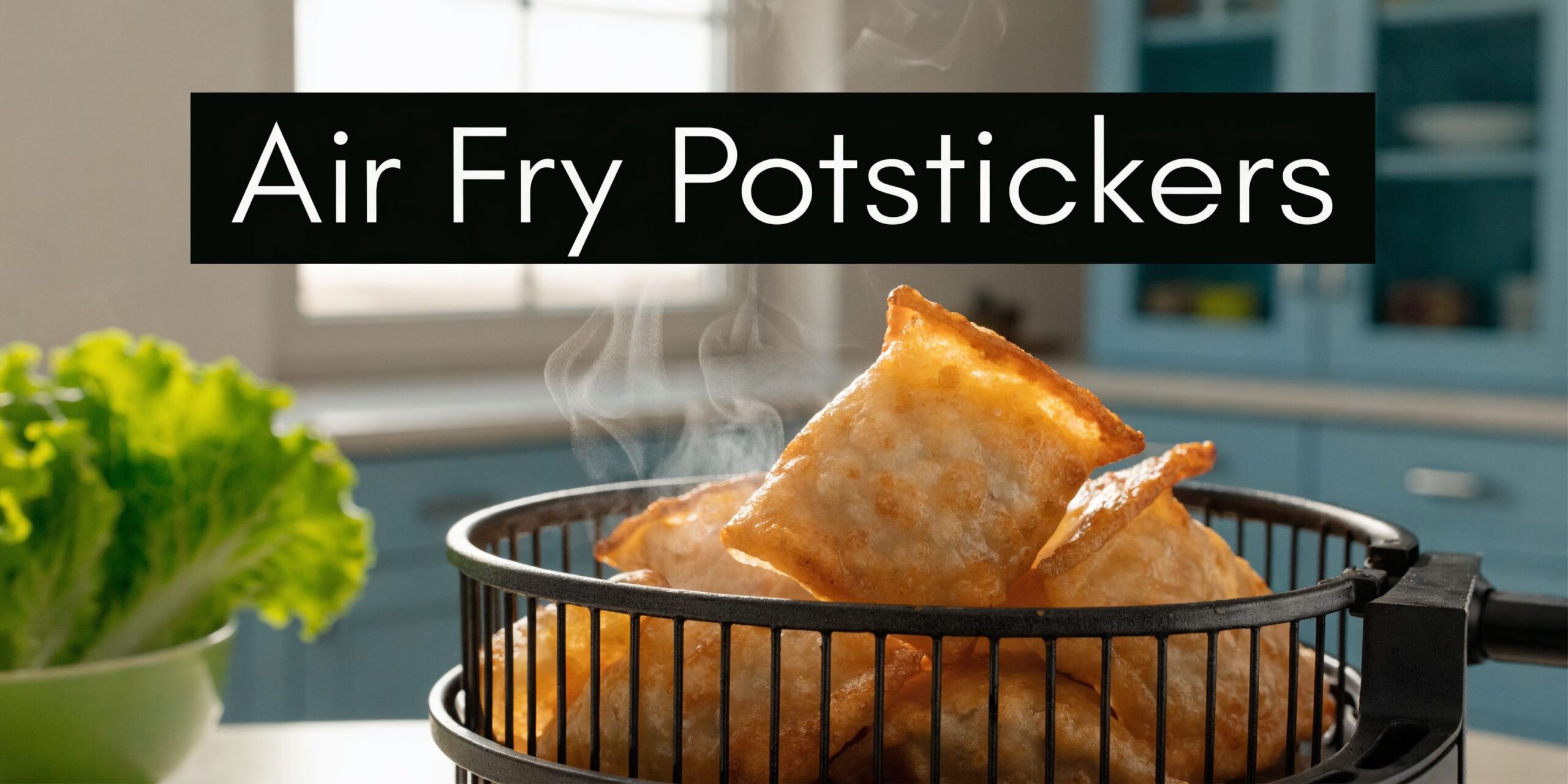
You’re standing at the freezer with a bag of potstickers in one hand and a growling stomach in the other. You want crisp edges, a hot center, and as little cleanup as possible. That’s exactly why the air fryer is such a good fit here.
So, can you air fry frozen potstickers? Yes. Not only can you, it’s one of the easiest ways to get that satisfying contrast between a browned wrapper and juicy filling without babysitting a skillet. The trick is that potstickers don’t fail at random. They fail for very specific reasons, and once you know those reasons, the whole process gets much easier.
Your Quick Path to Crispy Potstickers
Frozen potstickers are one of those foods that feel like they should be simple, but a lot of people still end up with pale tops, soggy bottoms, or wrappers that turn dry instead of crisp. That usually happens when the method is treated like a generic frozen snack instead of a dumpling with a wrapper that needs the right heat and airflow.
A typical weeknight example looks like this. You toss a few into the basket, hit a random temperature, and hope for the best. Sometimes it works. Sometimes the filling is hot but the outside is limp. Sometimes the edges brown before the middle catches up.
That’s why the better question isn’t just can you air fry frozen potstickers. It’s how to air fry them so they come out the way you want to eat them.
What works is a short setup, a little oil, and enough space around each dumpling for the hot air to do its job. What doesn’t work is crowding the basket and expecting the wrappers to crisp on their own.
If you like quick air fryer snacks in this same lane, the snack ideas on this air fryer blog category page are worth browsing later. For now, keep this in mind: frozen potstickers are absolutely air fryer friendly, and they can go from freezer to plate fast without thawing, heavy oil, or a mess on the stove.
The air fryer gives you speed and crunch. The quality comes from how you load and handle the potstickers, not from pressing the start button alone.
Preparing for Air Fryer Success
The fastest way to ruin frozen potstickers is to treat them like nuggets and toss them in cold and dry. Potstickers are fussier than that. The wrapper needs heat right away, and it needs a thin coat of oil so it can blister and brown instead of turning stiff.

Preheat the basket
Start with a hot air fryer. A few minutes of preheating gives the bottom of the wrapper immediate contact with hot metal and circulating air, which helps set the exterior before excess surface moisture can linger.
That matters more with potstickers than with thicker frozen foods. Their wrappers are thin, so they react fast. In a cold basket, they spend the first few minutes slowly thawing and steaming. That is how you get soft patches that never quite catch up, even if the filling ends up hot.
A practical target is 370 to 400°F. The lower end gives you a little more margin before the edges overbrown. The higher end cooks faster, but some brands with thinner wrappers can dry out if your air fryer runs hot.
Oil is the difference between crisp and dry
Use oil on purpose, not as an afterthought.
In my kitchen, dry potstickers almost always turn out patchy. One side stays pale, the pleats get tough, and the spots that should crisp just harden. A light coating fixes that because the wrapper browns more evenly and holds onto a better bite instead of turning brittle.
Spray or brush a thin layer on both sides. You want the surface lightly coated, not shiny and dripping. Too little oil leaves the wrapper chalky and tough. Too much can make the bottoms greasy before the tops color.
Neutral oil is the safest pick. Olive oil works fine. Sesame oil adds flavor, but use it lightly because it can dominate the filling. A refillable mister usually gives the best control.
The same texture rule shows up with other bread-based air fryer foods too. This guide to bagel in air fryer is a good example of how surface prep changes the final crust.
Your short prep checklist
- Keep them frozen: Don’t thaw first. Thawed potstickers stick more easily and can split before the wrapper crisps.
- Preheat before loading: Hot contact helps the first side firm up fast.
- Coat lightly with oil: Aim for full coverage, not heavy spray.
- Give each piece space: Touching potstickers trap steam at the sides.
- Check the wrapper thickness: Thin-skinned brands usually do better at the lower end of the temperature range.
Kitchen reality: Potstickers are quick, but they reward a little setup. One minute of prep solves most of the soggy-wrapper problems people blame on the air fryer.
The Foolproof Air Frying Method
Hot basket. Frozen potstickers. Light oil on the wrapper. From here, the goal is simple. Cook the outside fast enough to crisp before the filling starts drying out.

Start with the right temperature
For most frozen potstickers, 370 to 400°F is the working range. Lower heat gives the wrapper a little more time to crisp without hardening too fast. Higher heat speeds things up, but it can push thin wrappers from pale to dry in a hurry.
Use this baseline:
- 370°F for about 9 to 10 minutes: Best for thicker wrappers and larger dumplings.
- 380°F for about 8 to 9 minutes: A reliable middle ground for everyday batches.
- 400°F for about 7 to 8 minutes: Best for thinner-skinned brands or when you want faster browning.
Those times are starting points, not promises. Basket size, fan strength, and wrapper thickness all change the finish.
Give each potsticker room to crisp
Air fryers fail with potstickers for one reason more than any other. Steam gets trapped.
Arrange them in a single layer with a little space between each piece. If they touch, the sides where they meet stay soft. If they overlap, the lower wrapper steams and the top colors unevenly. That is how you end up with dumplings that are crisp on one edge and limp everywhere else.
For a full basket, cook in batches. It takes longer, but the result is better and more predictable.
Flip once at the midpoint
At the halfway mark, open the basket and turn them over. If the potstickers are small and loose, a firm shake works. If they are larger, pleated, or packed with filling, flip them one by one with tongs so the wrapper does not tear.
This one step fixes a lot of uneven browning. It also gives you a chance to spot problems early. If the wrapper looks dry and dusty, add a very light mist of oil. If the bottoms are darkening too fast, drop the heat slightly for the second half of cooking.
A practical batch guide
This is the setup I use most often:
| Air fryer setting | What to expect | Best for |
|---|---|---|
| 370°F | More even browning, slower finish | Thick wrappers, larger potstickers |
| 380°F | Balanced crisping and timing | Most standard frozen brands |
| 400°F | Faster color, stronger crust | Thin wrappers, small batches |
A few rules stay the same every time:
- Single layer only
- Leave space between pieces
- Flip once halfway through
- Cook straight from frozen
Pull them by look and feel, not just the timer
A finished potsticker should look golden in spots, feel set on the outside, and release easily from the basket. The wrapper may blister a little. That is a good sign. It means the surface has dried and crisped instead of steaming.
If they still look pale and feel soft, give them another 1 to 2 minutes. If the bottoms are getting dark before the tops color, the heat is a little high for that brand. Lower it next batch and add a minute. That adjustment matters because frozen potstickers are not all built the same. Some have a thicker, chewier wrapper. Others carry more moisture in the filling, which slows browning and can leave the outside soggy if you rush the cook.
If your potstickers are browning unevenly, the machine usually is not the whole problem. Temperature, spacing, and wrapper thickness are working together. Adjust one of them, and the batch usually gets back on track.
Achieving the Perfect Golden-Crisp Finish
The timer gets you close. Your senses get you the rest of the way.
A finished potsticker should look golden-brown, not chalky beige and not dark brown. The wrapper often develops tiny blisters, and when you lift one with tongs, it should feel set and crisp instead of floppy.

Why one air fryer nails it and another runs slow
Not every machine cooks the same way. Air fryer models can vary in cook time by 20 to 30% because of airflow dynamics, and the wrapper itself needs 193 to 204°C at the surface to gelatinize and crisp properly, according to Christina All Day’s frozen dumpling air fryer benchmarks.
That explains why one machine gives you great color at a certain setting while another leaves the same brand pale. It’s not user error every time. Sometimes it’s just a different fan pattern or basket shape.
The same source also notes that flipping halfway can improve evenness by up to 25% because both sides get direct exposure to circulating heat. That tracks with real-world results. Potstickers almost always look better when you intervene once instead of leaving them untouched.
What done sounds like
The best clue isn’t only visual. It’s also the texture when you move them around the basket.
Listen for:
- A light crisp tap: The wrapper sounds firm against the basket or tongs.
- Less surface softness: The sides don’t sag when lifted.
- No wet sheen: Moist-looking patches usually need more time.
For extra crunch
If you like a more restaurant-style finish, use a short final push instead of extending the whole cook too long.
Try one of these:
- A quick last blast at the higher end of your usual setting
- A tiny extra spritz of oil near the end if the wrapper looks dry rather than crisp
- An extra minute only on the side that still looks pale
That gives you more color without drying out the filling.
Common Air Fryer Potsticker Problems Solved
Most bad batches come from a small mistake, not a bad appliance. Potstickers are pretty forgiving once you know what went wrong.
Soggy bottoms and pale sides
This is almost always an airflow problem.
The common assumption is that more potstickers in one batch saves time. In practice, it usually does the opposite. When the basket is crowded, the wrappers trap steam against each other instead of crisping.
Fix it like this:
- Separate them fully: Leave room between each piece.
- Flip halfway through: One side pressed against the basket for the full cook won’t brown evenly.
- Cook in rounds: A good first batch beats a full soggy basket.
Dry or tough wrappers
This one usually points back to oil. Air frying isn’t deep frying, but potsticker wrappers still need some surface fat to brown properly. Without it, the wrapper can harden before it crisps.
If your batch looks rigid instead of appetizing, lightly oil both sides next time and don’t let the cook drag on longer than needed.
Some people think skipping oil makes air-fried potstickers lighter. Usually it just makes them tougher.
Burnt wrapper, cool center
Brand differences are evident here. A common complaint online is inconsistency from one bag to the next, and that’s tied to wrapper thickness, size, and filling moisture. The verified data notes that thinner wrappers may cook in under 8 minutes at 380°F, while thicker, doughier ones can take over 12 minutes, based on Everyday Family Cooking’s observations on air fryer dumplings.
That means a one-size-fits-all setting doesn’t really exist.
A simple adjustment table
| Problem | Likely cause | Better move |
|---|---|---|
| Burning outside first | Thin wrapper or smaller dumpling | Lower the temperature slightly and check earlier |
| Undercooked center | Thick wrapper or dense filling | Add time in small increments |
| Too much moisture in basket | Wetter filling variety | Give more space and check color, not just time |
Veggie potstickers can behave differently from pork or chicken versions because the filling releases moisture differently. Smaller gyoza-style dumplings also finish faster than chunky potstickers.
The fastest way to dial in a new brand is to treat the first batch as a test batch. Cook a small amount, take notes, then lock in your own setting for that bag.
Serving, Storing, and Reheating Tips
Fresh potstickers don’t need much to taste good. A dipping sauce and a little garnish go a long way.

Easy ways to serve them
Try these combinations:
- Soy sauce and ginger: Salty, sharp, classic.
- Chili crisp or chili garlic sauce: Great if you want heat.
- Soy sauce with a little sesame oil: Richer and deeper.
- Green onions and sesame seeds on top: Fast way to make frozen food feel less frozen.
If you’re making lunch for one, pair the potstickers with cucumber slices or a simple salad. If it’s snack night, put out two or three sauces and let everyone mix.
How to store leftovers
Let leftovers cool, then move them to a sealed container in the fridge. The key is not trapping steam while they’re still hot, because that softens the wrapper before you even get to reheating.
For longer storage, keep them wrapped well in the freezer. Texture is always best on the first cook, but air frying is still the best way to bring them back.
Best reheating method
Skip the microwave if crispness matters. It warms the filling, but the wrapper usually turns soft and rubbery.
The air fryer works better because it restores the outside while reheating the center. Put the leftover potstickers in a single layer and heat just until the wrapper is crisp again and the filling is hot. No need to overthink it. Reheating is shorter than the first cook, and checking early is the smart move.
If you want more snack ideas beyond dumplings, you can browse the recipe collection at airfryersnackideas.com.
If you want more practical air fryer snack ideas that work on busy days, visit airfryersnackideas.com for simple recipes, crisping tips, and freezer-friendly favorites.
