


Alright, let's get right to it. The secret to perfect air-fried snacks isn't just the machine—it's the oil you use. Your best bets are versatile, high-smoke-point oils like refined avocado, canola, and grapeseed oil. These are the workhorses of the air fryer world, giving you that irresistible crunch without filling your kitchen with smoke.
Your Quick Guide to the Best Air Fryer Oils
Picking the right oil feels like a small step, but it makes all the difference. Think of it like this: you wouldn't use just any pan for any job on the stove, right? The same logic applies here. For air frying, the single most important factor is an oil's smoke point—that's the temperature where it stops being helpful and starts burning.
Once an oil hits its smoke point, it's not just a matter of a hazy kitchen. The oil starts to break down, which can ruin the taste of your food and even release some nasty compounds. Since air fryers work by blasting food with hot air, you need an oil that can stand up to the heat.
Why Temperature Matters
Most of us are cooking at temperatures between 180–200°C (356–392°F). This is the magic zone for getting things crispy, but it's also where some popular oils, like extra-virgin olive oil (smoke point around 190°C), start to struggle. On the other hand, an oil like refined avocado oil (about 270°C) or even refined peanut oil (about 232°C) can handle that heat without breaking a sweat.
Key Takeaway: Always match your oil's smoke point to your air fryer's temperature. It's the simplest way to guarantee great flavor and avoid a smoky mess.
To help you get started, I've put together a quick-glance table with my top recommendations. It breaks down the essentials so you can pick the right oil for whatever you're craving.
Top 5 Recommended Oils for Air Frying
This chart is your shortcut to choosing the best oil. It covers smoke point, flavor, and some of my favorite snack pairings to get you inspired.
| Oil Type | Smoke Point (°F / °C) | Flavor Profile | Best For Snacks Like |
|---|---|---|---|
| Avocado Oil (Refined) | 520°F / 270°C | Neutral, slightly buttery | Crispy french fries, chicken wings, breaded items |
| Grapeseed Oil | 420°F / 215°C | Clean, light, neutral | Vegetables like broccoli and Brussels sprouts, fish sticks |
| Canola Oil | 400°F / 204°C | Very neutral | All-purpose, great for mozzarella sticks and onion rings |
| Light/Refined Olive Oil | 465°F / 240°C | Mildly fruity, neutral | Roasted potatoes, seasoned chicken, garlic bread |
| Peanut Oil (Refined) | 450°F / 232°C | Mild, nutty | Spring rolls, shrimp, anything needing a savory hint |
This table should give you a solid foundation for your air frying adventures. Once you've got the basics down, feel free to check out our full range of air fryer snack articles on our blog for more recipes and inspiration.
Why Smoke Point is Your Air Frying Secret Weapon
Think about making toast. You wouldn't use the same toaster setting for a flimsy slice of white bread as you would for a thick, hearty piece of sourdough. If you crank the heat for that thin slice, you don't get a golden-brown masterpiece—you get smoke, a burnt smell, and a bitter breakfast. That’s exactly how to think about an oil's smoke point in your air fryer.
The smoke point is just what it sounds like: the temperature where an oil stops shimmering and starts smoking. It’s a literal tipping point. Push an oil past this temperature, and it begins to break down chemically. This isn't just a small kitchen hiccup; it kicks off a chain reaction that ruins your food's flavor, tanks your kitchen's air quality, and can even strip away the nutritional benefits of your meal.
When you're picking the right oil, you're really just finding one that can handle the intense, swirling heat of the air fryer without breaking a sweat.
What’s Happening When the Oil Smokes?
Picture oil molecules as tiny, stable building blocks. As you heat them up, they start vibrating faster and faster. Once you cross that smoke point threshold, those structures literally fall apart. This breakdown, known as thermal decomposition, unleashes a bunch of stuff you don't want anywhere near your food.
First, you’ll get hit with a harsh, acrid smell. That's your first red flag. The oil’s flavor twists from pleasant and neutral into something bitter and burnt, a taste that seeps right into your food. Those perfectly seasoned sweet potato fries can go from delicious to disgusting in just a couple of minutes.
Here's what's crucial: Going past an oil's smoke point does more than just ruin dinner. The breakdown creates free radicals and other potentially harmful compounds like acrolein—the very same substance that gives burnt food its sharp, unpleasant smell.
The Science Behind That Perfect Crunch
So, how do we get that satisfying, crispy exterior we all crave from our air-fried snacks? It happens when moisture on the food's surface evaporates rapidly, leaving behind a dehydrated, crunchy crust. The right oil is a key player here, acting as a heat conductor that spreads the air fryer’s heat evenly across every nook and cranny. It helps pull that moisture out while ensuring the food inside stays tender.
But if the oil starts smoking, the whole process gets sabotaged. Instead of a clean, crispy layer, you get a coating of burnt oil particles. The result? A greasy, unevenly cooked snack that tastes bitter.
Let's break it down simply:
- Below the Smoke Point: The oil is stable and happy. It transfers heat efficiently, helps your food brown beautifully, and gives you that perfect crispy texture without adding any weird flavors. This is your cooking sweet spot.
- At or Above the Smoke Point: The oil becomes unstable and starts to break down. It produces smoke, smells terrible, and makes your food taste burnt. Instead of helping things crisp up, it can leave them tasting scorched and feeling soggy.
How to Choose Your Oil Wisely
Grasping this one concept is incredibly powerful. It lets you glance at any oil in your pantry and know right away if it's a good fit for the job. Most air fryer recipes cook somewhere between 350°F and 400°F (175°C to 205°C). The smart move is to choose an oil with a smoke point comfortably above that range.
This is exactly why you'll always see oils like refined avocado oil (520°F) and grapeseed oil (420°F) at the top of every "best oil" list for air fryers. They can take the heat without any drama, letting you focus on the food, not the smoke detector. On the flip side, oils with lower smoke points, like unrefined extra virgin olive oil (around 375°F) or flaxseed oil, are poor choices for high-heat air frying. They’ll start to break down and smoke almost immediately.
The Big Trade-Off: Health vs. Flavor
Picking the "best" oil for your air fryer isn't about finding a single winner. It's more like choosing the right tool for the job. You wouldn't use a sledgehammer to hang a picture frame, right? The same logic applies here.
Your decision really boils down to one simple question: what’s more important for this recipe—health or flavor? Answering that will point you to the perfect oil every time.
When You Just Want That Perfect Crunch
Sometimes, all you want is maximum crispiness without the oil getting in the way. For that, you need a neutral, high-heat oil. They're the quiet workhorses of the kitchen.
Think of refined avocado oil, grapeseed oil, or canola oil. These guys have sky-high smoke points and barely any taste, which is exactly what you want. They do their job behind the scenes, helping your fries or chicken wings get that incredible golden-brown finish without adding any unwanted flavors. This makes them fantastic all-rounders for most snacks.
When the Oil is Part of the Recipe
But then there are times you want the oil to add to the flavor. This is where things get interesting. A little bit of sesame oil on some spring rolls or using refined peanut oil for a batch of satay-style chicken wings adds an incredible nutty depth that a neutral oil just can't.
The trick is knowing when to use them. A strong-tasting oil can easily overpower something delicate, but for the right dish, it can take a simple snack and make it something special.
So, how do you choose?
- For pure crunch: Go with a high-smoke-point, neutral oil like avocado or grapeseed.
- For an extra flavor kick: Pick an oil like refined peanut or sesame when its taste fits the recipe.
- For delicate foods: Always stick with neutral oils to let the food’s own flavor be the star.
Once you get the hang of this, you’ll stop looking for one "do-it-all" oil and start picking the perfect one for whatever you’re cooking.
A classic mistake is reaching for extra virgin olive oil for high-temp air frying. It’s amazing on a salad, but the intense heat of an air fryer destroys its delicate compounds, making your food taste bitter and wiping out its health perks.
Making a Smart Choice Even Healthier
Let's be honest, one of the best things about an air fryer is getting crispy food with way less oil. That’s already a massive win for healthier eating. But you can take it a step further by being smart about the type of oil you use, even if it's just a tiny amount.
Not all fats are created equal. Health experts agree that we should favor unsaturated fats (especially the monounsaturated kind from plants) over saturated and trans fats. So, while your air fryer cuts down on the amount of oil, choosing an oil like canola, avocado, or high-oleic sunflower over something like palm oil or shortening gives you another health boost. For a deeper dive, check out the trends in heart-healthy cooking and their effect on the air fryer market on marketsandata.com.
When you toss your Brussels sprouts in a teaspoon of avocado oil, you're not just setting them up for a perfect roast. You're also adding a dose of heart-healthy monounsaturated fats. It’s a tiny tweak that really doubles down on the benefits of air frying.
Pairing The Perfect Oil With Your Favorite Foods
Alright, we’ve covered the basics of smoke points and the constant tug-of-war between health and flavor. Now for the fun part: putting that knowledge to work in your kitchen. Choosing the right oil for your air fryer is more than just a technical step; it’s where you get to be creative and turn a good snack into something truly amazing.
Think of it this way: the real magic happens when you know why a certain oil is the perfect match for a specific food. It’s all about using an oil’s personality—its smoke point, its taste, and how it behaves under heat—to get that perfect crunch and flavor every single time.
Oil Pairing Guide for Popular Air Fryer Snacks
To make things even easier, here’s a quick cheat sheet for some of the most popular air fryer snacks. Think of this as your starting point for matching the right oil to the right food for flawless results.
| Snack Type | Ideal Cooking Temp (°F) | Recommended Oil | Reason Why It Works Best |
|---|---|---|---|
| French Fries/Potatoes | 380-400 | Avocado, Refined Peanut | High smoke point prevents smoking and creates an ultra-crispy exterior without burning. |
| Chicken Wings | 380-400 | Avocado, Grapeseed | Extremely high heat tolerance is needed to render fat and crisp up the skin perfectly. |
| Vegetables (Broccoli, etc.) | 360-390 | Light Olive, Grapeseed | Neutral flavor lets the vegetable taste shine; withstands heat well for good caramelization. |
| Breaded Items (Mozzarella Sticks) | 350-370 | Canola, Vegetable | A clean, neutral oil ensures the breading gets golden and crunchy without tasting greasy. |
| Fish Fillets (Salmon) | 370-390 | Avocado, Light Olive | A light, buttery flavor complements the fish, and the high smoke point prevents a bitter taste. |
| Reheating Pizza | 350-360 | No oil needed! | The existing oils in the cheese and toppings are usually enough to crisp it back to life. |
This table is just a guide, of course. Feel free to experiment! Once you get a feel for how these oils work, you'll intuitively know which one to grab for whatever you're cooking.
Achieving Legendary Crispy Fries and Potatoes
When it comes to fries, potato wedges, or roasted spuds, we all want the same thing: a fluffy inside and a golden, crunchy shell that you can hear from across the room. To get there, you need an oil that can handle high heat without smoking up your kitchen or adding a weird flavor.
These are your go-to options:
- Refined Peanut Oil: This is a classic for a reason. Its high smoke point (around 450°F / 232°C) is perfect for the intense heat potatoes need to get crispy. Plus, it adds a subtle, savory nuttiness that just works.
- Avocado Oil: With a smoke point soaring up to 520°F / 270°C, this is your foolproof choice. You'll get zero smoke, and its clean, buttery flavor lets your seasonings be the star.
- Canola or Grapeseed Oil: Both are fantastic, wallet-friendly workhorses. They’re totally neutral and hold up great under heat, making them reliable picks for any potato dish.
This little flowchart can help you decide whether to prioritize health or flavor on any given day.
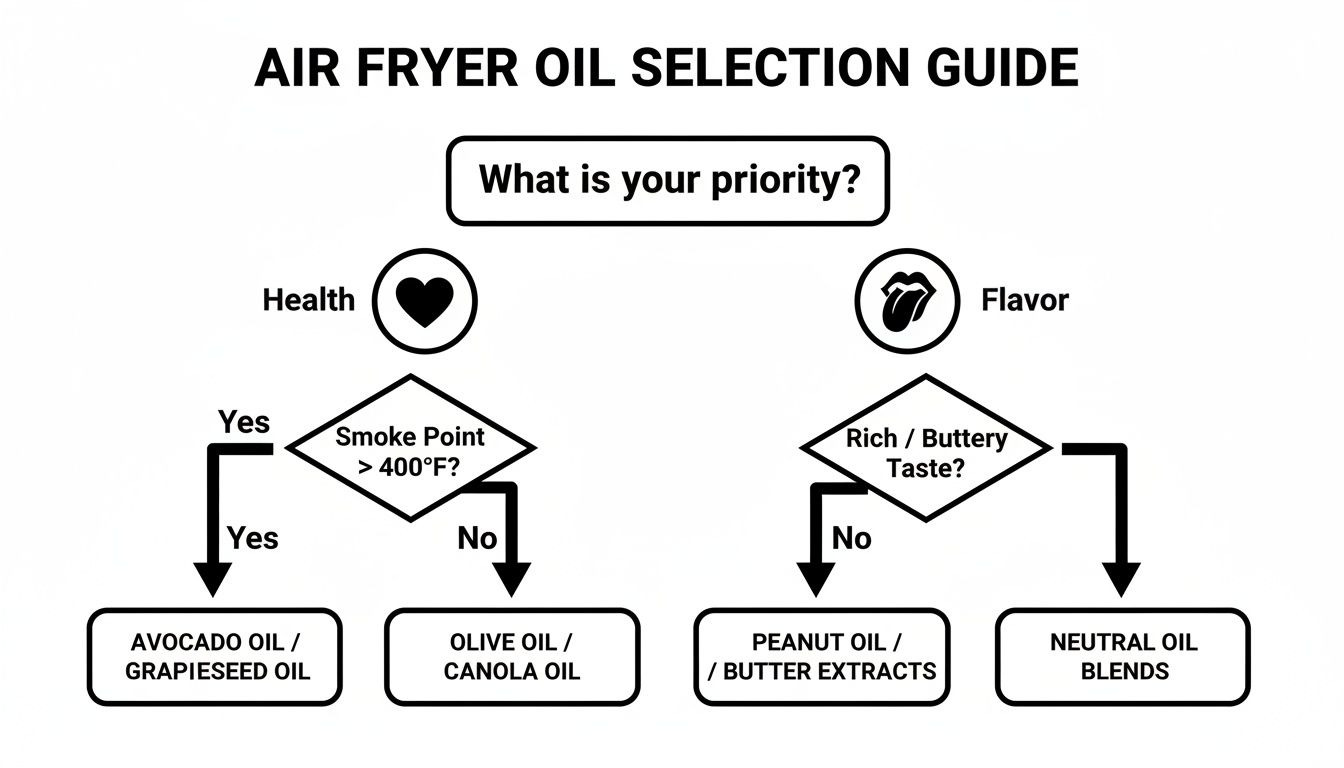
As you can see, your end goal—whether it's the healthiest option or the most flavorful one—points you toward a different set of oils.
The Secret to Perfectly Crispy Chicken Wings
For chicken wings, you have two jobs: render the fat from the skin to get it shatteringly crisp and keep the meat inside juicy. That process demands sustained, high heat, which means a high-smoke-point oil is non-negotiable.
Avocado oil is the clear winner here. It can take the heat without breaking a sweat, ensuring the skin gets golden and crispy without the oil burning and turning bitter. A light toss in avocado oil before you hit it with your dry rub is the key to a perfect finish.
Elevating Vegetables From Simple to Sensational
When you’re air frying veggies like broccoli, Brussels sprouts, or asparagus, the right oil helps the edges get beautifully caramelized while the inside stays tender. Since most vegetables cook pretty fast and have delicate flavors, you’ve got a bit more freedom here.
- Grapeseed Oil: It has a light, clean taste that won’t get in the way of the natural sweetness of roasted vegetables.
- Light/Refined Olive Oil: A great pick for a hint of that Mediterranean vibe without the low smoke point of extra-virgin. It’s a natural partner for herbs like rosemary and thyme.
Pro Tip: For an Asian-inspired veggie side, toss them in grapeseed oil to cook. Right at the end, maybe in the last minute, add a tiny splash of toasted sesame oil. The aroma is incredible, and you get that nutty flavor without any risk of it burning.
Mastering Breaded and Delicate Snacks
For things like mozzarella sticks, onion rings, or frozen spring rolls, the oil’s job is to turn the coating golden and crunchy—not soggy and greasy. A neutral, high-heat oil like canola or a light vegetable oil blend is what you want. It gets the breading crisp without adding any competing flavors.
The same idea applies to more delicate snacks. Say you're toasting a bagel in the air fryer. A very light brush of refined olive oil can make the everything-seasoning pop without overwhelming the bagel itself. If you're curious, you can learn all about making a perfect bagel in the air fryer in our full guide.
By matching your oil to your food, you stop just cooking and start designing your meal. You're taking control of texture and flavor, guaranteeing a perfect, smoke-free result every time.
Applying Oil for Perfect Results Without the Mess
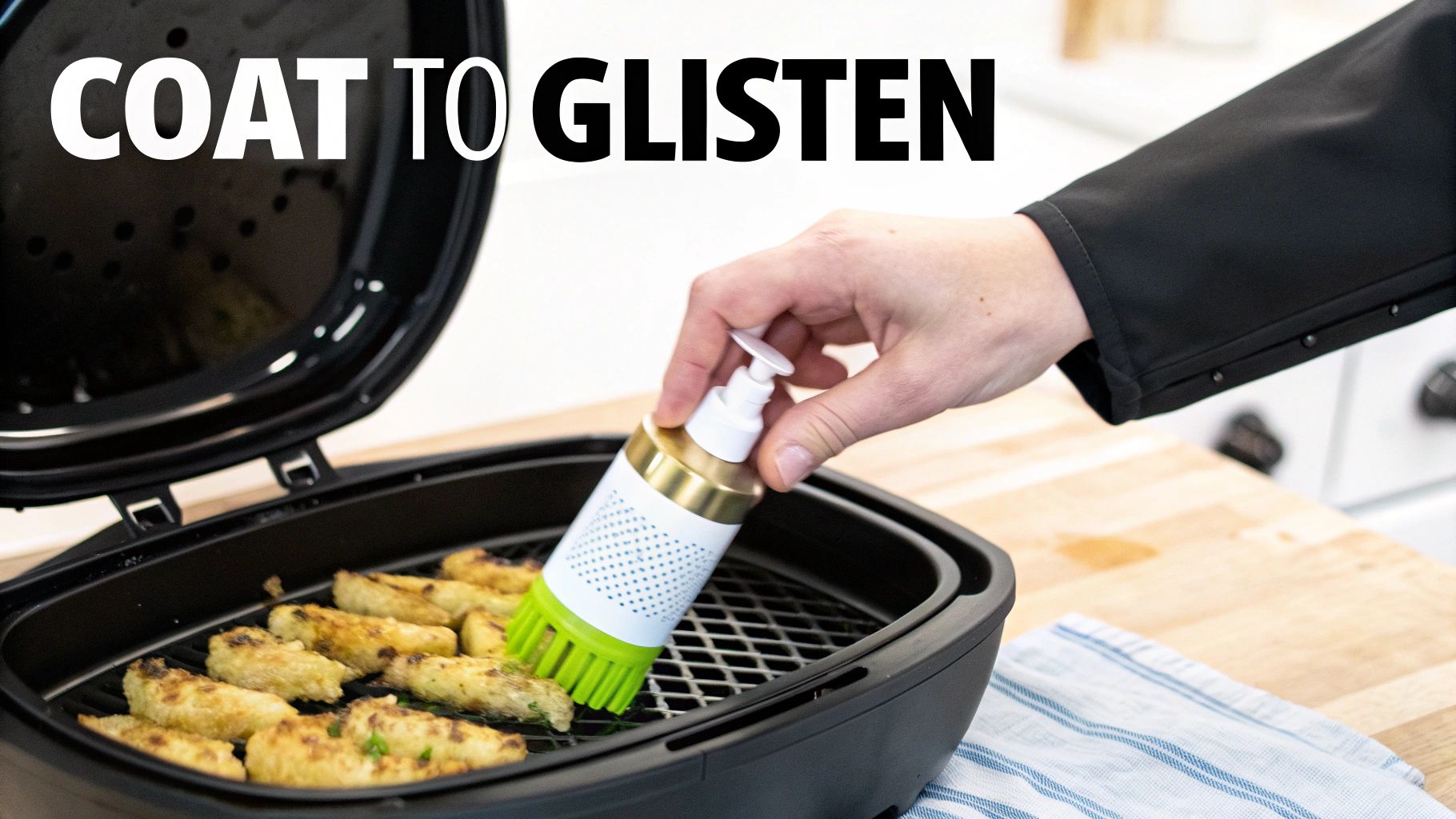
Getting that perfectly crispy, golden-brown finish isn't just about picking the right oil—it’s about how you apply it. Go too heavy, and your food ends up soggy and greasy. Too light, and it’s dry and disappointing. The sweet spot is a super-thin, even layer that lets the hot air do its thing.
This "less is more" approach is exactly why air fryers took over our kitchens. They give us that deep-fried texture using a tiny fraction of the oil. In fact, some analyses show they can use as little as 5% of the oil compared to deep-frying. For a busy parent or a college student, that simple switch can slash monthly oil consumption. You can find more stats on the air fryer market on marketsandata.com.
So, how do you get it just right? Let’s break down the three best ways to apply oil: spraying, brushing, and tossing. Each has its time and place, and knowing the difference will seriously up your snack game.
The Spray Method for Even Coverage
Spraying is the go-to for most people, and for good reason. It creates a fine, even mist that lightly coats your food without ever drowning it. This method is a lifesaver for spritzing veggies or chicken wings already in the basket halfway through cooking.
But here’s a crucial tip: step away from the aerosol cooking sprays like PAM. Those cans contain propellants and other additives that can slowly eat away at your air fryer’s non-stick coating, causing it to chip and peel over time.
The smart move is to grab a refillable oil mister or sprayer. This little gadget puts you in complete control. You can fill it with any high-smoke-point oil you like, save money in the long run, and, most importantly, protect your appliance. It's the secret to a perfect, light coating every time.
Rule of Thumb: Your goal is to "coat to glisten, not to drip." The food should have a light sheen, but you should never see pools of oil at the bottom of the basket.
Brushing and Tossing for Direct Application
Sometimes, you need to get a little more hands-on. These methods give you more control and are perfect for making sure every single piece of food is properly prepped before it even hits the heat.
-
Brushing: This is your precision tool. It’s fantastic for foods with uneven surfaces or when you want the oil in a specific spot. Think about painting a light layer of oil onto a salmon fillet or a pork chop. A simple silicone pastry brush is your best friend here.
-
Tossing: When you're working with a big batch of smaller items—like french fries, potato cubes, or broccoli florets—tossing is the fastest and most effective way to go. Just pop your ingredients in a bowl, drizzle in a teaspoon or two of oil, and toss with your hands or tongs until everything is lightly and evenly coated.
Mastering these simple techniques is just as important as choosing the best oil for air fryers. Once you get the hang of it, you’ll be getting that satisfying crunch with minimal oil, making your snacks delicious and cleanup a breeze.
Don't Let Good Oil (and Your Air Fryer) Go Bad
So you've picked the perfect oil for your air fryer—that's a great start. But keeping that oil fresh and your air fryer in tip-top shape is just as important. A little bit of care goes a long way in making sure your food tastes fantastic and your appliance lasts for years.
Think of your cooking oils as being a bit sensitive. They have three major enemies: heat, light, and air. Exposing them to any of these will cause them to break down and go rancid faster, which ruins the taste. The fix is simple: store your oils in a cool, dark place like a cabinet or pantry, well away from the heat of your stove.
Keep Your Air Fryer Clean and Happy
Cleaning up after using oil is non-negotiable. If you let it slide, a sticky, gummy film builds up inside your air fryer basket. This gunk can mess with how your food cooks and even make it taste off. Regular cleaning is the secret to avoiding this mess and protecting that non-stick coating.
Here’s a quick and painless routine to follow after you cook:
- Let it Cool: Safety first! Always unplug the air fryer and let it cool down completely.
- Give it a Soak: Pop out the basket and fill it with hot water and a bit of dish soap. Letting it soak for 10 minutes does most of the hard work for you, loosening any stubborn, greasy bits.
- Scrub Gently: Use a soft sponge or brush to wipe away the residue. Steer clear of steel wool or anything abrasive—that stuff will scratch and ruin the non-stick surface.
- Rinse and Dry: Give everything a good rinse and make sure all the parts are totally dry before you put your air fryer back together.
A few minutes of cleanup now saves you from a major scrubbing headache later.
Smart Habits, Smarter Cooking
This little routine isn't just about cleanliness; it's about efficiency. A clean air fryer heats up more evenly, and fresh oil makes for better-tasting food. It’s all part of what makes air frying so great in the first place.
Did you know that a modern air fryer uses only 15–20% of the energy a deep fryer would? It's a huge saving. Analysts even point out that newer models with smart presets for specific foods help you stay below an oil's smoke point, which saves energy and makes your food healthier. You can read more about these air fryer technology trends on bccresearch.com.
The Bottom Line: Taking care of your tools is just as important as choosing the right ingredients. By storing your oil properly and keeping your air fryer clean, you’ll get delicious, consistent results every time while saving a little energy and money along the way.
Got Questions About Air Fryer Oils? We've Got Answers
Even with all the charts and tips, you probably still have a few lingering questions. That's totally normal! Let's tackle some of the most common ones I hear all the time so you can get back to cooking with confidence.
Can I Use Aerosol Cooking Sprays Like PAM?
I know it’s tempting to grab that can of PAM—it’s so convenient! But here’s the inside scoop: you should avoid commercial aerosol sprays. They’re packed with propellants and other chemicals that are notorious for damaging the non-stick coating on air fryer baskets over time. You'll start to see it chip and peel.
The best move is to get a refillable oil mister or spray bottle. You can fill it with your own high-quality oil, get that same fine mist, and completely skip the basket-ruining additives. It’s a small change that makes a huge difference for the life of your appliance.
Do I Really Need to Add Oil to Frozen Foods?
This one surprises a lot of people. For most store-bought frozen snacks like fries, tots, or chicken nuggets, you actually don't need any extra oil. These foods are almost always par-cooked in oil before being frozen, so they have enough built right in to get perfectly crispy.
Of course, if you're aiming for that extra golden-brown crunch, a super-light spritz from your oil mister won't hurt. For more ideas on what to pop in your air fryer, check out our huge list of air fryer snack ideas.
Key Insight: The difference between "refined" and "unrefined" oil is huge. Unrefined oils are minimally processed (think cold-pressed) to keep their natural flavor and nutrients, but this gives them a lower smoke point. Refined oils are processed to strip out impurities, which means a neutral taste and a much higher smoke point—making them ideal for the high heat of an air fryer.
How Can I Tell if My Oil Has Gone Bad?
Trust your senses on this one—they're usually the best guide. If your oil has gone rancid, it will smell off. Think stale, metallic, or even a bit like crayons.
Visually, it might look cloudy, darker than it should, or feel sticky to the touch. Cooking with bad oil will absolutely ruin the flavor of your food, so my best advice is: when in doubt, throw it out.
