


When you're staring into the freezer, trying to figure out a quick meal, your air fryer is your best friend. The best frozen foods for an air fryer are the ones that are practically made for it: things with a built-in crispy coating or naturally low moisture. Think breaded chicken nuggets, french fries, tater tots, mozzarella sticks, and spring rolls.
These foods come out perfectly because the air fryer's intense, circulating hot air cooks them fast, giving them an incredible crispy crunch on the outside while keeping the inside perfectly tender.
Your Guide To Air Fryer Frozen Food Perfection
Let's be honest, the air fryer is a game-changer. It takes everyday frozen items and turns them into something you'd actually look forward to eating, and it does it in way less time than a regular oven. If you’re over soggy microwave meals or waiting forever for the oven to preheat, you’re in the right place.
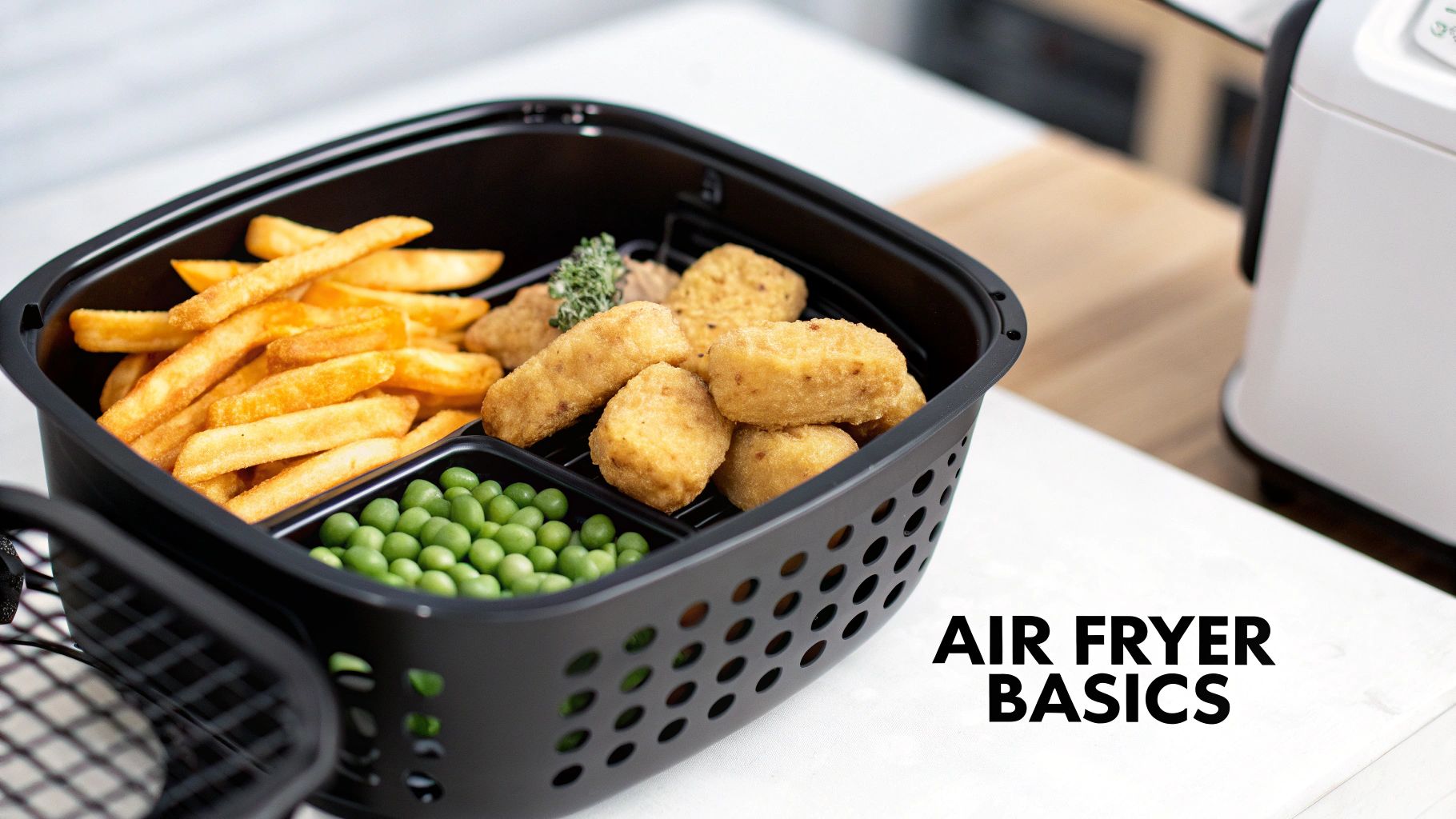
The secret weapon here is rapid air circulation technology. Imagine a small, high-powered convection oven that blasts your food with a whirlwind of hot air. This process crisps up the outside almost instantly, giving you that golden-brown crunch you crave, all without needing to add a ton of extra oil.
Why Your Freezer Is Now Your Best Friend
The sheer speed of an air fryer makes it the perfect partner for anything from the freezer aisle. It's especially brilliant at reviving foods that are supposed to be crispy. That intense heat zaps away any surface ice crystals before they can turn your food into a soggy mess, which is a common problem with other cooking methods.
So, what's the common thread among frozen foods that work so well?
- Surface Texture: Anything with breading or a light batter, like onion rings or fish fillets, gets an unbelievably crunchy crust.
- Low Moisture: Foods like french fries and tater tots don't have a lot of internal water, so they crisp up instead of just steaming themselves.
- Uniform Shape: Consistently sized items like chicken wings or jalapeño poppers cook through evenly, so you don't get frustrating cold spots.
The real magic of the air fryer is its ability to deliver that deep-fried texture with up to 80% less oil. It transforms simple frozen staples into satisfying meals, making it a must-have for busy professionals, college students, and anyone seeking a quick and delicious solution for dinner.
For a little more inspiration, you should check out our collection of creative air fryer snack ideas. We have everything from super simple snacks to ideas for full meals, showing you just how much this little appliance can do.
Why Some Frozen Foods Get Perfectly Crispy (and Others Don't)
Ever pulled a batch of frozen fries out of the air fryer and marveled at that perfect, golden crunch, only to have your next experiment turn out disappointingly limp? It’s not your fault—it all comes down to the science of what an air fryer actually does.
Forget thinking of it as a tiny oven. It’s more like a supercharged convection cyclone, blasting food with a vortex of hot air. This intense, circulating heat is the secret sauce. It hits the surface of frozen food so fast that it evaporates the ice crystals before they can turn to steam and make everything soggy. The result is a beautifully dehydrated, crispy outer layer while the inside cooks through. It's the polar opposite of a microwave, which basically just excites water molecules and steams your food into submission.
The Magic Formula: Size, Shape, and Surface
The frozen foods that truly shine in an air fryer almost always share a few key characteristics. First up is uniformity. Think about tater tots or chicken nuggets—they’re all roughly the same size and shape, which allows that hot air to hit every nook and cranny evenly.
This is why they cook so consistently, avoiding that dreaded half-burnt, half-frozen disaster. But the surface of the food is where the real magic happens.
- A Little Bit of Breading: Anything with a light coating, like mozzarella sticks or onion rings, is practically designed for an air fryer. That breading or batter creates a protective shield that gets outrageously crispy.
- Less Water, More Crunch: Foods with a lower natural moisture content, like potatoes, don't release a ton of steam as they cook. This lets the outside dry out and crisp up much faster.
- Fat is Your Friend: A little bit of fat, either already in the food or from a quick spritz of oil, is a fantastic heat conductor. It’s what helps everything get that beautiful golden-brown color and adds a ton of flavor.
The Power of Breaded Proteins
Frozen breaded goodies like chicken wings and fish sticks are a perfect showcase of this science in action. Honestly, their success is a huge reason the air fryer became so popular in the first place. These items are literally built for crunch, and the air fryer delivers that texture better than any other kitchen gadget.
This isn't just a kitchen trend; it's a market-mover. As more of us look for healthier and faster ways to get dinner on the table, the demand for air fryers has exploded. The global market is now expected to hit a staggering $1.26 billion.
These bite-sized proteins can get up to 75% crispier than their oven-baked counterparts, all while using a fraction of the oil you'd need for deep frying. That’s a huge win for busy families and professionals. We’re talking freezer-to-table in about 20 minutes at 380°F for a batch of wings—a level of convenience that’s hard to beat. You can dig deeper into the air fryer market trends on mordorintelligence.com.
Mastering Frozen Potatoes And Fries
If there’s one food that was practically made for the air fryer, it’s the frozen potato. French fries, tater tots, potato wedges—you name it. They don't just cook well in an air fryer; they come out spectacularly, hitting that perfect, restaurant-quality crispiness that's almost impossible to get from a conventional oven. It's the reason they're at the top of my list for guaranteed air fryer success.
So, what’s the secret? It all comes down to the potato itself. The combination of high starch and low moisture content creates that fluffy interior we all love. On top of that, most frozen potato products are cut into uniform shapes, which is a huge advantage. This consistency allows the hot, circulating air to hit every surface evenly, resulting in a perfectly golden, crunchy finish all around.
Getting That Perfect Golden Crunch
Nailing that perfect crunch is easier than you think, but a few small details make a world of difference. The single biggest mistake I see people make is overcrowding the basket. You have to think of it as giving each fry enough personal space to get properly crispy. When they're piled up, they just end up steaming each other, and you get a soggy, disappointing result.
The goal is always a single, even layer. It allows for maximum air circulation. And please, don't forget to shake the basket! A good, vigorous shake halfway through the cooking time is absolutely essential. It repositions everything, ensuring each and every fry gets its turn in the direct path of the hot air.
The infographic below really breaks down why certain frozen foods, especially potatoes, work so well.
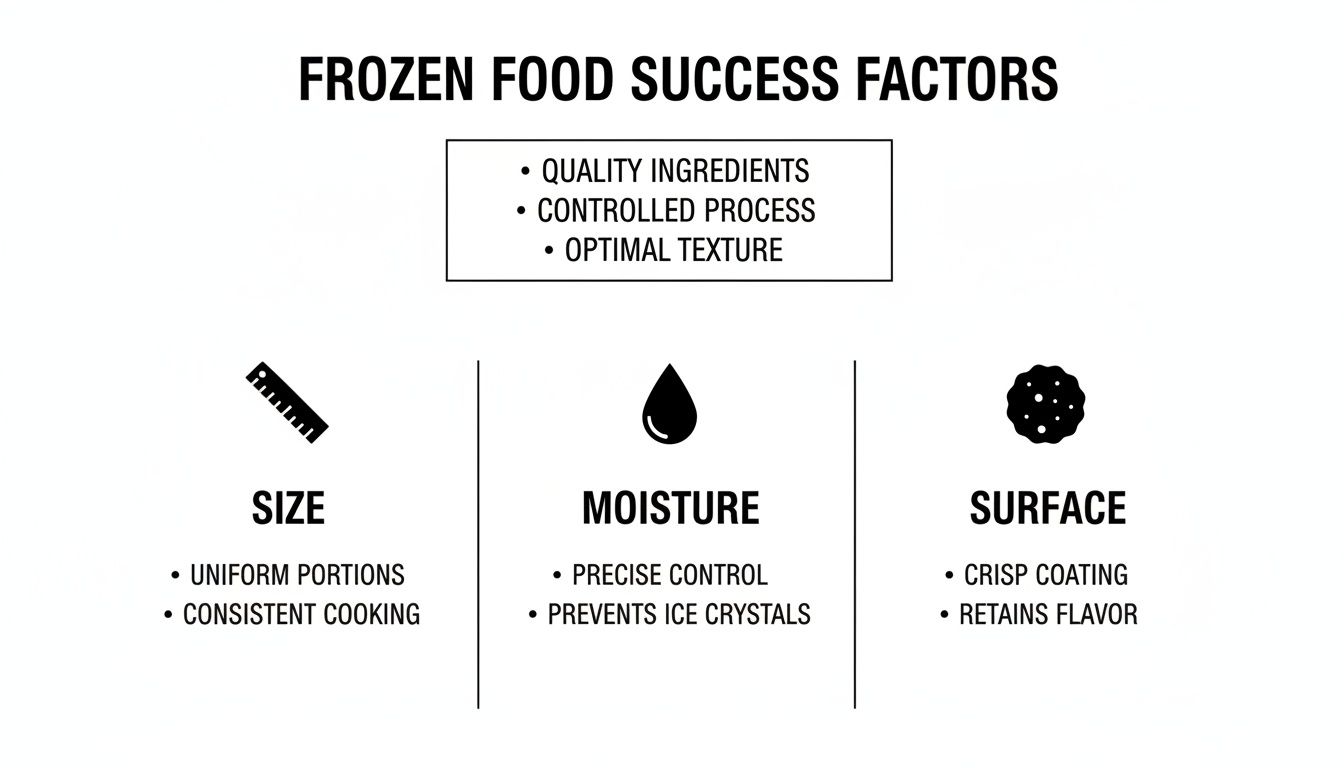
The consistent size and low moisture of frozen fries are a perfect match for the air fryer's cooking environment. This isn't just a popular opinion; the numbers back it up. We’ve seen a massive 71% jump in search interest for frozen vegetables and potatoes, thanks to people looking for healthier, budget-friendly meal options.
While the global frozen food market was valued at a staggering USD 314.55 billion in 2025, fries have a special place. An air fryer can slash oil usage by up to 80% compared to deep frying, giving you that incredible crunch without all the grease. You can dive deeper into these frozen food sales trends at accio.com.
Key Takeaway: The secret to perfect air-fried potatoes is simple: give them space and shake them often. Spreading them in a single layer allows the hot air to work its magic, and a mid-cook shake guarantees that coveted all-over crunch.
For a quick and easy reference, I've put together this chart to help you get started with the most common frozen potato products.
Air Fryer Cooking Guide For Frozen Potato Products
This handy chart is your go-to for achieving perfect crispiness on all your favorite frozen potato treats. Just find your item, set the temperature, and keep an eye on the time.
| Frozen Potato Type | Recommended Temperature (°F) | Average Cooking Time (Minutes) | Pro Tip For Best Results |
|---|---|---|---|
| Straight-Cut Fries | 400°F | 10-15 | Shake the basket vigorously at the halfway point for even browning. |
| Crinkle-Cut Fries | 400°F | 12-16 | The ridges crisp up beautifully; don't overcrowd to ensure air hits every surface. |
| Waffle Fries | 380°F | 10-14 | Their large, flat surface cooks quickly. Flip each one over halfway through. |
| Tater Tots | 400°F | 15-20 | Give them an extra 2-3 minutes if you like them exceptionally crispy. Shake often. |
| Potato Wedges | 380°F | 15-20 | Larger size means a longer cook time. Ensure they aren't overlapping. |
| Sweet Potato Fries | 375°F | 12-18 | They have more sugar and can burn faster, so keep a close eye on them. |
Think of this table as a starting point. Your specific air fryer model might run a little hotter or cooler, so always be prepared to adjust by a minute or two to get the results you want.
Ultimately, mastering frozen potatoes is your first real step toward becoming an air fryer pro. Once you get the hang of it with fries, you’ll find that the same core principles—don't overcrowd and shake halfway through—apply to almost any frozen food you want to cook.
The Best Frozen Snacks And Appetizers
Okay, let's talk about the category where your air fryer really becomes the MVP of the kitchen: frozen snacks and appetizers. This is where you can turn freezer-aisle staples into something that tastes like it came straight from your favorite pub's deep fryer.
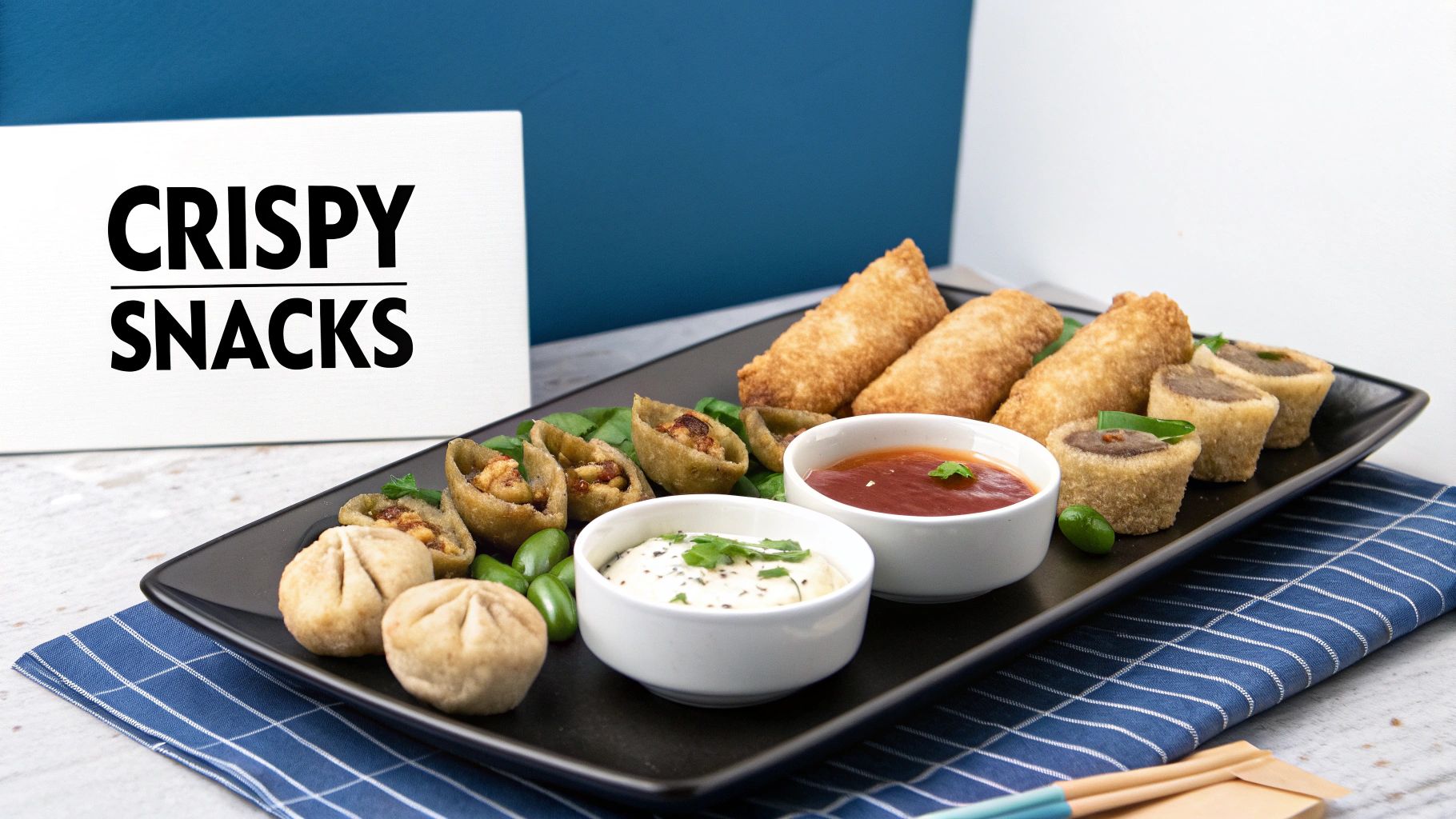
Think about those classic, crowd-pleasing snacks—mozzarella sticks, jalapeño poppers, and onion rings. These goodies are practically tailor-made for air frying. Their breaded coating is designed to get crunchy, and the air fryer's intense, circulating heat does exactly that, creating a shatteringly crisp exterior while leaving the inside perfectly gooey and melted. It’s all that deep-fried satisfaction without the vat of oil.
Achieving Snack Perfection
The number one rule for getting these breaded snacks just right is probably one you've heard before: don't overcrowd the basket. You need to give each piece its own space for the hot air to work its magic. A single, even layer is absolutely crucial for that 360-degree crunch.
For most of these breaded appetizers, a temperature between 375°F and 400°F for 8-12 minutes is the perfect range. Just remember to give the basket a good shake halfway through to make sure everything cooks evenly.
But what about snacks that aren't breaded? Things like frozen spring rolls or potstickers have more delicate wrappers that can get a little dry or tough. The solution is simple: a light spritz of cooking oil. Just a quick spray before you start cooking helps the wrappers turn golden and crisp instead of leathery, locking in all that moisture and flavor.
The air fryer's superpower is transforming standard frozen snacks into something special. With minimal effort, you can create a satisfying mini-meal or an impressive appetizer spread that looks and tastes far more complex than it actually was to prepare.
Quick Serving Ideas and Tips
Turning a simple frozen snack into a more rounded-out treat is all about the pairings. A good dipping sauce makes all the difference.
- Mozzarella Sticks: You can't go wrong with a side of warm marinara sauce for that classic restaurant experience.
- Jalapeño Poppers: Cool things down with a creamy ranch dip or an avocado-lime crema to balance the spice.
- Spring Rolls: A sweet chili sauce or a simple soy-ginger dip is the perfect partner for these savory bites.
- Potstickers & Dumplings: Mix up some soy sauce, a splash of rice vinegar, and a few drops of sesame oil for a fantastic, authentic dip.
These simple additions take your snacks from basic to brilliant. And if you're looking to see just how far your air fryer can take you with bread-based items, you can learn how to make a perfect bagel in an air fryer in our detailed guide. It's another great example of this appliance's amazing versatility.
From Veggies to the Sea: Mastering More Frozen Foods
Once you've nailed fries and snacks, it's time to see what your air fryer can really do. This is where it shines, taking foods that often turn out soggy—like frozen vegetables and seafood—and making them genuinely delicious. The secret lies in that powerful, dry heat, which transforms these tricky items into perfectly cooked meals.
Forget what you know about steaming veggies. When it comes to frozen broccoli, cauliflower, or Brussels sprouts, the goal is a beautiful, crisp-tender roast. The biggest mistake people make is dumping them straight from the bag, ice crystals and all. That ice just turns to steam, the mortal enemy of a crispy finish.
The fix is easy: give them a quick rinse under cool water to knock off the ice, pat them completely dry, and then toss with a tiny bit of oil and your favorite seasonings. This simple prep makes all the difference.
Getting That Perfect Roasted-Vegetable Char
You know that slightly charred, deeply flavorful result you get from oven-roasting? You can get that in your air fryer, but you have to give the veggies some room to breathe. If you pile them in, they’ll just steam in their own moisture.
Always cook in a single layer, even if it means working in a couple of batches. Trust me, the incredible texture is worth the extra five minutes.
Here are a few starting points I use all the time:
- Frozen Broccoli Florets: Crank it up to 400°F for 12-15 minutes. A good shake halfway through helps all those little florets get brown and crispy.
- Frozen Brussels Sprouts: I find 380°F for 15-20 minutes is the sweet spot. Shaking is non-negotiable here; you want every side to get that gorgeous caramelization.
- Frozen Cauliflower: Just like its cousin broccoli, 400°F for about 15 minutes works wonders. Try tossing it in some buffalo sauce after it comes out for an awesome, healthy snack.
The Secret to Flaky, Never-Soggy Seafood
The air fryer is a total game-changer for frozen seafood, especially anything with breading. Think frozen shrimp, fish fillets, and even fish sticks. They come out with an unbelievably crunchy, golden crust, while the fish inside stays moist and flaky. No more sad, microwave-soggy fish.
For these, I always preheat the air fryer for a few minutes. Dropping the frozen seafood into a hot basket gives the coating a head start on crisping up. And just like with vegetables, don't overcrowd the basket! Give each piece space to get that perfect, all-over crunch.
When it comes to frozen seafood, the mantra is hot and fast. Most breaded fish and shrimp are done in about 10-12 minutes at 400°F. This high heat sets the crust quickly, long before the delicate seafood inside has a chance to get tough or dry.
And let's not forget about breakfast! Frozen waffles and sausage patties are brilliant in the air fryer. They take just a few minutes and come out way crispier and more evenly cooked than they ever could in a toaster or microwave. It’s this incredible versatility that makes the air fryer an indispensable tool for fast, tasty meals using what you've already got on hand.
Common Air Frying Mistakes To Avoid
Even the best frozen foods can end up a soggy mess if you fall for a few common air frying traps. Getting that perfect golden-brown crunch is really more about your technique than the food itself. Once you learn to sidestep these simple mistakes, you'll be turning out perfectly cooked food every single time.
The number one mistake I see people make is overcrowding the basket. It's so tempting to just dump everything in at once, but you have to resist!
The Overcrowding Problem
What Happens: Think of your air fryer as a tiny convection oven that blasts food with super-hot, circulating air. When you pile food in, that air can't get to every surface. The stuff on the bottom ends up steaming in its own moisture, while the top layer might get scorched. The result? A sad, limp pile of unevenly cooked food.
How to Fix It: Always, always cook in a single layer. Don't let pieces overlap too much. If you're cooking a big batch of fries or nuggets for the whole family, it's far better to cook in two separate batches. That little bit of extra time is the difference between mushy and magnificently crispy.
Another classic rookie error is skipping the preheat. Tossing frozen food straight into a cold air fryer basket just won't give you the texture you're looking for. It’s like trying to get a good sear on a steak by starting it in a cold pan—it just doesn't work.
Preheating is your secret weapon for that signature air-fried crisp. It creates an initial blast of intense heat that instantly starts evaporating any surface moisture, especially on breaded items. This sets the crust before the inside has a chance to turn soggy.
Other Common Pitfalls
Finally, a couple of small details make a huge difference: shaking the basket and using just the right touch of oil. They seem minor, but they are absolutely key for even cooking and getting that ideal texture.
Forgetting to Shake: For anything small and loose like french fries, tater tots, or broccoli florets, you have to give the basket a good, vigorous shake halfway through the cooking time. It's not optional! This simple action flips everything around, ensuring all sides get hit by that direct, hot air for a perfect all-over crisp.
Oil Mismanagement: Air fryers are famous for using less oil, but that doesn't mean no oil. A light spritz of cooking spray on things like frozen veggies or potstickers is crucial. It keeps them from drying out into leathery husks and helps them achieve that beautiful golden-brown color. Conversely, drenching your food will just leave you with a greasy puddle at the bottom of the basket and a smoky kitchen.
Frequently Asked Questions
Even with the best advice, a few common questions always seem to pop up when you're getting the hang of air frying frozen foods. Let's tackle them head-on so you can cook with confidence and get that perfect crunch every single time.
Do I Need to Thaw Frozen Food First?
Nope! In fact, please don't. For the best frozen foods for air fryer cooking, you want to go straight from the freezer to the basket.
Thawing first is the fastest way to a soggy, disappointing meal. It adds way too much moisture, which creates steam inside the air fryer and prevents anything from getting crispy.
Think of it this way: the air fryer's superpower is its intense, circulating heat. That blast of hot air is designed to evaporate the ice crystals on the surface and cook the food from frozen, locking in moisture on the inside while creating that crave-worthy crispy shell on the outside.
Should I Add Oil to Frozen Foods?
This one really depends on what you're cooking. It's not always a yes or no answer.
Here’s a simple rule of thumb:
- Pre-fried or Coated Foods: Things like french fries, tater tots, and breaded chicken nuggets already have oil in their coating from when they were made. Adding more just makes them greasy, so you can skip it entirely.
- Plain or Uncoated Foods: Raw frozen veggies (think broccoli florets or Brussels sprouts) and unbattered seafood definitely benefit from a light spritz of cooking oil. Just a little bit helps them brown up nicely and keeps them from getting dry.
Why Is My Food Coming Out Soggy?
This is a classic air fryer problem, and it almost always comes down to one of two culprits: overcrowding the basket or not using enough heat.
When you pile food in, you block the airflow. That traps steam, and steam is the enemy of crispiness. For the best results, always cook in a single, even layer, leaving a little space for the hot air to work its magic.
Also, double-check your temperature. Most frozen goodies need a hot environment to crisp up properly, usually somewhere between 375°F and 400°F. If you need more specific tips or some fresh recipe ideas, you can find tons of great info on our air fryer snack ideas blog.
