


If you're going to master your air fryer, the first thing to get a handle on is temperature. Almost everything you'll cook falls within a surprisingly simple range: 325°F to 400°F.
That’s it. That’s the magic window. Knowing this moves you from just following recipes to actually understanding how to cook in your machine.
The Secret to Perfect Air Fryer Temperatures
An air fryer isn't just a tiny oven. It’s a powerful convection machine that blasts food with super-hot, circulating air. Think less like baking and more like a concentrated whirlwind of heat that’s all about creating that perfect crispy, golden-brown crust. This is precisely why getting the temperature right is so important.
Nailing the temperature from the get-go is the difference between wonderfully crispy wings and a sad, soggy mess. It's the key to making your air frying journey a whole lot more delicious and fun.
Your Go-To Temperature Zones
To make things even easier, let's break down that main temperature window into three distinct zones. Each one has a specific job, and learning which to use will seriously up your cooking game.
- Lower Heat (325-350°F): This is your gentle-cooking zone. It’s perfect for reheating leftovers without turning them into shoe leather or for cooking thicker foods that need to cook all the way through before the outside gets too dark. Think denser baked goods or thick chicken breasts.
- The Golden Zone (350-375°F): This is your everyday, all-purpose range. The vast majority of foods live here. From frozen mozzarella sticks to fresh broccoli, this is the sweet spot that perfectly balances a crispy exterior with a thoroughly cooked interior.
- High Heat (375-400°F): When you want maximum crunch, crank it up. This is the zone for getting that deep-fried texture on things like homemade French fries, chicken wings, or crispy Brussels sprouts.
Most of what you cook will land somewhere between 325°F and 400°F (that’s about 163°C to 204°C). For instance, a batch of frozen fries turns out perfectly at 350°F for 11-25 minutes. This kind of consistency is what makes the air fryer so incredibly easy to use.
Key Takeaway: The single most important factor for success is matching the right temperature zone to your food. High heat creates crisp, while lower heat ensures items cook through evenly.
Once you get a feel for these zones, you'll be able to adapt almost any recipe on the fly. For a little inspiration on what to cook next, check out our favorite air fryer snack ideas. Getting comfortable with these settings will give you the confidence to experiment and guarantee delicious results every time.
Why Your Air Fryer’s Temperature Dial Might Be Lying to You
Ever followed an air fryer recipe perfectly, down to the last degree and minute, only to pull out burnt chicken wings or limp, soggy fries? It's incredibly frustrating. You start to wonder if you did something wrong, but here’s a little secret from my kitchen to yours: it’s probably not you. It's your machine.
The number you see on the dial isn’t always the real temperature inside the basket. Think of it like the oven in a rental apartment—you quickly learn that 400°F on the dial might actually mean a fiery 415°F or a lukewarm 385°F. Air fryers are the same way.
This isn't just a tiny quirk; that temperature gap is often the culprit behind a recipe working beautifully for your friend but falling flat in your air fryer. It can be the difference between a perfectly cooked meal and a kitchen disappointment.
What Causes the Temperature Gap?
So, what's going on inside that little black box? It's not that some brands are "good" and others are "bad." Instead, a few key design choices create these temperature personalities.
- Heating Element Power: Just like engines in cars, some heating elements are zippier than others. They get hot faster and hold their temperature more steadily, while others might fluctuate up and down as they cycle on and off.
- Basket Design: The size and shape of the basket make a huge difference. A small, round basket concentrates heat differently than a wide, shallow one, completely changing how the hot air swirls around your food.
- Fan Strength: The fan is the real star of the show in an air fryer. A super-powerful fan whips hot air around with more force, cooking food faster and more intensely, even if the temperature setting is the same as a model with a weaker fan.
This isn't just kitchen gossip, either. One study found that to get the air inside the basket to an actual 180°C (356°F), different models needed their dials set anywhere from 183°C all the way up to a shocking 220°C. You can dig into the full findings on these heating characteristics yourself, but the takeaway is clear: blindly trusting the number on the dial is a recipe for disaster.
Key Insight: The most important thing you can do is get to know your air fryer. Learning its unique personality is far more valuable than following any recipe to the letter.
The Easiest Way to Test Your Air Fryer: The Toast Test
So, how do you find out if your air fryer runs hot, cold, or just right? Forget fancy thermometers. All you need is a single slice of bread. This dead-simple "toast test" will tell you everything you need to know.
- Get Set: Pop one slice of plain white bread into the center of your air fryer basket. Set the temperature to 350°F (177°C).
- Time It: Set the timer for 5 minutes. Don't walk away!
- The Mid-Way Check: At the 3-minute mark, pause the machine and take a peek. What do you see? Is the bread pale, perfectly golden, or already browning a little too fast?
- Read the Results:
- Dark or Burnt at 3-4 Minutes: You've got a hot one! Your air fryer runs hot. Plan on knocking 10-15°F off the temperature in most recipes.
- Perfectly Golden Brown at 5 Minutes: Congratulations, your machine is pretty accurate. You can follow most recipes as written.
- Still Pale After 5 Minutes: Your air fryer runs cool. You'll likely need to add 10-15°F to recipe temperatures or cook for a few extra minutes.
Running this quick, five-minute test is a game-changer. It equips you with the confidence to tweak any recipe on the fly, guaranteeing you get that crispy, golden, perfectly cooked result you were hoping for, every single time.
The Ultimate Snack Temperature and Time Chart
Alright, this is where the magic happens. Think of this section as your new best friend in the kitchen—the cheat sheet you'll want to bookmark, print out, and stick on your fridge. We're moving past the "how it works" and getting straight to the good stuff: exactly how long and at what temperature to cook your favorite snacks.
We’ve organized everything by food type, from those freezer-aisle heroes to fresh veggies and even baked goods. I won't just throw numbers at you; I’ll give you the "why" behind the settings. You'll see why starchy foods need a blast of high heat for that addictive crunch, while other foods need a gentler touch to come out perfectly.
Let's get cooking.
Frozen Favorites
This is where the air fryer really earns its spot on the counter. It's a total game-changer for turning frozen foods into crispy, golden perfection in a fraction of the time. The secret is usually high heat, which blasts away ice crystals and crisps the outside before the inside can turn into a soggy mess.
- French Fries (Thin Cut): Go with 400°F (204°C) for 10-15 minutes. The most important step? A good, hard shake of the basket halfway through. It's the only way to get every single fry gloriously crispy.
- Mozzarella Sticks: These need a quick trip at 380°F (193°C) for 6-8 minutes. Keep a close eye on them! You're aiming for melted, gooey cheese, not a cheese explosion all over your basket.
- Chicken Nuggets: Set it to 400°F (204°C) for 10-12 minutes. Make sure to flip them over at the halfway point to get them evenly browned and delicious.
- Tater Tots: These little potato nuggets crave high heat. A solid 400°F (204°C) for 15-20 minutes does the trick. Don't be shy with the shaking—do it once or twice for maximum crispiness.
My Golden Rule: Never, ever overcrowd the basket with frozen food. Give everything space to breathe in a single layer. That’s how you get that crunchy, "just-fried" texture instead of a sad, steamed pile.
The chart below is a perfect example of why just trusting the dial isn't always enough. It shows how the temperature you set can be quite different from the actual temperature inside the air fryer.
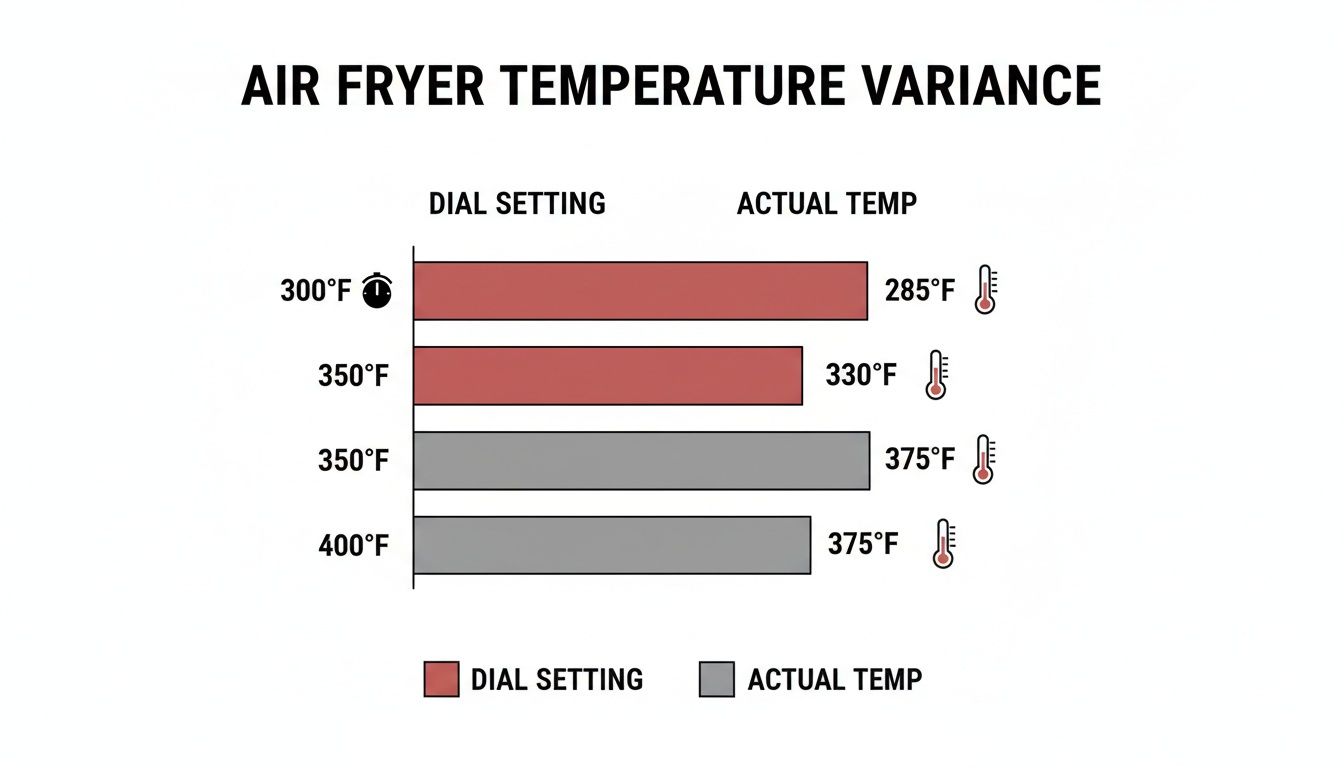
This just goes to show that what you set isn't always what you get. It’s why getting to know the quirks of your specific machine is so important for consistent results.
Fresh Vegetables
The air fryer is an absolute beast when it comes to roasting vegetables. It gives them those beautifully charred, crispy edges while keeping the insides perfectly tender. A little bit of oil is your best friend here—it helps with the browning and stops anything from sticking.
Here are a few of my go-to settings:
- Broccoli Florets: Toss them in a bit of oil and your favorite seasonings, then cook at 375°F (190°C) for 10-12 minutes. A good shake midway through keeps the delicate tops from burning before the stems are tender.
- Brussels Sprouts (Halved): An air fryer classic for a reason! Cook them at 380°F (193°C) for 15-18 minutes. You'll know they're done when the outer leaves are dark, crispy, and irresistible.
- Asparagus Spears: This is one of the fastest, easiest side dishes you can make. Set the temp to 400°F (204°C), and they’ll be tender-crisp in just 6-8 minutes.
- Bell Pepper Strips: Perfect for fajitas or just as a simple side. Air fry at 380°F (193°C) for 8-10 minutes until they're soft and have a little bit of char.
Proteins and Meats
From wings to salmon, your air fryer can handle proteins like a champ, leaving them juicy on the inside with a fantastic crust. Temperature is everything here. Go too low, and you'll just steam the meat. Too high, and you'll end up with a burnt outside and a raw middle.
- Chicken Wings: For skin so crispy it crackles, pat the wings completely dry with a paper towel before you season them. Cook at 380°F (193°C) for 25 minutes, and don't forget to flip them halfway through.
- Salmon Fillets: A delicate fish like salmon needs a softer touch. Cook at 370°F (188°C) for 7-10 minutes, depending on how thick your fillet is. This keeps it flaky and moist.
- Steak (1-inch thick): Want a perfect medium-rare? Preheat that air fryer! Cook at a sizzling 400°F (204°C) for about 7-9 minutes, flipping once. The most important part: let it rest for a few minutes before you dare slice into it.
- Sausages: Cook these at 370°F (188°C) for 12-15 minutes. Just be sure to roll them around occasionally so they get nice and brown on all sides.
Baked Goods and Breads
That's right, you can bake in this thing! It's brilliant for small batches when you don't want to fire up the whole oven. The trick is usually to dial the temperature back a bit. This ensures the inside gets fully cooked before the top gets too dark from the circulating hot air.
- Reheating Pizza: This alone is worth the price of an air fryer. Forget the soggy microwave mess. Reheating pizza at 350°F (177°C) for 3-4 minutes brings the crust back to life without turning the cheese into rubber.
- Muffins: Use silicone liners for easy cleanup. Bake at 330°F (165°C) for 12-15 minutes. The circulating air helps them cook fast and gives them those beautiful domed tops.
- Biscuits (Canned): Lay them out in a single layer and cook at 330°F (165°C) for 8-10 minutes. Flip them halfway through for a perfect, even golden brown.
- Toasting Bagels: For a superior toasted bagel, you can easily make a bagel in the air fryer at 350°F (177°C) for about 4-5 minutes. It creates an amazing crisp on the outside while leaving the inside perfectly soft and chewy.
Comprehensive Air Fryer Cooking Times and Temperatures
To make things even easier, I've compiled all this information (and more!) into a detailed table. This is your ultimate reference guide for nailing over 20 of the most popular air fryer snacks.
| Food Item | Recommended Temperature (°F / °C) | Estimated Cooking Time (Minutes) | Pro Tip |
|---|---|---|---|
| FROZEN FOODS | |||
| French Fries (Thin) | 400°F / 204°C | 10-15 | Shake basket vigorously halfway through. |
| Tater Tots | 400°F / 204°C | 15-20 | Cook in a single layer and shake 1-2 times. |
| Chicken Nuggets | 400°F / 204°C | 10-12 | Flip them over at the halfway point for even browning. |
| Mozzarella Sticks | 380°F / 193°C | 6-8 | Watch closely to prevent cheese from leaking out. |
| Onion Rings | 400°F / 204°C | 8-10 | Don’t overcrowd; cook in batches if needed. |
| Fish Sticks | 380°F / 193°C | 10-12 | Flip once during cooking for extra crispiness. |
| FRESH VEGETABLES | |||
| Broccoli Florets | 375°F / 190°C | 10-12 | Toss with oil and seasoning first; shake halfway. |
| Brussels Sprouts (Halved) | 380°F / 193°C | 15-18 | Cook until outer leaves are dark and crispy. |
| Asparagus Spears | 400°F / 204°C | 6-8 | A little oil and salt is all you need. |
| Bell Pepper Strips | 380°F / 193°C | 8-10 | Cook until softened and slightly charred. |
| Zucchini Slices | 400°F / 204°C | 12-15 | Don't slice too thin or they'll get soggy. |
| Baby Carrots | 380°F / 193°C | 15-18 | A touch of maple syrup or honey before cooking is delicious. |
| PROTEINS & MEATS | |||
| Chicken Wings | 380°F / 193°C | 25 | Pat wings completely dry with paper towels for the crispiest skin. |
| Salmon Fillet | 370°F / 188°C | 7-10 | Cook skin-side up if you want it crispy. |
| Steak (1-inch) | 400°F / 204°C | 7-9 (Medium-Rare) | Always preheat the air fryer and let the steak rest after cooking. |
| Sausages | 370°F / 188°C | 12-15 | Turn occasionally for even browning. |
| Bacon Strips | 350°F / 177°C | 8-10 | Place in a single layer; no preheating needed. |
| BAKED GOODS & MORE | |||
| Reheating Pizza | 350°F / 177°C | 3-4 | Far superior to the microwave for a crispy crust. |
| Biscuits (Canned) | 330°F / 165°C | 8-10 | Flip them halfway through cooking. |
| Toasted Bagel | 350°F / 177°C | 4-5 | Creates a perfectly crisp outside and soft inside. |
| Grilled Cheese Sandwich | 370°F / 188°C | 6-8 | Butter the outside of the bread and flip halfway. |
| Hard-Boiled Eggs | 270°F / 132°C | 15-17 | No water needed! Plunge in an ice bath after cooking. |
Remember, these are fantastic starting points. Your specific air fryer model, the size of your food, and how full your basket is can all affect cook times, so don't be afraid to peek and add a minute or two if needed. Happy air frying
Here’s the rewritten section, designed to sound natural and human-written:
Mastering the Art of Time and Temperature
This is where you go from following recipes to truly cooking with your air fryer. Those temperature charts? Think of them as a great starting point, not the final word. The real magic happens when you understand the delicate dance between time and temperature. Once you get a feel for this, you can adjust on the fly and nail the results every single time.
It’s a lot like making toast. If you blast your bread on the highest setting, you’ll get a charred, smoky outside and a disappointingly soft inside. Lower the heat and give it more time, though, and you get that perfect, golden-brown crunch all the way through. Your air fryer works on the exact same principle.
Getting a feel for this relationship is what will free you from having to follow recipes to the letter. It's how you become a more intuitive, confident cook.
Adjusting Your Cook on the Fly
Understanding this balance lets you make smart calls in the moment. You can tweak time and temperature to solve all sorts of common kitchen problems.
Let's say you're in a hurry. Your first instinct might be to crank the heat all the way up to 400°F, but that's a one-way ticket to burnt food. A better move is to bump the temperature up just a little—maybe from 370°F to 385°F—and then shave a few minutes off the cook time. The trade-off? You'll need to shake the basket more often to keep things cooking evenly.
Key Insight: A small temperature bump means less time in the fryer and more hands-on attention (like shaking or flipping). On the flip side, a lower temperature is more forgiving and gives you a bigger window to get things right without constant checking.
Why the Amount of Food Matters
Here's a mistake I see all the time: assuming a small handful of fries cooks the same as a basket that's packed full. It doesn't. The amount of food you're cooking completely changes the game inside your air fryer.
- Small Batches Cook Faster: When you have a single layer of food with plenty of room for air to move, things cook incredibly fast. For a small portion, you might need to knock 25-30% off the time a recipe calls for.
- Larger Batches Need More Time: A full basket traps steam and blocks that hot air from circulating. The machine has to work way harder. For bigger batches, you'll almost always need to add more time and be really good about shaking the basket every 5-7 minutes to get everything crispy.
Think about boiling water. A little bit in a mug boils in a minute, but a huge pot on the stove takes forever to get going. A full basket of cold, frozen food does the same thing—it drops the temperature inside your air fryer, so it needs more time to recover and cook everything through. Once you get this, you can adjust your settings with confidence, whether you're making a quick snack for one or a big batch of wings for the whole family.
Troubleshooting Common Air Fryer Temperature Issues
Even the most experienced home cooks have an off day with their air fryer. It's a real letdown when you’re craving that perfect crunch and end up with something… well, disappointing. Think of this section as your personal guide to figuring out what went wrong and how to fix it, so every meal comes out just right.
We'll walk through the most common temperature-related hiccups one by one. I'll break down the problem, explain why it's happening, and give you a straightforward solution to get things back on track.
Problem One: The Food Is Soggy, Not Crispy
This is, by far, the most frequent complaint I hear. You bought an air fryer for that deep-fried texture but ended up with a batch of limp, steamy fries. Don't throw in the towel—the fix is usually incredibly simple.
Common Causes:
- Temperature Too Low: If the heat isn't high enough, moisture steams the food instead of evaporating off the surface.
- Overcrowded Basket: This is the #1 cause of soggy food. When you cram too much in, the hot air can't circulate, trapping steam right where you don't want it.
- Not Enough Oil: A tiny bit of oil is a fantastic heat conductor. It helps transfer that intense heat to the food's surface, which is key for browning and crisping.
The Solution:
First and foremost, give your food some breathing room! Always cook in a single, even layer, working in batches if you have to. It's worth the extra few minutes. Next, try bumping the temperature up by 10-15°F. And finally, a light toss or spritz of oil will do wonders for achieving that beautiful golden-brown crunch.
Expert Tip: For anything you can shake, like fries or wings, do it! A vigorous shake halfway through the cooking time is non-negotiable. It flips everything around so all sides get exposed to that powerful circulating heat, guaranteeing an even, crispy result.
Problem Two: The Outside Is Burnt, But The Inside Is Raw
We've all been there. The outside of your chicken looks perfect—maybe even a little too dark—but when you cut into it, the center is completely undercooked. This classic mistake happens when the temperature is just too high for the food's thickness.
The exterior cooks and burns long before the heat has a chance to work its way to the dense interior. It’s especially common with thicker cuts of meat like chicken breasts or hefty baked goods like potato wedges.
Common Causes:
- Temperature Set Too High: You cranked the dial to the max, hoping to cook faster, but you just ended up scorching the surface.
- Food Pieces Are Too Large: A thick, dense piece of food simply needs more time for the heat to penetrate all the way through.
The Solution:
It's an easy fix: lower the temperature and extend the cooking time. For instance, instead of trying to blast a thick chicken breast at 400°F for 15 minutes, pull back to 360°F and cook it for 20-25 minutes. This gentler heat allows the inside to cook through perfectly without turning the outside into charcoal. When in doubt, an instant-read thermometer is a cook's best friend.
Beyond the Basics: Thinking Like an Air Frying Pro
Alright, you've made it through the nuts and bolts of air fryer temperatures, from figuring out hot spots to fixing common cooking fails. Now, let’s tie it all together. The real secret to mastering your air fryer isn't about memorizing dozens of recipes; it's about getting a feel for a few core concepts that will make you a truly confident cook.
Think of these as the fundamental truths of air frying. Once they click, you'll be able to nail that perfect crispy finish every time, no matter what you toss in the basket.
The Three Golden Rules of Air Frying
When you get right down to it, incredible air-fried food comes from understanding three simple but powerful ideas. If you take anything away from this guide, let it be these three points:
- Get to Know Your Machine: As we've discussed, no two air fryers are exactly alike. Yours might run a little hot or a little cool. Doing a quick "toast test" is the single best thing you can do to learn its quirks and know how to adjust any recipe you find online.
- Balance Heat and Time: This is the big one. High heat for a short time is your go-to for getting a great crisp on thinner foods. Lower heat for a longer time is for cooking thicker things, like chicken pieces, all the way through without burning the outside. Understanding this trade-off is what gives you real cooking intuition.
- Don't Crowd the Basket: This is the unbreakable rule. Piling food in there is the number one cause of soggy, steamed results. For that signature air-fried crunch, you absolutely need to cook in a single, even layer so the hot air can do its job.
The air fryer has clearly moved past being just another trendy gadget; it's a fixture in modern kitchens now. That shift is backed by some serious numbers, too. The global air fryer market was valued at about USD 1.37 billion in 2024 and is expected to grow to USD 2.09 billion by 2030. You can read more about this trend and what’s driving it over at MarkNtel Advisors. All this growth means we're seeing more variety and better prices, but the basic science of how they work—circulating hot air—never changes.
Final Takeaway: Your goal is to stop just following recipes and start understanding how your air fryer actually cooks. Once you get a feel for these fundamentals, you can improvise, experiment, and get perfect results with pretty much any snack you can dream up.
With this knowledge, you're ready to tackle anything from frozen mozzarella sticks to fresh broccoli with total confidence. You don't just know what temperature to set, you know why it's the right one. For more ideas and to keep learning, check out our full library of recipes and guides on our air fryer snack ideas blog.
Now, go make something amazing.
Your Air Fryer Temperature Questions, Answered
Let's be honest, even after you get the hang of your air fryer, questions pop up. I get it. This is where we tackle those common head-scratchers with some quick, straight-to-the-point advice. Think of this as your personal cheat sheet for those little moments of doubt in the kitchen.
Here are the answers to the questions I hear from pretty much every new air fryer owner.
Do I Really Have to Preheat My Air Fryer?
In most cases, yes! Taking just 3-5 minutes to preheat is one of the best habits you can get into. It’s absolutely essential for foods where you're chasing that ultimate crispy texture, like French fries or chicken wings.
Think of it like putting a steak on a cold pan—it just doesn't work right. Preheating gets the cooking chamber hot from the get-go, searing the outside of your food for a better crust and ensuring it cooks evenly all the way through. You can probably get away with skipping it for a quick reheat, but for that signature air-fried crunch, preheating is a non-negotiable step.
How Do I Convert My Favorite Oven Recipes?
This is the golden rule I always share: drop the temperature by 25°F (around 15°C) and shave 20-25% off the cooking time. Why? Air fryers are like super-charged convection ovens, using a powerful fan to blast hot air in a much smaller space, which makes them cook incredibly fast.
So, if your go-to frozen pizza says to bake at 400°F for 20 minutes, try your air fryer at 375°F. Start peeking in on it around the 15-minute mark. It's always better to check early and add more time than to walk away and come back to a burnt snack.
Key Conversion Tip: Air fryers are speed demons. Always dial back both the heat and the time, and check your food way sooner than you normally would.
Is It Okay to Use Aluminum Foil or Parchment Paper?
Absolutely, you can use both! But there's one massive catch: you can't block the airflow. The magic of an air fryer is all in that circulating hot air, so if you cover up the holes in the basket, you're just steaming your food.
The easiest solution is to use perforated parchment liners designed for air fryers. If you use a regular piece, make sure your food is heavy enough to hold it down so it doesn't get sucked up into the heating element (a definite fire hazard!). And never, ever put a liner in while preheating—it needs the weight of the food to stay put. They are a lifesaver for cleanup with sticky foods, though!
Why Is My Food Coming Out Unevenly Cooked?
I can almost guarantee it's one of two things: you're either overcrowding the basket or forgetting to shake it. Your food needs personal space for the hot air to wrap around every single piece.
When you pile everything in, the food on the bottom steams while the food on top gets crispy. For anything small like fries, tater tots, or chopped veggies, give the basket a really good shake at least once halfway through. This simple move flips everything around, giving each piece its moment in the hot seat for that perfect, golden-brown finish.
Ready to put this expert knowledge to work and find your next go-to snack? We have hundreds of simple, crave-worthy recipes at airfryersnackideas.com that will help you master your machine. Explore our recipe collection and start cooking like a pro.
