


Forget everything you think you know about making scalloped potatoes—the long oven preheat, the hour-plus bake time, the hope that the center actually cooks through. Making them in an air fryer is a total game-changer. You get that same bubbly, golden-brown crust and perfectly tender potatoes, but in way less time. It's all thanks to the magic of rapid air circulation.
Why the Air Fryer Is Your Secret Weapon
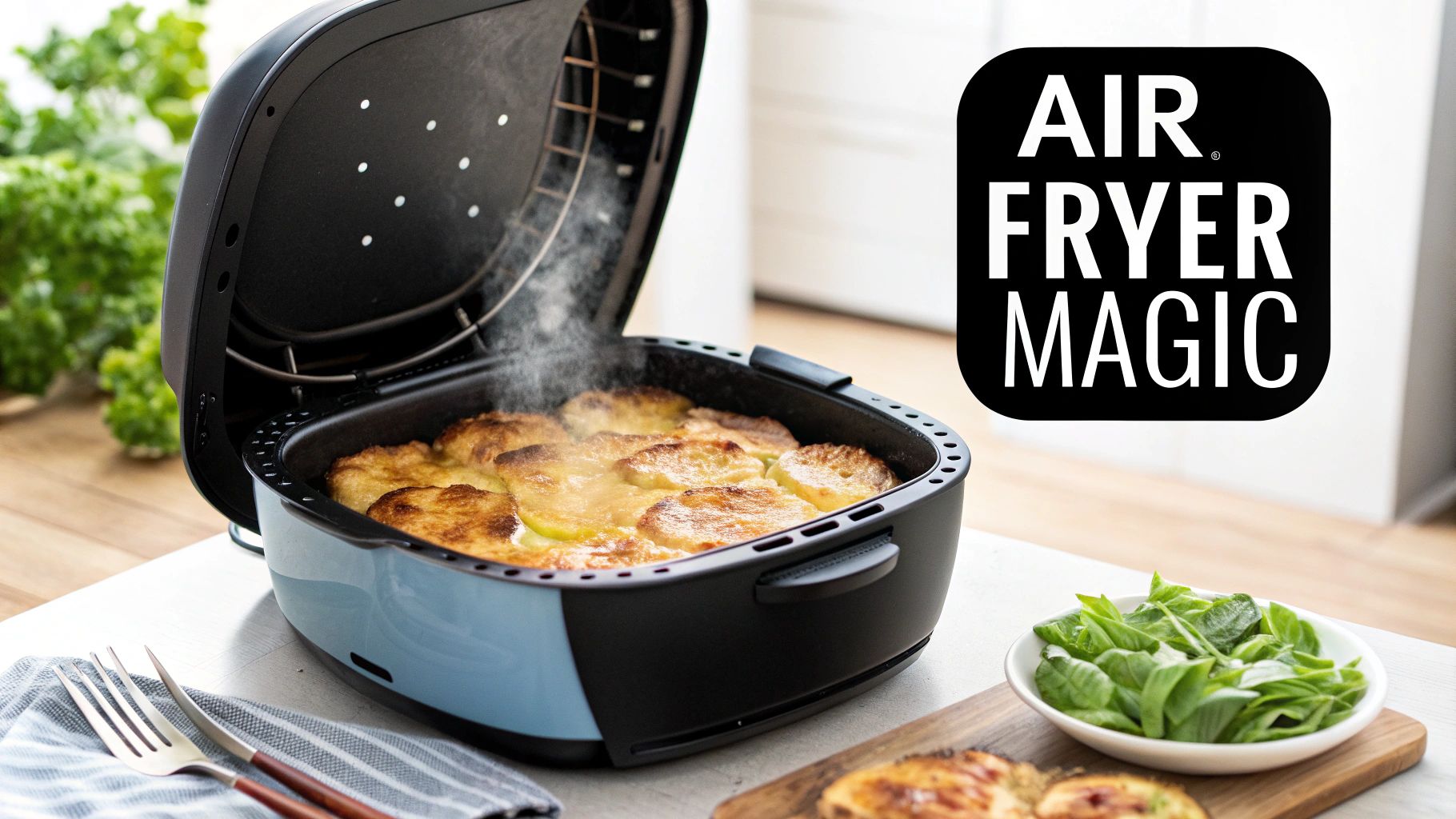
If you've ever found yourself impatiently tapping your foot while waiting for a giant oven to heat up for just one side dish, you're going to love this. Traditional scalloped potatoes can easily hog your oven for over an hour, and that’s not even counting the 15-20 minutes it takes just to preheat. The air fryer completely flips that script.
Because it's so much smaller and has such a powerful fan, it gets up to temperature in just a couple of minutes. This seriously slashes the time from prep to plate, turning a decadent dish like scalloped potatoes into something you can actually pull off on a busy weeknight.
The Science of Superior Cooking
So, what's the secret? It’s all in the convection. An air fryer uses a heating element and a high-speed fan to blast hot air all around your food, which is perfect for scalloped potatoes.
This creates two key benefits:
- Even Steaming: That swirling hot air wraps around the baking dish, creating a consistent little oven that gently steams the potato layers from every angle. This ensures they get fork-tender without turning into mush.
- Perfect Browning: When you cook the potatoes uncovered for the final stretch, that same circulating air works its magic on the top layer. It creates a beautifully crisp, golden-brown crust that a conventional oven sometimes struggles to achieve without burning the edges.
You end up with that classic comfort-food texture—velvety potatoes, creamy sauce, and a satisfyingly crisp top—but with more precision and a lot less guesswork.
The air fryer's main win is its speed and energy efficiency. It can cut cooking times by up to 25% compared to a conventional oven and uses way less energy, making it a much smarter choice for smaller dishes like this.
More Than Just a Timesaver
It's not just about speed, though. Using an air fryer also frees up your main oven, which is a lifesaver during big holiday meals when oven space is like gold. Imagine Thanksgiving or Christmas dinner: the turkey or roast can have the main oven all to itself while your air fryer is off to the side, perfecting the scalloped potatoes.
A lot of us are realizing this appliance is for so much more than just reheating pizza or making fries. If you look around, you'll find tons of creative air fryer snack ideas that show just how versatile it can be. It's really about getting that holiday-worthy quality any day of the week, with less fuss and an easier cleanup.
Choosing the Right Ingredients for the Creamiest Results
The secret to truly unforgettable scalloped potatoes isn't some complicated culinary trick—it’s all about starting with the right building blocks. Seriously, choosing your ingredients wisely is what takes this dish from "pretty good" to a decadent, creamy masterpiece your family will request again and again.
Each component, from the potato you pick to the cream you pour, has a specific job to do. Let's break down why certain choices work so much better than others, especially when you're working with the concentrated heat of an air fryer.
The Potato Is Paramount
Listen, not all potatoes are created equal, especially for this recipe. If you want that naturally thick, luxurious sauce, you need starch. It's non-negotiable. That's why your best bet will always be starchy or medium-starch potatoes.
- Yukon Golds are my absolute go-to. They walk that perfect line with a buttery texture and just enough starch to thicken the sauce beautifully without turning to mush. They hold their shape just enough.
- Russets (Idaho potatoes) are a fantastic second choice. They're loaded with starch, which means your sauce will be incredibly thick and creamy. The only downside is they're a bit fluffier and can break down more than Yukons.
Whatever you do, steer clear of waxy varieties like red or new potatoes for this dish. They just don't have the starch content needed, so they hold their shape too well. You'll end up with a thin, watery sauce instead of that velvety texture we're aiming for.
Pro Tip: Whatever you do, don't rinse the potato slices after you cut them! You'll be washing away all that wonderful surface starch. That starch is your secret weapon for a thick, velvety sauce that clings to every single layer.
Building the Perfect Cream Sauce
The sauce is the soul of the dish, and this is no time to be shy about richness. We need full-flavored, high-fat ingredients to prevent the sauce from breaking or curdling under the air fryer's intense heat.
For your liquid, heavy cream is hands-down the best option. Its high fat content (around 36%) creates a super stable, rich sauce that clings to the potatoes perfectly. You can get away with whole milk, but just know the final dish will be noticeably thinner. Sometimes I'll do a mix of heavy cream and whole milk for a slightly lighter, but still delicious, middle ground.
Choosing Your Cheese and Aromatics
Okay, this is where you get to add that final layer of personality. The key is to pick a cheese that melts like a dream without getting greasy.
- Gruyère is the classic for a reason. It brings a sophisticated nutty, salty flavor and melts into a gorgeous, gooey blanket.
- Sharp Cheddar is another winner, giving you that familiar tangy bite and a beautiful golden-brown crust.
- A little Parmesan grated over the top before the final air fry adds an amazing savory, crispy finish.
Don't forget the aromatics! Finely minced garlic adds a pop of warmth that cuts right through the richness. And my favorite little secret? A tiny pinch of nutmeg. It's a classic pairing for a reason—it just elevates all those creamy flavors without being obvious.
To help you get the perfect combination every time, I've put together a quick guide for pairing potatoes and cheeses.
Potato and Cheese Pairing Guide
Think of this table as your cheat sheet for nailing the texture and flavor you're craving. Whether you want something classic and gooey or sharp and structured, the right combination makes all the difference.
| Ingredient | Best Choice | Why It Works |
|---|---|---|
| Potato | Yukon Gold | The perfect all-rounder. It has enough starch to create a creamy sauce but stays firm enough to hold its shape for distinct layers. |
| Potato | Russet | The starch king. Choose this for the absolute thickest, creamiest sauce, but be gentle when layering as it's more delicate. |
| Cheese | Gruyère | The classic choice for a smooth, velvety melt and a rich, nutty flavor that complements the cream perfectly. |
| Cheese | Sharp Cheddar | Delivers that iconic tangy flavor and melts into a beautiful, golden crust. A crowd-pleaser every time. |
| Cheese | Parmesan (Topping) | Not ideal for the layers as it can get grainy, but it creates a wonderfully crisp and savory top crust. |
Ultimately, the best choice comes down to personal preference. Don't be afraid to mix and match! A blend of Gruyère and cheddar, for instance, can give you the best of both worlds—gooey texture and a sharp bite.
Bringing It All Together: From Slicing to Serving
Alright, this is where the magic happens. You’ve done your prep, and now it's time to turn those simple ingredients into a show-stopping side dish. We’ll walk through slicing the potatoes, whipping up a velvety sauce, and layering it all for that perfect, bubbly finish. Trust me, getting these details right is the secret to unforgettable scalloped potatoes.
The Perfect Slice: Why Consistency is King
If there's one thing that makes or breaks scalloped potatoes, it's the slice. You're aiming for a uniform 1/8-inch thickness. Any thicker, and you’ll end up with crunchy, undercooked spots. Too thin, and your potatoes might just turn to mush.
This is where a mandoline really shines. I know, another kitchen gadget, but if you love gratins or scalloped dishes, it's a game-changer. It gives you perfectly identical slices every single time, which means every layer cooks at the same rate. You can do it with a sharp knife and a steady hand, but a mandoline removes all the guesswork.
My Two Cents: If you're using a knife, take a moment to slice one potato perfectly and use those first few slices as a visual guide for the rest. It takes a little extra focus, but it’s so much better than biting into a hard, raw potato later.
Nailing the Creamy Béchamel Sauce
The heart and soul of this dish is a creamy, lump-free béchamel sauce. It sounds fancy, but it's really just a classic white sauce, and it's easy to master once you know the key. The trick is to cook the raw flour taste out of your roux (the butter-flour paste) before adding any liquid.
First, melt your butter in a saucepan over medium heat. Whisk in the flour until you've got a smooth paste and let it cook for about 60 seconds, stirring constantly. This little step toasts the flour and makes a world of difference in the final flavor.
Now, grab your warm heavy cream and milk. Slowly—and I mean slowly—pour it in while whisking like you mean it. Using warm liquid is my go-to trick for preventing lumps. Just keep stirring gently as the sauce cooks until it's thick enough to coat the back of a spoon. That's your cue to take it off the heat and stir in your seasonings and half of the cheese until it's gloriously smooth.
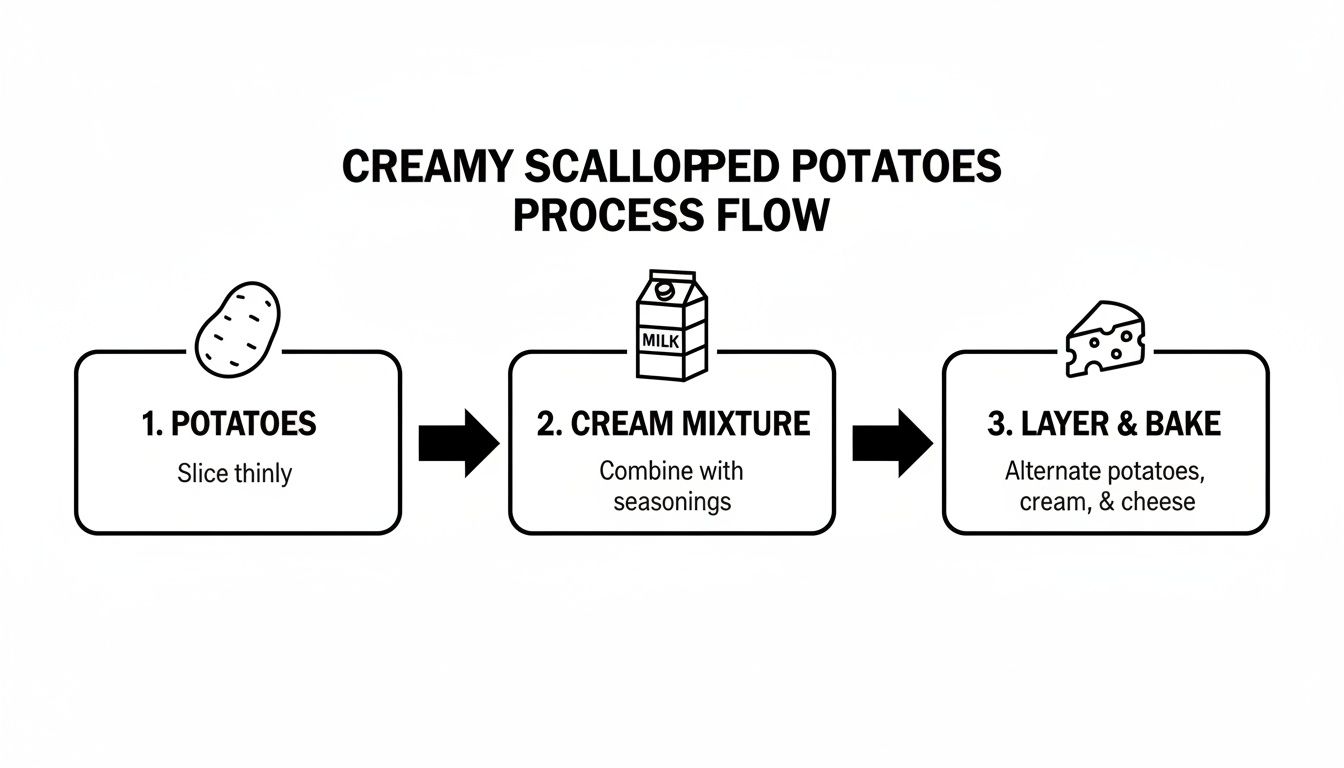
As you can see, it's just a simple process of combining potatoes with a creamy sauce and cheese to create something truly special.
The Art of Layering for the Air Fryer
With your potatoes perfectly sliced and your sauce simmering, it’s assembly time. Grease your air-fryer-safe dish and let’s get layering. The goal here is simple: make sure every single slice of potato is bathed in that incredible sauce.
- A Base of Sauce: Spread a thin layer of sauce on the bottom of the dish first. This is crucial for preventing the bottom potatoes from sticking or scorching.
- The First Potato Layer: Arrange about a third of your potato slices in an overlapping pattern. Think of them like shingles on a roof or a neat row of fallen dominoes.
- Pour on the Sauce: Spoon more of that béchamel over the potatoes, using a spatula to gently nudge it into all the nooks and crannies.
- Repeat, Repeat, Repeat: Keep going with layers of potatoes and sauce until you’ve used everything up. Your final layer should be a generous coating of sauce. Now, sprinkle the rest of that cheese all over the top.
Now for the two-stage cooking method—this is the key to getting it right in the air fryer.
- Part 1: The Steam: Cover the dish tightly with aluminum foil and air fry at 350°F (175°C) for 20-25 minutes. The foil traps all the steam, gently cooking the potatoes until they're perfectly tender without letting the top burn.
- Part 2: The Golden-Brown Finish: Carefully peel back the foil. Crank the heat up to 375°F (190°C) and cook for another 10-15 minutes. You're just looking for that bubbly, golden-brown crust we all love.
This two-part approach is foolproof. You get tender potatoes on the inside and a beautifully crisp, cheesy top. Just be sure to let the dish rest for at least 10 minutes before you dig in—it helps the sauce set up perfectly.
Insider Tips for Flawless Scalloped Potatoes
Making good scalloped potatoes is one thing, but getting them perfect every single time? That comes down to a few little secrets that most recipes don't mention. These are the tricks of the trade that will help you sidestep common problems before they even have a chance to start.
First, and I can't stress this enough: do not rinse your potato slices after you cut them. I know it can be tempting, but you'll wash away all that precious surface starch. That starch is your best friend for a thick, velvety sauce that beautifully coats every single slice instead of turning into a watery pool at the bottom of your pan.
Preventing Common Cooking Pitfalls
Another classic mistake is a sauce that splits or curdles. This usually happens when you pour cold cream into a hot pan, shocking the dairy and causing it to separate. The fix is surprisingly simple—just gently warm your milk and cream before adding them to your roux. This tiny step makes all the difference, helping the sauce emulsify into a smooth, stable, and incredibly creamy consistency.
Now, let's talk about a common air fryer frustration. You pull out the dish, and the top is a gorgeous golden brown, but the potatoes underneath are practically raw. It happens to the best of us! The air fryer's intense top-down heat is fantastic for browning but can work too fast for the potatoes to cook through.
The Foil Tent Trick: To get that perfectly cooked center and golden-brown crust, cover your dish tightly with foil for the first 20-25 minutes of air frying. This traps steam and gently cooks the potatoes until they're tender. Then, just take the foil off for the last 10-15 minutes to get that bubbly, beautifully browned top.
This two-step method is your ticket to scalloped potato perfection.
Mastering Doneness and Sauce Consistency
So, how can you be absolutely sure your air fryer scalloped potatoes are done? The golden top can be deceiving. The real test is to slide a thin knife or a cake tester into the very center of the dish. If it goes in and comes out with almost no resistance, your potatoes are tender and ready.
It's also important to remember that the sauce will continue to thicken as it cools. Letting the dish rest for at least 10-15 minutes after it comes out of the air fryer is non-negotiable. This gives the sauce time to set up, so you can serve clean, beautiful slices where the layers hold their shape.
This rest period is just as crucial as the cooking time itself. Think of it like resting a steak. For another easy comfort food idea, you should see our guide on making a fantastic bagel in the air fryer.
Creative Twists and Flavor Variations
Once you've nailed the classic recipe, the real fun begins. Think of these air fryer scalloped potatoes as the perfect canvas, just waiting for your signature touch. These ideas are starting points to get your own creativity flowing, whether you're craving something smoky, spicy, or packed with fresh herbs.
A really simple but elegant upgrade is to add savory, meaty elements. Tucking in some crispy, crumbled prosciutto or cooked bacon between the potato layers creates a fantastic salty crunch. It's a small change that makes the dish feel instantly more substantial and special, contrasting beautifully with the creamy potatoes.
Amp Up the Flavor with Cheeses and Aromatics
Swapping out the cheese is probably the easiest way to give the dish a whole new personality. Gruyère is a classic for a reason, but don't stop there.
- Smoked Gouda brings a deep, smoky flavor that is just incredible.
- Fontina is a great choice for its milder, nutty taste and ridiculously creamy melt.
- A blend of white sharp cheddar and Monterey Jack strikes that perfect balance between tangy flavor and gooey, melty texture.
Another fantastic way to build flavor is by layering in caramelized onions. Slicing onions and cooking them down slowly until they're sweet and jammy adds a profound depth that's hard to beat. Fresh herbs also work wonders here—a sprinkle of fresh thyme leaves or finely chopped rosemary between the layers will infuse the entire dish with an amazing earthy aroma.
Don't be afraid to mix and match. A combination like smoked Gouda with caramelized onions and a pinch of fresh thyme can turn your standard side dish into a gourmet experience your guests will be talking about long after dinner.
Going Dairy-Free or Adding Some Heat
Making a dairy-free version that’s just as rich and satisfying is totally possible. The secret? A well-made cashew cream. Just soak raw cashews in hot water, then blend them with a little water, garlic, and nutritional yeast until it's silky smooth. That nutritional yeast is key—it delivers the cheesy, savory flavor you’d otherwise miss.
For anyone who likes a little kick, adding some spice is a great move. A pinch of cayenne pepper or a dash of smoked paprika mixed into the sauce will add a gentle warmth throughout. If you want more noticeable heat, try layering in finely diced jalapeños or a sprinkle of red pepper flakes. These additions slice right through the richness, creating a more dynamic and exciting dish.
For more inspiration on adapting recipes, check out the various ideas on our air fryer snack ideas blog.
What to Do With Leftover Scalloped Potatoes
The good news is that these scalloped potatoes are fantastic the next day. The key to keeping that creamy texture is proper storage. Let the dish cool down completely on the counter first—this prevents condensation from making things watery.
Once cool, you can either cover the baking dish tightly with foil or transfer the leftovers to an airtight container. Stored this way, they’ll be good in the fridge for up to five days.
How to Reheat for Best Results
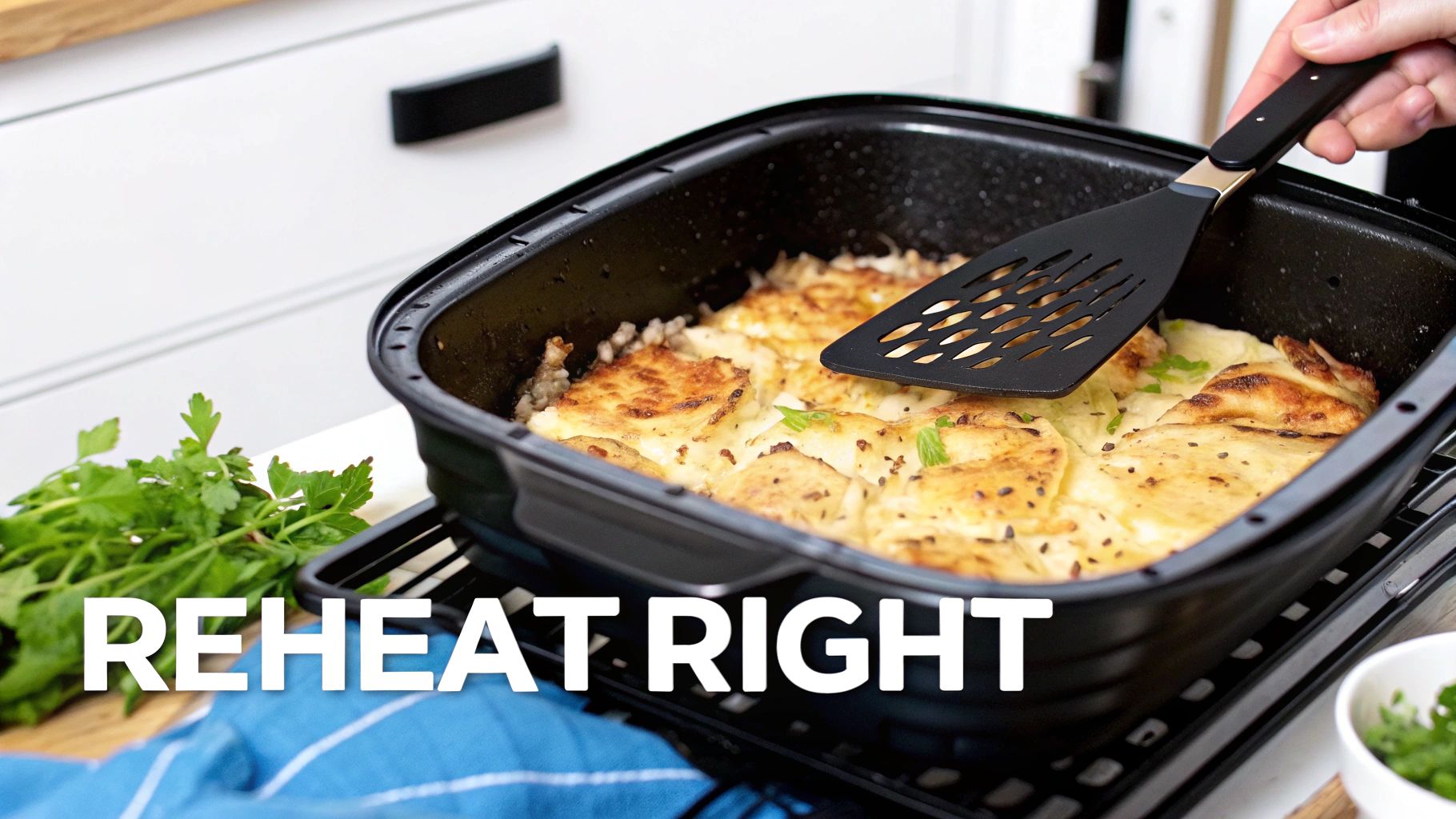
When you're ready for another helping, please step away from the microwave. It's the fastest way to a soggy, sad dish. Your air fryer is, once again, the hero here, reviving the potatoes so they taste almost as good as they did fresh from the first bake.
The air fryer is the only way to get it right. It reheats the creamy sauce while re-crisping the cheesy top, bringing back the textures that made the dish so good in the first place.
To reheat, just pop a slice or a scoop into a small, oven-safe dish that fits in your air fryer basket.
Set your air fryer to 350°F (175°C) and heat for 5-7 minutes. You'll know it's ready when the sauce is gently bubbling and the top looks golden and delicious again. This method warms everything through evenly without drying out the potatoes, giving you an almost-instant side for a weeknight dinner.
Answering Your Air Fryer Scalloped Potato Questions
It's one thing to follow a recipe, but it's another to master it. I've found that a few questions tend to come up again and again when making scalloped potatoes in the air fryer. Let's get those sorted out so you can cook with confidence.
Can I Prepare This Dish Ahead of Time?
Absolutely. Prepping ahead is one of my favorite kitchen shortcuts, especially for a holiday or dinner party.
You can assemble the entire dish, potatoes and sauce, up to 24 hours before you plan to cook it. Just layer everything in your air fryer pan, cover it tightly, and store it in the fridge.
When it's time to cook, pull the dish out and let it rest on the counter for about 30 minutes. Taking the chill off helps it cook much more evenly. You'll likely need to add an extra 5-10 minutes to that first covered cooking step to make sure everything gets heated through properly.
What Causes Undercooked or Hard Potatoes?
This is probably the most common hiccup people run into, and the fix is usually simple. It almost always comes down to one of two things: your potato slices are too thick, or your air fryer is running too hot.
The secret to perfectly tender potatoes is all in the slice. You're aiming for a consistent 1/8-inch thickness. If some slices are thick and others are paper-thin, you'll end up with a mix of hard potatoes and mushy ones.
A tell-tale sign of the temperature being too high is if the top is getting brown and crispy long before the potatoes underneath have had a chance to soften. If you see this happening, dial back the heat a bit and just let it cook covered for longer. This gives the potatoes more time to steam and become tender before you uncover them for that final golden-brown finish.
Should I Use Milk Instead of Cream?
For this recipe, I really stick with heavy cream. Its high fat content is what gives you that ultra-rich, creamy sauce that won't curdle or separate when heated. It's much more stable.
You can technically use whole milk, but just know that the sauce will be noticeably thinner. If you do go the milk route, be extra careful when making the sauce—heat it gently and never let it come to a hard boil, which is what can cause it to break.
For more simple and delicious recipes, explore all the creative possibilities at airfryersnackideas.com. Find your next favorite snack by visiting our recipe collection.
