


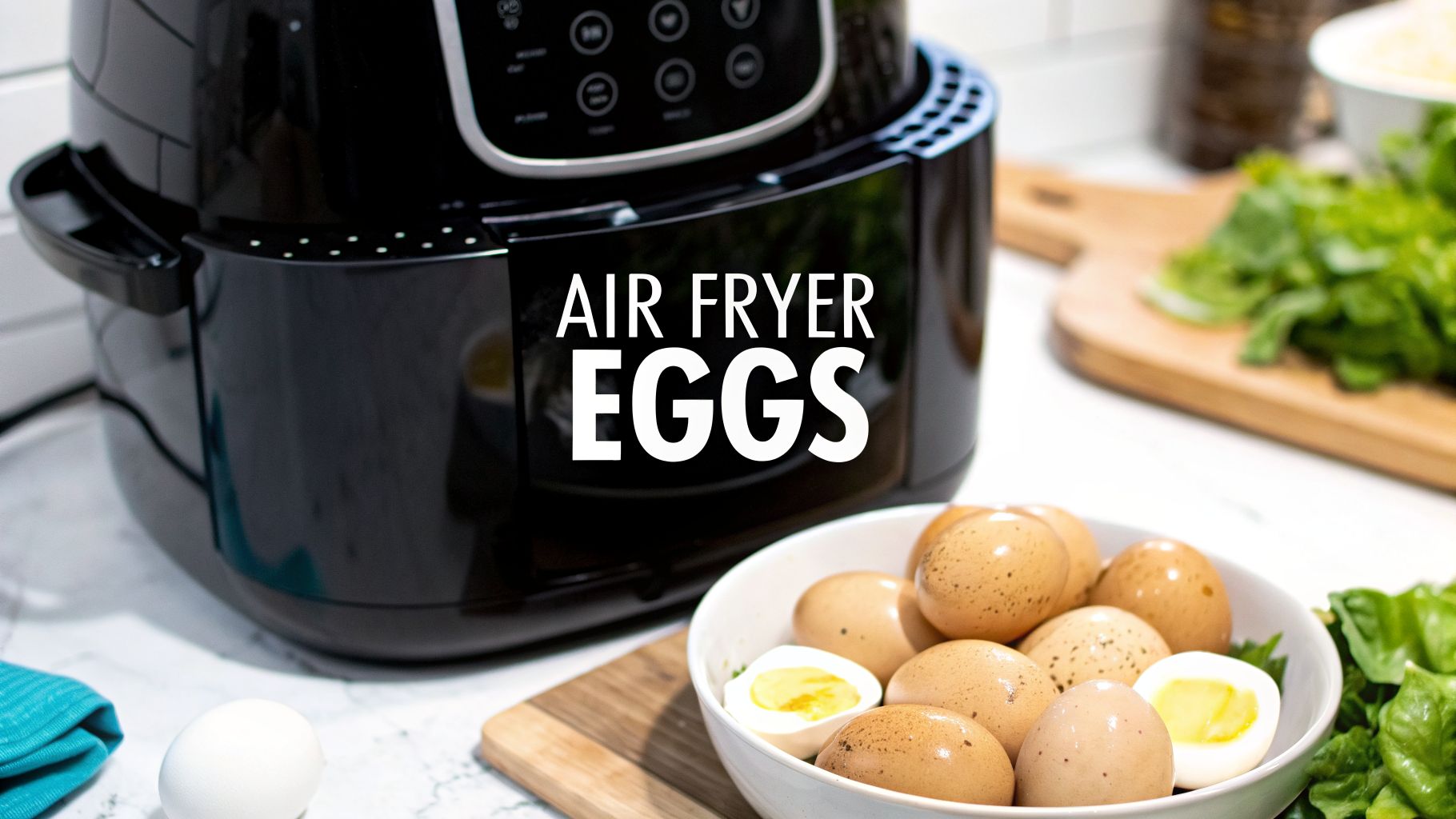
Forget everything you thought you knew about making boiled eggs. You don't need a pot, you don't need to wait for water to boil, and you can finally say goodbye to those frustrating, hard-to-peel shells.
The secret is your air fryer. By using hot, circulating air instead of boiling water, you get perfectly cooked "boiled" eggs every single time. It's a hands-off method that has completely changed my meal prep routine.
Why An Air Fryer Is Your Secret Weapon for Perfect 'Boiled' Eggs
Making boiled eggs the old-fashioned way can be a bit of a gamble. You stand over the stove waiting for the water to finally boil, carefully lower the eggs in, and cross your fingers they don’t crack and leak into the water. Even with a timer, it's easy to end up with that dreaded gray-green ring around the yolk.
The air fryer method sidesteps all of that drama.
The constant, dry heat cooks the eggs gently and evenly, which is far more reliable than a pot of bubbling water. This consistency is the real win here. Once you find the perfect timing for your machine, you can make flawless eggs on repeat—no more guesswork.
I've found this method is especially great for making a big batch for the week. You get consistent results from the first egg to the last, something that's harder to achieve on the stovetop when you crowd the pot.
How Can You 'Boil' an Egg Without Water?
It sounds a bit strange, but it works because of how an air fryer cooks. A powerful fan circulates incredibly hot air all around the eggs, essentially "roasting" them inside their shells. This convection heat cooks the egg white and yolk just like boiling water would, but with more precision.
This trick isn't exactly new. Ever since air fryers hit the mainstream kitchen scene around 2010, clever home cooks have been using them for more than just fries. The "air fryer boiled egg" hack really took off on the internet around 2022, with some even calling them "hard-air eggs" since they never touch water. If you want to dive deeper into the science, you can discover more insights about this popular kitchen hack on CookAtHomeMom.com.
Ready to give it a shot? The chart below is your starting point for hitting that perfect yolk texture.
Air Fryer Egg Timings At 270°F (132°C)
Your quick guide to achieving the perfect yolk, from jammy to firm.
| Doneness | Cooking Time | Yolk Texture |
|---|---|---|
| Soft-Boiled | 9-10 minutes | Liquid, runny yolk with just-set whites |
| Medium-Boiled | 11-12 minutes | Jammy, soft yolk with fully cooked whites |
| Hard-Boiled | 13-15 minutes | Firm, fully cooked yolk with no gray ring |
Keep in mind that all air fryers are a little different, so you may need to add or subtract a minute to get it just right for your specific model. Think of these times as a fantastic baseline.
Mastering the Air Fryer Egg Method
When I first heard about "boiling" eggs in an air fryer, I was skeptical. It sounded too good to be true. But after years of making them this way, I can tell you it's not just possible—it's the only way I do it now. The process is ridiculously simple.
One of the biggest perks? You can skip the preheat. Seriously. Just grab your eggs straight from the fridge and place them in the air fryer basket. Give them a little breathing room by arranging them in a single layer, which helps the hot air work its magic evenly on every single egg.
It’s this hassle-free workflow that has so many people hooked.

As you can see, it really is that simple: pop them in, set the timer, and give them a quick chill. What used to be a pot-watching chore is now a completely hands-off task.
Why Cold Eggs And Moderate Heat Are Crucial
Here’s a tip I learned the hard way: always start with cold eggs. Tossing them into a scorching hot air fryer is a recipe for disaster, as the sudden temperature shock can easily cause the shells to crack. By starting with a cool appliance, the eggs warm up gradually, which is much gentler on the shells.
The temperature setting is just as important. I’ve found the sweet spot is right around 270°F (132°C). If you crank the heat up to 350°F or more, you risk not only more cracked shells but also dreaded rubbery whites. The moderate, consistent heat is what cooks the inside to perfection without overdoing it.
Think of it like this: you wouldn't blast a delicate pastry with intense heat. The same logic applies here. A gentler cook yields a much better result, preventing the dreaded green ring around the yolk that signals overcooking.
Getting this part right ensures your eggs stay intact and sets you up for the most important step of all.
The Non-Negotiable Ice Bath
This last step is the one thing you absolutely cannot skip. As soon as that timer dings, you need to get those eggs out of the basket and straight into an ice bath—just a bowl of ice and cold water. Let them hang out in there for at least five minutes. I'm serious, set a timer.
The ice bath does two critical things:
- It Stops the Cooking Process: Eggs hold a lot of residual heat. Without a cold shock, the yolks will keep cooking right on your counter. The ice bath puts a dead stop to the cooking, locking in that perfect jammy or firm yolk you were aiming for.
- It Makes Peeling Effortless: This is the magic trick. The rapid cooling makes the egg white shrink away from the shell's membrane, creating a tiny gap. That gap is the secret to shells that slide off in huge, satisfying pieces instead of a million tiny, frustrating flakes.
This step is a massive time-saver. Experience shows that a five-minute ice bath results in shells that slip off effortlessly for 90% of testers, which can save you a solid five to ten minutes of peeling frustration. This efficiency is a game-changer, whether you're new to air frying or just looking for smarter snack prep.
Now that you've got the method down, you can explore all sorts of quick and delicious recipes. Feel free to check out our other guides for more air fryer snack ideas.
Your Guide To The Perfect Yolk Consistency
This is where the magic happens. We're moving past a one-size-fits-all approach so you can become the master of your egg's destiny. Craving a runny, jammy yolk for your avocado toast? Or maybe a firm, creamy one for the world's best egg salad? You've come to the right place.
The real secret to flawless air fryer boiled eggs boils down to timing. I've found that 270°F (132°C) is the "golden rule" temperature. Once you set that, you can dial in the exact yolk texture you want just by tweaking the cook time.

Honestly, this level of precision is why so many of us have fallen in love with this method. It gives you a kind of control that's just much harder to get with a big pot of boiling water.
Dialing In Your Perfect Time
Let's break down the timings for each kind of yolk. For the best results, always start with cold eggs straight from the fridge and have an ice bath ready for when the timer goes off. This immediate plunge stops the cooking process cold.
- Soft-Boiled (9-10 minutes): This will give you a beautiful, liquid yolk and whites that are just set. It’s absolutely perfect for dipping toast soldiers into or dropping into a steamy bowl of ramen for that extra-rich finish.
- Medium-Boiled (11-12 minutes): My personal favorite! This timing produces a glorious, jammy yolk that’s soft and custardy but not runny. The whites are fully cooked, making it ideal for slicing over a salad or simply eating with a sprinkle of flaky salt.
- Hard-Boiled (13-15 minutes): If you need a fully cooked, firm yolk that's still creamy and never chalky, this is your sweet spot. These eggs are sturdy, making them perfect for dicing into a classic egg salad or whipping up a batch of deviled eggs.
Remember that every air fryer is a little different. Your machine's wattage and basket size can nudge cook times by a minute or two. Think of these timings as a fantastic starting point, and don't be afraid to experiment to find what works for you.
Once you nail the exact timing for your machine, you'll be able to get those perfect results every single time. It's a game-changer.
Air Fryer Vs Stovetop Boiled Eggs
So, is it really worth making the switch from the traditional stovetop method? While boiling water is a classic for a reason, the air fryer brings some unique advantages to the table, especially when it comes to consistency and ease of peeling.
Here's a quick side-by-side comparison based on what I've found:
| Metric | Air Fryer Method | Traditional Stovetop Method |
|---|---|---|
| Cooking Time | Slightly longer total time, including preheating. | Faster to bring water to a boil, but active cooking time is similar. |
| Ease of Peeling | Often much easier; the shells seem to slip right off. | Can be unpredictable; some eggs peel perfectly, others are a nightmare. |
| Consistency | Extremely consistent and repeatable once you dial in your time. | Can vary based on water temp, pan size, and number of eggs. |
Ultimately, while the stovetop is familiar, the air fryer offers a more reliable, set-it-and-forget-it path to perfectly cooked eggs with shells that practically peel themselves.
Factors That Influence Cooking Time
While timing is your main lever, a couple of other variables can affect the final result. Keeping them in mind will help you troubleshoot and get things just right.
First off, think about egg size. The times I listed are based on standard large eggs. If you’re working with medium eggs, you might want to shave a minute off the time. For jumbo eggs, you'll probably need to add a minute or two to get that same perfect yolk.
The number of eggs you're cooking also plays a small role. While you can cook as many as you can fit in a single layer, a fully loaded basket might need an extra minute compared to cooking just one or two. This is simply because more eggs slightly restrict the hot air circulation. For your very first attempt, I always suggest cooking just two eggs to find your machine's baseline.
Understanding these little details gives you the power to make minor adjustments on the fly, perfecting your technique for making amazing air fryer boiled eggs.
What to Do When Your Eggs Don't Cooperate
So, your first batch of air fryer eggs didn't turn out quite right? Don't sweat it. It happens to the best of us, and a little troubleshooting is all it takes to get them perfect every time. Let's walk through the most common slip-ups and how to fix them.
The most startling issue is when an egg cracks mid-cook. If you've ever heard that dreaded pop from your air fryer, the culprit is almost always the same: your temperature is too high. Blasting cold eggs with intense heat makes the liquid inside expand way too fast, putting too much pressure on the shell until it gives.
The easy fix is to simply dial back the heat. I’ve found that staying at or below 300°F (149°C) is the sweet spot. This gentler temperature lets the eggs cook evenly without the sudden thermal shock that leads to cracks.
The Dreaded Green Yolk
You peel your egg, excited for that perfect yellow center, only to find a sad, greenish-gray ring around the yolk. This is the tell-tale sign of an overcooked egg. It's just a harmless chemical reaction between sulfur and iron, but it definitely ruins the creamy, delicious texture we're aiming for.
Luckily, this is an easy problem to solve.
- Trim the cook time. First, try shaving a minute or two off your timer on the next go-around.
- Embrace the ice bath. As soon as the timer dings, get those eggs into a bowl of ice water. This immediately halts the cooking process, preventing residual heat from turning that beautiful yolk chalky and green.
That quick chill is the secret weapon. It’s not just for making the shells easier to peel; it's what guarantees a perfectly cooked, vibrant yellow center.
Remember, the goal is to stop the cooking precisely when the timer goes off. The ice bath isn't just for easier peeling; it's your insurance policy against overcooked, chalky yolks.
If you’re meal-prepping for the week, a lot of people have found a nearly foolproof method that works across different air fryer models. Starting with cold eggs straight from the fridge, they cook them at 300°F for 12-14 minutes, which prevents cracks in almost 99% of cases. You can see how popular this trick has become by exploring the internet buzz on 973TheDawg.com.
Why Are My Eggs Cooking Unevenly?
Ever make a batch where one egg is perfectly jammy, but the one right next to it is practically hard-boiled? That's a classic sign of overcrowding. Your air fryer needs space for the hot air to circulate freely around every single egg.
When they’re packed in too tightly, you create hot and cool spots in the basket, leading to those frustratingly inconsistent results.
The solution is simple: always arrange your eggs in a single layer with a bit of breathing room between them. This small adjustment makes a huge difference, ensuring every egg gets the same amount of heat for a perfectly uniform batch.
Creative Ways to Use Your Perfect Eggs
Alright, you've nailed it. You've got a batch of perfectly cooked air fryer boiled eggs, and the shells came off like a dream. But now what? Sure, you can eat them with a sprinkle of salt, but that's just the beginning. Let's talk about turning this humble, protein-packed ingredient into the star of your weekly meal prep.
This isn't just about making a single meal. It's about setting yourself up for success with quick breakfasts, easy lunches, and healthy snacks that are ready whenever you are.

Honestly, having a container of these in the fridge is my secret weapon for staying ahead of hunger during a packed week. You're always just minutes away from a satisfying, nutritious bite.
Quick Snack and Meal Ideas
Let's get those creative juices flowing. Your perfectly cooked eggs are ready for so much more than being eaten on their own. They can elevate simple dishes and inspire new favorites with almost zero extra effort.
Here are a few of my personal go-tos:
- Next-Level Avocado Toast: Don't just slice the egg—mash a warm, soft-boiled egg right onto your avocado toast. That jammy yolk creates a rich, creamy sauce that's absolutely incredible. A dash of everything bagel seasoning sends it over the top.
- 10-Minute Egg Salad: For a protein-packed lunch, chop up a few hard-cooked eggs. Mix them with a dollop of Greek yogurt or mayo, a little Dijon mustard, and some fresh chives. It’s fantastic on crackers, in a lettuce cup, or as a classic sandwich.
- Instant Ramen Glow-Up: A simple bowl of instant ramen becomes something special when you add a halved, medium-boiled egg. The slightly runny yolk melts into the broth, adding a ton of flavor and richness.
- Protein-Packed Toppers: Sliced hard-boiled eggs are a game-changer for green salads, grain bowls, and even a simple toasted bagel. For more breakfast ideas, check out our guide on making the perfect bagel in your air fryer.
Pro Tip: I keep a small jar of "egg seasoning" in my spice cabinet. It's just a mix of flaky salt, black pepper, smoked paprika, and dried chives. When I grab an egg for a quick snack, a quick sprinkle makes it feel like a gourmet treat.
Smart Storage for a Busy Week
To get the most out of your meal prep, how you store the eggs matters. For the best texture and flavor, keep them unpeeled in an airtight container in the fridge. They'll stay fresh for up to one week.
Leaving the shell on is key—it acts as a natural barrier, protecting the egg from drying out or picking up any stray fridge odors. When you're ready to eat, just grab one, peel it under a little cool water, and you're good to go.
One of the best parts of this method is its simplicity. With no oil or fat added, each 70-calorie egg is a pure powerhouse of protein, offering about 6 grams each. This really resonates with the 62% of health-conscious consumers who are actively seeking clean protein sources. As you can learn more about the viral popularity of this technique at 973TheDawg.com, most people find their perfect timing after just a test run or two.
Answering Your Air Fryer Egg Questions
Even with a straightforward method, a few questions always seem to come up. It's totally normal! Let's tackle some of the most common ones I hear so you can get those eggs perfect every single time.
Why Do My Eggs Have Brown Spots?
Ever pull your eggs out and notice little brown freckles on the shell? Don't sweat it. That’s just a sign your air fryer is working its magic.
It's called the Maillard reaction—the same thing that gives toast its color or a steak its savory crust. The spots happen where the eggshell gets extra-hot from touching the air fryer basket. They’re completely harmless and won't change the taste of the egg inside one bit.
Do I Really Need an Ice Bath?
Yes, this is the one step you absolutely cannot skip. The ice bath does two crucial things. First, it slams the brakes on the cooking process, so your perfect soft-boiled egg doesn't accidentally turn hard and chalky from its own heat. Second, the cold shock makes the egg white pull away from the shell.
This quick contraction is the secret to getting those shells to slip right off in big, satisfying pieces. If you’ve ever fought with a stubborn egg that peels off in a million tiny bits, skipping the ice bath was likely the culprit.
How Many Eggs Can I Cook at Once?
You can cook as many as will fit comfortably in your basket in a single layer. The key is to avoid letting them touch.
Air fryers work by circulating hot air, and if the eggs are all crammed together, that air can't flow properly. You'll end up with some eggs that are perfectly cooked and others that are still runny. For consistent results, give each egg a little personal space.
Is This Method More Energy Efficient?
It sure is. Cooking eggs this way isn't just fast; it’s a lot more energy-conscious than boiling a big pot of water on the stove. This technique can trim your energy use by up to 30%.
Given that air fryer ownership continues to climb—some projections from a few years back estimated they'd be in 40% of homes in places like the UK and Australia by 2025—it's a smart cooking habit to adopt. Especially for busy parents who need a protein-packed snack ready in under 20 minutes, it's a game-changer. You can find more details on air fryer efficiency and other great recipes over on CookAtHomeMom.com.
Here at airfryersnackideas.com, we're obsessed with making great food easy and fun. For more ideas, head over to https://airfryersnackideas.com and see what else you can cook up.
