


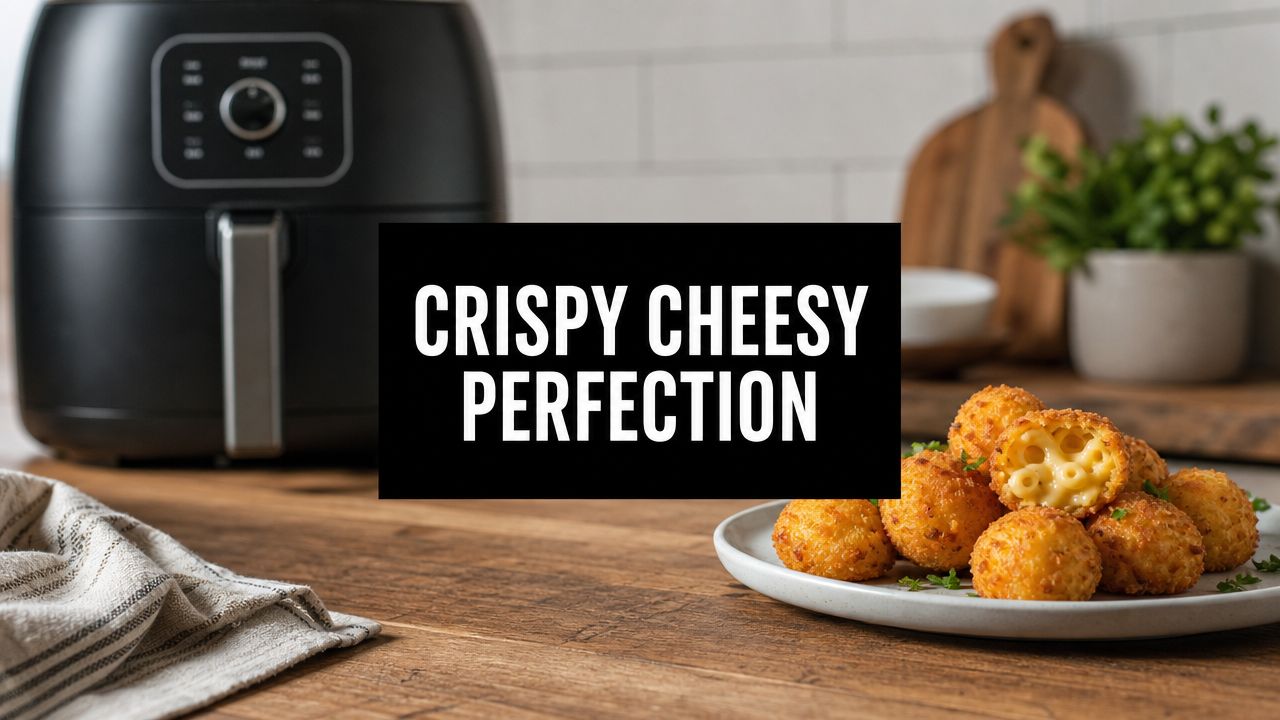
You're probably here because one of two things happened. You saw mac and cheese balls in a restaurant and want that same crunchy shell at home, or you already tried making them and ended up with cheesy blobs, split breading, or a basket full of stuck-on disappointment.
That's fixable.
Mac and cheese balls in the air fryer are one of those snacks that feel a little dramatic when they work. Crisp outside, creamy center, just enough ooze to make them look irresistible. But this is also a recipe with several failure points, and most of them happen before the air fryer even turns on. Once you understand the structure, the recipe gets a lot more reliable.
Why Your Air Fryer Was Made for Mac and Cheese Balls
The best version of this snack has contrast. The shell should be golden and crisp enough to crack lightly when you bite in. The center should stay rich and soft, not run all over the basket. That balance is exactly why the air fryer works so well here.

A lot of people think of mac and cheese as a casserole food. Slow, cozy, scoopable. But once it's chilled, shaped, and breaded, it turns into a fast-cooking snack that benefits from intense circulating heat. That's the air fryer's sweet spot.
Why this method feels easier than deep frying
Deep frying can absolutely make great mac and cheese balls, but it also asks for more setup and a tighter margin for error. Oil temperature matters constantly. Cleanup is messier. If your coating breaks, you're dealing with hot oil and leaking cheese at the same time.
The air fryer simplifies that process. You still need good prep, but the cooking itself becomes more controlled. You get strong browning on the outside without submerging the balls in oil, and you avoid the heavy feel that deep-fried snacks can sometimes have.
Practical rule: The air fryer won't rescue weak prep, but it will reward solid prep better than almost any other method.
This dish also makes sense right now because home cooks have the tool for it. Air fryer mac-and-cheese bites are a modern twist on a classic, helped along by the rise of home air fryers in the 2010s. In the U.S., 40% of households owned an air fryer in 2022, up from 30% in 2021, according to the Association of Home Appliance Manufacturers as cited by 2 Cookin Mamas on air fryer mac and cheese balls.
What the air fryer does best
Here's where the appliance earns its counter space:
- It sets the crust quickly. That fast blast of heat helps the breading firm up before the filling gets too loose.
- It keeps the process cleaner. No pot of oil, no splatter zone, no lingering fried smell taking over the kitchen.
- It fits snack cooking well. This is exactly the kind of batch-friendly appetizer that works for game day, weeknights, or late-night cravings.
If you like building an air fryer snack rotation, you'll find plenty of inspiration at Air Fryer Snack Ideas.
Gathering Your Ingredients for Melty Perfection
This recipe starts with one ingredient that matters more than all the others combined. Cold mac and cheese.
If the mac and cheese is warm, loose, or freshly made, it won't hold a ball shape well. You'll scoop it, try to roll it, and feel it spreading in your hands. Then the breading slides off. Then the filling leaks. It becomes a chain reaction.
Start with firm, chilled mac and cheese
The best base is mac and cheese that's been refrigerated until fully cold and firm. Leftovers are often better than fresh for this reason. A thicker, cheesier style works better than a very saucy one because it sets up more cleanly.
Look for these signs before shaping:
- It holds a scoop. If you can lift a portion and it stays together, you're in good shape.
- The pasta isn't swimming in sauce. Too much loose sauce makes the center unstable.
- It tastes strong enough cold. Cold foods taste a bit muted, so well-seasoned mac and cheese gives you a better finished bite.
If your mac and cheese seems soft, chill it longer before doing anything else. That extra patience saves more frustration than any trick later on.
Build the crust with the right coating
The breading matters just as much as the filling. For reliable coating, use a standard three-part setup:
| Ingredient | Job in the recipe | What happens if you skip it |
|---|---|---|
| Flour | Gives the egg something to grip | The coating can slide off |
| Egg | Acts as the binder | Panko won't adhere evenly |
| Panko | Creates a light, crisp crust | Regular crumbs tend to feel denser |
Panko is the right choice here. Its larger texture gives you that craggy, crisp exterior that browns well in circulating heat. Regular breadcrumbs can work in a pinch, but they usually produce a tighter coating and a less airy crunch.
Use shallow bowls, not deep ones. It's easier to roll and lift each ball without tearing the shape.
A light oil spray also belongs in your ingredient lineup, even though it feels optional. It helps the coating brown more evenly and cuts down on pale, dry patches.
The Core Technique Shaping and Breading for Success
The success of the dish primarily hinges on key preparation steps. The air fryer part is short. The shaping and breading are what decide whether you get neat, crisp bites or a basket full of broken filling.

Form first, then chill hard
Scoop the cold mac and cheese into even portions and roll them gently into compact balls. You don't need to squeeze them aggressively, but you do want them tidy and fairly tight so there aren't weak edges waiting to split open.
Then comes the essential step. Freeze the formed balls before cooking. A proven method is to freeze them for 30 to 60 minutes, and recipe tests noted by My Forking Life's macaroni and cheese balls method show that this step, along with cooking in a single layer, is critical for shape retention and preventing breakage.
That cold center gives the coating time to crisp before the inside softens too much. Skip it, and the filling often starts losing structure before the shell is ready.
Bread with intention, not speed
Once the balls are cold and firm, bread them in this order:
Flour first
A light flour coating helps dry the surface and gives the egg something to cling to.Egg second
Coat fully, but let excess drip off. Too much egg creates wet spots in the crumbs.Panko last
Press the crumbs on gently but firmly so they stick.
Here's the part many home cooks rush. Don't toss the balls casually from bowl to bowl. Lift them carefully. Turn them fully. Press the panko on all over, especially on any seam or soft-looking area.
If a ball feels soft while breading, put it back in the freezer instead of forcing it through the process.
A double coat is worth it for fragile batches
If your mac and cheese is extra creamy, or if you've had coating issues before, go with a double coating. That means egg and panko once, then another quick egg-and-panko pass. It creates a sturdier crust and improves browning in the air fryer.
A good breaded ball should look dry on the outside, evenly covered, and sturdy enough to lift without sagging. If it looks patchy or wet, fix that before cooking. Once it goes into the basket, the structure is already decided.
Perfect Air Frying Temp Time and Technique
Once the balls are shaped, frozen, and breaded well, the cooking is straightforward. The key is resisting the urge to pack the basket full and blast them until they look dark enough. This snack likes high heat and a short cook. It doesn't like crowding.

The temperature and time that work most often
The most reliable range for mac and cheese balls air fryer cooking is 380°F to 400°F for 8 to 12 minutes, based on recipe patterns summarized by The Recipe Critic's air fryer mac and cheese balls guide. One tested method uses 380°F for 6 minutes, then a flip, then another 6 minutes.
That range makes sense in practice. You need enough heat to crisp the panko quickly, but not so much that the cheese center breaks loose before the coating sets.
A solid working method looks like this:
| Step | What to do | Why it matters |
|---|---|---|
| Preheat | Heat the air fryer before loading | Helps the crust start setting right away |
| Oil the basket lightly | Prevents sticking | Protects the coating during removal |
| Cook in a single layer | Leave space around each ball | Allows hot air to reach all sides |
| Flip halfway | Turn for even browning | Prevents one pale side |
Small adjustments make a big difference
If your air fryer runs hot, start checking earlier. If it tends to brown slowly, let the full time run and use the flip to judge progress. The visual cue matters more than chasing a single exact minute.
Look for these doneness signs:
- Deep golden coating
- Crisp surface when nudged
- A little cheese peeking out on one or two spots
That tiny bit of ooze is usually a good sign. A full rupture is not.
For another example of timing and basket spacing in snack-style air frying, this bagel in the air fryer guide shows how much texture depends on airflow and not overcrowding.
Let them rest briefly after cooking. The outside stays crisp, and the center stops being lava-hot.
One more thing that helps. A quick spray of oil on top of the breaded balls before cooking improves color and helps the panko develop a more even finish. Without it, the coating can still crisp, but it often looks patchier.
Elevate Your Snack Game with Fun Variations
Once the classic version is dependable, this recipe becomes a very easy base for riffs. The trick is to keep every add-in working for the structure instead of against it. Big wet ingredients make the balls harder to shape. Finely chopped, well-drained, or fully cooked mix-ins are the safer move.

Variations that still behave well in the air fryer
Some additions improve flavor without making the base unstable. These are the ones I'd reach for first:
- Crisp bacon bits bring salt and smoky crunch. Keep them finely crumbled so they blend into the filling.
- Jalapeño adds heat, but dice it small and avoid making the mixture watery.
- Shredded chicken turns the bites into a more filling snack. A little Buffalo sauce works, but don't overdo it or the mixture gets loose.
- Different cheeses can change the whole personality. Sharp cheddar keeps things classic, while pepper Jack or gouda shifts the flavor in a more playful direction.
Good add-ins versus risky add-ins
Here's the trade-off that matters most:
| Add-in type | Usually works well | Can cause trouble |
|---|---|---|
| Meaty | Bacon, finely shredded chicken | Large chunks of ham or very wet pulled meat |
| Spicy | Jalapeño, a little hot sauce | Too much liquid sauce |
| Vegetable | Finely chopped broccoli or spinach | Watery vegetables that weren't cooked down |
| Cheese | Firmer shredded cheese | Excessively soft cheese pockets |
The best time to add these is before shaping, while the mac and cheese is cold. Mix gently so you don't break down the pasta too much.
A variation should change the flavor, not the texture foundation. If the mixture gets softer after add-ins, chill it again before scooping.
Dips and serving ideas
These are great plain, but a dip takes them from snack to party food. Marinara gives you acidity. Ranch cools down spicy versions. Sriracha mayo works when you want a richer, sharper contrast.
If you enjoy putting together different air fryer appetizers for gatherings, the blog archive at Air Fryer Snack Ideas is useful for pairing ideas and serving inspiration.
Serve them hot, and don't stack them in a bowl too early. A crowded serving dish traps steam, which can soften that crisp shell you worked for.
Troubleshooting Common Mac and Cheese Ball Problems
This is the section that saves most batches. When mac and cheese balls in the air fryer go wrong, the problem usually looks dramatic, but the cause is often simple. The good news is that each issue has a practical fix.
Why did my mac and cheese balls fall apart
The most likely cause is that they weren't cold enough. That's the first thing I'd check every single time. A soft center loses structure before the crust can lock in.
If they flattened, split, or leaked badly, ask yourself:
- Were the formed balls frozen long enough
- Was the mac and cheese very firm before shaping
- Did the coating fully cover weak spots
If the answer to any of those is no, that's probably the problem. Chill longer next time, and don't bread a batch that still feels delicate in your hands.
Why are they soggy instead of crisp
Soggy patches usually come from crowding. Common failure points include overcrowding the basket, insufficient freezing, and skipping a mid-cook flip, and one tested workflow recommends spacing the balls about ¾ inch apart and turning them halfway through for even crispness, according to The Country Cook's air fryer mac and cheese bites workflow.
That spacing matters because these don't just need heat. They need moving air around each piece.
Try this if the crust stays pale or uneven:
- Cook fewer at a time so air can circulate
- Spray the tops lightly with oil for better browning
- Flip halfway through cooking instead of leaving one side parked on the basket
Why did the coating slide off
This usually points back to breading technique. Wet surfaces, too much egg, or rushed handling can all make the coating separate.
A more reliable approach is:
- Dry the outside lightly with flour first.
- Use egg as a thin binder, not a heavy layer.
- Press the panko onto the ball instead of just rolling it loosely.
If your batch is especially soft, use the double-coating approach mentioned earlier.
Can you store and reheat them successfully
Yes, but the reheating method matters. Let them cool fully before storing so condensation doesn't soften the coating. The air fryer is the best way to bring them back to life because it restores exterior texture.
The microwave will heat the center, but the crust usually loses its edge fast. If crispness is the whole point, skip the microwave.
If you want more snack ideas that work in real kitchens, visit airfryersnackideas.com. It's a helpful resource for air fryer recipes built for busy cooks, quick cravings, and dependable results.
