


Making perfect potato fries in an air fryer is a lot easier than you might think. It’s all about how that hot air swirls around the potatoes, giving them that crispy, golden outside while keeping the inside perfectly fluffy. And the best part? You only need a tiny bit of oil.
This method turns a simple potato into a fantastic, healthier snack, and you get to skip the whole mess of deep-frying. Say goodbye to soggy, sad fries—this guide will help you nail that perfect crunch every single time.
Why Your Air Fryer Makes the Best Fries
The magic behind those amazing air fryer fries is something called rapid air circulation. Think of your air fryer as a small, super-efficient convection oven. It blasts hot air all around the food, and that intense heat quickly dries out the surface of the potatoes, creating that irresistible crust we all love.
Deep frying means drowning potatoes in oil. With an air fryer, you're using just a fraction of that—sometimes just a single teaspoon is all it takes. This cuts down on calories and fat, and you won't have to deal with a greasy kitchen cleanup afterward.
The Rise of a Kitchen Essential
What once seemed like a quirky gadget is now a must-have in so many kitchens. And for good reason! It actually delivers on its promise of crispy, delicious food without the guilt. If you're looking for a healthier crunch in your potato snacks, the air fryer is your best friend.
You can see this trend in the numbers, too. The global air fryer market was recently valued at around USD 1.4 billion and is expected to almost double by 2030. In North America alone, it makes up about 35% of the market. It’s pretty clear that people who care about what they eat are looking for easier ways to cook the foods they love. You can dig into more of the data in this air fryer market report.
The best thing about using an air fryer for fries is the control. You can get that restaurant-quality texture right at home, but with way less oil and zero splatter to clean up.
Beyond Just Fries
A huge part of the appeal is just how versatile these machines are. It’s not just for making incredible potato fries; it can handle all sorts of recipes, which makes it a fantastic tool for any cook. From reviving leftovers so they taste fresh again to cooking up quick weeknight dinners, the possibilities are practically endless.
For more ideas, check out some of our other air fryer snack recipes over at https://airfryersnackideas.com/.
Choosing the Right Potato for Ultimate Crispiness
The secret to truly fantastic air fryer fries starts long before you even plug in the machine. It all comes down to the potato. Picking the right one is the foundation for everything that follows, and it’s the single biggest factor that determines if your fries end up crispy and fluffy or sad and dense.
It’s a common misconception that any old potato will do the trick. They actually fall into a few different categories based on their starch content, and that one little detail changes everything.
High-Starch vs. Low-Starch: What's the Difference?
For that classic, restaurant-style french fry, you absolutely want a high-starch potato. The Russet is king here. It has a dry, almost floury texture that gets incredibly light and fluffy on the inside once it’s cooked. More importantly, its low moisture content is exactly what you need for air frying, as it lets the outside dehydrate and crisp up to golden-brown perfection.
Potatoes on the other end of the spectrum, like waxy Red Bliss or fingerlings, have much more moisture and less starch. They’re fantastic for things like potato salad because they hold their shape, but that same quality makes for a denser, sometimes even chewy, fry. Yukon Golds are a decent middle-ground option; they'll give you a creamier bite but won't deliver the same satisfying crunch as a Russet.
My Two Cents: If you take away only one thing, let it be this: use Russet potatoes. Their high starch content is the non-negotiable secret to getting that perfect crisp-on-the-outside, fluffy-on-the-inside texture that makes a french fry great.
Let's break down the most common options you'll find at the store.
Potato Type Comparison for Air Fryer Fries
Choosing the right spud can feel a bit overwhelming, but this simple chart lays out the pros and cons of the most popular varieties for making fries.
| Potato Type | Starch Level | Best For (Texture) | Notes for Air Frying |
|---|---|---|---|
| Russet | High | Classic crispy exterior, fluffy interior | The gold standard. Low moisture content makes it ideal for achieving maximum crispiness. |
| Idaho | High | Similar to Russet; crispy and fluffy | Essentially a type of Russet. An excellent and widely available choice. |
| Yukon Gold | Medium | Creamy, slightly dense interior | A good all-rounder. Won't get as crispy as a Russet but has a nice buttery flavor. |
| Red Potato | Low | Firm and dense; holds shape well | Not recommended for classic fries. Tends to become chewy rather than crispy. |
| Sweet Potato | High | Soft interior, slightly less crispy exterior | A great alternative! Higher sugar content means they brown faster, so watch them closely. |
Ultimately, Russets are my go-to for a reason, but don't be afraid to experiment with Yukon Golds or even sweet potatoes to see what you prefer.
The Art of the Perfect Cut
How you slice your potatoes is just as critical as which ones you pick. The name of the game is uniformity. If your fries are a random mix of thick and thin, they’ll cook unevenly. You’ll end up with a frustrating batch where some are burnt to a crisp while others are still raw in the middle.
I've found that a thickness of about ¼ to ½ inch is the sweet spot. This gets you that crispy outside without completely drying out the inside.
- Classic Sticks: The go-to cut for a reason. Slicing them into uniform batons gives you the most surface area for crisping.
- Wedges: A heartier, steakhouse-style option. Just make sure the wedges are all the same size so the thin tips don’t burn before the thick part is cooked.
- Shoestring: For the crunch lovers out there. Slice them super thin (under ¼ inch), but know that you'll need to slash the cooking time significantly to avoid burning them.
Don't Skip This Step: The Cold Water Soak
Here's the one trick that will immediately elevate your fry game from good to great: soaking the cut potatoes in cold water. This simple step pulls excess starch from the surface of the potatoes. Why does that matter? That sticky, starchy film traps moisture, essentially steaming your fries instead of letting them fry.
Soaking them for at least 30 minutes (or even a few hours) washes that starch away. This allows the surface of the potato to dry out properly, which is absolutely essential for getting a truly golden, crispy crust.
After they’ve had their bath, you have to pat them completely dry with a kitchen towel or paper towels. Seriously, get them as dry as you possibly can. Tossing wet potatoes into an air fryer is a surefire way to get a soggy, disappointing result.
The Foolproof Method for Crispy Golden Fries
Alright, your potatoes are prepped, patted dry, and ready for their transformation. This is where the magic of the air fryer comes in, using that rush of hot air to give you a satisfying crunch without a deep fryer. The real secret, though, is knowing which cooking method to use.
We’ll walk through two fantastic approaches. The first is a simple single-fry method—it’s my go-to for a quick weeknight side dish. The second is a double-fry technique. It takes a little more patience, but the result is that shatteringly crisp, restaurant-quality texture that holds up beautifully.
Getting the prep work right is what sets the stage for perfect fries every single time.
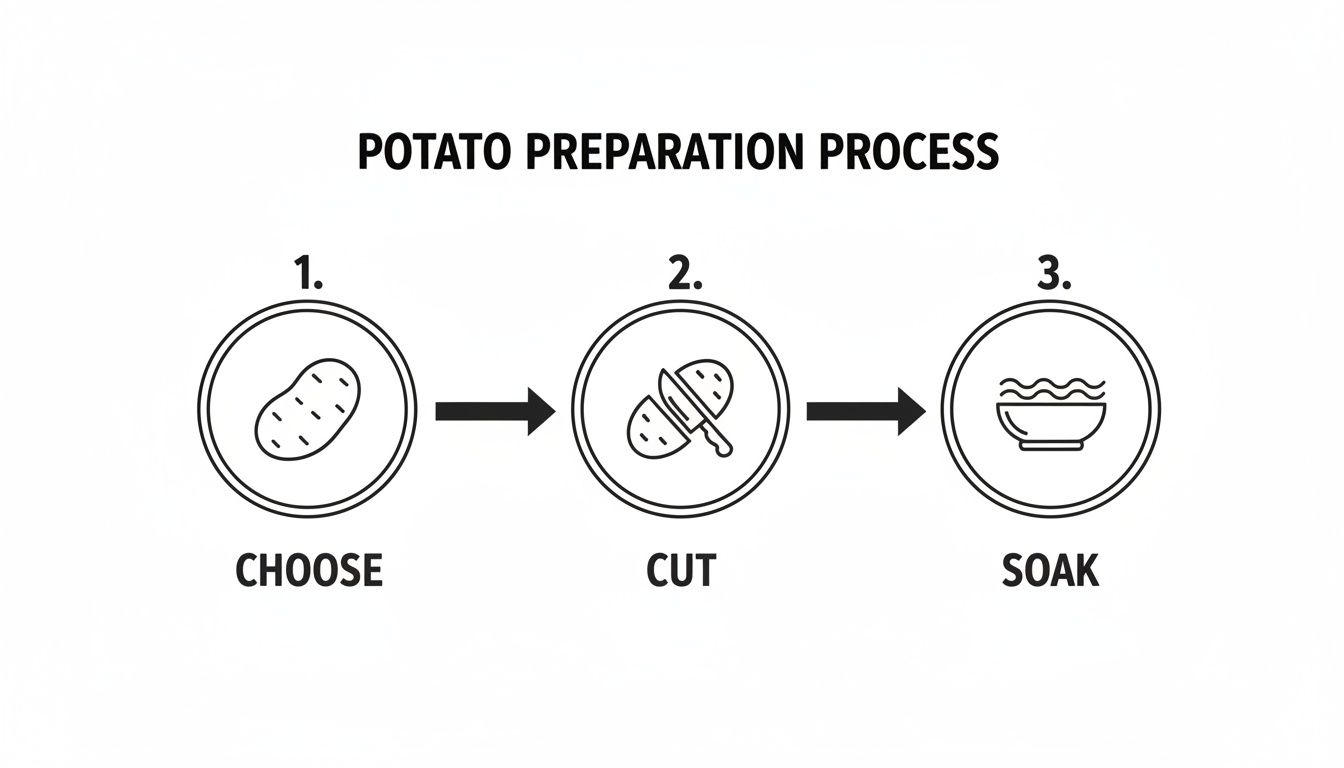
Honestly, don't skip this part. Choosing the right spud, cutting everything uniformly, and soaking out that excess starch is the foundation for ultimate crispiness.
The Quick and Easy Single-Fry Method
This is the technique most people will use, and for good reason. It’s efficient, straightforward, and still churns out wonderfully crispy potato fries in the air fryer.
First things first: preheat your air fryer to 400°F (200°C). I can't stress this enough. Tossing potatoes into a cold basket is a recipe for soggy fries; you want that heat to hit them immediately to start the crisping process.
While it’s heating up, get your dry potato sticks into a big bowl. Drizzle them with just a teaspoon or two of a high-smoke-point oil, like avocado or canola. You're not trying to drown them, just a very thin, even coat to help them turn golden. Toss them with salt, garlic powder, paprika, or whatever seasonings you love.
Once preheated, arrange the fries in a single layer. Overcrowding is the number one enemy of crispy food—it just traps steam. Give them space! Cook for 15-20 minutes, but here's the crucial part: give the basket a vigorous shake at the halfway point. This flips them around and ensures every surface gets blasted with that hot air. They're done when they look golden and crispy to you.
The Ultimate Double-Fry for Maximum Crunch
If you're chasing that next-level, I-can't-believe-these-aren't-deep-fried texture, the double-fry method is your answer. It's a two-step process using two different temperatures. The first cook gently softens the inside, and the second, high-heat blast creates that incredible, durable, crispy shell.
The First Fry: Start by preheating your air fryer to a lower 350°F (175°C). Cook your seasoned fries for about 12-15 minutes, shaking once. They won't be crispy yet—they should be soft and just starting to get some color.
The Cooling Phase: This step is non-negotiable. Pull the fries out and let them cool on a wire rack for at least 30 minutes. As they cool, moisture from the inside evaporates, which is exactly what you want for a super-crisp finish.
The Second Fry: Now, crank the heat up to 400°F (200°C). Put the cooled fries back in the basket and cook for another 5-8 minutes. Shake them every few minutes until they are a deep golden brown and you can hear how crispy they are.
This two-step process might feel like extra work, but the payoff is huge. The crispiness is on another level and lasts so much longer, making it perfect if you're serving guests or just want the absolute best texture.
No matter which method you choose, the key principles are the same: preheat your machine, don't overcrowd the basket, and give it a good shake. Master these, and you'll nail delicious homemade fries every time. And if you're looking for other quick snacks, you might want to check out how to make a perfect bagel in the air fryer.
Taking Your Fries to the Next Level with Seasonings and Dips

Sure, a perfectly cooked, simply salted fry is a beautiful thing. But why stop there? Your air fryer is a blank canvas for flavor, and moving beyond the salt shaker can completely transform your homemade potato fries air fryer experience. This is where a simple side dish starts to steal the show.
The real trick is knowing when to add your seasonings. For any dry spices—think garlic powder, smoked paprika, or dried herbs—you'll want to toss them with the potatoes and oil before they go into the air fryer. This simple step bakes the flavor right into the fries as they cook.
On the other hand, more delicate ingredients like fresh herbs, finely grated cheese, or anything with a high sugar content should wait. Add these after the fries are hot and crispy. The intense, circulating heat of an air fryer can easily scorch fresh garlic or parsley, leaving you with a bitter, burnt taste instead of fresh flavor.
A Few of My Go-To Seasoning Blends
If you're tired of the usual salt and pepper, these combinations are a fantastic starting point. I just mix everything in a small bowl and toss it with the fries before cooking.
- Smoky Paprika & Garlic: A classic for a reason. I combine 1 teaspoon of smoked paprika, ½ teaspoon of garlic powder, and just a pinch of cayenne for a little kick.
- Lemon Herb: This one is so bright and fresh. Mix 1 teaspoon of dried oregano with ½ teaspoon of onion powder. Then, right after they come out of the fryer, toss them with the zest of one lemon.
- Garlic Parmesan: The ultimate savory treat. As soon as the fries are done, toss them with ½ teaspoon of garlic powder, ¼ cup of finely grated Parmesan cheese, and some fresh parsley. The heat from the fries melts the cheese just enough.
And if you don't have fresh herbs on hand, don't sweat it. Knowing how to substitute dried herbs for fresh is a kitchen skill that ensures your fries are always packed with flavor.
Next-Level Homemade Dips
A great dip is the other half of the perfect fry experience. Instead of reaching for the ketchup bottle, you can whip up one of these easy sauces while your fries are getting crispy.
A great dipping sauce should complement, not overpower, the flavor of your fries. Aim for a balance of creamy, tangy, and savory to make each bite more interesting than the last.
Spicy Sriracha Aioli:
This one is dangerously addictive. Just mix ½ cup of mayonnaise with 1-2 tablespoons of sriracha (your call on the heat), a good squeeze of lime juice, and one minced garlic clove. It’s creamy, spicy, and perfect.
Cooling Garlic & Chive Dip:
For something a bit more refreshing, combine ½ cup of sour cream or Greek yogurt with 1 tablespoon of freshly chopped chives, ½ teaspoon of garlic powder, and a pinch of salt. Let it sit for a few minutes so the flavors can really come together.
It's Not Just for Standard Fries
This whole approach to seasoning and dipping works beautifully for other things, too. Think sweet potato fries or thick-cut wedges. In fact, the natural sweetness of sweet potato fries is an amazing match for smoky or spicy flavors like chipotle powder.
This craving for new and exciting flavors isn't just a home-cooking trend. The global frozen potato fries industry has seen massive growth, largely because people want premium, air-fryer-friendly options with interesting flavors like truffle and za'atar. It's a fun space to watch for new inspiration.
What to Do When Your Air Fryer Fries Go Wrong
Even seasoned pros have an off batch now and then. If your fries came out less than perfect, don't sweat it. Most of the time, a small tweak to your method is all you need to get back on track. Let's break down the most common issues and how to fix them.
The Soggy Fry Problem
The number one complaint I hear is about soggy fries. This almost always boils down to either moisture or overcrowding—or sometimes both.
Remember when we talked about patting the potatoes completely dry after soaking? That step is non-negotiable. Any water left on the potatoes turns to steam in the air fryer basket, and steam is the mortal enemy of a crispy fry.
The other culprit is piling too many fries in at once. You need that hot air to whip around every single fry. If they're crammed in there, they just steam each other. It’s always, always better to cook in two smaller batches than one giant, overcrowded one.
The Unevenly Cooked Fry
Ever pull out your basket and find some fries are perfectly golden while others are pale and floppy, with a few burnt ones for good measure? That's a classic sign you skipped the mid-cook shake.
Shaking the basket halfway through is absolutely essential. It’s what moves the fries from the bottom to the top and the middle to the edges, giving every last one a chance to get blasted by the heat. If you forget, the fries on the top cook way too fast, and the ones buried in the center never stand a chance.
My Two Cents: I set a timer on my phone specifically for the halfway point. When it dings, I don't just give the basket a gentle nudge—I give it a good, hard shake to really toss everything around. This one little habit is the key to getting that perfectly uniform, golden-brown finish every single time.
Quick Fixes for Other Common Issues
Here are a few other little snags you might run into and how to sort them out:
- My fries are burnt or too dark. Your temperature is likely too high for the size of your cut. If you're making thinner, shoestring-style fries, try knocking the heat down to 380°F (193°C). This gives the inside a chance to cook before the outside gets scorched.
- My fries taste bland. You have to season them before they go into the air fryer. Tossing the raw, oiled potatoes in your spice blend lets those flavors bake right onto the surface. Just salting them at the end never tastes as good.
- My fries are dry and tough. This usually means they were cut too thin or you didn't use quite enough oil. Make sure every fry has a light, even coating of oil, and try to stick to that classic ¼-inch thickness for a fluffy inside and crispy outside.
Got Questions About Your Air Fryer Fries? We’ve Got Answers.
Even the most straightforward recipes can leave you with a few questions. I get it. I’ve been there. Let’s tackle some of the most common things people ask when trying to get that perfect batch of potato fries air fryer style.
Can I Really Make These Fries With No Oil at All?
You absolutely can, but I'll be honest—the texture just isn't the same. Fries made with zero oil tend to come out dry and taste more like a baked potato stick than a true fry.
For that golden, crispy exterior we're all chasing, a little bit of oil is your best friend. We're not talking much. Just one teaspoon is usually plenty to lightly coat an entire batch, giving you that satisfying crunch and flavor without a lot of extra fat.
Why Is Everyone So Serious About Not Overcrowding the Basket?
This is probably the single most important rule of air frying, and overcrowding is the number one reason for soggy fries. It's all about airflow. Your air fryer works by blasting hot air all around the food.
When you pile the fries in, that hot air can't circulate. Instead of crisping up, the potatoes just steam each other, leading to a limp, sad result. It's always, always better to cook in two smaller batches.
Think of it this way: you're not adding more time, you're guaranteeing every single fry has a fighting chance to become perfectly golden and delicious. A few extra minutes of patience pays off big time.
Is Preheating the Air Fryer Really Necessary?
Yes, and please don't skip this step! It makes a huge difference. Tossing your potatoes into an already-hot basket gives them a head start on crisping. The intense initial heat immediately starts cooking the outside, creating a seal that prevents the fries from getting waterlogged.
Most air fryers only take about 3-5 minutes to get up to temperature, so it’s a quick step that ensures a much better final product.
This kind of convenience is a massive reason why air fryers and homemade fries have exploded in popularity. In fact, the global market for French fries is valued at over USD 24 billion and still growing. People love fries, and the air fryer makes a healthier version incredibly accessible. You can read more about the growth of the French fry market here.
For more of our best tips and tricks, feel free to explore our other air fryer snack articles.
Here at airfryersnackideas.com, our goal is to show you just how much you can do with your air fryer. Find more of our favorite recipes at https://airfryersnackideas.com.
