


If you've ever tried to adapt a favorite recipe, you've probably wondered about the difference in air fryer vs oven cooking time. The short answer? It all comes down to speed and efficiency. As a rule of thumb, air fryers cook food roughly 20-25% faster than conventional ovens. This is all thanks to their compact size and a powerful fan that circulates hot air with incredible intensity, cooking food fast while delivering that signature crispy finish.
Understanding Air Fryer And Oven Cooking Time Differences
So, you're struggling to convert your go-to oven recipes for your new air fryer? Don't worry, you're not alone. Making the switch from a big, traditional oven to a small, high-powered air fryer requires a slight mental adjustment to both time and temperature. Think of it this way: an oven gently bakes food with surrounding heat, while an air fryer actively blasts it with a concentrated, rapidly moving jet of hot air.
That fundamental difference in mechanics is the real reason cooking times drop so dramatically. An air fryer is basically a small, countertop convection oven on steroids. This powerful convection action speeds up the entire cooking process, browning and crisping the outside of your food far more quickly than a regular oven ever could. If you're looking for tasty and fast meals, experimenting with different air fryer snack ideas is the perfect way to see this speed firsthand.
Key Differences at a Glance
To pick the right tool for the job, it helps to see a side-by-side comparison of how these two appliances get things done. Each has its own strengths, depending on what you're making.
| Feature | Air Fryer | Conventional Oven |
|---|---|---|
| Preheat Time | 0-3 minutes | 10-20 minutes |
| Cooking Speed | 20-25% faster on average | Slower, more gradual cooking |
| Ideal Batch Size | Small to medium (1-4 servings) | Large (family-sized meals) |
| Energy Use | Lower energy consumption | Higher energy consumption |
| Best For | Crispy textures, reheating, frozen foods | Baking, large roasts, casseroles |
This table gets straight to the point. An air fryer is the champion of speed and crispiness for smaller batches, making it a lifesaver for quick snacks and weeknight dinners.
The air fryer's compact chamber and high-velocity fan create an intense cooking environment. This not only cuts down on time but also enhances the Maillard reaction, leading to superior browning and crispiness compared to a standard oven.
Let’s look at a real-world example. A batch of spiced tofu that takes a full 40 minutes to get crispy in an oven at 420°F can be perfectly cooked in an air fryer in just 10 minutes at 390°F. That's an incredible 75% reduction in cooking time, showing just how much your choice of appliance matters. It's this efficiency that makes the air fryer such a game-changer for busy people.
Why Air Fryers Cook Food So Much Faster Than Ovens
To really get the hang of converting recipes between an air fryer and an oven, it helps to know why they're so different. An air fryer doesn't just bake; it blasts food with superheated, high-speed air. This creates an intense cooking environment that a big, clunky conventional oven just can't match. It really boils down to three things: size, airflow, and heat intensity.
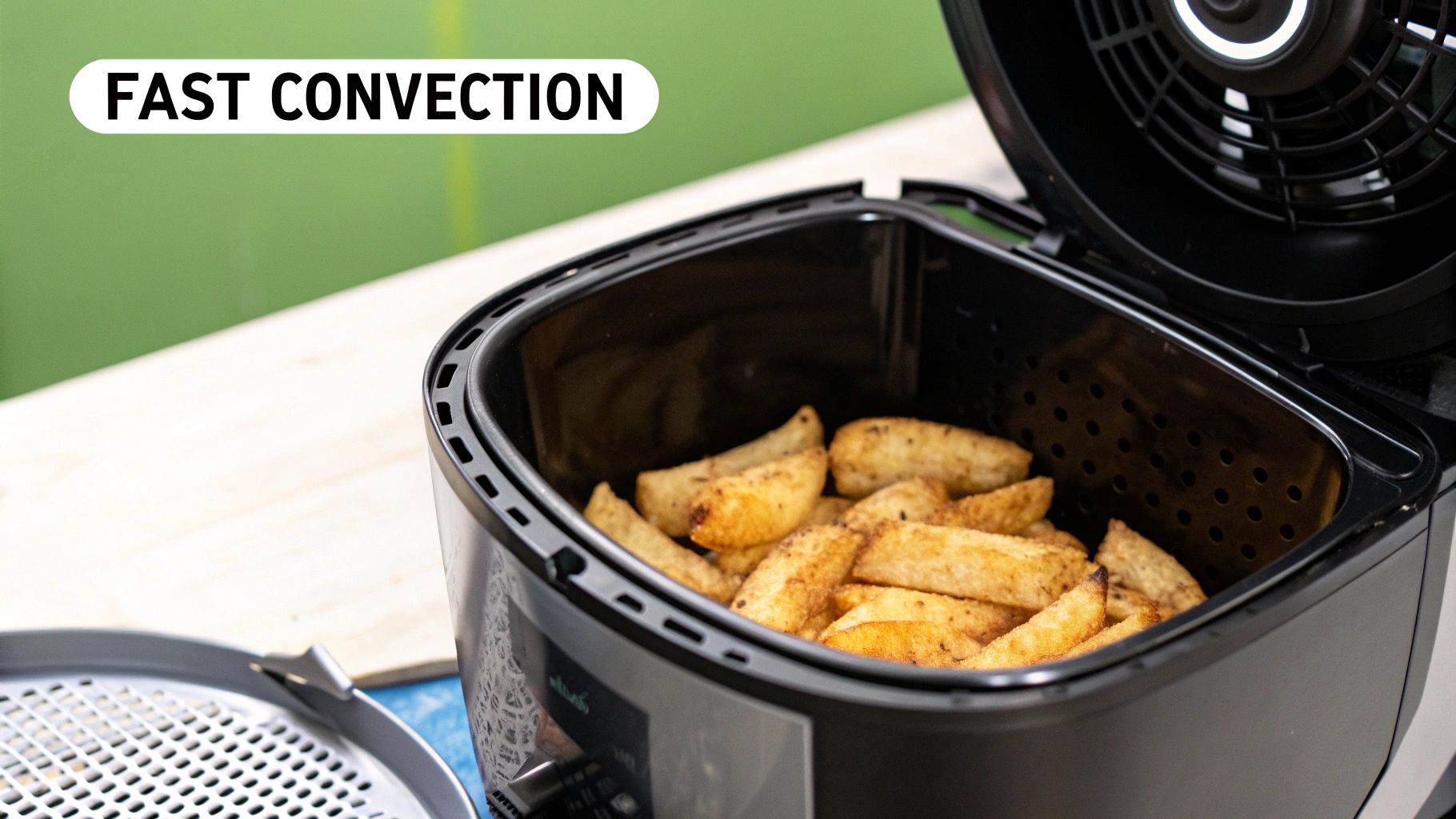
This powerful environment is what gets the Maillard reaction going in record time. That’s the magic chemical process that gives roasted and fried foods that amazing brown crust and deep flavor. By blasting away moisture so quickly, an air fryer gets right to the browning, while a conventional oven is still trying to heat its cavernous, humid interior. The result? A perfectly crisp exterior in way less time.
The Power of Compact Convection
Think about trying to heat a huge warehouse with a little space heater versus heating a small closet. The closet heats up in no time, right? That’s pretty much how an air fryer works. Its tiny chamber lets the heating element and fan get the temperature soaring in just a couple of minutes, which is why most don’t even need preheating.
A conventional oven, on the other hand, has a massive space to heat up, burning a ton of energy and time just to get to the right temperature. Even a convection oven with a fan can’t keep up. Their fans are designed to gently move air around a large box, not create a concentrated whirlwind of heat right on top of your food.
An air fryer is basically a countertop convection oven on steroids. Its small size and powerful fan create a high-pressure, high-temperature storm that slashes cooking times by focusing all that heat directly onto the food's surface.
How Appliance Design Changes the Game
The way these two appliances deliver heat is completely different. An oven uses radiant heat from its elements and slow-moving natural convection. An air fryer forces the issue with a powerful fan sitting right on top of the food basket.
- Air Fryer Mechanics: A fan at the top forces air down through a heating element. The perforated basket then lets that hot air swirl all around the food, hitting it from every angle. This 360-degree airflow cooks everything evenly and incredibly fast.
- Oven Mechanics: Heat slowly radiates from elements at the top and bottom. It works great for baking a cake, but it's not very efficient for getting things crispy. This often leads to soggy bottoms or uneven spots, meaning you have to be more careful about flipping.
This design difference is why people swear by them for quick snacks and weeknight meals. Some tests have found air fryers can be up to 65% faster than fan ovens for certain foods. Think about it: bacon that takes 10-15 minutes in an oven is perfectly crisp in just 6-8 minutes in an air fryer. That kind of efficiency is a game-changer, a fact backed up by tons of real-world testing. You can explore more appliance comparisons and find other helpful tips on Parts Town's resource center.
The Golden Rule for Converting Oven Recipes to an Air Fryer
Figuring out how to translate oven cooking times for an air fryer can feel like a bit of a guessing game at first. But don't worry, there's a simple rule of thumb that will get you fantastic results with almost any recipe, preventing the dreaded "burnt on the outside, raw on the inside" scenario.
Think of it this way: an air fryer is basically a small, high-powered convection oven. The fan circulates hot air incredibly fast, which is why it cooks so quickly and makes food so crispy. To account for this intensity, you just need to dial back the temperature and the time from what your oven recipe calls for. It’s the most common mistake newcomers make, but it's an easy one to avoid.
Meet The 25/25 Rule
The best starting point for converting a recipe is what I call the 25/25 Rule. It’s a simple, two-step adjustment that works wonders and will quickly become your go-to guide.
The 25/25 Rule: Reduce the oven temperature by 25°F (about 15°C) and cut the cooking time by 20-25%.
This little trick puts you right in the sweet spot. Dropping the temperature prevents the powerful, circulating air from scorching the surface before the inside has a chance to cook through. At the same time, cutting the cook time accounts for how much faster and more efficient the air fryer is. Just remember, it's a starting point—not an unbreakable law. You should always plan to check your food a little early.
Putting The Rule Into Practice
Let's walk through how this works with a couple of everyday examples. You'll see it's less about doing complicated math and more about making a quick, common-sense adjustment.
Example 1: Roasted Broccoli
- Oven Instructions: 400°F for 20 minutes.
- Applying the Rule:
- Temperature: 400°F – 25°F = 375°F
- Time: 20 minutes – 25% (which is 5 minutes) = 15 minutes
- Air Fryer Instructions: Cook at 375°F for about 15 minutes. Give the basket a good shake halfway through. You'll get incredibly crispy, slightly charred florets that are so much better than the oven version.
Example 2: Frozen Chicken Wings
- Oven Instructions: 425°F for 45 minutes.
- Applying the Rule:
- Temperature: 425°F – 25°F = 400°F
- Time: 45 minutes – 25% (about 11 minutes) = ~34 minutes
- Air Fryer Instructions: Cook at 400°F for 25-30 minutes, making sure to flip them halfway. The intense airflow does an amazing job rendering the fat, leaving you with perfectly crispy skin.
These examples show how easily the formula works. The real key to success is to start checking for doneness a few minutes before you think the food will be ready. You can always add another minute or two, but you can't un-burn your dinner!
When to Tweak the Rule
While the 25/25 Rule is a fantastic baseline, it’s not one-size-fits-all. Some foods just behave differently in that superheated, swirling air, so a little finesse might be needed.
Here are a few situations where you might want to adjust your approach:
- Thick, Dense Foods: For things like a thick chicken breast or dense potato wedges, consider dropping the temperature a bit more—maybe 30-40°F lower than the oven temp. This gives the inside enough time to cook fully without burning the outside.
- Fatty Foods: With bacon or sausages, the standard temperature is usually fine, but the high-velocity air can cause grease to splatter and smoke. Keep an eye on it and be prepared to empty the drip tray if needed.
- Delicate Baked Goods: This is where things get tricky. Converting recipes for muffins or small cakes requires careful monitoring. You’ll likely need a larger temperature drop and might have to experiment to keep them from drying out.
Ultimately, mastering your air fryer just comes down to a little practice. Start with the 25/25 Rule, keep a close eye on what you're cooking, and don't be afraid to make small adjustments along the way. Before you know it, you'll be converting recipes with total confidence.
Your Go-To Snack Conversion Cheat Sheet
Knowing the theory behind recipe conversion is one thing, but putting it into practice is what really counts. General rules are a great start, but what you really need is a reliable guide for the snacks you make every single day. This is your quick-reference cheat sheet for getting crispy, delicious results without the guesswork.
We're not talking about generic conversions here. We're focusing on the real-world snacks you crave: frozen fries that need that perfect crunch, mozzarella sticks that are gooey on the inside without exploding, and jalapeño poppers with a beautifully golden crust. This guide gives you a solid starting point, so you can stop worrying about the air fryer vs oven cooking time debate and just enjoy your food.
The Science Of Snack Speed
So, why do snacks get so crispy so fast in an air fryer? It all comes down to the science. Most frozen snacks are designed to be cooked with intense, dry heat. The powerful, circulating hot air inside an air fryer is much better at mimicking a commercial deep fryer than your standard oven, creating that signature crisp on the outside while perfectly melting the inside.
This speed is a lifesaver for quick meals. A student rushing to class or a parent needing a fast after-school snack can get food on the table in minutes. For example, bacon that takes a full 10-15 minutes in the oven is perfectly crisp in just 6-8 minutes in an air fryer. Four fresh sausages? Done in only 8 minutes. You can see more official cooking time comparisons from Ninja Kitchen to really appreciate the time savings.
Mastering Your Favorite Frozen Foods
The air fryer was practically made for frozen foods, often making them taste even better than when they're baked in an oven. The trick is simply to remember you’re working with a more concentrated and powerful heat source, so a little less time goes a long way.
Here’s a simple visual reminder of the general conversion rule we've been talking about. It’s all you need to remember for most recipes.
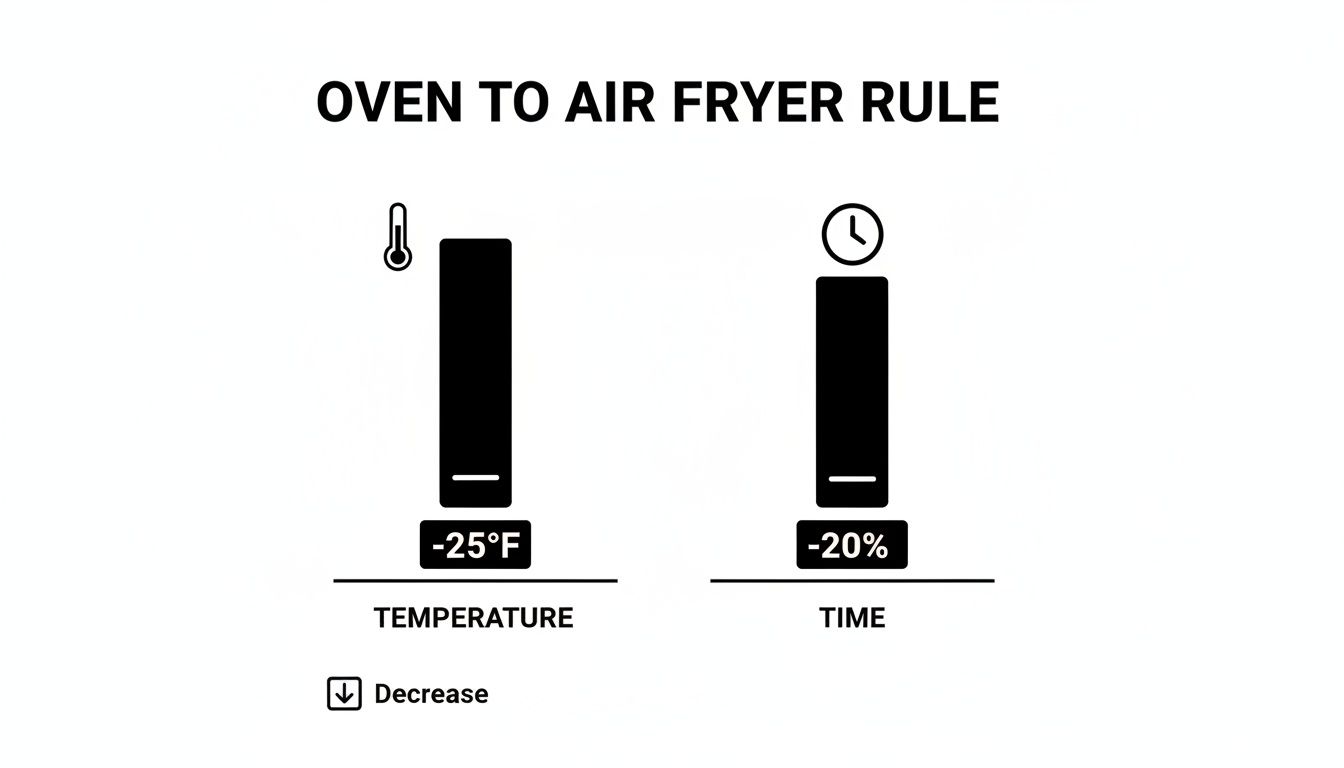
This just confirms the go-to "25/25 Rule"—a simple drop in temperature (25°F) and a 20-25% cut in the cooking time is the most reliable place to start for almost any oven recipe.
The biggest mistake you can make with frozen snacks is overcrowding the basket. Proper air circulation is non-negotiable for achieving that signature crispy texture. Always cook in a single, even layer, even if it means working in batches.
With that in mind, let’s get specific. I’ve put together a handy table with conversions for some of the most popular snacks out there. And for a snack you might not have considered, check out our guide on making a bagel in an air fryer—it's a game-changer.
Oven to Air Fryer Snack Conversion Chart
This quick-reference chart takes the guesswork out of your favorite snacks. Use these settings as your starting point, and you'll get perfect results almost every time.
| Snack Food | Standard Oven Instructions (Time/Temp) | Recommended Air Fryer Instructions (Time/Temp) | Pro Tips for Perfect Results |
|---|---|---|---|
| Frozen French Fries | 425°F for 18-22 mins | 400°F for 12-15 mins | Shake the basket vigorously halfway through. For extra crispiness, add 1-2 extra minutes at the end. |
| Frozen Mozzarella Sticks | 450°F for 8-10 mins | 380°F for 5-7 mins | Do NOT overcrowd. Check them at 5 minutes; pull them as soon as the cheese starts to ooze to prevent blowouts. |
| Frozen Jalapeño Poppers | 400°F for 12-15 mins | 375°F for 8-10 mins | Arrange in a single layer with space between each popper. Flipping is not necessary if air circulation is good. |
| Reheating Pizza (1-2 slices) | 375°F for 10-12 mins | 350°F for 3-5 mins | Place slices directly in the basket. This method revives the crust perfectly, making it taste freshly baked. |
This chart moves past theory and gives you actionable numbers you can use for dinner tonight. Just remember that every air fryer is a little different, so treat these as a baseline. After a few tries, you’ll get a feel for your specific machine and be converting recipes like you’ve been doing it for years.
Of course. Here is the rewritten section with a more natural, human-written tone.
How to Fix Common Air Fryer Conversion Mistakes
Even when you follow a good rule of thumb like the "25/25 Rule," things can still go sideways. A small misstep when converting oven times to your air fryer can leave you with a less-than-perfect snack, which is easily the biggest frustration for anyone just getting started. The good news? These issues are simple to spot and even easier to fix.
Don't sweat it if your first couple of tries aren't amazing. Getting a feel for your specific air fryer model is all part of the learning curve. Once you know what's causing these common problems, you'll be troubleshooting like a pro and getting that perfect, crispy finish every time.
Problem One: The Dreaded Burnt Outside, Raw Inside
This is probably the most maddening mistake of all. You pull out a chicken tender that looks beautifully golden, only to bite into a raw, chewy center. It’s a classic sign not that your air fryer is faulty, but that your temperature is off-balance.
Nine times out of ten, the cause is simply that the air fryer temperature is too high. The super-hot, circulating air crisps up the outside so fast that the heat doesn't have a chance to work its way to the middle.
The Solution:
- Drop the Temperature More: Instead of just knocking 25°F off the original oven temp, try reducing it by 40-50°F. This gentler heat gives the inside a chance to catch up with the outside.
- Add a Little More Time: Naturally, a lower temperature means you'll need to cook it for a bit longer. Plan on adding a few extra minutes to make up for the lower heat.
- Check Doneness Early and Often: For things like chicken or pork, a meat thermometer is your best friend. It’s the only way to know for sure that it’s reached a safe internal temperature without scorching the surface.
The magic of an air fryer is all in that hot, circulating air. If your food is burning on the outside, it means the surface is cooking way too fast for the heat to penetrate the center. Lowering the temperature is the best way to get things back in sync.
Problem Two: Soggy, Disappointing Fries
You were dreaming of crispy, golden fries, but ended up with a basket of sad, limp potato sticks. When fries or anything battered turns out soggy, the problem usually boils down to two things: you’ve either overcrowded the basket or you didn't use enough oil.
For that signature air-fried crunch, airflow is everything. When you cram food into the basket, you block the hot air from circulating and end up trapping steam. This essentially steams your food instead of "frying" it.
The Solution:
- Cook in a Single Layer: This is a non-negotiable rule. For the absolute best results, arrange food in one even layer with plenty of space between each piece. Never fill the basket more than halfway.
- Work in Batches: Cooking for a group? It’s much better to run two or three small batches than to try and shove everything in at once.
- Use a Touch of Oil: Air fryers are "less-oil" fryers, not "no-oil" fryers. A quick spritz of cooking spray or tossing your food in just a teaspoon of oil is crucial for helping the heat transfer and getting that beautiful, golden-brown color.
This rapid cooking is exactly why air fryers are so efficient. For example, a baked potato that can take up to 80 minutes in a conventional oven is done in just 30-40 minutes in an air fryer—that’s a time saving of over 50%. This incredible speed is all thanks to that concentrated, circulating heat, which you can read more about in this deep dive on air fryer energy use.
When You Should Still Use Your Oven
While an air fryer's speed is a total game-changer for weeknight dinners and crispy snacks, it isn't always the right tool for the job. Honestly, knowing what your air fryer can't do is just as important as knowing what it does well. The whole air fryer vs oven cooking time debate becomes pretty pointless when the oven is clearly the better appliance for certain things.
Your conventional oven still has a crucial place in the kitchen, especially when you need a lot of space and gentle, all-around heat. Some meals and cooking methods just work better in that roomy, steady environment. Trying to cram these recipes into an air fryer is a recipe for frustration and, frankly, disappointing food.
When Size and Capacity Matter
Let's start with the most obvious difference: size. An oven is huge, and an air fryer is small. That compact basket is exactly what makes an air fryer so fast, but it's also its biggest limitation. You just can't cook a lot of food at once without things getting crowded and soggy.
Think about these situations where the oven is really your only option:
- Large Batch Cooking: If you're cooking for a crowd or meal-prepping for the week, you need space. Roasting a couple of sheet pans full of veggies or baking a big lasagna is simple in an oven but impossible in most air fryers.
- Big Roasts: A whole chicken, a Thanksgiving turkey, or a massive pork shoulder needs that cavernous space to cook through evenly. These literally will not fit in a standard air fryer basket.
- Multiple Dishes at Once: An oven lets you cook your main course and a few side dishes all at the same time. Trying to do that in an air fryer would mean running it over and over again in time-consuming batches.
An air fryer is a rockstar for cooking small portions fast, but it can't hang with an oven's ability to handle big meals and bulky roasts. For family dinners and holiday feasts, the oven is still the undisputed champ.
For Delicate Baking and Wet Batters
An air fryer's powerful fan is its secret weapon for getting things crispy, but it's a major liability for delicate baked goods. That intense, circulating air can completely wreck recipes that need gentle, even heat to rise and set properly.
Picture the delicate structure of a cake or the light, airy texture of a soufflé. These need a still, humid environment to bake correctly. The tornado of hot air inside an air fryer can make cakes cook unevenly, dry them out, or even blow the batter around before it has a chance to set.
Here’s when you should always stick with your trusty oven:
- Cakes, Breads, and Pastries: These all rely on the consistent, radiant heat of an oven to get the right texture and a perfect rise.
- Wet Batters: If you're making something with a thin, liquid batter like tempura, the air fryer's fan will just blow it right off the food before a crust can even form. It's a mess.
- Custards and Soufflés: These delicate dishes need the gentle, often water-bath-friendly environment of an oven to cook through without curdling or collapsing.
Frequently Asked Questions
Even with the best charts and guides, you're bound to have a few questions when you're getting the hang of a new appliance. Converting oven recipes for your air fryer is more of an art than a science, and the little details often depend on your specific machine and what you're cooking.
Let's tackle some of the most common questions people ask. Getting these details right is the key to moving from just following a recipe to really understanding your air fryer, which means you'll get great results every single time.
How Do I Adjust Time For Different Air Fryer Sizes?
Yes, the size of your air fryer makes a huge difference. A compact 2-quart model will almost always cook faster than a larger 6-quart one. The reason is simple: in a smaller basket, the food is closer to the heating element, and the small chamber gets intensely hot much quicker.
As a rule of thumb, if you're using a smaller air fryer, start checking for doneness about 3-5 minutes earlier than the recipe suggests. On the flip side, if you have a big, oven-style air fryer, you might find yourself adding a minute or two to get that perfect finish. Think of the recipe time as a starting point, not a hard-and-fast rule.
Do I Always Need To Flip Food In An Air Fryer?
Even though an air fryer's claim to fame is its powerful circulating air, flipping or shaking is still a critical step for that perfectly even, all-over crisp. The reality is that most air fryers have a much stronger heat source at the top, right where the fan and heating element live.
Shaking the basket or flipping your food halfway through the cook time guarantees that every surface gets its turn directly under that intense heat. This simple step prevents the dreaded soggy bottom and ensures a beautiful, golden-brown finish.
For small, loose items like french fries, tater tots, or chopped veggies, a good shake of the basket is all you need. For anything larger, like chicken breasts, pork chops, or fish fillets, you’ll want to physically flip them over to get an even cook.
Can I Use Aluminum Foil Or Parchment Paper Safely?
You can definitely use both, but it's crucial to do it the right way. The most important rule: never put loose foil or parchment paper in an empty air fryer while it's preheating. The fan is incredibly powerful and can whip it up into the heating element, creating a serious fire hazard.
- Parchment Paper: Look for perforated parchment liners made for air fryers. The holes are essential for allowing that hot air to circulate properly.
- Aluminum Foil: You can use foil, just make sure your food is heavy enough to hold it down. Also, avoid covering the entire bottom of the basket, as this will block airflow and steam your food instead of frying it.
Both are fantastic for making cleanup easier, especially with saucy or greasy foods. You can find more practical advice and tricks on our blog.
